Google is using two billion Android phones to detect earthquakes worldwide

Skye Jacobs

Posts: 1,913   +58
Staff
Why it matters: Between 2021 and 2024, Google leveraged the motion sensors on more than two billion Android phones to create a global network capable of detecting earthquakes and sending automated warnings to millions across 98 countries. The results of this massive project reveal a technology that challenges traditional seismology and has the potential to improve public safety on a worldwide scale.
Unlike conventional systems that use dedicated, expensive seismic instruments, Google's Android Earthquake Alerts system leverages the sheer scale of smartphones, which continuously collect motion data unless users opt out. By analyzing inputs from these devices, the technology not only identified the origins and strength of more than 11,000 earthquakes, but did so with accuracy rivaling that of specialized seismometers.

Google's report, published in Science, marks the first comprehensive analysis of the system's performance since it quietly launched three years ago. During that time, the number of people receiving earthquake warnings surged tenfold, fulfilling a company's promise to bring alerts to many who had never had access before.

The alert system's edge is not in any one device's precision, but in numbers. Algorithms developed by Google piece together signals from phones scattered across broad regions, contending with local differences in geology, building materials, and the varying ways different phone models register movement. This method allows the system to spot even faint tremors by recognizing patterns of collective shaking.
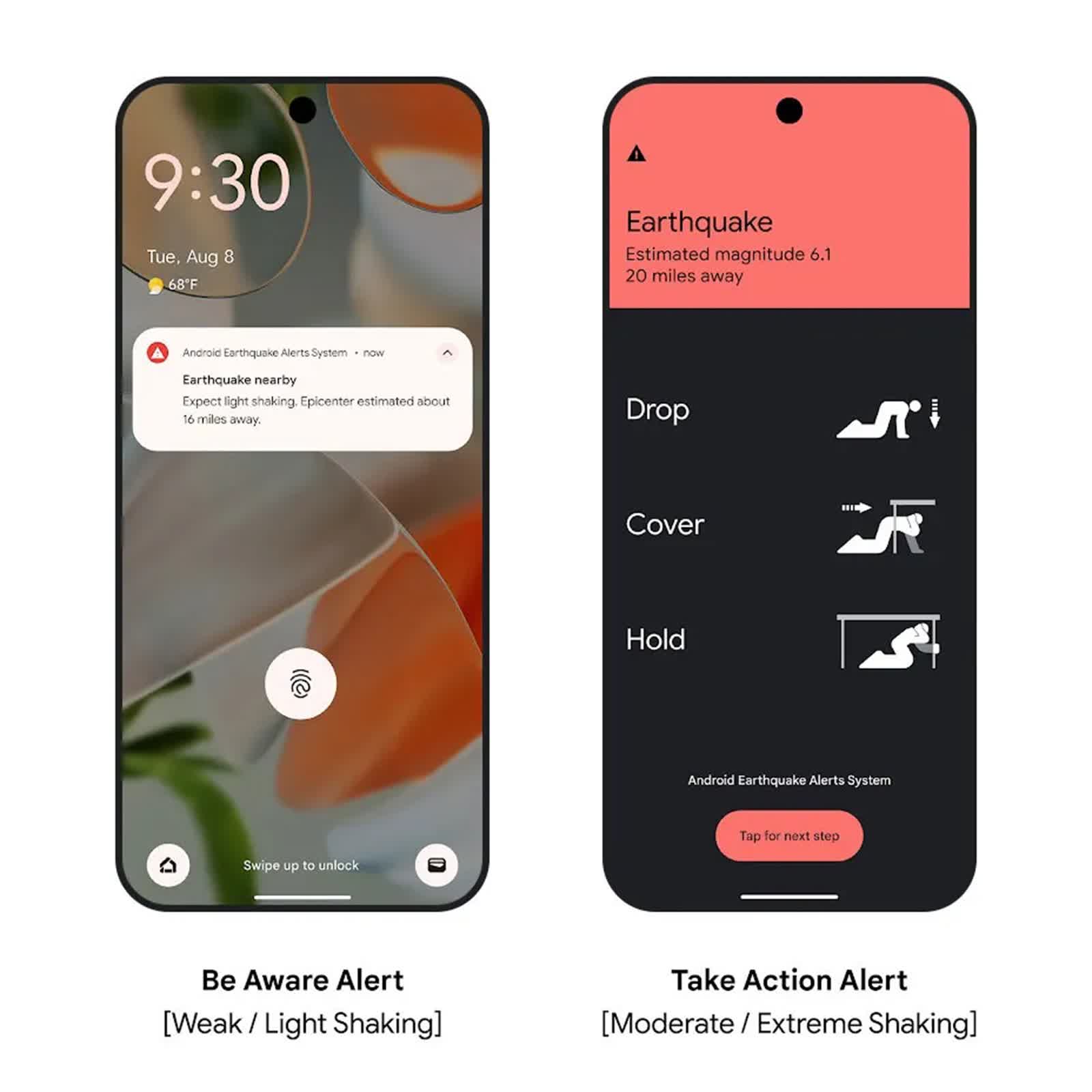
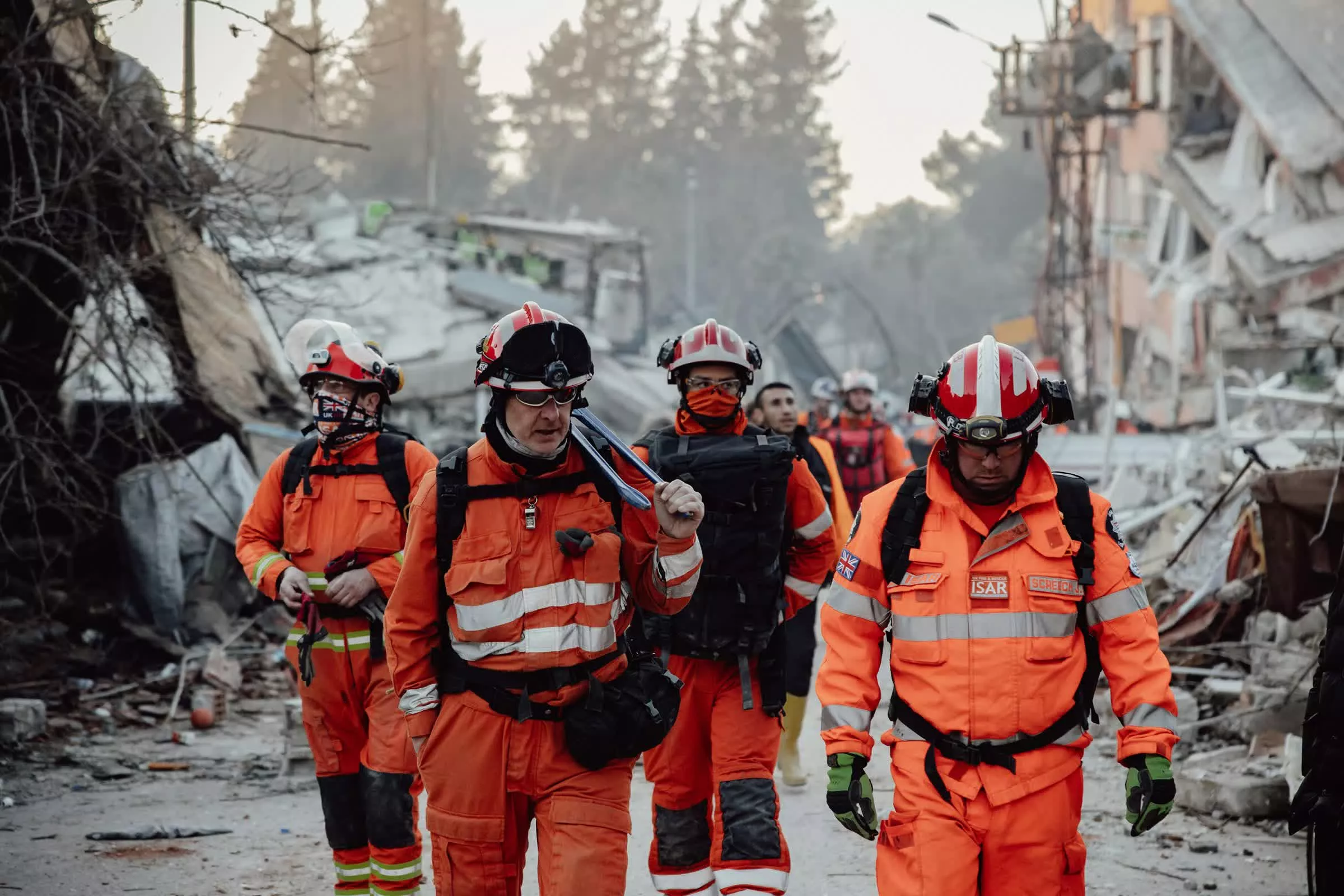
However, limitations remain, especially when it comes to the world's most powerful earthquakes. In February 2023, two devastating quakes in Turkey underscored some of these challenges. The system initially underestimated the severity of these events, sending 4.5 million alerts that, in hindsight, should have been even more urgent. When revisiting the incident with upgraded algorithms, Google's team found that improved analysis would have triggered stronger 'TakeAction' alerts, reaching as many as ten million devices.

"This shows they have been working to improve the system since 2023, with tangible positive results," Harold Tobin, a seismologist at the University of Washington, told Nature. "For a public-safety system like this one, the Android team has a responsibility to be very transparent about how it works so that civil authorities can make those judgment calls themselves."

Transparency has become a key point of scientific debate surrounding the system. While Google claims to be open about how its technology works, the proprietary nature of its algorithms and privacy concerns tied to user data remain barriers to broader scrutiny.

"It's very impressive – most countries don't have an earthquake early-warning system, and this can help provide that service," said Allen Husker, a seismologist at the California Institute of Technology.

He added that independent scientific access to the system's data and algorithms would help build confidence in its reliability. Google describes its earthquake alert as a supplemental safety measure, not a replacement for official systems run by governments or scientific agencies.

"That really is the origin of this paper," said Richard Allen, a seismologist at the University of California, Berkeley, and a visiting faculty member at Google. "I hope the community will recognize that and appreciate that."

Permalink to story:

 
Just a thought, if your phone detects an earthquake and tries to send you a warning that you're in the middle of an earthquake one would think you're already aware of the fact that you're in the middle of an earthquake
It’s an early warning… the faint tremors happen often before a big quake… assuming it’s accurate, even a few minutes warning could mean the difference between life and death for people.
 
It would be nice to understand how Google reliably distinguishes earthquake related motions from regular motions.
Probably an algorithm that ignores phones that were recently in major movements and only looks at phones that were sitting relatively still and all show similar movement in the same area. Say you have 200,000 phones sitting still on a table in a 5 mile radius and they all report similar vibrations at the same time
 
I bet those phones gather a lot more than earthquake data.
They do…. But… people concentrate on the “spyware” and assume that Google (and other companies) are scrutinizing their every movement…

You have to understand that the purpose of getting all the info is simply to MAKE MONEY!

They want your info so that they can sell you stuff with greater accuracy. And of course develop their AIs - also to sell you more stuff :)

They’re not interested in ratting out cheating spouses or naked photos of you and your pals…
 
They do…. But… people concentrate on the “spyware” and assume that Google (and other companies) are scrutinizing their every movement…

You have to understand that the purpose of getting all the info is simply to MAKE MONEY!

They want your info so that they can sell you stuff with greater accuracy. And of course develop their AIs - also to sell you more stuff :)

They’re not interested in ratting out cheating spouses or naked photos of you and your pals…
wait, so you're saying Google Gemini isn't interested in that picture of me in a bondage suit with a ball gag at my grandmothers funeral?
 
It’s easy to overlook that many countries don’t have dedicated (or reliable) seismic infrastructure. For them, this Android system might not just be supplemental, it could be the only warning they get. That changes how we should think about access to early-warning tech.
 
They do…. But… people concentrate on the “spyware” and assume that Google (and other companies) are scrutinizing their every movement…

You have to understand that the purpose of getting all the info is simply to MAKE MONEY!

They want your info so that they can sell you stuff with greater accuracy. And of course develop their AIs - also to sell you more stuff :)

They’re not interested in ratting out cheating spouses or naked photos of you and your pals…
You think that that data centre the NSA built in Utah is being filled with bought data? Palantir is going to use that data to create a map of the country for which they are getting paid, thus your assumption is entirely wrong.
 
I don't like the idea of any corporation using device I bought for it's whatever purposes.

Thanks Google for letting me know you do that. Will be ditching Android at first available possibility.
You're switching to Apple, which is even more insecure, instead? They are one and the same as Apple collect exactly the same data, Apple just have a habit of storing it in text files on the device.
 
This is what I call a GOLD initiative... Google decided to investigate the infertility of humans by "watching" our actions when we are in bed.

that's great,,,
 
You think that that data centre the NSA built in Utah is being filled with bought data? Palantir is going to use that data to create a map of the country for which they are getting paid, thus your assumption is entirely wrong.
That’s not a company… that’s the US government… completely different kettle of fish…
 
You're switching to Apple, which is even more insecure, instead? They are one and the same as Apple collect exactly the same data, Apple just have a habit of storing it in text files on the device.
It's not about security. It's about boundaries.
 
It’s an early warning… the faint tremors happen often before a big quake… assuming it’s accurate, even a few minutes warning could mean the difference between life and death for people.
That's not how it works in this case, see the linked research paper. It's realtime earthquake detection and the idea is that the Internet travels faster than the ground moves. The research seems to be primarily based on a trial in Turkiye, and it would probably give seconds warning instead of minutes:
User feedback shows that 85% of people receiving an alert felt shaking, and 36, 28, and 23% received the alert before, during, and after shaking, respectively.
 
That's not how it works in this case, see the linked research paper. It's realtime earthquake detection and the idea is that the Internet travels faster than the ground moves. The research seems to be primarily based on a trial in Turkiye, and it would probably give seconds warning instead of minutes:
Actually…

We illustrate typical AEA system behavior and warning times with two example earthquakes. The first is the 17 November 2023 earthquake in the Philippines with a magnitude of 6.7 and a hypocenter 40 km offshore at a depth of 52 km according to the US Geological Survey (USGS) global catalog. It took about 12 s for the P wave to reach the closest cluster of phones, and the first alert was generated 18.3 s after the OT with an estimated magnitude of 5.5. The magnitude estimate grew over time to a maximum of 6.5, 28.6 s after OT (table S1). Figure 4A shows the warning time for users receiving a BeAware alert that ranged from a few seconds for those closest to the epicenter experiencing the strongest shaking, up to ~90 s for those at 400 km experiencing light shaking. Warning times for the strongest shaking (MMI 7 or 8, very strong to severe) ranged up to ~15 s. For the moderate shaking, which also causes damage (MMI 5 or 6, moderate to strong), warning times ranged from seconds up to a minute (Fig. 4A). Almost 2.5 million phones were alerted for this event, and more than 100,000 received TakeAction alerts. The TakeAction alerts (Fig. 4B) arrived at most phones a few seconds before the S-wave arrival and ~2 to 8 s before peak shaking of MMI 6, 7, and 8.

So… they can get about 15 seconds warning - and that’s NOW… I’d assume the goal would be to make it better… and if I’m in a compromised place - even 10 seconds might be useful…
 
It's not about security. It's about boundaries.
It just means trusting a different corporation to keep your data safe. This is why I've finally come around to believing only open source operating systems are the way to go. Not perfect, but not relying on trust as everything is in the open. In an imperfect world this is the best solution to date.
 
Probably an algorithm that ignores phones that were recently in major movements and only looks at phones that were sitting relatively still and all show similar movement in the same area. Say you have 200,000 phones sitting still on a table in a 5 mile radius and they all report similar vibrations at the same time
That sounds reasonable
 
Back