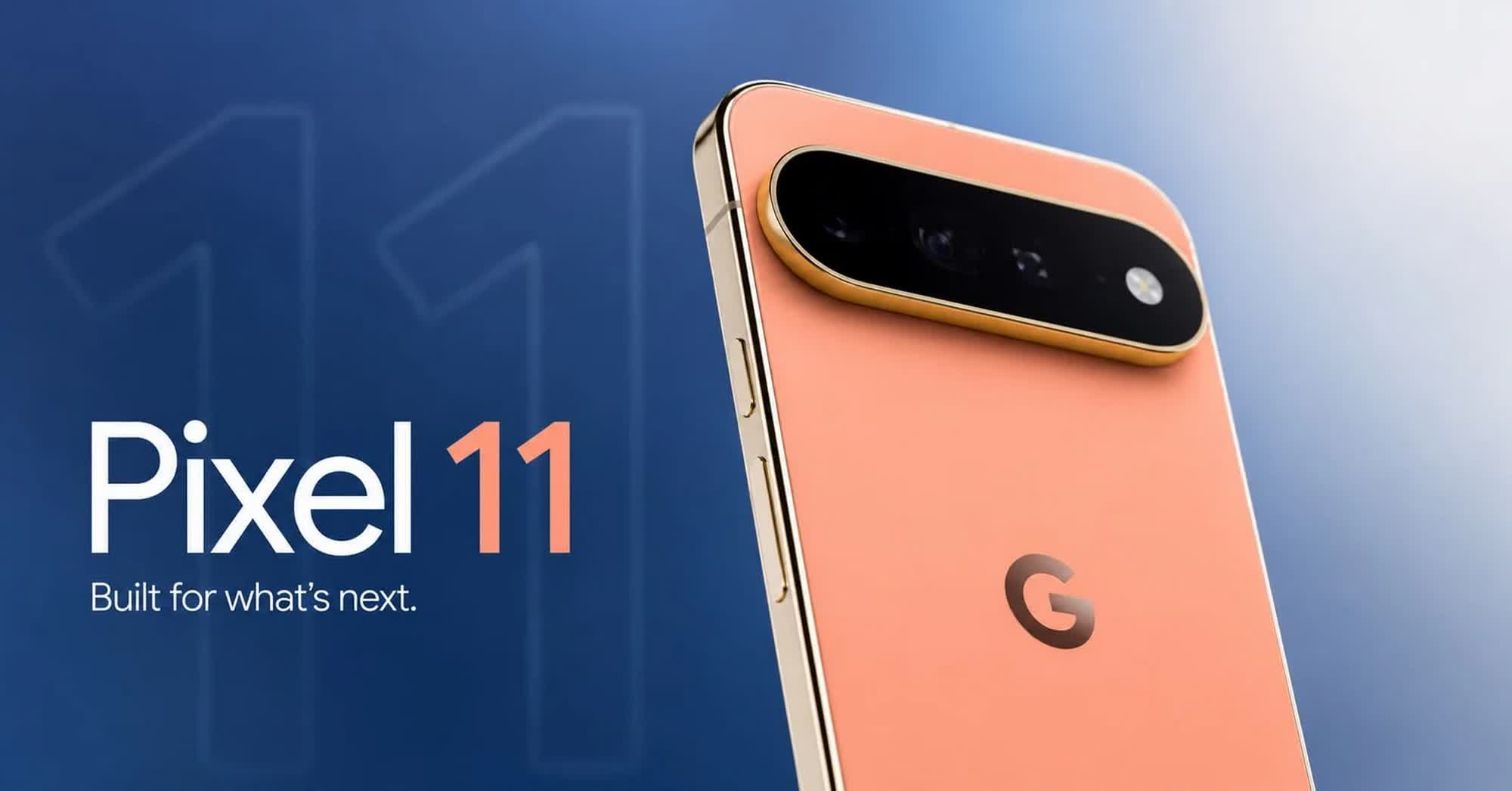
First look: Google's Pixel 11 series marks the company's most aggressive AI play yet, pairing a new 2nm Tensor G6 chip with deeper on-device Gemini integration across all four models – Pixel 11, Pixel 11 Pro, Pixel 11 Pro XL, and Pixel 11 Pro Fold. It's also the first Pixel generation to drop Samsung's Exynos modem in favor of MediaTek, a move aimed squarely at years of connectivity and heat complaints. Pricing starts at $899 for the base Pixel 11, climbing to $1,099 for the Pro and $1,299 for the Pro XL.
The base Pixel 11 gets a 6.3-inch Full HD+ AMOLED display with up to 120Hz adaptive refresh, up to 3,000 nits of peak brightness, and Corning Gorilla Glass Victus 2 on top. Inside, it packs 12GB of LPDDR5X RAM, up to 512GB of storage, and a 4,985mAh battery with 30W wired and 25W Qi2.2 Pixelsnap wireless charging.
On the imaging side, the Pixel 11 sticks with a triple rear camera, led by a 48MP primary sensor (f/1.7, OIS, LDAF), joined by a 13MP ultra-wide and a 10.8MP 5x telephoto. Up front, a punch-hole cutout houses a 10.5MP selfie camera at f/2.2.
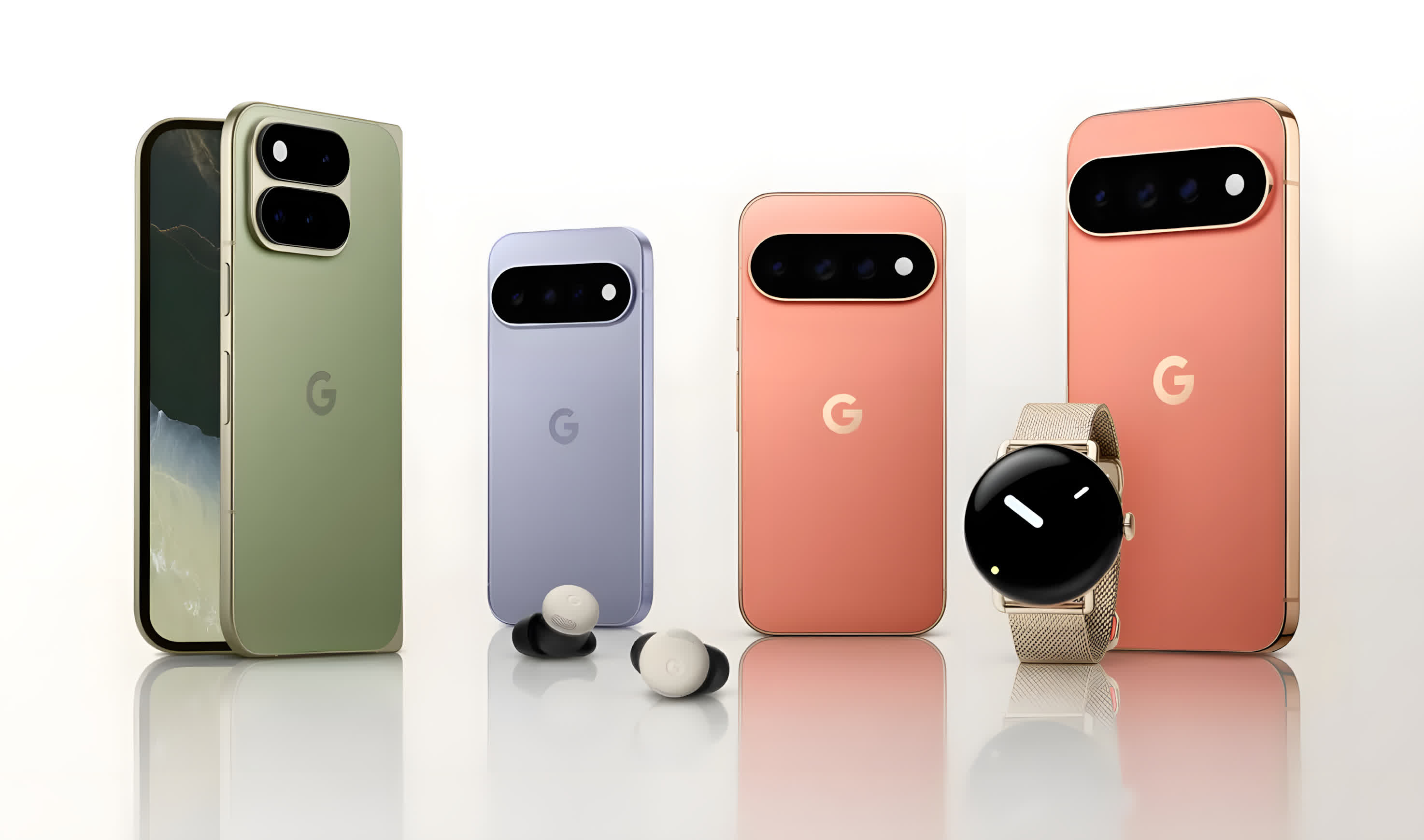
Step up to the Pro models and the displays grow more capable: the Pixel 11 Pro carries a 6.3-inch 1.5K LTPO AMOLED panel at 2856 x 1280, while the Pixel 11 Pro XL moves to a 6.8-inch QHD+ AMOLED panel at 1344 x 2992. Both hit up to 3,600 nits peak brightness, 120Hz adaptive refresh, and the same Gorilla Glass Victus 2 protection.
The two Pro phones also share a camera system, built around a 50MP primary sensor (f/1.68, OIS, LDAF), backed by a 48MP ultra-wide and a 48MP 5x telephoto capable of 120x digital zoom. Selfies come from a shared 42MP front camera at f/2.2.
Battery capacity is where the two split: the Pixel 11 Pro carries a 4,850mAh cell, while the larger Pro XL steps up to 5,115mAh. Charging speeds diverge too: the Pro tops out at 30W wired, while the Pro XL supports 45W, though both share 25W Qi2.2 Pixelsnap wireless charging.
The standout new hardware feature on the Pro models is HiLight, a ring of ambient LEDs circling the camera flash. It glows in custom, user-set colors to signal when Gemini is active, and can flag calls from favorite contacts with color-coded alerts, a feature Google says will later extend to incoming messages as well.
Every phone in the series ships with Android 17 out of the box and carries Google's promise of seven years of OS updates, security patches, and Pixel Drops.
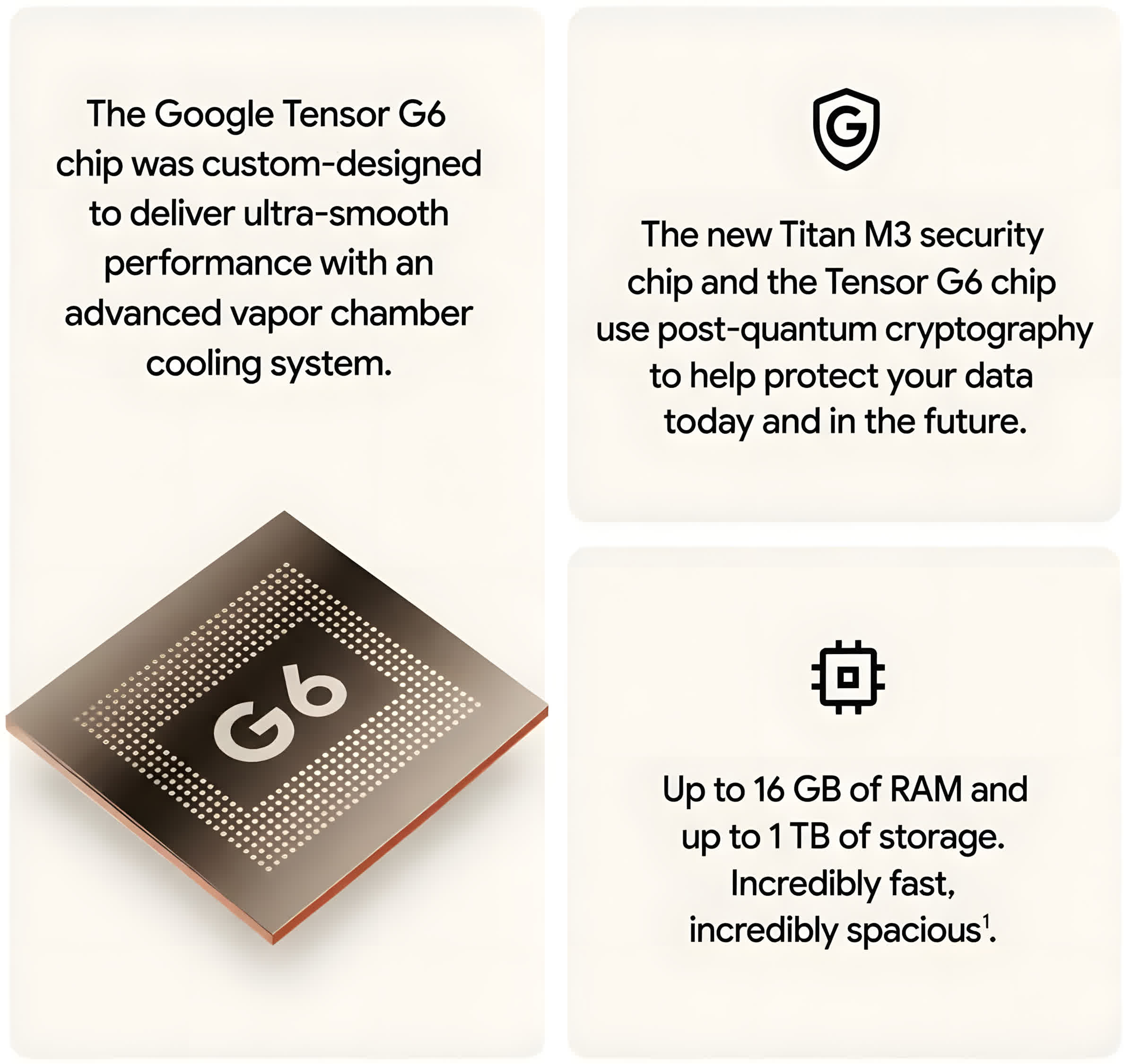
All four run on the Tensor G6, which brings a 7-core CPU, a 50% boost in TPU-driven on-device AI performance, and MediaTek's M90 5G modem, that's a a notable shift from Google's longtime use of Samsung Exynos modem. The Titan M3 security chip rounds out the platform.
The Pixel 11, Pro, and Pro XL (though not the foldable) share an ultrasonic under-display fingerprint scanner and IP68 dust and water resistance. Connectivity across the lineup includes 5G, Wi-Fi, GLONASS, Galileo, BeiDou, NavIC, NFC, and USB-C 3.2.
Pricing starts at $899 for the 256GB Pixel 11, with the Pixel 11 Pro and Pro XL starting at $1,099 and $1,299 respectively, also at 256GB. All three are available for preorder today.


