
In a nutshell: Not much can stop Mother Nature once a hurricane forms. Torrential rain, high winds, and floodwaters threaten to destroy everything in their path, often leaving those in a storm's way with little choice but to evacuate. However, for those at Tampa General Hospital, evacuation wasn't an option. Instead, TGH teams sprang into action just one day before Hurricane Helene's arrival, deploying a flood wall designed to hold back several feet of storm surge at the hurricane's peak.
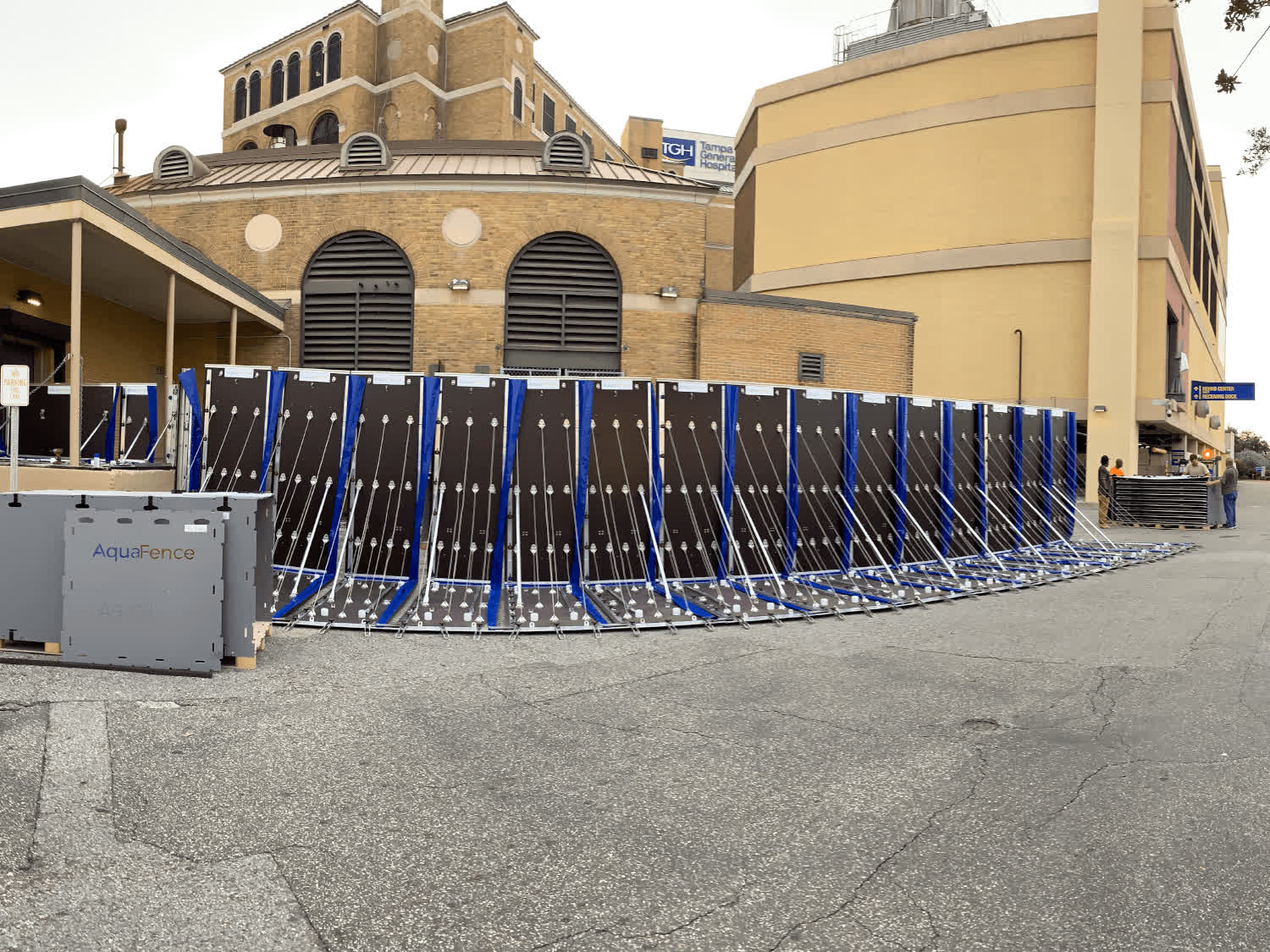
Tampa General Hospital, the region's only level one trauma center, is situated on Davis Island, just a stone's throw from the bay. With no safe option to relocate patients before Hurricane Helene's arrival, the hospital had no choice but to prepare to weather the storm. Those preparations included deploying an advanced, water-tight floodwall system designed by AquaFence, a Norwegian company specializing in flood protection.
The AquaFence FloodWall is a rapidly deployable flood defense that doesn't require additional fill, weights, or supports. It can withstand storm surges of up to 15 feet. Once in place and anchored, the wall forms a water-tight barrier that actually stabilizes and strengthens as water pressure increases.
As #HurricaneHelene continues, the AquaFence at TGH stands firm. The water-impermeable barrier is designed to withstand storm surge up to 15 feet. It has worked through multiple rain events to prevent storm waters from impacting hospital operations. #WeAreTGH #StormWatch pic.twitter.com/papsd6oPg2
– Tampa General Hospital (@TGHCares) September 27, 2024
TGH teams were tasked with deploying the barrier on Wednesday, just one day before Hurricane Helene was set to strike. While fortifying an island-based facility so close to a hurricane's landfall may seem like an impossible task, the team was prepared.
Since acquiring the AquaFence in 2019, the hospital has successfully deployed the barrier to protect the facility from several major storms. After each deployment, the barrier's performance has been thoroughly inspected and enhanced, with improvements like new anchors and attachment points added to ensure it can withstand future flooding events.
It's easy to underestimate just how much power and pressure floodwaters can exert on structures like TGH's FloodWall.
According to the US Geological Survey, water at a depth of just one foot can exert more than 500 lbs (227 kg) of lateral force. At two feet, rushing water generates enough buoyancy and force to lift and carry away most large vehicles. The fact that TGH's static barrier can withstand the immense pressure caused by hurricane flooding without failing is an incredible feat of engineering.
After the storm surge, Jennifer Crabtree, TGH's vice president of corporate communications and chief of staff, confirmed the barrier's effectiveness in once again protecting the facility, its residents, and staff.
In a separate interview with Fox News, Dustin Pasteur, vice president of facilities, emphasized the hospital's commitment to fortification over evacuation. "We're a 100-year-old hospital, and we're right here on the bay. We can't evacuate. There are not enough hospital beds in the region to take our patients."
How engineering saved Tampa General Hospital from Hurricane Helene's storm surge


