Ingenious DIY setup powers home for 8 years with over 1,000 repurposed laptop batteries

zohaibahd

Posts: 978   +19
Staff
WTF?! Far less than a quarter of e-waste generated globally is properly collected, treated, and recycled, according to the UN. That's why repurposing and extending the lifespan of discarded electronics is so crucial. One person has done just that, with a remarkable home charging system created by repurposing over a thousand used laptop batteries.

This remarkable feat has been running successfully for an astonishing eight years without a single battery replacement, as detailed by the creator, Glubux, on the online forum Second Life Storage.

The setup is housed in a somewhat unassuming shed 50 meters (164 feet) away from the individual's residence, but its purpose is anything but ordinary. It combines old laptop batteries with solar panels to create an off-grid power supply, essentially turning a pile of e-waste into a sustainable energy solution.
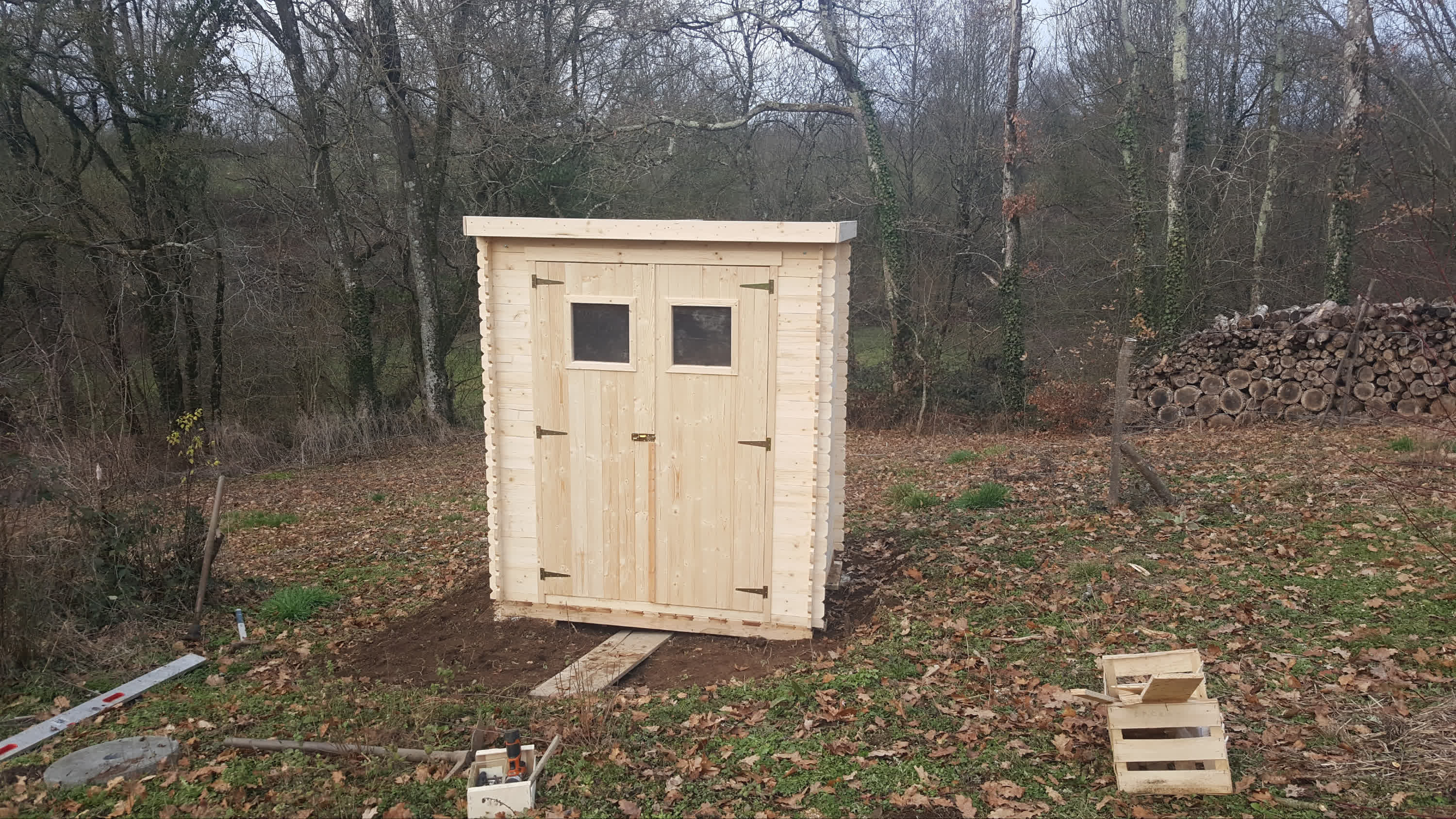
Despite the unconventional nature of this system, there have been no reports of fire hazards or swollen battery issues throughout its nearly decade-long operation. In fact, Glubux claims he can power his entire house from it, including the washing machine.

The project's origins can be traced back to November 2016, when the creator shared his initial plans on the forum. At the time, he had already begun producing part of his electricity needs with a modest 1.4kW solar panel array, an old 24V 460Ah forklift battery, charge controllers, and a 3kVA inverter.

However, Glubux aimed to expand his setup by constructing a dedicated shed to house additional batteries and charge controllers/inverters. He had already amassed around 650 laptop batteries and had started sorting and assembling them into packs, each designed to hold approximately 100Ah by carefully matching the number of cells and using copper wiring for efficient connections.
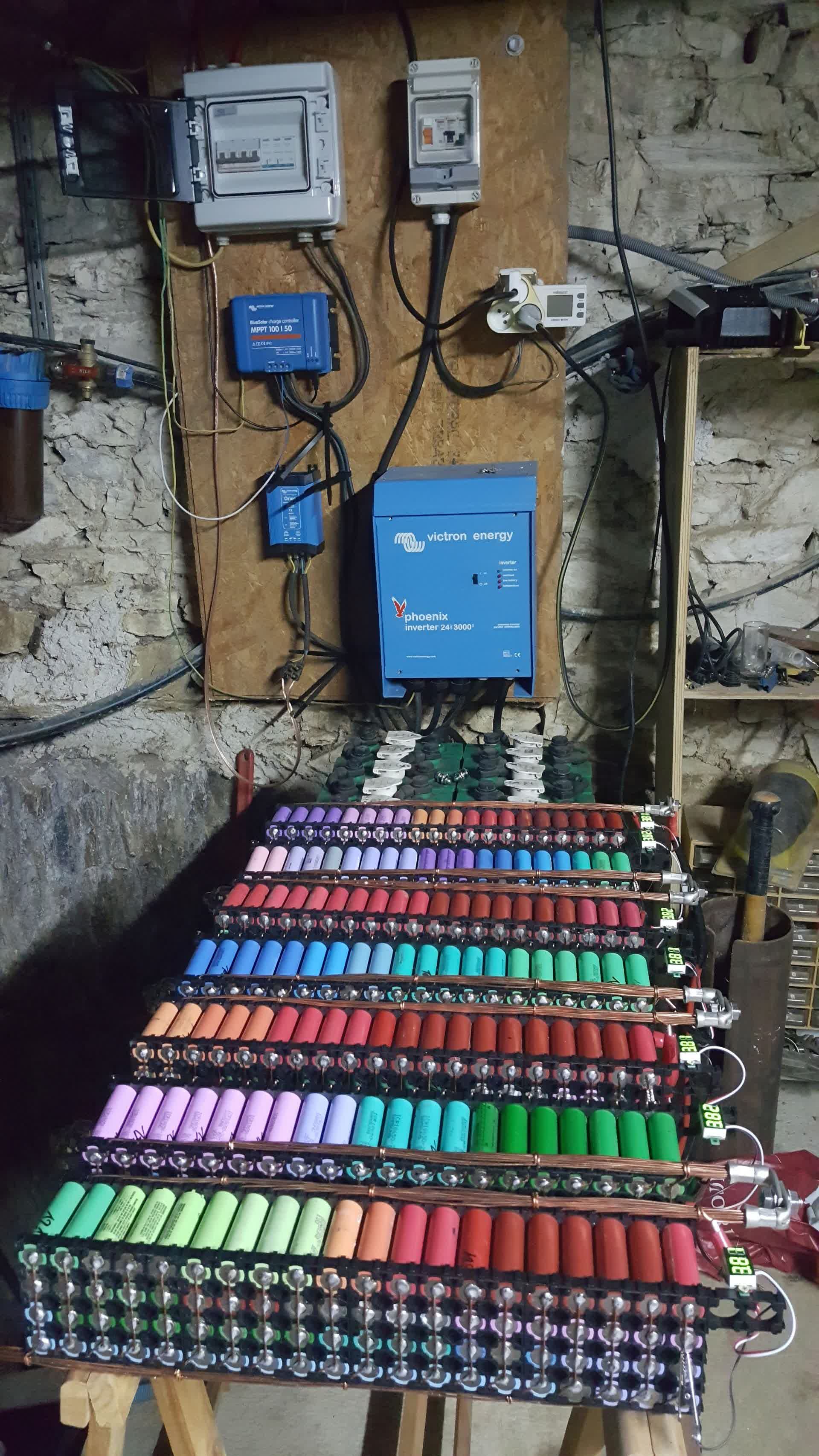
While some initial hiccups arose, such as uneven discharge rates among packs with different cell counts, the creator quickly adapted by rebalancing the packs and adding cells where needed. Eventually, he ended up using over a thousand laptop batteries.

If you're wondering why the batteries in the photos don't resemble your typical laptop power pack, that's because laptop batteries have historically been multiple battery cells housed within a single casing. However, in this ingenious setup, Glubux took those individual cells and assembled them into their own customized racks – a process that likely required a fair bit of elbow grease and technical know-how, but one that has ultimately paid off in spades.

Fast-forward to the present day, and a recent update from Sunday revealed that the setup has been running without a hitch for eight years, with not a single laptop battery cell requiring replacement. Glubux has also upgraded his solar panel array to 24 units rated at 440W peak each, providing ample power generation capacity, especially during the winter months.

Permalink to story:

 
Cool project but completely non-viable for most people. This pack also would only run my HVAC for about 3-4 minutes before draining the pack completely. I've considered a 40-60kW solar array, but it's not worth it given stock market returns over 20+ years far outweigh savings on electricity and that is assuming delivery fees and mandatory minimum fees don't keep increasing which the definitely will.

I also think not needing to replace a single cell is shear dumb luck. Good for this guy it has worked out, but this is not a typical result. Statistically this is a near impossibility. Typical failure rate on lithium cells is not less than 0.00001% after 8+ years.
 
Looks like a fun project and anything that recycles electronics is good. I hope he has some class C fire extinguishers handy!
 
This is cool and definitely a neat way to reuse parts that would otherwise end up in a landfill.

Might be a market for a more "plug and play" option, I'm sure plenty of folks are sitting on a small pile of old batteries that could be repurposed into a back-up power solution or UPS or something else with far less elbow grease.
 
Things hicks do in the woods in the 21st century. It's like starting a fire by rubbing sticks together while having a lighter in your pocket. Making moonshine would have been more useful. Good for Cletus though.
 
I wouldn't do this because I'd be worried about fires or failure at a critical moment.
I was searching the article for a TOTAL battery size in kWh and didn't find it.
My EV has a 102 kWh battery.
I would love to get solar on my house with a warranteed battery 100kWh backup that had the ability to store power and then rapid charge my EV at level 2 speeds (I have a built in home charger Lectron V Box).
If you combine solar, battery backup, low energy LED lighting... you could run very well off the grid. The problem comes when you need to heat the house in freezing weather or run your dryer, oven or washing machine.
 
Well - It's a great idea, which is also why Tesla is making these "home batteries" (should've been available a couple of years back though). In places with alot of sun, I reckon you could live 100% on a combination of sufficient solar panels and a good battery solution. In Europe the Solar Panel business is booming (well, central and south Europe) due to the fact that the powerplants are having issues keeping up with demand and prices are skyrocketing. Solar panels are feeding excess power back into the grid - so a large neighbourhood actually ends up providing power to the grid instead of draining it.
Hopefully solar panel efficiency will continue to improve to a point where you don't need your entire roof covered in them to provide enough power
 
I used some old batteries before, for some low consumption stuff, they are brilliant.

But being in the woods, having that wooden shed and also so many batteries? That's brilliant!

I'm pretty sure the woods don't have lights at night, so he could do some solar charged, off the grid, lights in the trees with motion sensors... Also useful if a bear is nearby
 
I mean if collecting, disassembling, matching, and maintaining battery packs sounds like a fun hobby...

I’ll just pay the $0.08 a KWh and do something fun with my free time.

It seems like a better way to spend time than the billions of hours spent doomscrolling daily. We should applaud engineers. Minds like this are the reason why we have the luxuries we do.
 
My brother and I built the same thing about 5yrs ago, it's pretty sweet to see someone else has done the same. We 3d printed the racks and he luckily worked for Goodwill so he got all the laptop batteries he could ever need for free. We set-up 12 of these racks, 10 panels and said screw the grid. The set-up powers the whole house flawlessly even during summer running a/c. We live in Maine and winters are cold and ugly outside but this system pushes through it. The one issue you need to be proactive about is the chance of a battery going bad getting hot and catching fire/blowing up. Although if you pay attention you can see a deviation in charge/output on any given cell. This is definitely not a project for the average person but more suited for someone familiar with electricity, tech etc. This will for sure save you $ in the long run and if you have access to some of the materials needed for free/cheap BONUS!!!
 
It seems like a better way to spend time than the billions of hours spent doomscrolling daily. We should applaud engineers. Minds like this are the reason why we have the luxuries we do.
I race motorcycles for fun. Sorry doomscrolling is what comes to mind for you when you hear the word hobby.

No, minds that make products for other people improve society. Nothing against DIYers (I DIY sometimes myself), but let's not act like building something alone in your backyard is somehow for the greater good. It's usually to make something cheaper (occasionally better) than the non-DIY route. Case and point: reusing batteries is cheaper than buying new ones (cheaper in dollars but not time).
 
I wouldn't do this because I'd be worried about fires or failure at a critical moment.
I was searching the article for a TOTAL battery size in kWh and didn't find it.
My EV has a 102 kWh battery.
I would love to get solar on my house with a warranteed battery 100kWh backup that had the ability to store power and then rapid charge my EV at level 2 speeds (I have a built in home charger Lectron V Box).
If you combine solar, battery backup, low energy LED lighting... you could run very well off the grid. The problem comes when you need to heat the house in freezing weather or run your dryer, oven or washing machine.
Was waiting for someone to mention the potential fire/kaboom risk; I'm guessing that's why they put them in a shed a good distance from the house, but I still wouldn't want to take the risk.

RE: dryer, oven or washing machine, my mom has a pretty basic solar setup (no energy storage), and her monthly power bill still never tops $25 - and a good part of that is just the base service charge. We all live in AZ, so no freezing weather, but really hot summers instead. Of course, AZ weather is also perfect for solar power.

I'll be getting solar, power storage and fast EV chargers installed sometime in the next few months. It is kind of a no-brainer out here so long as you have the cash to pay for it, and don't get caught in one of those leasing nightmares.

Given my power usage, I should end up breaking even in ~12 years - if I were going to sell the house before that, I'd definitely take a hit, but even if I do move at some point, I'd still be keeping the place and renting it out, so that wouldn't be an issue.

Of course, for a lot of people, that isn't an option for any number of reasons, but for those of us fortunate enough for it to be, there really isn't too much in terms of downside, and a lot of benefits.
 
Was waiting for someone to mention the potential fire/kaboom risk; I'm guessing that's why they put them in a shed a good distance from the house, but I still wouldn't want to take the risk.

RE: dryer, oven or washing machine, my mom has a pretty basic solar setup (no energy storage), and her monthly power bill still never tops $25 - and a good part of that is just the base service charge. We all live in AZ, so no freezing weather, but really hot summers instead. Of course, AZ weather is also perfect for solar power.

I'll be getting solar, power storage and fast EV chargers installed sometime in the next few months. It is kind of a no-brainer out here so long as you have the cash to pay for it, and don't get caught in one of those leasing nightmares.

Given my power usage, I should end up breaking even in ~12 years - if I were going to sell the house before that, I'd definitely take a hit, but even if I do move at some point, I'd still be keeping the place and renting it out, so that wouldn't be an issue.

Of course, for a lot of people, that isn't an option for any number of reasons, but for those of us fortunate enough for it to be, there really isn't too much in terms of downside, and a lot of benefits.


I have an EV and I love it. One visit to the dealer per year. 12,000 miles and I spent just $20 on the car for windshield washer fluid. Yeah the tires are $400 each but that's typical. They wear better on this car than any of my previous ICE cars.

Someday I want Solar, but I want it to be effortless and cost effective. I demand a battery backup.

I really hope I could get a 100 kWh battery so I can rapid charge my EV.

I drive 1000 miles a month on average and I could drive literally for free since I could save energy in the house and put it in the car.
 
My brother and I built the same thing about 5yrs ago, it's pretty sweet to see someone else has done the same. We 3d printed the racks and he luckily worked for Goodwill so he got all the laptop batteries he could ever need for free. We set-up 12 of these racks, 10 panels and said screw the grid. The set-up powers the whole house flawlessly even during summer running a/c. We live in Maine and winters are cold and ugly outside but this system pushes through it. The one issue you need to be proactive about is the chance of a battery going bad getting hot and catching fire/blowing up. Although if you pay attention you can see a deviation in charge/output on any given cell. This is definitely not a project for the average person but more suited for someone familiar with electricity, tech etc. This will for sure save you $ in the long run and if you have access to some of the materials needed for free/cheap BONUS!!!
If I'm not mistaken, Goodwill sells donated items to help the less fortunate. Unless people donated a boatload of defective laptops, that took a lot of relatively high end merchandise off of their shelves (or people donated a bunch of broken laptops).
 
Cool project but completely non-viable for most people. This pack also would only run my HVAC for about 3-4 minutes before draining the pack completely. I've considered a 40-60kW solar array, but it's not worth it given stock market returns over 20+ years far outweigh savings on electricity and that is assuming delivery fees and mandatory minimum fees don't keep increasing which the definitely will.

I also think not needing to replace a single cell is shear dumb luck. Good for this guy it has worked out, but this is not a typical result. Statistically this is a near impossibility. Typical failure rate on lithium cells is not less than 0.00001% after 8+ years.
You know that failure rate of .000001% would be 1 cell in a 100 million right? To have a 50/50 chance of only 1 cell going bad it would be .05%. A much smaller number. Still I agree that in most scenarios a cell or 2 would have gone bad unless they aren't used much or rotated.
 
My brother and I built the same thing about 5yrs ago, it's pretty sweet to see someone else has done the same. We 3d printed the racks and he luckily worked for Goodwill so he got all the laptop batteries he could ever need for free. We set-up 12 of these racks, 10 panels and said screw the grid. The set-up powers the whole house flawlessly even during summer running a/c. We live in Maine and winters are cold and ugly outside but this system pushes through it. The one issue you need to be proactive about is the chance of a battery going bad getting hot and catching fire/blowing up. Although if you pay attention you can see a deviation in charge/output on any given cell. This is definitely not a project for the average person but more suited for someone familiar with electricity, tech etc. This will for sure save you $ in the long run and if you have access to some of the materials needed for free/cheap BONUS!!!

I'm in Maine too. Been looking for something similar. Would you be willing to share what you've done ? 3d files, panel ratings, your kwh usage etc? I work in electronics but haven't done that deepna dive into the DIY battery side. Been looking more at server farm backup battery/ups reclaims.
 
I race motorcycles for fun. Sorry doomscrolling is what comes to mind for you when you hear the word hobby.

No, minds that make products for other people improve society. Nothing against DIYers (I DIY sometimes myself), but let's not act like building something alone in your backyard is somehow for the greater good. It's usually to make something cheaper (occasionally better) than the non-DIY route. Case and point: reusing batteries is cheaper than buying new ones (cheaper in dollars but not time).
I'm sorry that minimising an accomplishment and negating what is clearly the application of an inquisitive, creative and problem-solving mind, is what comes to mind when you read an article like this.
 
If I'm not mistaken, Goodwill sells donated items to help the less fortunate. Unless people donated a boatload of defective laptops, that took a lot of relatively high end merchandise off of their shelves (or people donated a bunch of broken laptops).
Yes alot of broken things go to Good will
 
Some time ago a few friends and I recovered several dozen batteries thrown away from destroyed laptops. We took them apart and checked each cell, its behavior during charging and after, which took us 1 month. We classified them into excellent, good and bad. We took apart the bad ones and used the copper and aluminum electrodes to make electrodes for electroplating. We used the good ones in small autonomous robotics projects and with the excellent ones we built several portable power banks, between 24 and 28 Ah. . some with multiple charging source (5v from USB or a power supply, and an integrated solar cell), 5V power delivery (some delivering up to 4W) and LEDs to work as lamps. Fun projects.
 
Cool project but completely non-viable for most people. This pack also would only run my HVAC for about 3-4 minutes before draining the pack completely. I've considered a 40-60kW solar array, but it's not worth it given stock market returns over 20+ years far outweigh savings on electricity and that is assuming delivery fees and mandatory minimum fees don't keep increasing which the definitely will.

I also think not needing to replace a single cell is shear dumb luck. Good for this guy it has worked out, but this is not a typical result. Statistically this is a near impossibility. Typical failure rate on lithium cells is not less than 0.00001% after 8+ years.
Not to interject, I have the same type of build, but with 4760 recycled cells, has been working running my shop and a few circuits in my place for over 6 years, zero pickups.
If you do it the right way, how this person did, you'll be fine
I am assuming he ran all the cells through a multi cell charger such as the opus bt-c3100 which gives you each cells capacity, but a few other things that guarantee you know the remaining life of the cell.
 
These type of projects aren't new. Google it. You can even get the moulded kits to stack the batteries in.
These 18650 batteries are really good. Hey even the early Tesla's used them (do they still use them)?
18650 batteries are also in your Ryobi/DeWalt/Makita/Milwaukee/etc battery packs. Not used in modern notebooks anymore because they try to make them slimmer. I had a hedge trimmer that wouldn't last half an hour. Opened it to find 2x18650 1200mah batteries. Replaced them with 2x2000mah from an old notebook and now have enough juice to finish...
 
I have an EV and I love it. One visit to the dealer per year. 12,000 miles and I spent just $20 on the car for windshield washer fluid. Yeah the tires are $400 each but that's typical. They wear better on this car than any of my previous ICE cars.

Someday I want Solar, but I want it to be effortless and cost effective. I demand a battery backup.

I really hope I could get a 100 kWh battery so I can rapid charge my EV.

I drive 1000 miles a month on average and I could drive literally for free since I could save energy in the house and put it in the car.
I'll definitely never be buying another ICE car, that's for certain. But I'm also long-term chronically ill, thanks to which I don't put a lot of miles on my cars, as I'm frequently too sick to drive, so I won't be replacing them with EVs until they either start having issues, or I see the beginnings of the ICE collapse (when EV adoption starts hitting the level where demand for gas drops enough for the economies of scale of the gasoline industry to begin breaking down).

I currently have a 2013 Toyota Highlander and a 2015 BMW Z4, with 68K miles and 36K miles on them, respectively, and they are both in great condition, so it may still be a while. Honestly, the biggest issue I have with them is that I drive them so infrequently that I always need to have them plugged in to a battery tender, or end up with a dead battery the next time I need to go somewhere. I don't think I've driven the Highlander at all in the past six months (which means it's probably high time I do, just so all the fluids get moved around and the engine doesn't weld itself together).

I do have to admit, the Volvo EX90 is pretty tempting, especially considering the EV tax credit is almost certainly going to get killed off before long. But I still think I'll wait for the next generation in battery technology to come around, just since I have no real reason not to.

What is funny is that one of the things that I look forward to with an EV is the exact inverse of what you said you're looking forward to with solar: for me, an EV represents additional battery capacity for my solar/whole-house battery setup, whereas for you, the whole-house battery system represents a way to fast charge your EV lol
 
Back