Instagram CEO says in the age of AI, you can't assume what you see online is real

Skye Jacobs

Posts: 1,913   +58
Staff
Big quote: At the close of 2025, Instagram head Adam Mosseri used his personal account to post a 20-page presentation examining what he called the "new era of infinite synthetic content." The slideshow, which reads like a digital memo to the future of photography, argues that technology has permanently blurred the distinction between authentic and artificial imagery – and that Instagram, once defined by its personal photo diaries, has already moved beyond that stage.
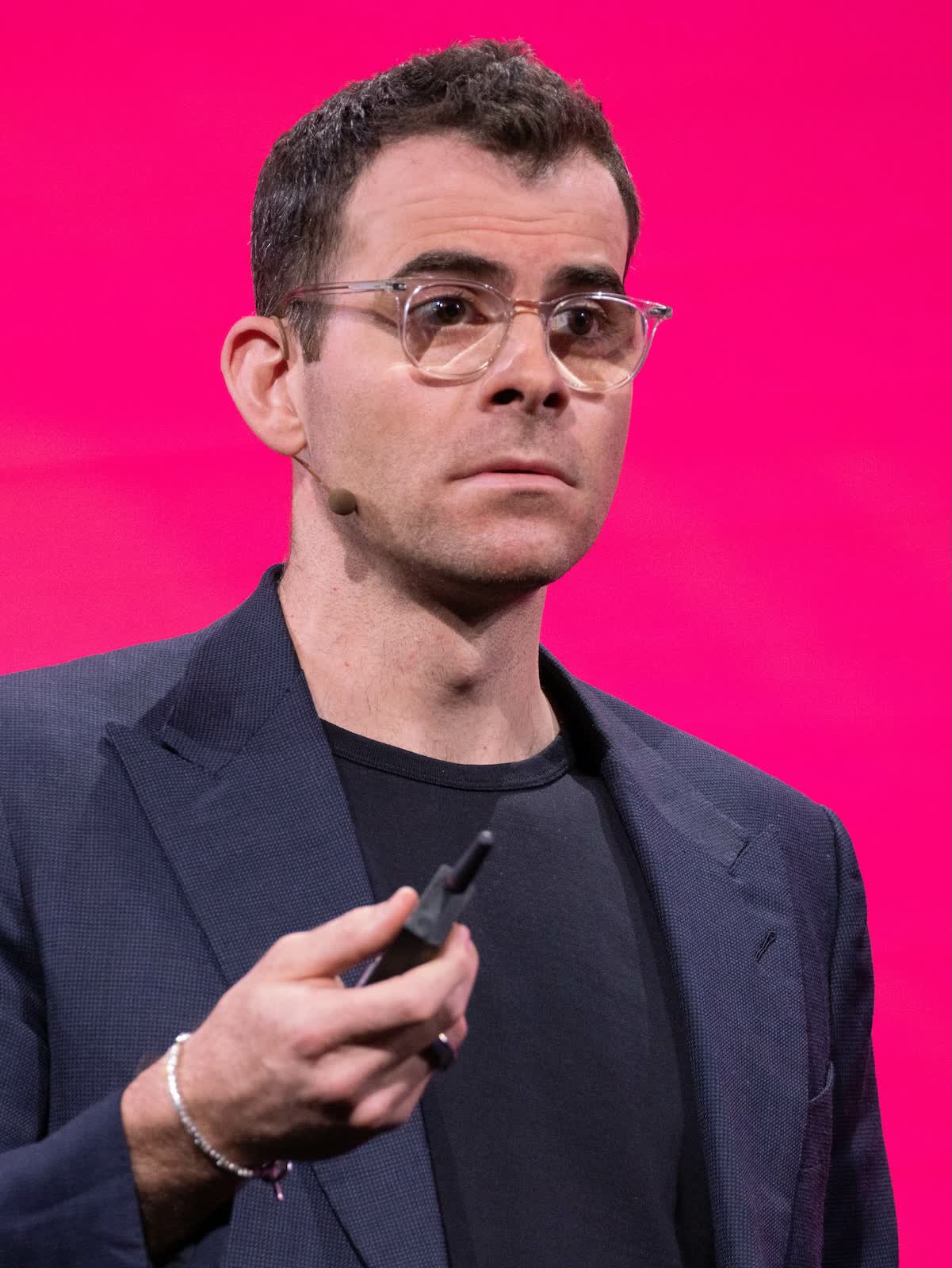
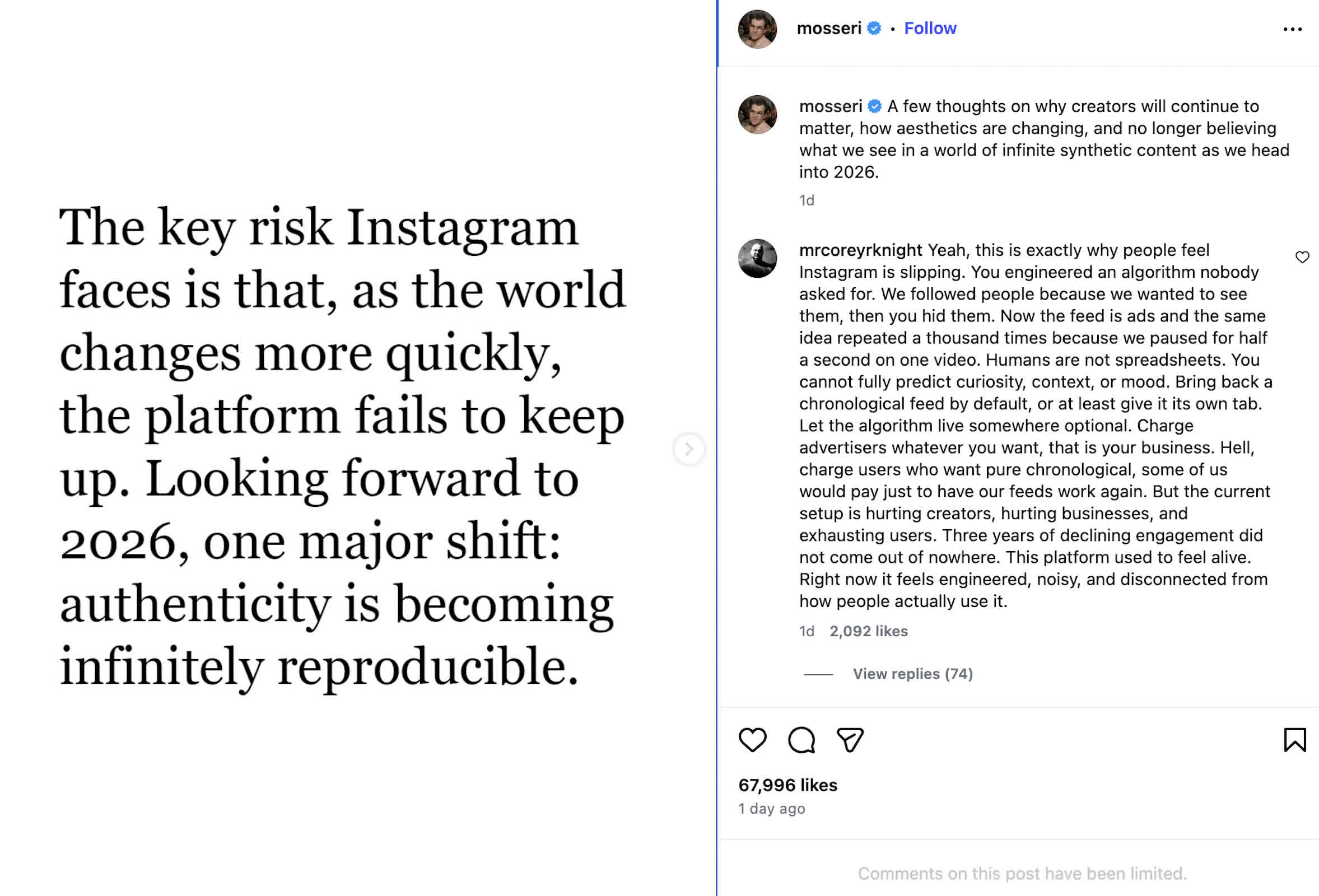
Mosseri said the traditional, more intimate feed was "dead" years ago. What replaces it now, he suggested, is a world in which users must adapt to a new default assumption: that not everything they see is real. "For most of my life I could safely assume photographs or videos were largely accurate captures of moments that happened. This is clearly no longer the case and it's going to take us years to adapt," he wrote.

He described a shift from trust to verification as the foundation of visual culture online. "We're going to move from assuming what we see is real by default, to starting with skepticism. Paying attention to who is sharing something and why. This will be uncomfortable – we're genetically predisposed to believing our eyes."

Also read: More than 20% of YouTube's feed is now "AI slop," report finds

Mosseri's comments reflect a growing unease among technology observers about the collapse of photographic truth. Last year, The Verge's Sarah Jeong wrote that the default assumption about a photo is about to become that it's faked, because creating realistic and believable fake photos is now trivial to do. Mosseri's reflections, though focused on Instagram's role, echo that prediction.

The Instagram chief outlined what he described as a necessary evolution in platform design: "We need to build the best creative tools. Label AI-generated content and verify authentic content. Surface credibility signals about who's posting. Continue to improve ranking for originality."
These steps, if implemented, would shift more responsibility to Meta's systems for distinguishing between synthetic and authenticated visual media. This problem is increasingly pressing as generative AI models drive new waves of image production at scale.

He also addressed the ongoing debate over the aesthetics of AI imagery, pushing back on the idea that all generative output should be dismissed as low-value filler. People like to complain about AI slop, but there's a lot of amazing AI content, Mosseri claimed, though he gave no examples or specific reference to Meta's own AI initiatives.

In a subtle critique of conventional camera makers, he argued that companies chasing hyperrealistic effects – tools that can "make everyone look like a pro photographer from 2015" – may be missing the larger transformation already underway.

The presentation concludes a year in which discussions about authenticity, attribution, and misinformation in visual media intensified across the tech industry. As 2026 begins, Mosseri's warning – that audiences must learn to see with skepticism first – signals not just a design challenge for social platforms but a cultural recalibration of what counts as proof in an age of infinite synthesis.

Permalink to story:

 
Yes, I realized about 4 years ago that instagram doesn’t care at all anymore what I need. They have all the data and profiling in the world to figure out what I like to see, only to ignore it altogether and push down my throat whatever else they please, but most importantly, reel spam, above all. Memes, pets, cutsie bullcr@p. You only liked Nordic landscape stills so far, but how about a video of a dog eating junk now? Or a babe driving a Lamborghini?

Sometimes I try to fight it and press that “not interested” button HUNDREDS of times (I’m not kidding), then it gets better for a while, but a few months and the memes and puppies are back.

And that’s precisely why I don’t scroll at all on instagram anymore, so good job.
 
Where I live, we're constantly bombarded by scam texts, robocalls, mitma, impersonation scam and so on. now looking back, it has always evolved. and thanks to AI it's gonna get worse.

let say 22 years ago, it started with fake web ads, pop-ups and what not.
then soon after, you receive it in your email mailbox. the word spam becomes commonplace, and email providers put a junk folder just for it.
didn't take long before we started receiving spam text messages and robocalls.

the latest crap I have to watch out right now is impersonation scam. let say someone pretends they have my package and say it was misrouted and want me to pay. or let say someone cloned your public instagram and made a new fake profile, then use it maliciously. or the most common one is someone stole your videos in youtube and passes it off as their own.

what I'm trying to say is that in my 20 years of using the internet: in general I just can't trust what I see. in instagram, it's even worse because the algorithm now shows you feed of account you don't follow.

argues that technology has permanently blurred the distinction between authentic and artificial imagery – and that Instagram, once defined by its personal photo diaries, has already moved beyond that stage.

well spoken. it WAS a personal photo diaries app, but now it has turned into something else. don't even get me started on youtube.

As 2026 begins, Mosseri's warning – that audiences must learn to see with skepticism first
duh

 
Never have owned an Instagram account, much less appeal to open one now. AI has broken the internet, where at one point it united real people together, now it’s become a hive mind of zombies.
 
When I meet a person with enough product in their hair, I assume nothing that is happening is real, so I've always handled the internet with rubber gloves. It's the convergence of money and words so just plug your ears and get what you came for, like costco.
 
So much for “I saw it with my own eyes” or “this photo proves you were at the location of the crime”. It’s good to be a defense attorney….”prove it’s not AI…”
 
The wild part is that the solution seems to be "trust the platform" to tell you what’s real, which is… bold. We’re supposed to be skeptical of images, but fully confident in whatever credibility badge the algorithm hands out. That's very Meta... of Meta.
 
This CEO hasn't said anything that everyone who visits YouTube doesn't already know and hasn't known for several years. Did he think he was being profound?
 
Back