
What just happened? Things are going from bad to worse for Intel. In addition to the nightmare that is the Raptor Lake CPU crisis and the backlash over eliminating 15,000 jobs, the company is now being sued by shareholders over accusations it fraudulently concealed problems in its foundry business.

The Construction Laborers Pension Trust of Greater St. Louis, a Missouri-based pension fund, filed the lawsuit against Intel on behalf of other investors in a San Francisco federal court on Wednesday. The proposed class action names Chief Executive Officer Pat Gelsinger and Chief Financial Officer David Zinsner as co-defendants.
The suit claims that Intel hid problems relating to its chip-manufacturing business that led to it posting weak results, making mass layoffs, suspending its dividend, and causing its market cap to fall by $32 billion.
According to the lawsuit, Intel told investors that designing and manufacturing its own chips through its foundries would allow it to save $8 to $10 billion exiting 2025. "Unbeknownst to investors, however, Intel's foundry business was floundering, costing billions of dollars more than investors had been led to believe even while revenue growth in the division actually declined during the Class Period," the suit states, referring to a period from January 25 to August 1, 2024.
Intel recently reported revenue of $12.83 billion for the second quarter, down 1% from the previous year, missing analyst expectations of $12.94 billion. Chipzilla also revealed a $1.61 billion net loss and lowered its forecast for the current quarter, leading Gelsinger to call the Q2 financial performance "disappointing." Shares fell 26% in a single day to their lowest point since 2013, making it the worst trading day for Intel since 1974.
The suit also highlighted statements from the defendants that showed the "purported success" of Intel's business units, including its foundry model. The shareholders say that these statements were false and misleading, and failed to reveal that the foundry business was experiencing rising costs and more capital expenditures than investors had been led to believe, resulting in $7 billion in losses in 2023.
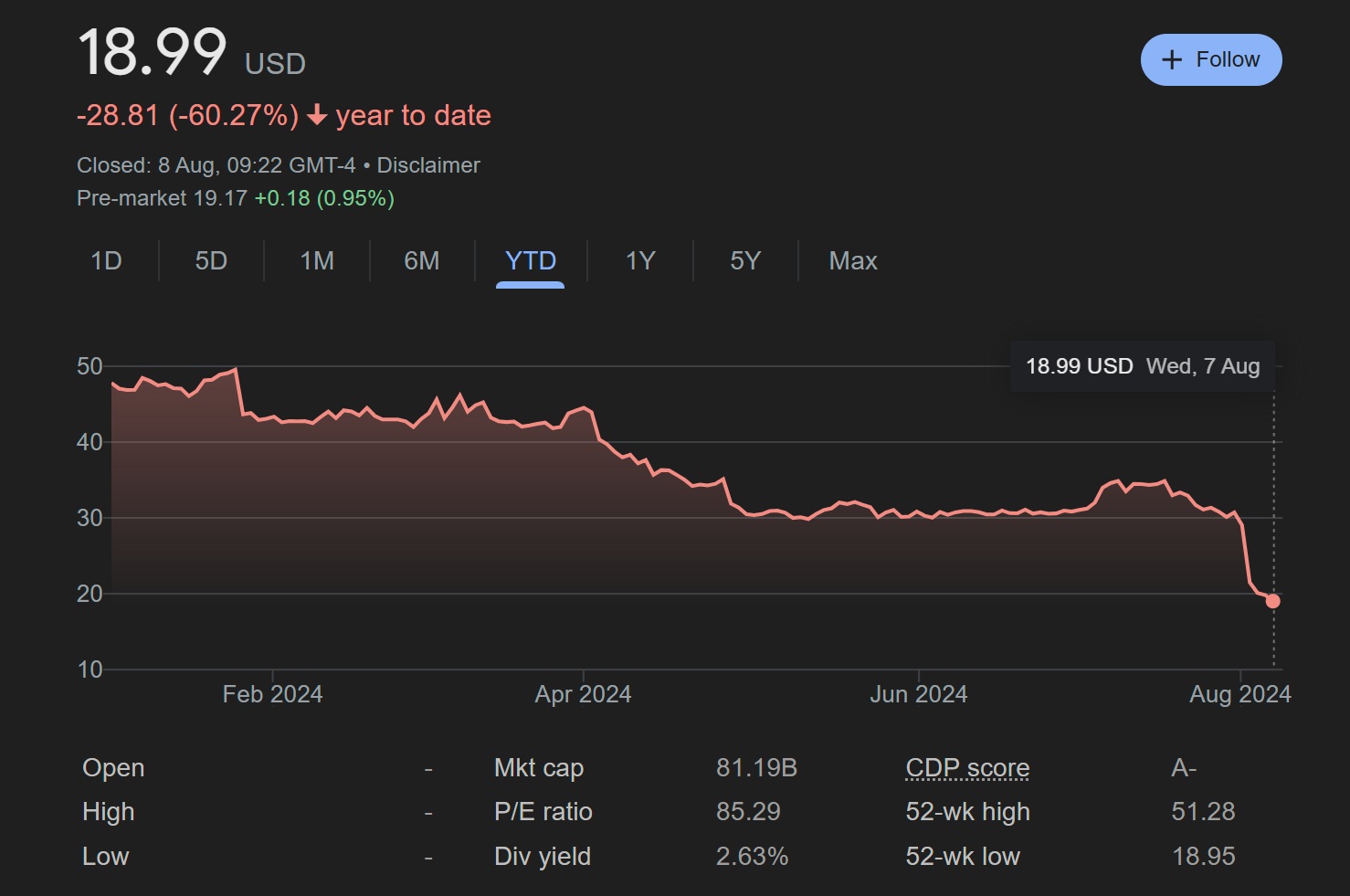
Intel's year-to-date share price
Intel's share price is currently at $18.99. It was close to $50 at the end of January, marking a decline of around 62% in just over six months.
In other Intel news, it's just been revealed that the company turned down the chance to acquire a 15% stake in OpenAI for $1 billion back in 2017 and 2018, potentially causing it to miss out on billions of dollars.
Intel faces shareholder class-action lawsuit for allegedly concealing foundry business problems


