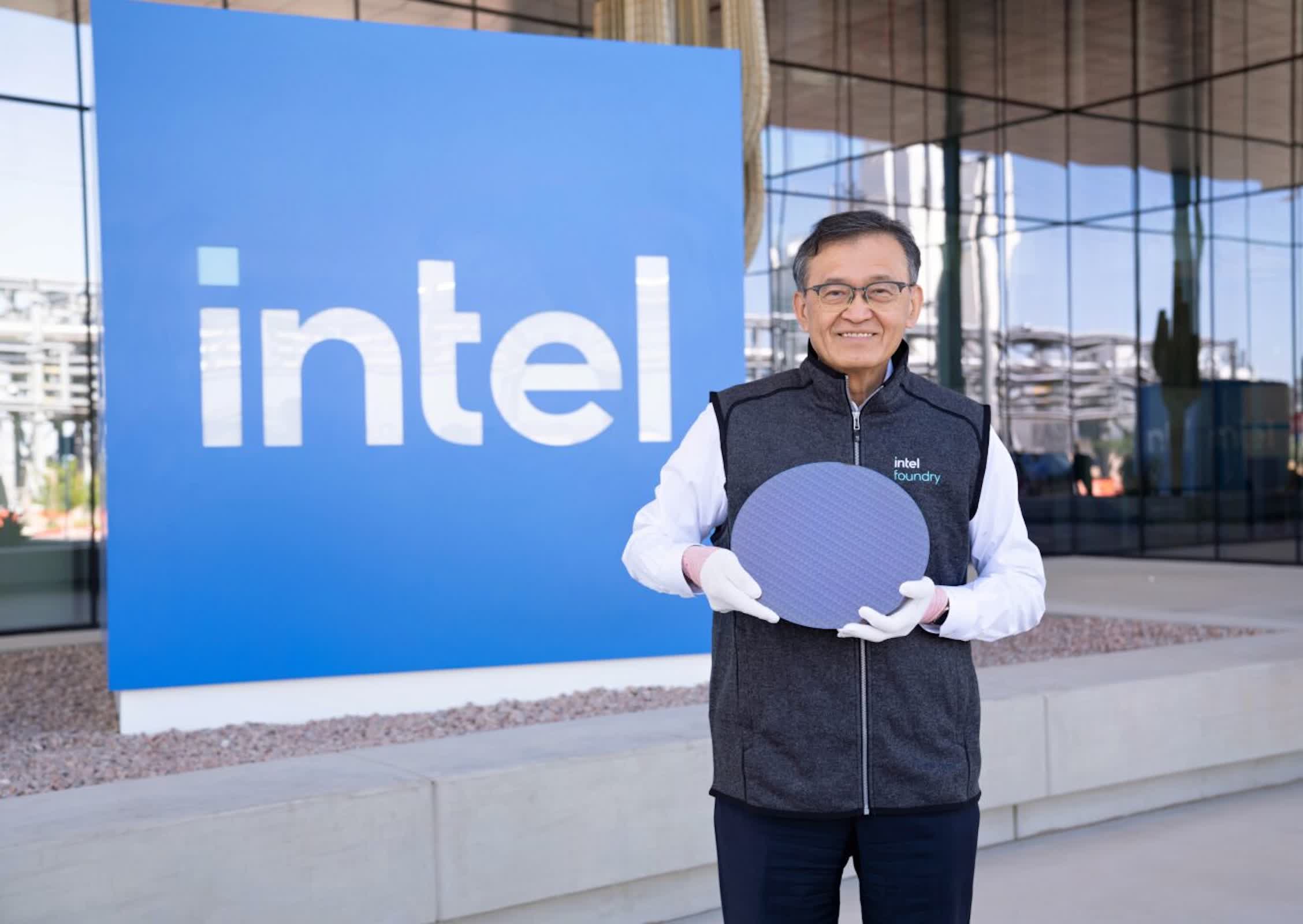
Intel says it's selling every chip it can produce, so it's feeding AI servers first

Skye Jacobs

Posts: 1,913   +58
Staff

Intel's fourth-quarter results reflected rising demand for its AI and data center products, offset by persistent supply constraints that continue to pressure its consumer segment. The semiconductor giant reported $13.7 billion in revenue for Q4 2025, down 4 percent year over year but near the high end of its guidance. Annual revenue fell slightly, from $53.1 billion to $52.9 billion.

The mixed results highlight a fundamental tension within Intel's business: the company is selling nearly every chip it produces, yet still can't keep up with demand. Supply shortfalls have forced executives to prioritize high-margin segments while rationing production of consumer processors.

Intel's data center and AI division was a standout performer, posting quarterly revenue growth of nine percent and annual growth of five percent. Gains came as cloud providers and enterprise customers increased demand for new Xeon and AI accelerator lines optimized for massively parallel workloads. In contrast, Intel's client computing group – responsible for Core processors, Arc graphics, and other personal computing products – saw revenue decline seven percent for the quarter and three percent for the year.
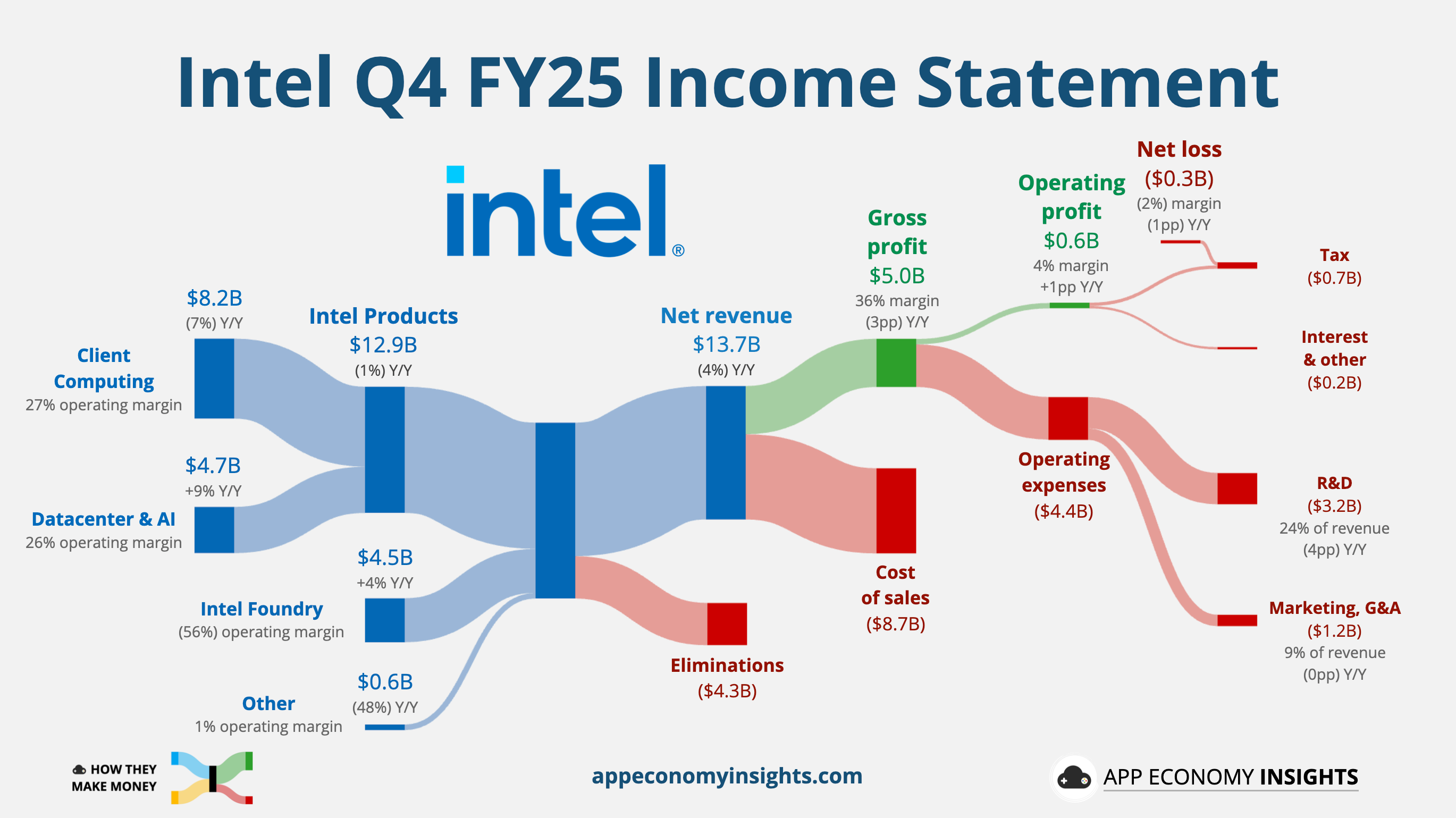
Credit: App Economy Insights

The imbalance has led management to shift manufacturing priorities toward the business segment, generating stronger margins. Chief Financial Officer David Zinsner said Intel is focusing its internal wafer supply on data center products while outsourcing a larger portion of consumer chip production to external foundries such as TSMC.

That prioritization could lead to potential shortages or pricing pressure for Intel's upcoming consumer lineup, including the new Core Ultra Series 3 processors, codenamed Panther Lake. Unlike their predecessors, which relied heavily on TSMC fabrication, these chips are being produced mostly in-house.

Zinsner acknowledged that Intel cannot fully abandon the client market, but the company is shifting as much production as possible toward data center products. The decision reflects where demand is strongest and most profitable at a time when every usable wafer counts.
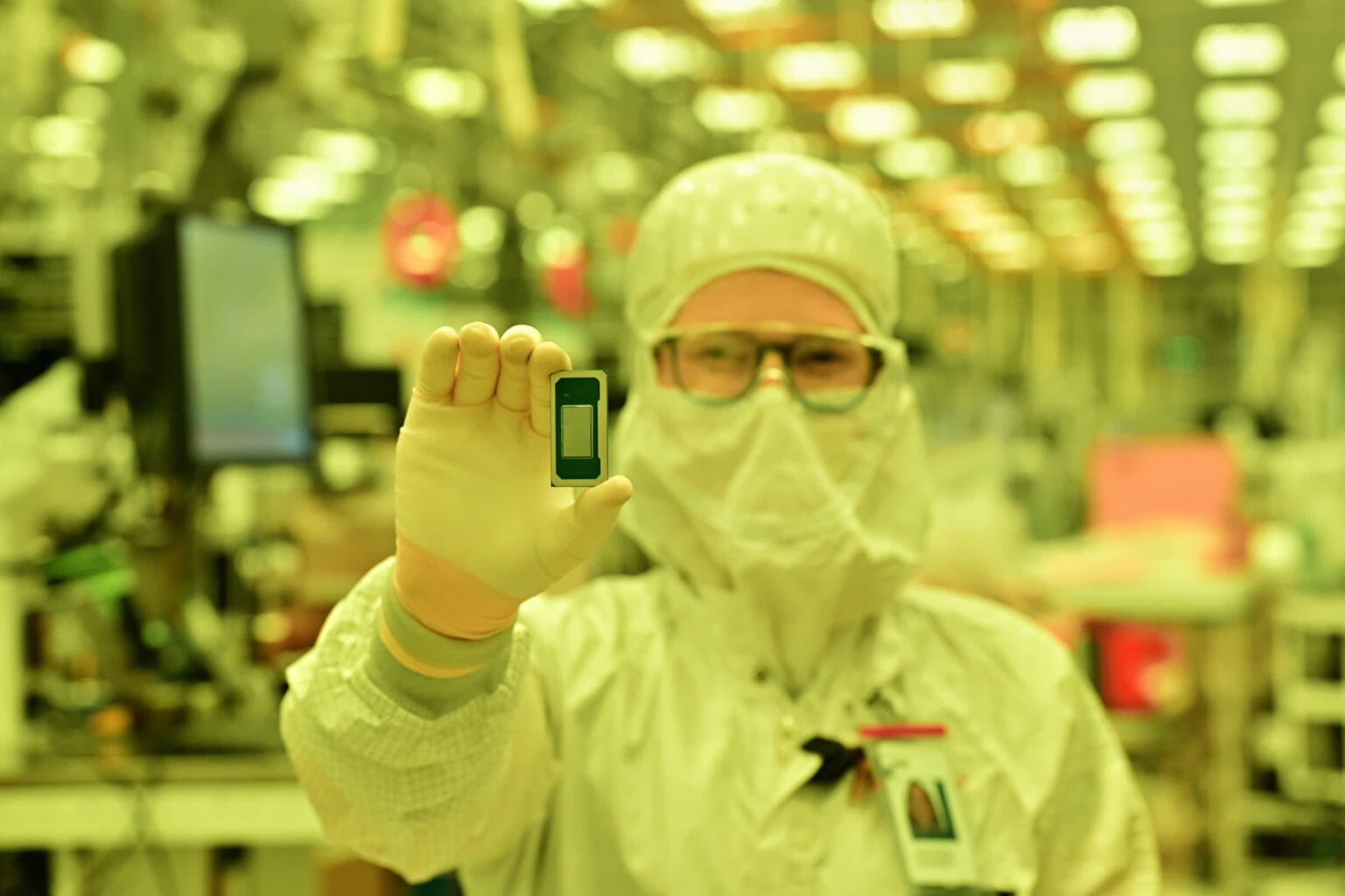
Intel's production problems stem largely from its 18A node, the advanced chipmaking process intended to help the company regain technological leadership. The transition has been uneven, with yield rates below expectations. Intel says yields are improving by seven to eight percent each month, but those gains come from a low baseline, as reports from mid-2025 indicated that only about 10 percent of early 18A wafers met quality thresholds.

While CEO Lip-Bu Tan described current yields as "in line with internal plans," he acknowledged they remain below desired levels. Both Tan and Zinsner indicated that output should recover in the second quarter of 2026, with the first quarter representing the "trough" of supply constraints.

Intel is simultaneously preparing its next fabrication nodes and architectural overhauls. Work continues on the refined 18A process and its successor, 14A, which could allow Intel's foundries to serve third-party customers for the first time in decades. The company expects to begin securing commitments from external partners between late 2026 and early 2027, shaping future capacity planning.

On the design front, Intel plans to release its next-generation Nova Lake architecture at the end of 2026. The platform will unify Intel's desktop and laptop processor families and use the 18A process for at least part of its production.

Despite supply challenges, Intel demonstrated resilience in Q4, driven by strong demand for AI and data center products. The company now faces the dual task of ramping production to meet consumer needs while preparing its next-generation nodes and architectures, setting the stage for growth in 2026 and beyond.

Permalink to story:

 
In the era of AI, the current x86 CPU as we know it is no longer the leader. Therefore, it needs a major reform to remain relevant. This includes integrating L4 HBM4 cache with capacities in the gigabyte range and ensuring fast access to the CPU. So, Intel should return to its memory manufacturing origins to archive competitive prices for the HBM memory.
For office applications, simply taking a traditional ("messy") design, printing it on a 2nm process, and call it a 'Lake' is ok but does not represent pioneering technology.
 
In the era of AI, the current x86 CPU as we know it is no longer the leader. Therefore, it needs a major reform to remain relevant. This includes integrating L4 HBM4 cache with capacities in the gigabyte range and ensuring fast access to the CPU. So, Intel should return to its memory manufacturing origins to archive competitive prices for the HBM memory.
For office applications, simply taking a traditional ("messy") design, printing it on a 2nm process, and call it a 'Lake' is ok but does not represent pioneering technology.
Man, what are you smoking? Keep in mind, the article you are commenting on prescribes Intel as selling every CPU they can make to the AI machine, so WTF are you talking about that the x86 CPU is no longer the leader?
 
I hope this AI bubble pops soon and leaves companies losing billions.
Yes to a correction that separates useful tech from overhyped junk; that makes sense. But I’d suggest rooting for widespread losses doesn’t. Losses of that magnitude don’t just hit executives—it means layoffs, pulled investment, and knock-on effects that hurt the entire economy.
 
Yes to a correction that separates useful tech from overhyped junk; that makes sense. But I’d suggest rooting for widespread losses doesn’t. Losses of that magnitude don’t just hit executives—it means layoffs, pulled investment, and knock-on effects that hurt the entire economy.
As you are saying.
The sooner it pops the better.
The longer is blowing up the bigger boom it will do when it pops and the harder it will hit.
 
Man, what are you smoking? Keep in mind, the article you are commenting on prescribes Intel as selling every CPU they can make to the AI machine, so WTF are you talking about that the x86 CPU is no longer the leader?
Intel has always been a decade behind. When GPUs became relevant to gaming, they didn't have one. Now that GPUs are becoming relevant to AI, they are just starting to produce GPUs suitable for gaming. They are old and have become too rigid, much like IBM, which reportedly needed six months to send an empty box from one department to another. They no longer innovate. They have a chance to innovate because they possess the latest ASML machine, yet instead of rushing to demonstrate high yields to the market, they wait for demand just to get off the chair. Nvidia has a $4.5 trillion valuation, while Intel's valuation is nearly half that of Instagram's. (A website’s value is around $70 billion, and Intel's is around $40 billion). Does this sound like a leading company to you?
 
As you are saying.
The sooner it pops the better.
The longer is blowing up the bigger boom it will do when it pops and the harder it will hit.
Perhaps. But a crash isn’t an inevitability. I think we could also see “deflation,” where hype cools, unrealistic valuations come down, weak business models fail, and useful AI products stick around. That would be the best outcome for everyone IMHO.
 
Everyone says the AI Bubble will burst but who knows if it will or not. I think we are stuck with it for a while yet. Maybe in a year or two things will start getting back to normal. Just a head's up though even if the AI bubble bursts all of these companies will come back crawling to the poor consumers wanting our money now because all of a sudden, our consumer money is ok again. I say don't buy from them right away and let them sweat it out for a while. You have to know that after all of these prices have been skyrocketing and they are on a gravy train of money do you actually think they will want to lower the prices to where we can afford stuff again. No, they will not want to do that, and this is why I said let them sweat it out for a while and just maybe they might think oh maybe we should lower the prices slightly to sucker them to come back to us with their money.

 
Intel has always been a decade behind. When GPUs became relevant to gaming, they didn't have one. Now that GPUs are becoming relevant to AI, they are just starting to produce GPUs suitable for gaming. They are old and have become too rigid, much like IBM, which reportedly needed six months to send an empty box from one department to another. They no longer innovate. They have a chance to innovate because they possess the latest ASML machine, yet instead of rushing to demonstrate high yields to the market, they wait for demand just to get off the chair. Nvidia has a $4.5 trillion valuation, while Intel's valuation is nearly half that of Instagram's. (A website’s value is around $70 billion, and Intel's is around $40 billion). Does this sound like a leading company to you?
Intel wasn't a GPU manufacturer? AMD didnt have one either, neither did IBM, or Motorola. Complaining Intel didnt have GPU ready is like complaining Ford doesnt have a camper trailer ready for you to buy with your truck. Intel was and still is a CPU company first, them not having a GPU at some arbitrary point in the 90s doesnt mean they were always "a decade behind". Intel consistently led in CPU performance, the P5 Pentiums spent several years unmatched. Cyrix went out of business, AMD had to buy another company and utilize their tech to make a competitor. Intel basically had 0 competition for an entire decade from the launch of core 2 to the launch of zen 2, and even then it wasnt until zen 3 when AMD finally competed on a core by core basis in productivity, and the x3d for them to consistently take the gaming crown.

Moving on from this bizarre red herring, you seem to be operating under the idea that CPUs are now obsolete...for some reason? The article here states that Intel is selling every CPU they can make to power these AI servers, so on what basis are you making any of these claims that the CPU is now obsolete? Sure seems like the industry disagrees with you and has the multi billion dollar sales to back it up.
 
Perhaps. But a crash isn’t an inevitability. I think we could also see “deflation,” where hype cools, unrealistic valuations come down, weak business models fail, and useful AI products stick around. That would be the best outcome for everyone IMHO.
I think your’re right on the money on this part. Ai has come to stay - but we’ll see AI services consolidated into fewer providers once the «race» ends. I think OpenAI will crumble, snd then we’re left with «the big three» ..again
 
Last edited:
I think your’re right on the money on this part. Ai has come to stay - but we’ll see AI services consolidated into fewer providers once the «race» ends. I think OpenAI will crumble, snd then we’re left with «the big three» ..again
Any corpo wants to be one of "The Big Three" .. so they spend resources left and right.
90% of that wont generate enough profit to return spent resources.
Consequences will hit not only those too eager FOMO driven corpos, but the whole industry. Regardless if this round of racing ends with big burst or "just" the deflation.
 
As if a consumer wants to buy an Intel cpu right now.
They need to get rid of that terrible E-core P-core nonsense and all the scheduling issues it gives, catch up on power consumption and efficiency, implement a feature similar to 3D v-cache AND be competitively priced.

And even if they got all that right I'm not jumping in because they've lost my trust completely. And I don't see Intel with good genuine advertising or consumer interest, so good luck with the AI stuff, Intel! You'll probably be too late for that too when the bubble pops.
 
I got a really nice deal on Newegg. I traded in 13700k which gave me a lot of headache, for ultra 265k. I got 200 bucks from my old CPU, which made final price for the new one only 100 dollars.
Something tells me that these deals are going away as AI needs more and more hardware.
 
Great now cure every cancer with it.
What's that you say? It's to feed deepfakes to twitter? Oh okay.
Using AI to replace employees and tricking people to buy more products is a lot more profitable than curing cancer though.
Unfortunately, one excludes another eventually. But that is what they will learn too late.
 
I got a really nice deal on Newegg. I traded in 13700k which gave me a lot of headache, for ultra 265k. I got 200 bucks from my old CPU, which made final price for the new one only 100 dollars.
Do not tell me you have put the 265k into the board where 13700k used to be.
 
Losses of that magnitude don’t just hit executives—it means layoffs, pulled investment, and knock-on effects that hurt the entire economy.
The only growth in the US economy is due to AI.
When the bubble pops the US economy will take a serious hit, if this happens at the same time as Europe selling off US bonds (if Trump makes any more moves on Greenland) prepare for a massive recession.
 
The only growth in the US economy is due to AI.
When the bubble pops the US economy will take a serious hit, if this happens at the same time as Europe selling off US bonds (if Trump makes any more moves on Greenland) prepare for a massive recession.
Nah, that’s a bit of a stretch I think. AI isn’t the only source of US growth. An AI correction will happen and it won’t automatically tank the entire economy. And a coordinated European dump of US bonds is pretty unlikely. Treasuries are still the global safe haven. Recessions happen and are a normal part of economic cycles, too. This scenario just stacks a lot of low-probability assumptions together IMHO.
 
Back