
Why it matters: Intel's new chips are more than technical upgrades – they're a statement. With Core Ultra 3 and Xeon 6+, built partly on its breakthrough 18A process, Intel is betting it can regain its edge in performance, efficiency, and relevance in a market reshaped by AI.
Given some of the challenges Intel has faced recently, there's been an even greater-than-usual interest in the company's next-generation chips – codenamed Panther Lake for PCs and Clearwater Forest for servers.
Not only are they the first to be manufactured with Intel Foundry's latest 18A process, but they also arrive at a time when much of the tech and semiconductor industries' attention has shifted away from Intel and toward companies like Nvidia and AMD, thanks to their strength in GPUs for AI acceleration. This shift has raised questions about whether Intel could regain its status as a critical player in the chip industry.
Based on the specs and early performance numbers Intel just unveiled for these two new chip families, the company made it emphatically clear that its products and manufacturing technology remain a significant force to be reckoned with.
The new Panther Lake mobile SoC – officially called Core Ultra 3 – builds on the architectural enhancements first introduced with Core Ultra 2 processors (Lunar Lake) and takes them further. At the same time, Intel addressed some of Lunar Lake's structural limitations, including limited configuration choices for CPU and GPU, as well as the fixed amount of on-chip system memory, giving PC builders much greater flexibility in designing and configuring systems powered by Core Ultra 3.
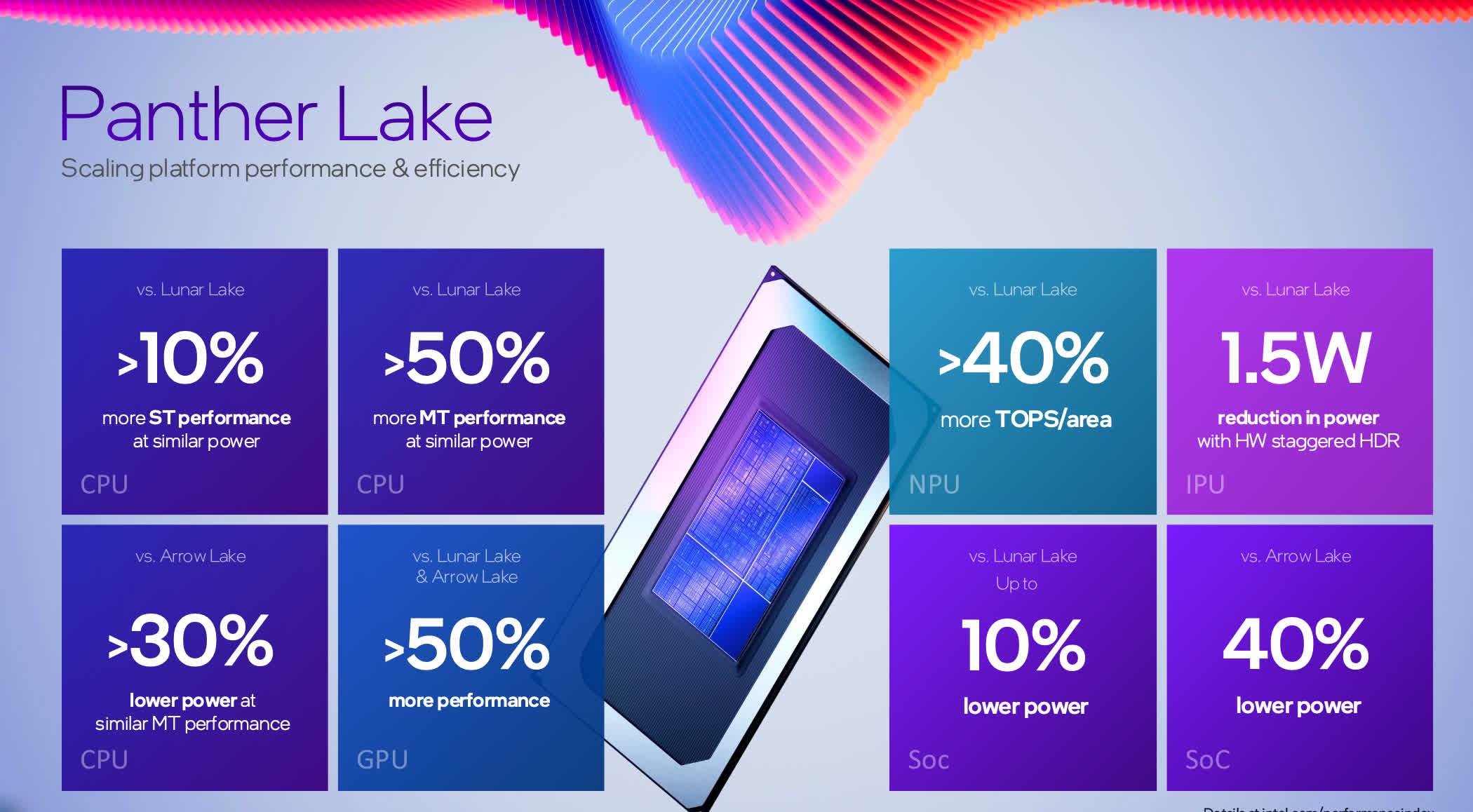
In addition, based on initial numbers provided by Intel, the new series leverages many of the performance improvements from the Core Ultra 200 series (Arrow Lake).
It's also worth noting that Intel is developing the software tools necessary to make Core Ultra 3 an appealing option for the growing robotics and edge computing markets.
The new Clearwater Forest server part, which Intel is calling Xeon 6+, also builds on previous designs while adding key architectural enhancements. Notably, both Xeon 6+ and Core Ultra 3 take advantage of Intel's latest efficiency-oriented E-core design, codenamed Darkmont.
The Xeon 6+, which Intel says will arrive in mid-2026, features only E-cores but includes up to 288 of them per socket – twice as many as the previous-generation Xeon 6.
This architecture includes substantial increases in cache and other in-depth improvements, contributing to a 17% higher number of instructions per clock (IPC). The Xeon 6+, which Intel says will arrive in mid-2026, features only E-cores but includes up to 288 of them per socket – twice as many as the previous-generation Xeon 6. As with past Xeon families, Intel is expected to introduce a separate line of processors featuring the latest performance-oriented P-cores, though none have been announced yet.
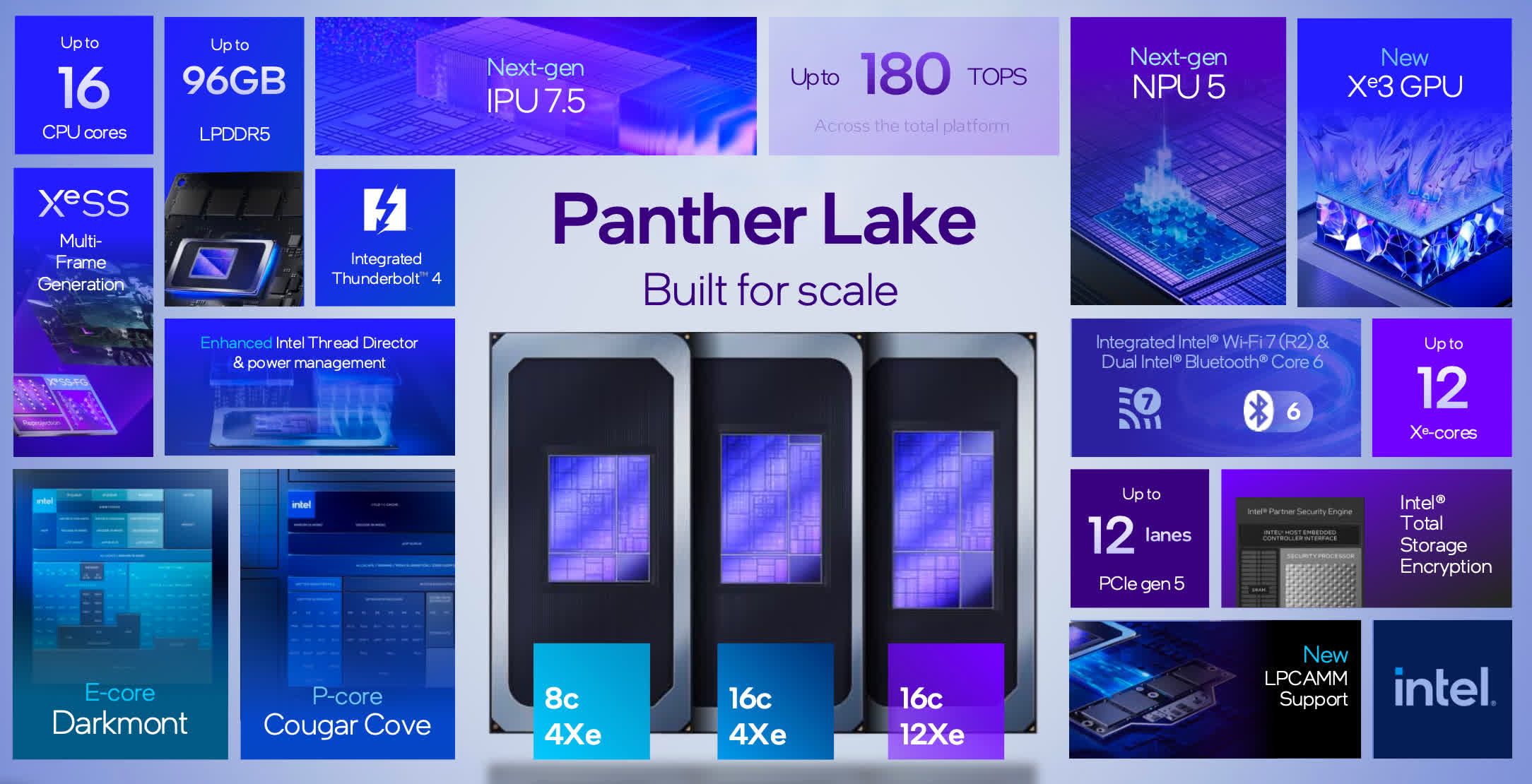
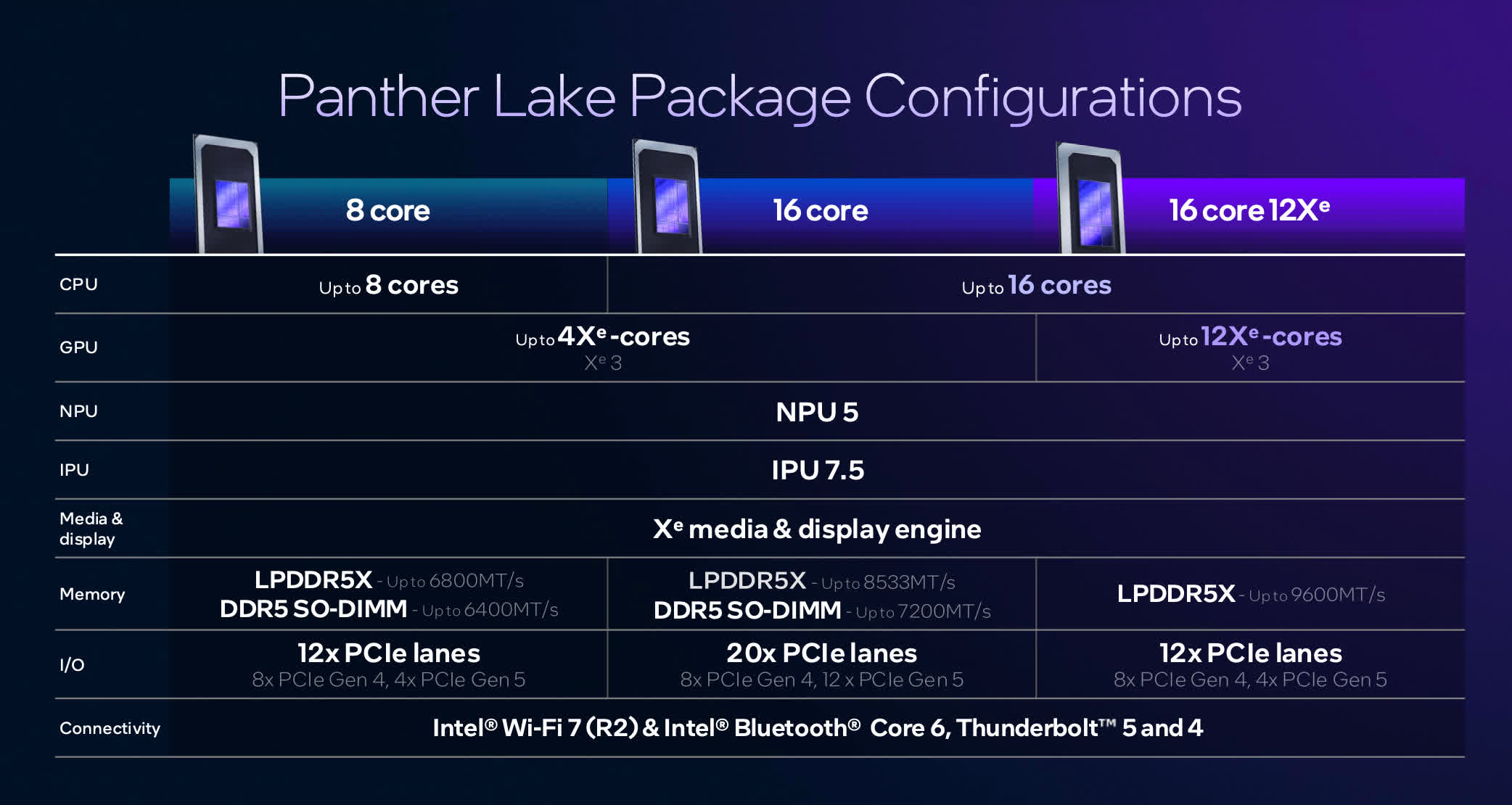
For Core Ultra 3, scheduled to ship later this year, one of the biggest advancements is the introduction of three base configurations with varying numbers of CPU and GPU cores.
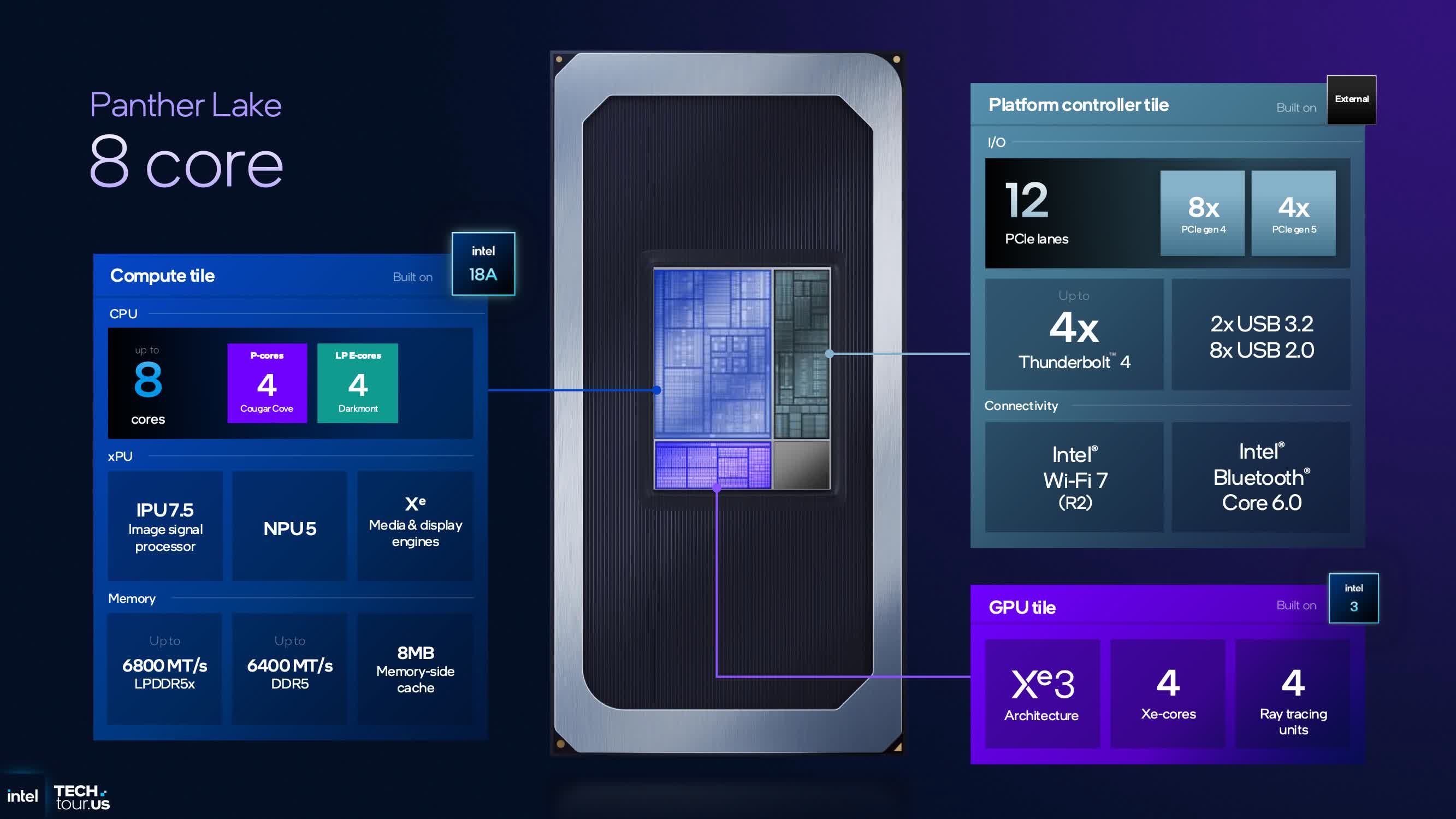

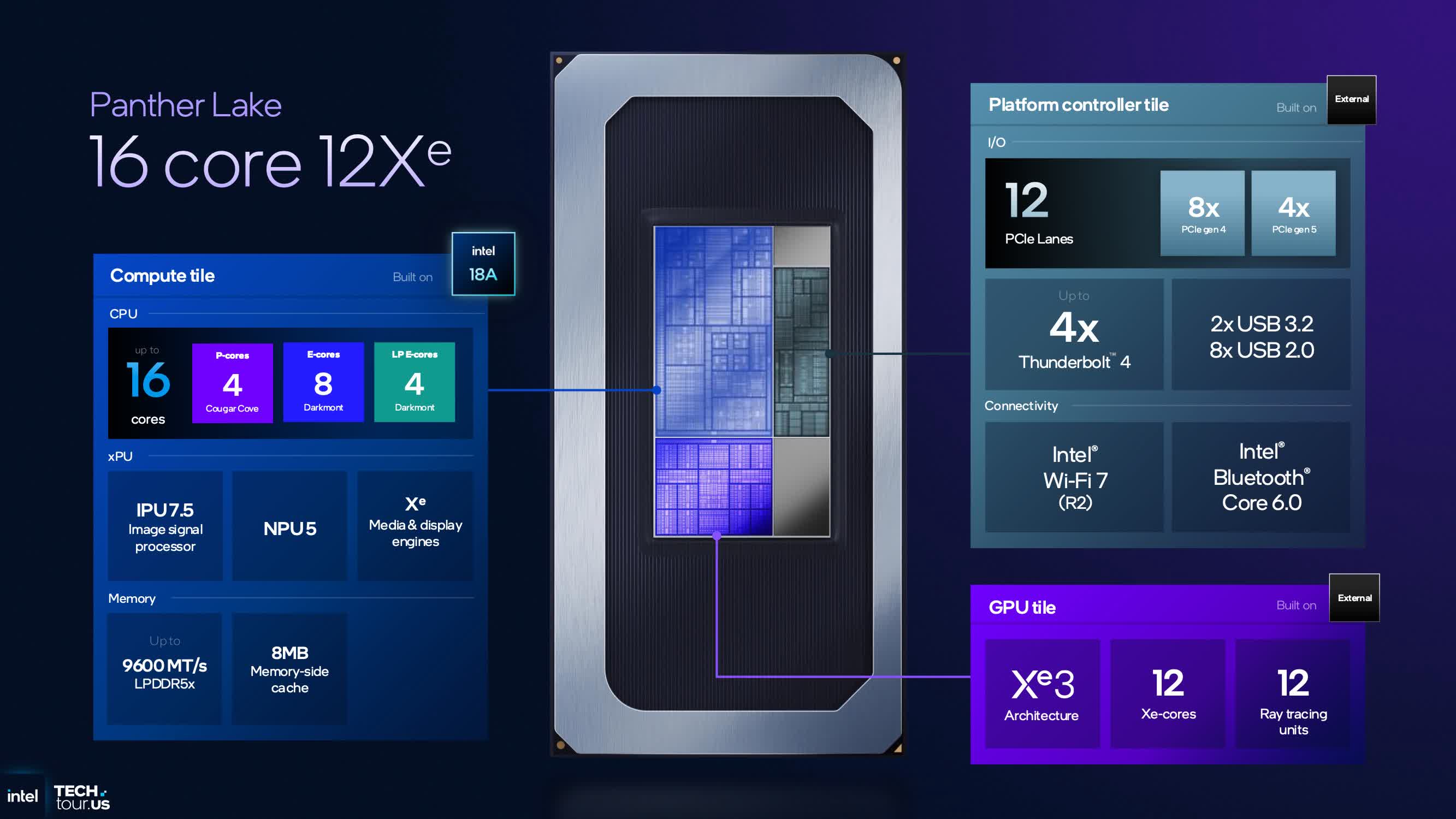
The baseline model features 8 CPU cores (4 E-cores and 4 P-cores), while the other two offer 16 cores (8 E-cores, 4 additional lower-power E-cores, and 8 P-cores). One of the 16-core models includes four of the newly enhanced Xe3 GPU cores, offering up to 50% better performance than the previous Xe2 GPU, according to Intel. The other features 12 Xe3 GPU cores for stronger all-around graphics performance in content creation and productivity applications. The baseline 8-core configuration includes 4 Xe3 GPU cores.
All Core Ultra 3 chips also feature an enhanced NPU (NPU5) for AI acceleration tasks. Delivering 50 TOPS, the new NPU offers only a modest performance increase over the 48 TOPS design in Core Ultra 2, but Intel emphasized that it's significantly smaller and more power-efficient.
Key to better AI performance is faster access to larger amounts of memory, an area Intel improved as well. The company removed the on-die memory used in Lunar Lake and now allows OEMs to include up to 128 GB of DDR5 SO-DIMMs or 96 GB of LPDDR5 memory. Memory access speeds have also been upgraded and tiered, ranging from 6,400 MT/s with SO-DIMMs to 9,600 MT/s with LPDDR5 on the 16 CPU / 12 GPU configuration.
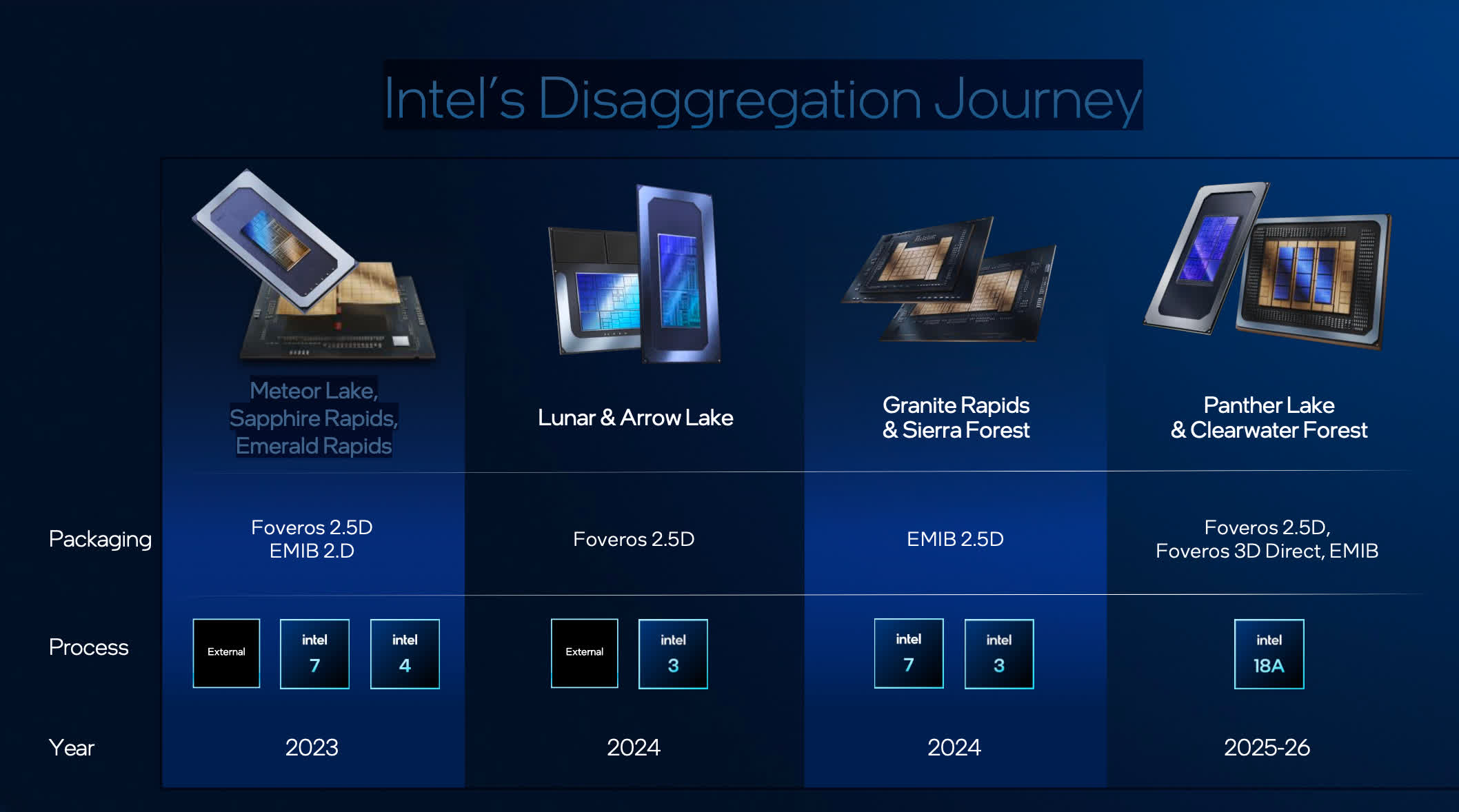
On the manufacturing front, both Core Ultra 3 and Xeon 6+ incorporate several unique Intel Foundry capabilities. Each includes components (specifically the CPU cores) built using Intel's 18A process technology.
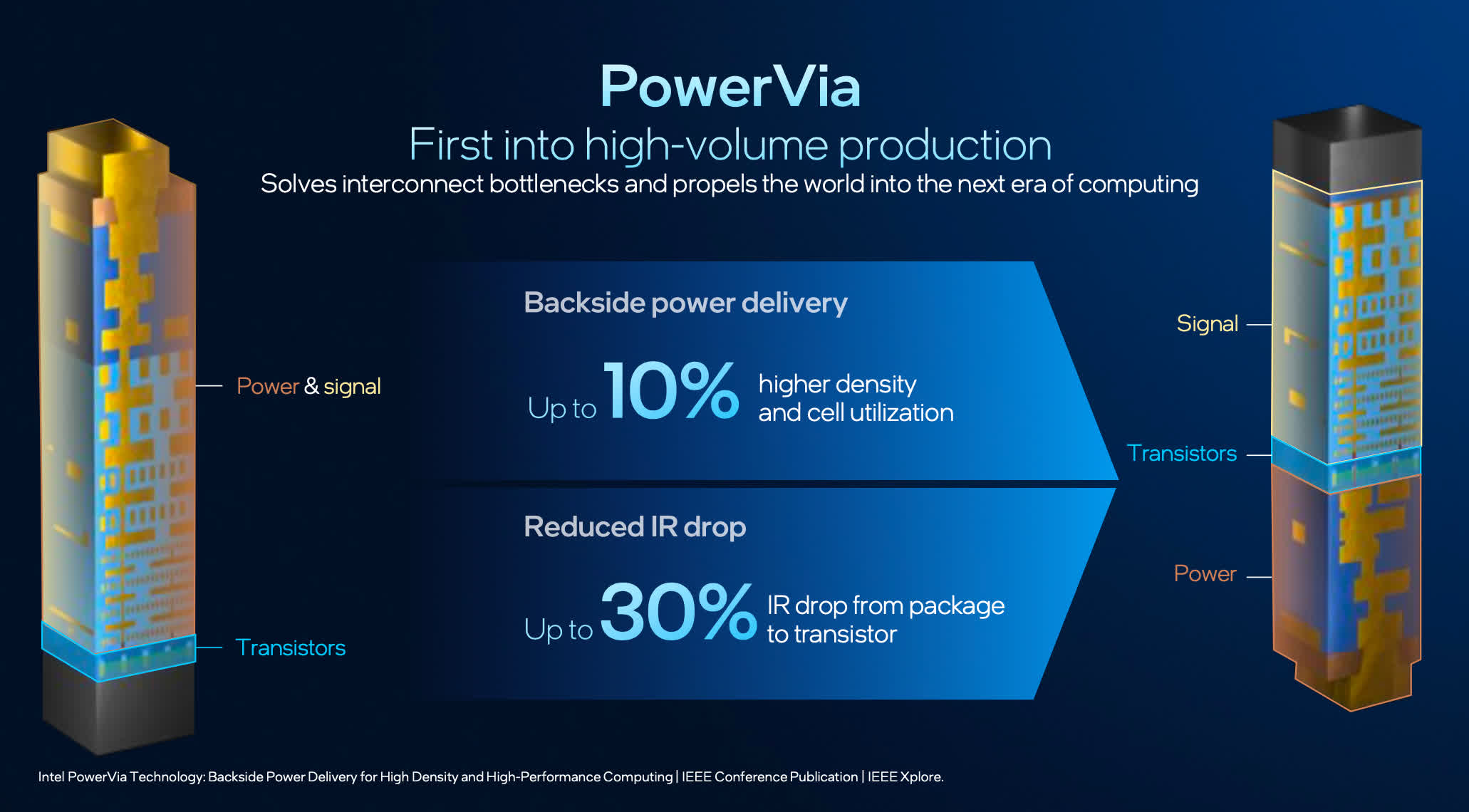
The 18A process features smaller transistors than previous nodes (for comparison, Intel's earlier lead process, Intel 3, is roughly equivalent to 30A) and introduces two key innovations: RibbonFET and PowerVia. RibbonFET, Intel's version of gate-all-around transistor technology, improves current flow compared to FinFET designs, while PowerVia delivers power to the backside of the transistor, improving efficiency and performance.
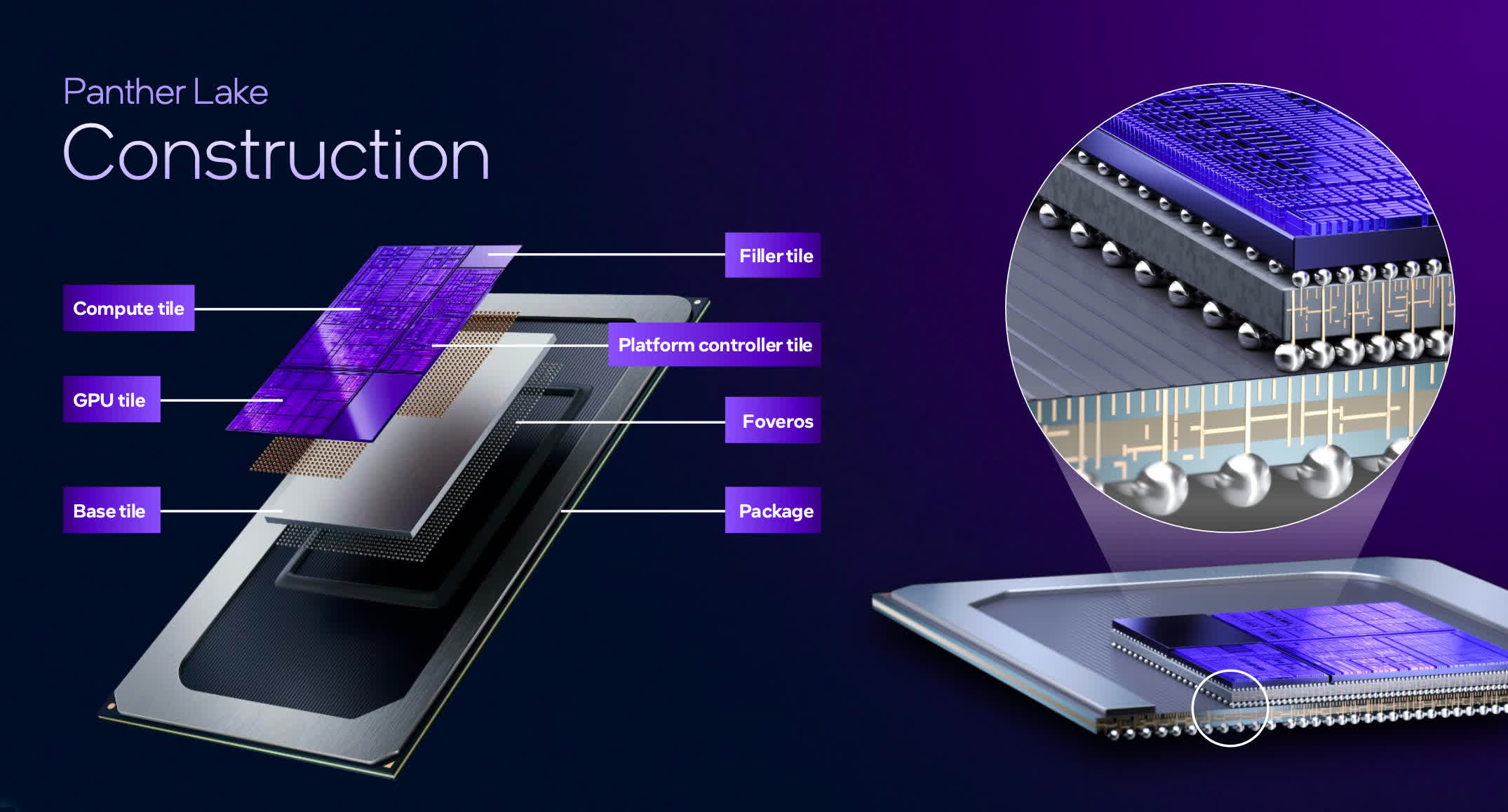
To be clear, not all parts of Core Ultra 3 and Xeon 6+ are built on 18A – only specific portions. Some elements continue to be manufactured by third-party foundries. Equally important, however, is that both chips benefit from Intel Foundry's leading-edge packaging technologies.
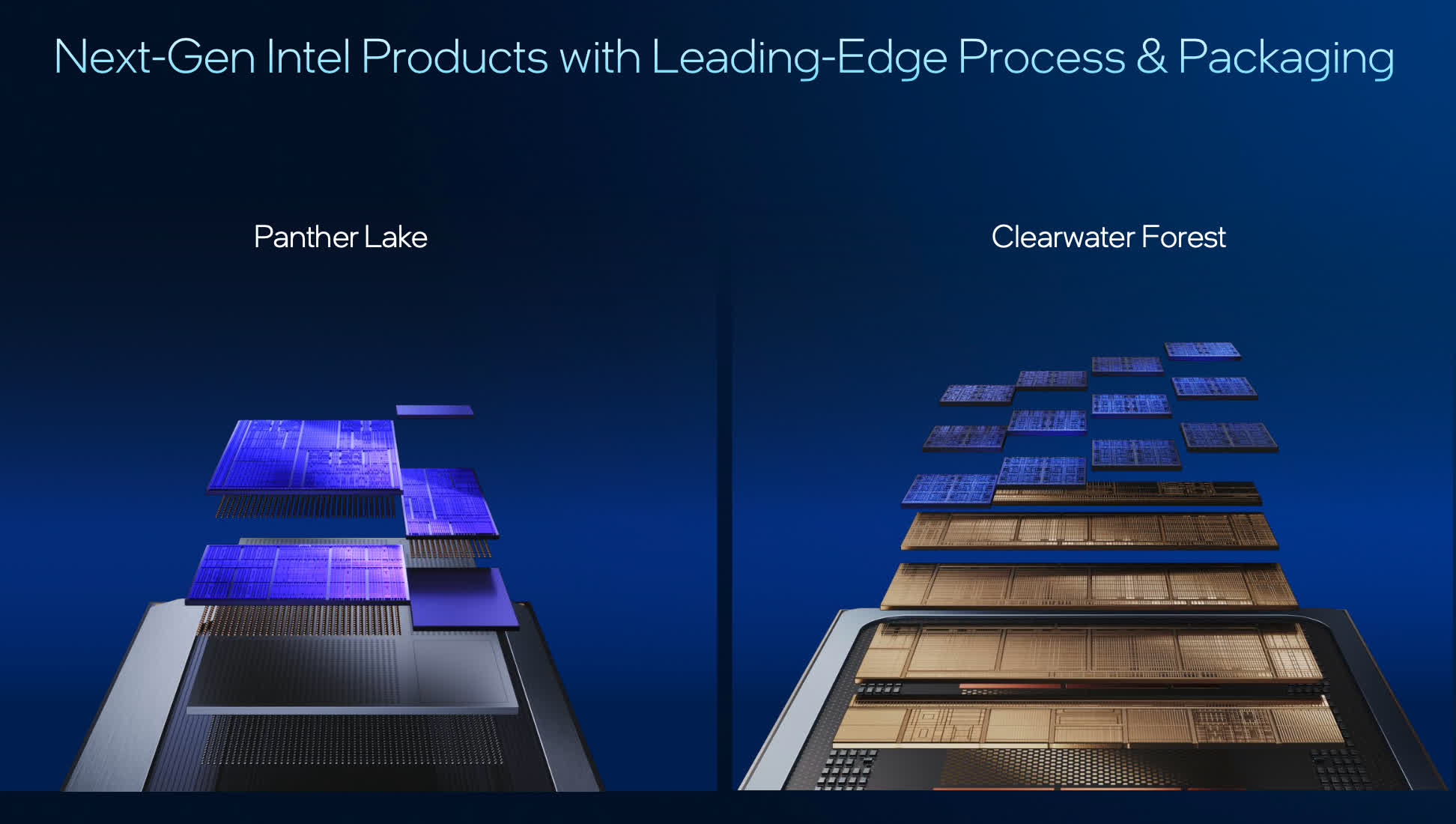
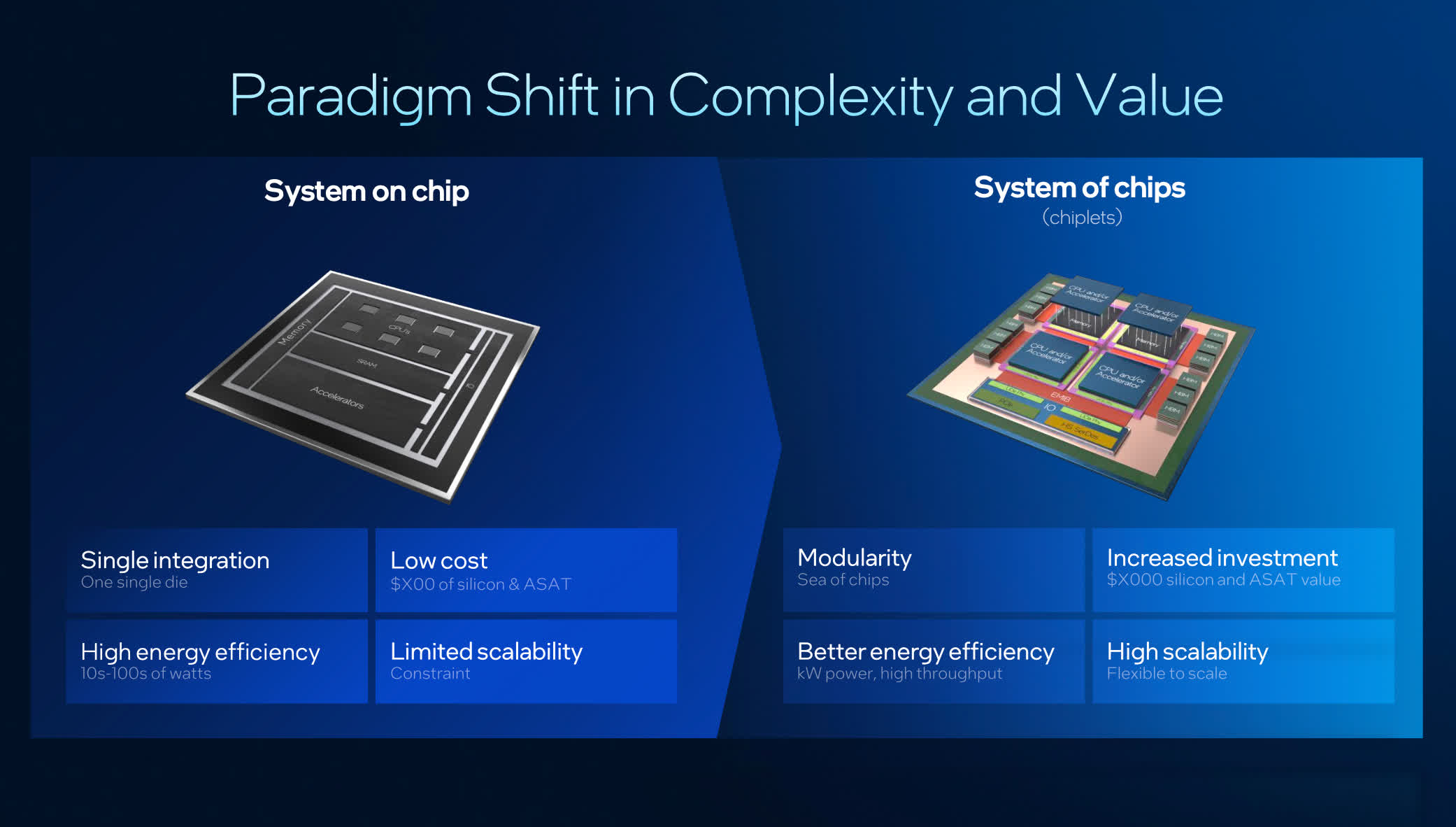
These enable complex chiplet designs that integrate multiple elements – such as CPU, GPU, and base tiles – into a single SoC package. In particular, the two chips leverage Intel's Foveros chip-stacking technology and high-speed EMIB connections. Together, these innovations play a central role in driving the performance and efficiency gains seen in Intel's latest chips and illustrate the kind of manufacturing advantages Intel Foundry can offer to third-party chipmakers.
Ultimately, these announcements show that Intel is not only able to execute on important advancements in both chip design and manufacturing, but that the company is listening to the demands of its customers and making the strategic adjustments needed to stay competitive. Despite the maturity of both the PC and server markets, new entrants continue to emerge, and for Intel to maintain a leadership position, it must deliver the kinds of capabilities that Core Ultra 3 and Xeon 6+ appear poised to provide.
Bob O'Donnell is the founder and chief analyst of TECHnalysis Research, LLC a technology consulting firm that provides strategic consulting and market research services to the technology industry and professional financial community. You can follow him on X @bobodtech
Intel signals strong comeback with next-gen Core Ultra 3 and Xeon 6+ chips


