IT worker tried to destroy an SSD with a drill and failed spectacularly

Shawn Knight

Posts: 15,818   +202
Staff member
Facepalm: A viral post on Reddit highlights the importance of proper data disposal practices. According to the story, a company's "IT guy" used a drill to destroy a solid-state drive before salvaging it. The problem? He drilled a single hole through the center of the casing, piercing the shell but never touching the small PCB inside – effectively making the attempt at data destruction useless.
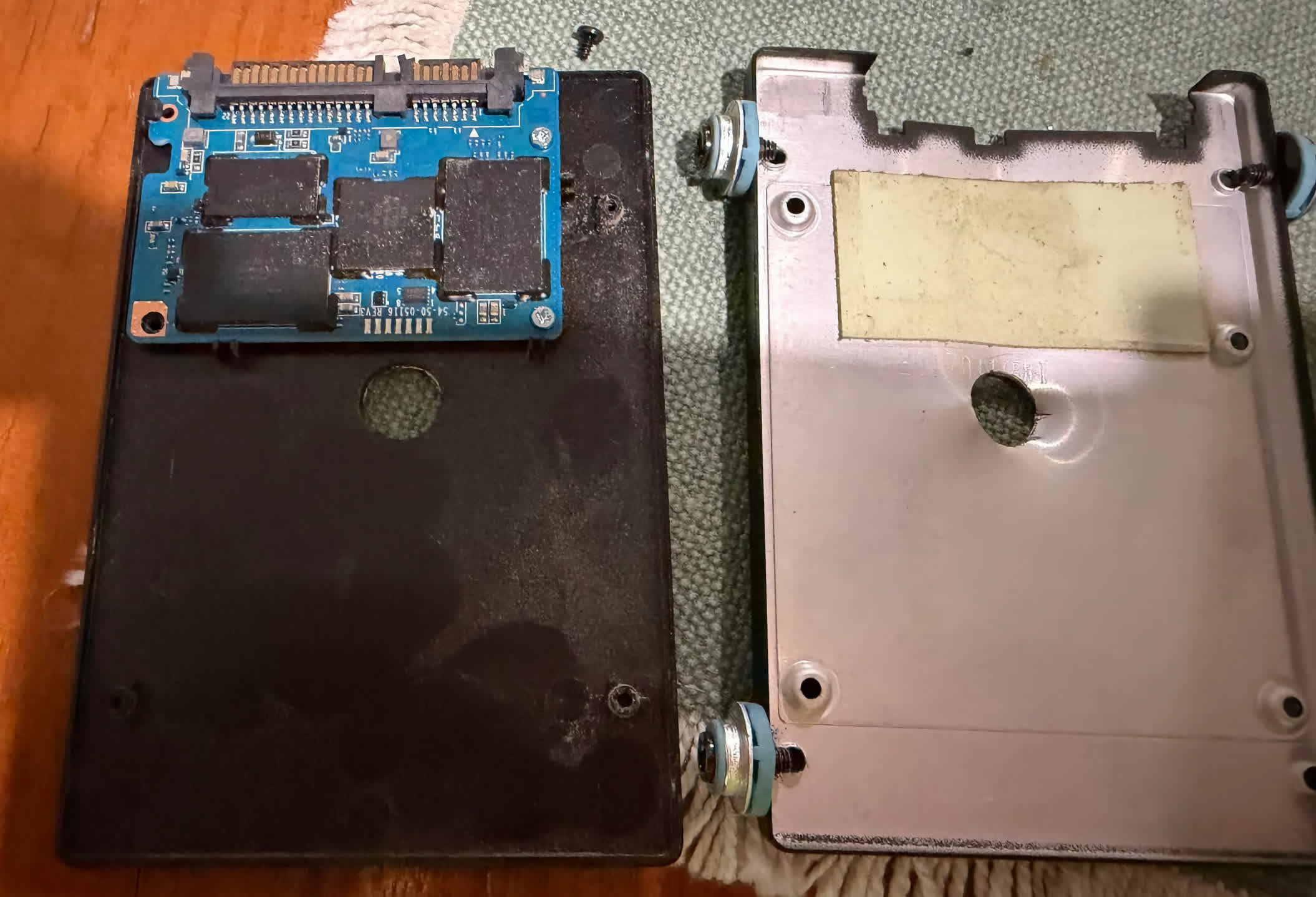
Power tools like drills have long been used to physically mangle storage devices, but only when used properly. With traditional mechanical hard drives, a few scattered holes are often enough to destroy the platters inside and make data recovery nearly impossible. Drilling can be effective on SSDs as well, but only if you actually make contact with the internal structure.
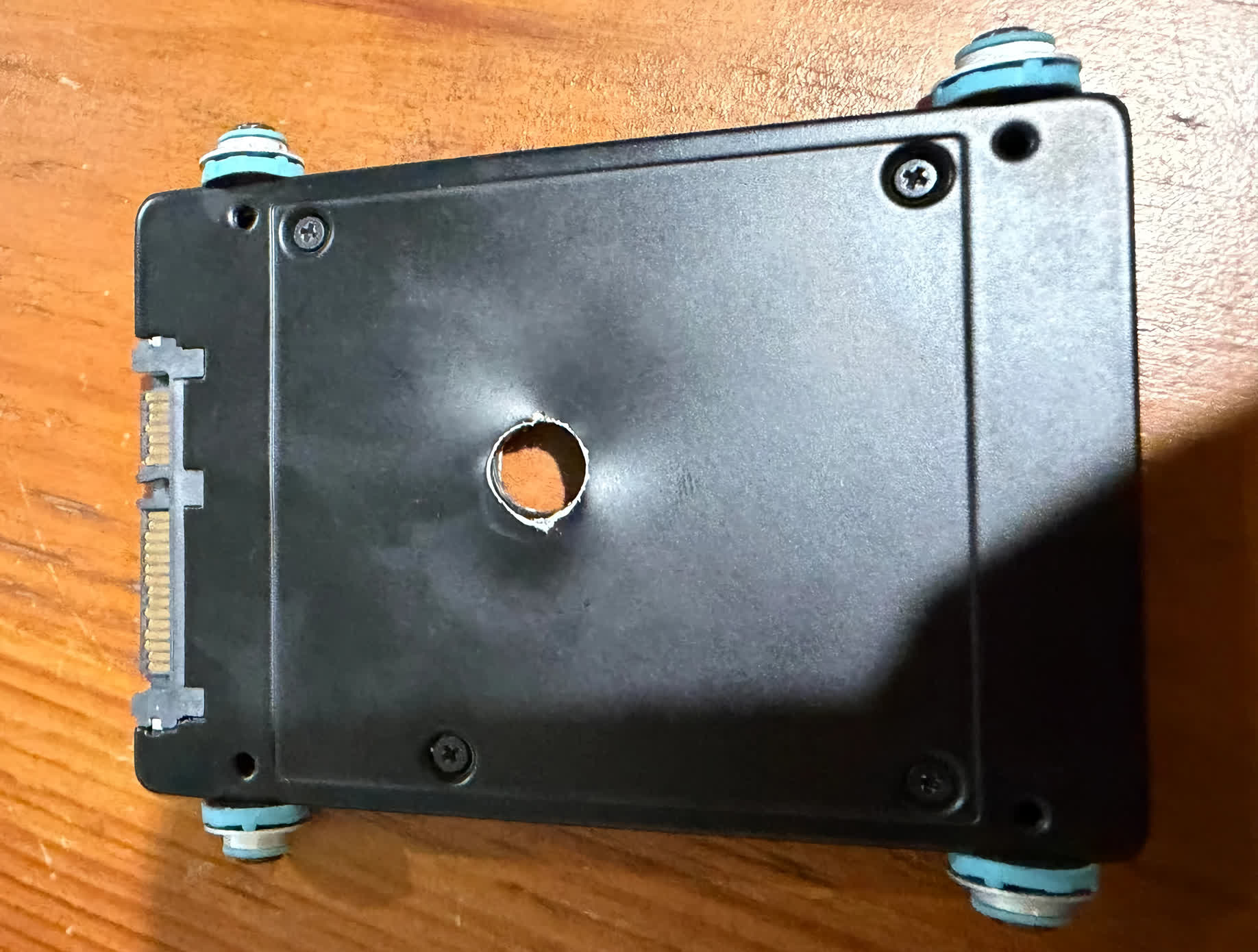
As the Reddit story illustrates, some SSDs utilize small PCBs that don't fill out the entire drive shell.

Should you find yourself in a similar situation, it'd probably be best to drill multiple holes in the drive at different points. To ensure you hit the mark, you could always open the outer shell and aim directly at the chips on the PCB. Most 2.5-inch SSDs are held shut with a handful of screws and although opening the case will likely void your warranty, that's not a concern as you're already attacking it with a power tool.
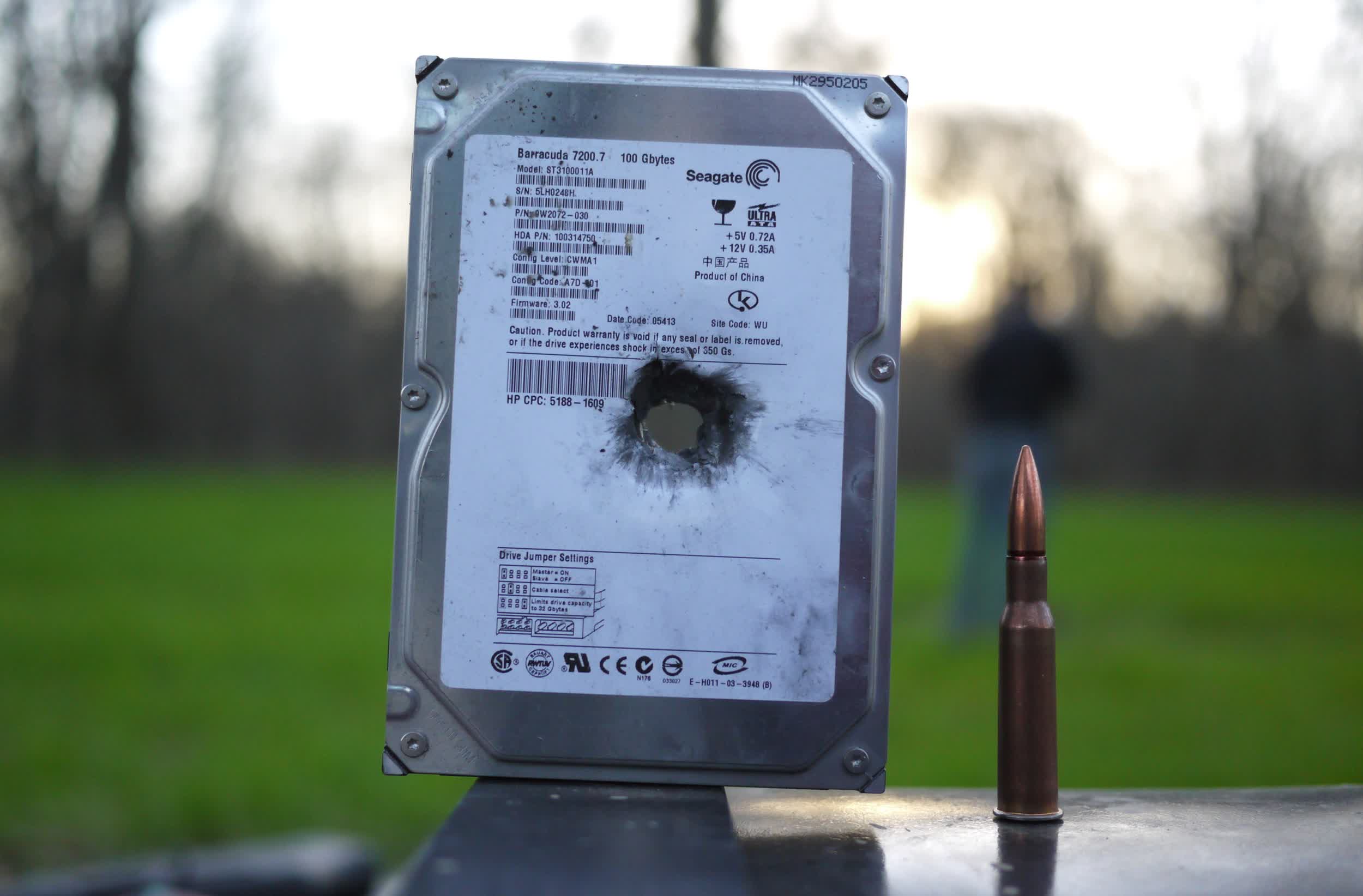
Of course, a drill isn't the only tool that can effectively destroy a drive. If you have access to firearms and a safe place to shoot, old drives can make excellent targets. They also don't hold up well when beat with a hammer or tossed in a fire. Just saying.

It's also not a bad idea to attempt to securely wipe drives before physically destroying them. In the case of the Reddit drive, had the IT guy wiped the drive before attempting to drill it, the odds of the next owner being able to extract anything off it would have been much lower.

Found is a TechSpot feature where we share clever, funny or otherwise interesting stuff from around the web.

Permalink to story:

 
For normal HDDs I just take them apart, destroy head, scratch all the disks and cut them in to peaces (they have been erased beforehand) and dispose them separately on different waste collection dates.
For the SSDs I didn't had a need yet.
 
Its pretty easy to securely erase any HD with the linux tool "hdparm". IMO, if this "IT" person didn't know that, they are not that good of an "IT" person. All you need is a "live" version of linux on a bootable USB stick and these instructions -

For anyone interested - https://grok.lsu.edu/Article.aspx?articleid=16716
 
Its pretty easy to securely erase any HD with the linux tool "hdparm". IMO, if this "IT" person didn't know that, they are not that good of an "IT" person. All you need is a "live" version of linux on a bootable USB stick and these instructions -

For anyone interested - https://grok.lsu.edu/Article.aspx?articleid=16716
Any "good" IT person knows that the best tools are not trustworthy enough. Those who might want your data to the point you have to destroy it have the resources to recover data from devices that have been wiped.

Thats why destructive methods are implemented. Grinding the disks or NAND into dust makes recovery impossible no matter how driven ne may be.
 
Why mention or even think about warranty *likely* being void if you open the drive before drilling through the PCB of an end of life SSD? I'm guessing you wouldn't destroy a perfectly good drive, still on warranty...
 
I used to take HDDs down to the workshop and ram a 20T pneumatic press through the spindle, fun times.
When there were still the larger HDD's, I would take ours apart, salvage the magnets, bust up the platters. Then they went away and the smaller HDD's were there and I still take them apart and pull the magnets before busting up the platters. Over the years I've got a magnet ball that is about half the size of a bowling ball.
 
My biggest, best 4TB SSD just failed - and I sent it to a recovery agency and they recycled it without my permission, also negating my warranty with the company I bought it from. Currently in court proceedings for the drive itself and the data I lost, but obviously it's a pointless, fruitless task.

Some dickhead just stole my drive and took it home. The data may or may not have been recoverable, but that ******* just stole a 4TB drive from me.
 
It's an SSD, a magnet would do nothing.
Even HDDs are pretty resilient to magnets. A fridge magnet or even stronger magnets that people typically have access to do nothing.
Drill a shallow hole and running it briefly with some sand in it would be a lot more effective.

 
Microwaves are a thing...
And do little to nothing to hard drives and SSDs. Microwaves are great for completely destroying optical discs and RAM, but do little to drives that have been built with shielding around them.

Hammers also do little until the hard drive platters have been removed. With SSDs the chips themselves need destroyed.

Data destruction, like everything else technology related, requires proper care and attention to detail.
 
Last edited:
And do little to nothing to hard drives and SSDs. Microwaves are great for completely destroying optical discs and RAM, but do little to drives that have be built with shielding around them.

Hammers also do little until the hard drive platters have been removed. With SSDs the chips themselves need destroyed.

Data destruction, like everything else technology related, requires proper care and attention to detail.
I was talking about SSDs specifically and I would like to see a test on this. I'm not talking about causing physical damage per say, just that shorting out the traces with the ultra high voltage caused by the microwave would damage the chips. Nothing like a gental 10,000 volt shock
 
Back