Through the looking glass: In a field increasingly defined by quantum experiments and exotic materials, a physics team at Queen's University in Canada has shown that innovation can also come from the ordinary. Using standard fiber-optic components – the same hardware that powers the global internet – the researchers built a new kind of computing machine that runs entirely on light. Unlike most advanced processors, it performs billions of operations per second while remaining perfectly stable at room temperature.
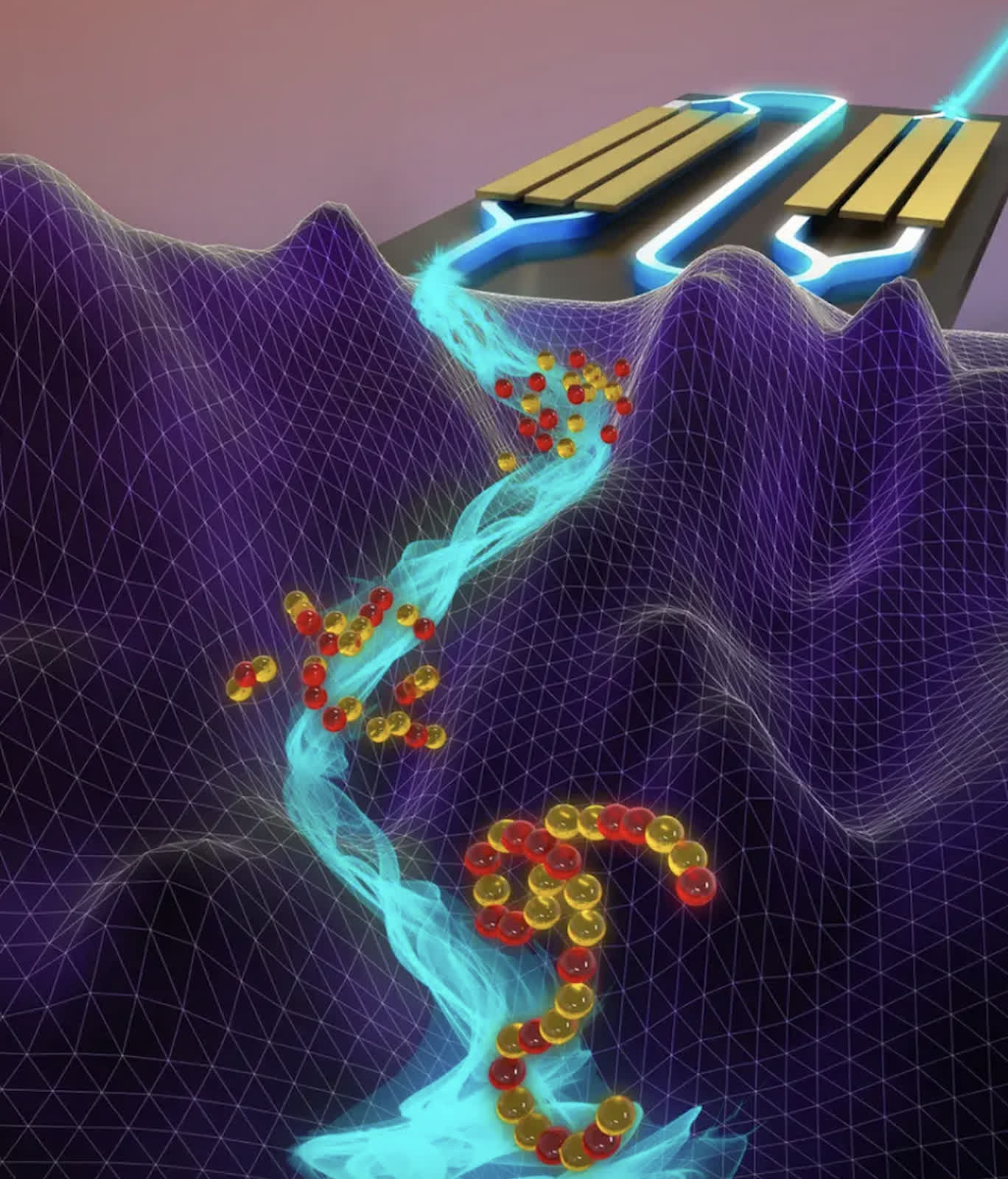
Published in Nature, the study details the first large-scale demonstration of a photonic Ising machine operating without the cryogenic constraints typical of quantum computing systems. The device, developed by physicist Bhavin J. Shastri and collaborators at McGill University, builds on a concept rooted in early 20th-century magnetism and adapts it using carefully controlled optical pulses.
The Ising model, first proposed in the 1920s to describe how magnetic materials align, has proven to be a robust mathematical tool for finding optimal solutions in enormous search spaces.
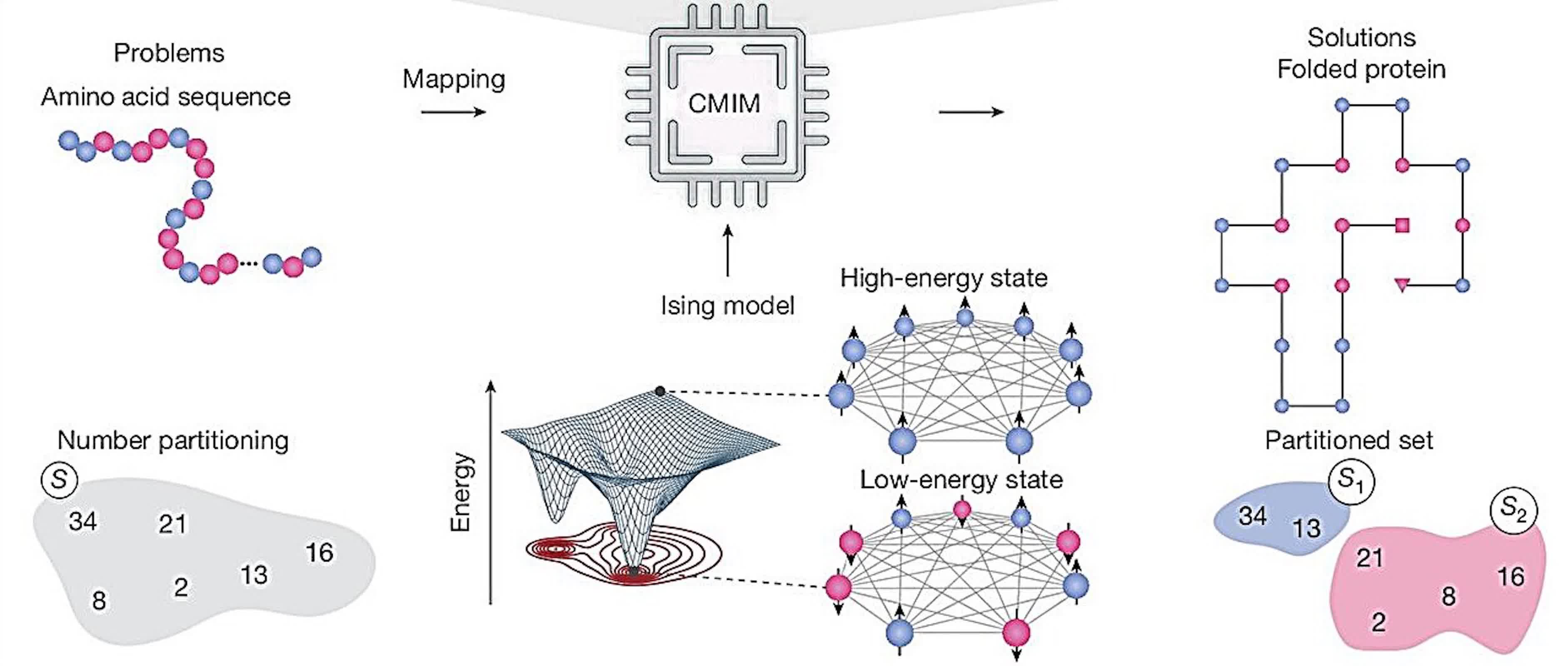
In this model, each variable in a problem behaves like a magnet's spin – pointing up or down – and the system as a whole seeks its lowest-energy state. That lowest-energy configuration corresponds to the optimal solution.
Traditional computers struggle to simulate this behavior when the number of variables grows exponentially. Even with high-performance clusters, evaluating every possible state of 50 interconnected spins would take longer than the age of the universe. The elegance of the Ising model lies in letting physics – not algorithms – perform the optimization naturally.
The Queen's prototype replaces these theoretical spins with ultrafast bursts of light. Within fiber-optic loops, laser pulses circulate, interact, and gradually settle into a configuration that represents the system's "ground state" for a given optimization problem.
As the pulses influence one another through modulators, the system converges toward a stable solution, much like a room full of people reaching consensus after a quick exchange of opinions.
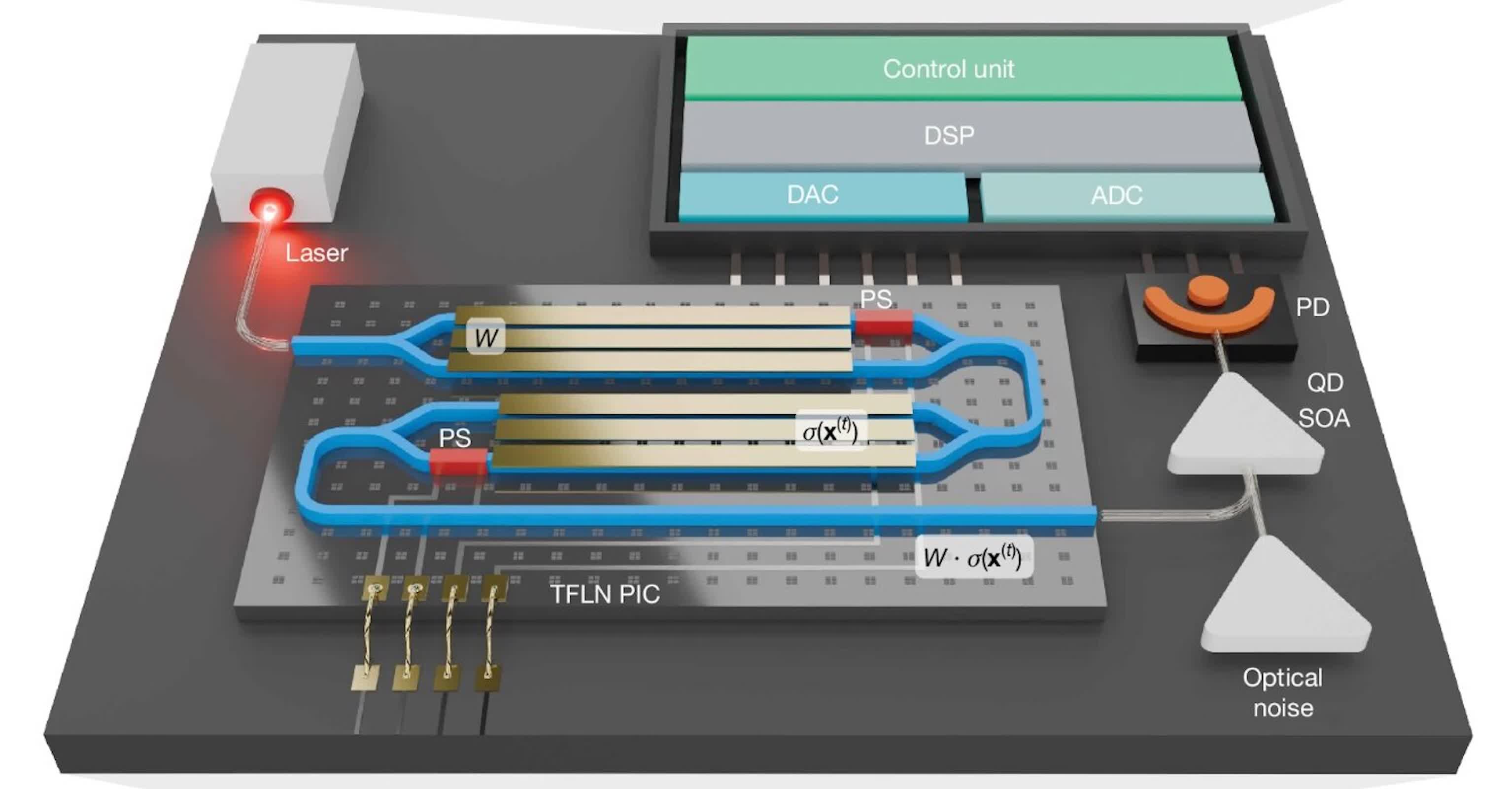
Shastri's team achieved 256 optical spins – representing 65,536 pairwise interactions – using just five main components. Lasers and electro-optic modulators inject the light, fiber loops provide the delay channels for interactions, and detectors capture the evolving optical states. The result is a compact machine capable of performing vast numbers of operations without the noise or fragility that often plague quantum approaches.
The experiment's significance lies less in raw speed than in operational realism. Many quantum and hybrid optical systems require cryogenic cooling or custom materials, which limit widespread deployment.
The Queen's device, however, maintained performance for hours under standard laboratory conditions. This reliability represents a crucial step from laboratory curiosity toward practical hardware that industries could eventually adopt.
Because the system's components are already mass-produced for telecommunications, scaling to additional spins should, in principle, be straightforward. This approach also implies greater energy efficiency: by constructing a processor that computes through physical relaxation rather than electronic switching or quantum error correction, the Shastri Lab drastically reduces power consumption.
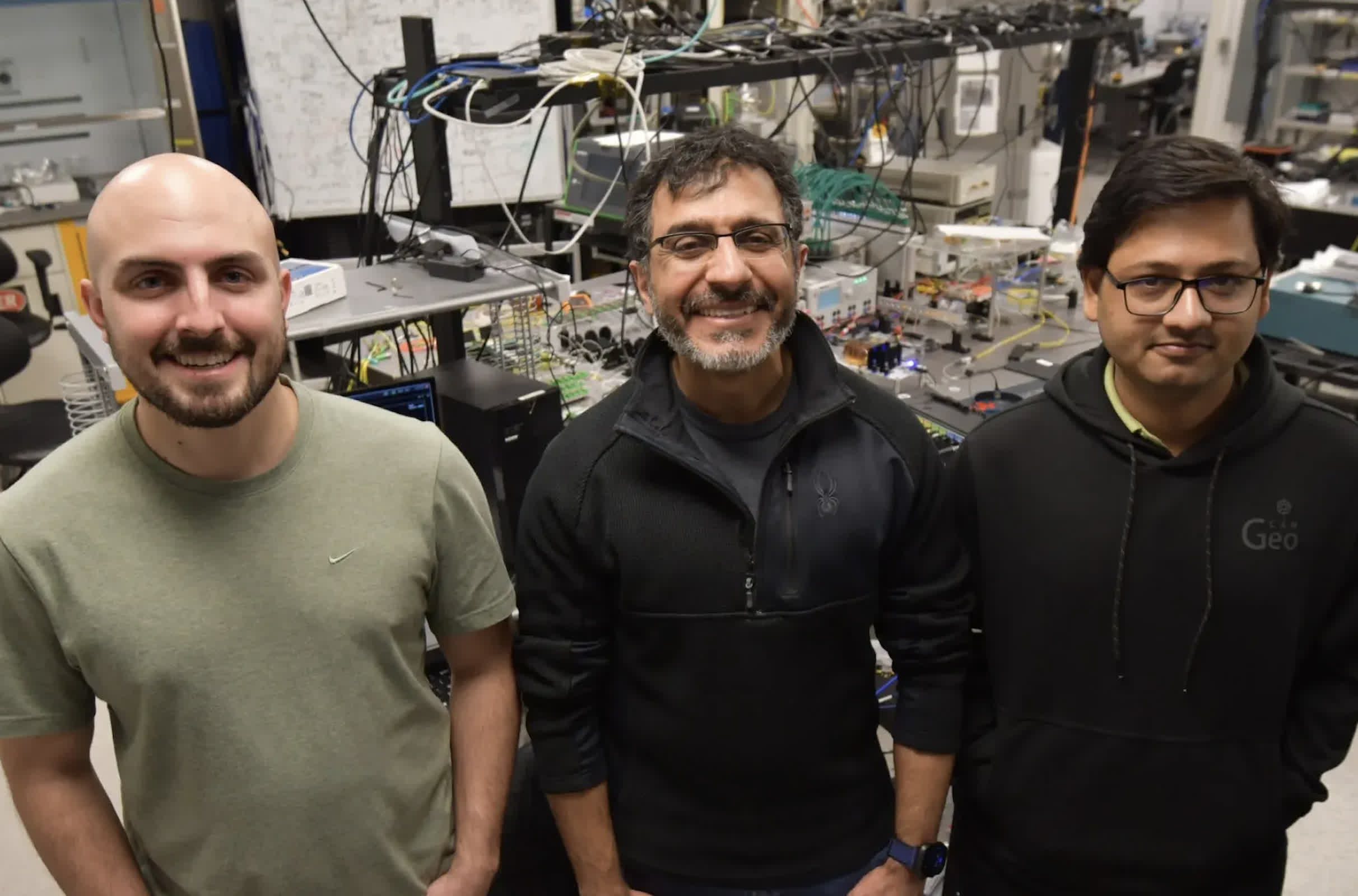
Bhavin Shastri, center, and PhD students Hugh Morison, left, and Nayem Al Kayed.
The Queen's team is now pursuing collaborations with industry to explore applications where powerful optimization directly impacts outcomes – supply chain logistics, telecommunications network routing, and molecular structure prediction, among others. Upcoming work will focus on scaling the system to higher spin counts and integrating the hardware into existing data and photonics infrastructures.
While this light-based Ising computer will not replace general-purpose chips or quantum processors, its demonstration offers something equally valuable: proof that an accessible, scalable form of physical computation can solve specialized problems more elegantly than billion-dollar rigs. For a century-old theory, it's an unexpected comeback.
Light may outshine quantum for some of computing's toughest optimization problems


