Meta agrees to pay $1.4 billion in Texas lawsuit for abusing facial recognition tech

Alfonso Maruccia

Posts: 2,581   +967
Staff
Facepalm: Meta attempted to use Facebook as a giant surveillance service to profit from users' personal data. The company ultimately failed in the endeavor and is now facing significant financial penalties as a result, which includes a massive settlement due to the state of Texas over the next five years.
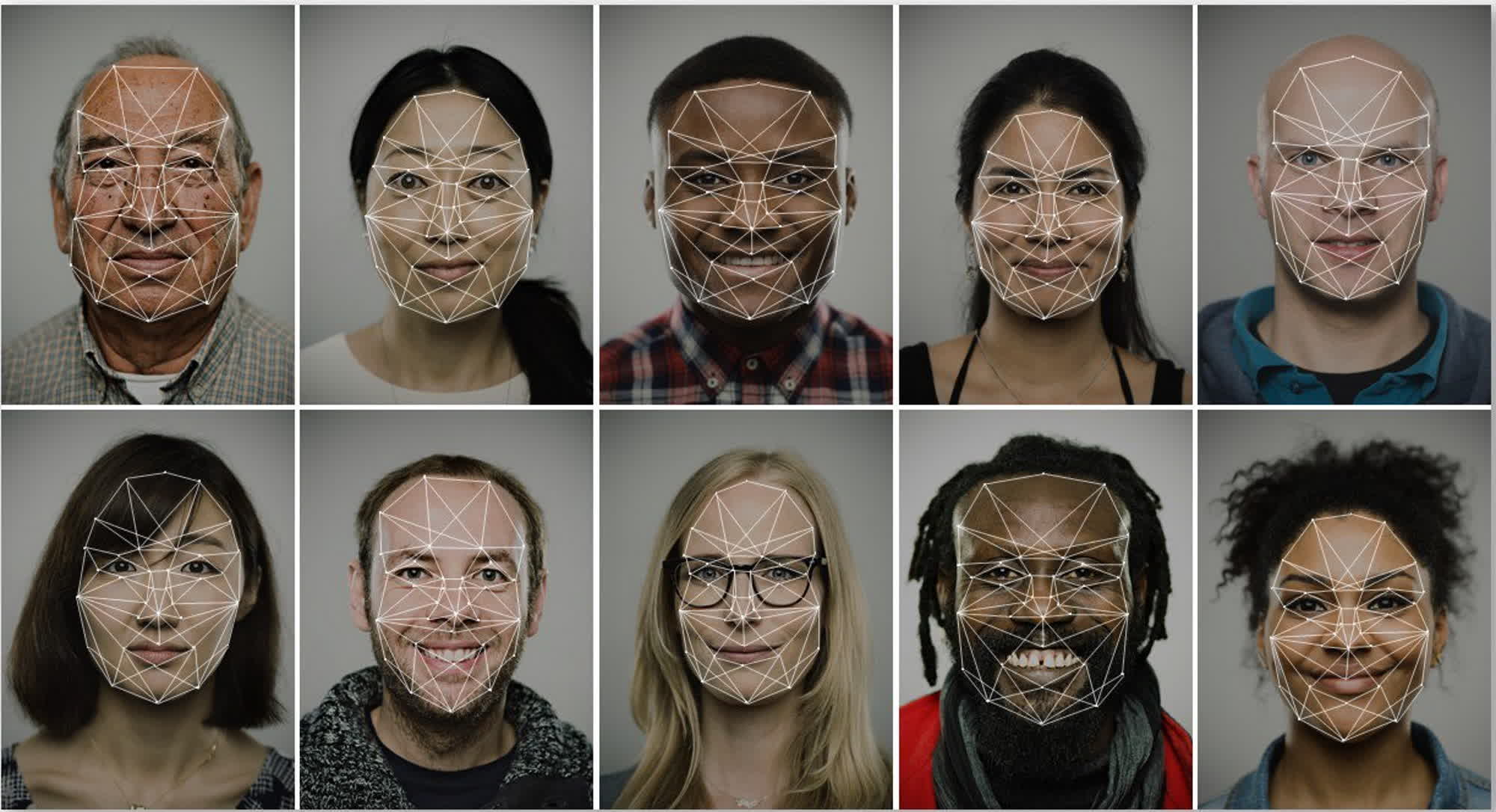
Texas Attorney General Ken Paxton collected a $1.4 billion settlement from Meta over Facebook's misuse of facial recognition algorithms. Meta had collected and used the personal biometric data of millions of Texans without prior authorization. According to Paxton's official statement, this settlement is the largest ever obtained from legal action initiated by a single US state.

Paxton's office filed the lawsuit against Meta in February 2022, following revelations that Facebook had been secretly gathering biometric data for over a decade. In 2011, the social network introduced its Tag Suggestions feature, designed to make it easier for users to tag people in photos. This feature was enabled by default, with no clear explanation of how the underlying technology worked.

Tag Suggestions utilized facial recognition software that analyzed "virtually" every face in photos shared by users. Data on the "facial geometry" of countless individuals was stored in Facebook's database, a practice that violated Texas's Capture or Use of Biometric Identifier Act and the Deceptive Trade Practices Act.

"This historic settlement demonstrates our commitment to standing up to the world's biggest technology companies and holding them accountable for breaking the law and violating Texans' privacy rights," Paxton said. Meta was ultimately forced to stop scanning Facebook photos.

Fearing legal "uncertainty" surrounding facial recognition algorithms, Facebook reportedly decided to erase the biometric data collected from more than a billion users. However, this move was not sufficient to deter the Attorney General of Texas, who proceeded with a lawsuit against Meta a year later.

In 2021, Facebook agreed to pay a $650 million settlement to resolve a class-action lawsuit in Illinois, which sought to enforce local privacy laws against extensive biometric scanning practices.

Before settling the Texas lawsuit, Meta argued that the Attorney General's claims were without merit. Now, having agreed to a $1.4 billion settlement over a five-year period, the company has expressed satisfaction with the resolution of the matter. Meta is also reportedly looking to increase its investments in Texas, including plans to build new data centers.

Permalink to story:

 
$1.4B seems like a lot until you realize the Meta has an estimated annual revenue of about $40B. They will likely just appeal and by the time it is all done, pay half if we are lucky, and it will take 10 years.

My point, these companies are so big that the risk of getting caught and fined is immaterial to them. The reward significantly outweighs the risk. Consumers rights be damned if they can make a buck, or in Meta's case a few Billion bucks.
 
You forget lawyer costs and fee's. Those are the real winners.

Just bizarre to think how much money is flowing through META - which started off as "Facebook" - certain intranet type of thing.
 
They will likely just appeal and by the time it is all done, pay half if we are lucky, and it will take 10 years.

My point, these companies are so big that the risk of getting caught and fined is immaterial to them. The reward significantly outweighs the risk. Consumers rights be damned if they can make a buck, or in Meta's case a few Billion bucks.

There won't be an appeal, Meta agreed to settle. But you are right, in general terms these companies aren't held accountable in any meaningful way.
 
You forget lawyer costs and fee's. Those are the real winners.

Just bizarre to think how much money is flowing through META - which started off as "Facebook" - certain intranet type of thing.
All those ads make a ton of cash. And data helps to power those ads. Data we freely give over, for better or worse.
 
It's basically $1.4B for the lawyers and whatever is left over for the plaintiff. I would think that with this much money involved, Texas will have many Law Firms offering their services.
 
But you are right, in general terms these companies aren't held accountable in any meaningful way.
Accountable for what? I'm no Facebook fan, but despite the drama-queen hysterics, the fact remains this data was not "collected in secret". The Tag suggestions feature literally tells you it's identifying the faces of you and your friends in photos. If someone doesn't understand that recognizing faces requires, well gosh, facial recognition, then their IQ is well below room temperature.

And despite the ominous-sounding "biometric data", what they're "collecting" is what you're already choosing to send to them -- images of your face. The fact that they examine that photo and record a few facts like how far apart are your eyes and how large your ears doesn't change the fact that you already sent them all this data already. And anyone and everyone who sees your social media photos can do the same. This point is likely too subtle for some here, so I'll be more explicit: anyone you send a few photos of yourself too already has your biometric data ... whether or not they've (yet) chosen to process it into facial geometry.
 
Meta/Facebook is a blight on the Internet and deserves to be shut down. It serves no useful purpose and only does harm.
It is a blight in many respects. It is the only way though I have to keep up with a few friends
 
Accountable for what? I'm no Facebook fan, but despite the drama-queen hysterics, the fact remains this data was not "collected in secret". The Tag suggestions feature literally tells you it's identifying the faces of you and your friends in photos. If someone doesn't understand that recognizing faces requires, well gosh, facial recognition, then their IQ is well below room temperature.

And despite the ominous-sounding "biometric data", what they're "collecting" is what you're already choosing to send to them -- images of your face. The fact that they examine that photo and record a few facts like how far apart are your eyes and how large your ears doesn't change the fact that you already sent them all this data already. And anyone and everyone who sees your social media photos can do the same. This point is likely too subtle for some here, so I'll be more explicit: anyone you send a few photos of yourself too already has your biometric data ... whether or not they've (yet) chosen to process it into facial geometry.
It's not just Meta, but large companies in general. For example, Boeing pleaded guilty to a criminal case, considered "the deepest corporate crime in US history" according to the victims, and received only a $487 million dollar fine (though that case isn't closed yet). It's interesting to compare that case, in which hundreds of people lost their lives, to this one, in which nobody (at least not directly) lost their lives, but the fine is so much higher.

Just because terms of service or a feature description make it clear what the company is doing, that doesn't make it legal. Too often companies craft arrangements to pass the letter of the law while violating its spirit, and in the semi-rare cases where companies are held accountable, often years later, the remedies are often weak and the executives walk away with a golden parachute, if they walk away at all. So, if one is a leader of a large company, there's generally little risk to flouting the regulations.
 
We have allowed this kind of company to monopolize our connection to each other so much that those of us who resist often get forgotten by those who drink the Kool-aid for the convenience.

Many of us don't use the services provided by those kinds of corporations for the exact reasons outlined in this article. Yet in this case anyone could just upload an image of us and tag it with our name and info, and our privacy is reduced even more.

Then a state government (and some law firms) rake in a large pile of money. The corporation in question (probably) agrees to invest more in that state. And the people that got their images "surveilled" get...?

Keep fighting.
 
It is a blight in many respects. It is the only way though I have to keep up with a few friends

If your friends cant bother visiting, calling or sending you a message outside of facebook then they are not friends.

We've let company's like Facebook pretty much take over the whole way of socialising. We can change that.
 
It's not just Meta, but large companies in general. For example, Boeing pleaded guilty to a criminal case, considered "the deepest corporate crime in US history"
It's called that by some pandering politicos, and those looking to get rich overnight from the death of a family member. Traveling by plane -- even Boeing planes -- is at least 10 times safer than automobiles. Even bathtubs are more dangerous, than commercial jetliners. As for the fine Boeing received, they paid 50 times as much -- at least -- in losses from the halting and delays associated with the 737 Max program.

Mao slaughtered 100M+ of his own people, many of them women and children, and, instead of being fined, was highly compensated for his efforts, and praised to the skies, both in China and here in the West. And even here in the US, bumbling incompetence by the government kills far more than any corporation. NY Governor Cuomo's forcing nursing homes to accept Covid-infected patients killed more than 15,000 people. Where's your outrage over that?

Just because terms of service or a feature description make it clear what the company is doing, that doesn't make it legal.
In this case -- yes it does make it legal. The law states collecting this data is illegal only without informed consent.
 
Last edited:
If your friends cant bother visiting, calling or sending you a message outside of facebook then they are not friends.
If my friends live hundreds and thousands of miles away they can't visit and I don't expect them to. But I understand and partially agree with your point.
 
If my friends live hundreds and thousands of miles away they can't visit and I don't expect them to. But I understand and partially agree with your point.

By the looks of your avatar I reckon that you know the phrase people come and go.

Meta and it's data collection is just absurd.
 
Back