Meta's massive undersea cable project delayed in Persian Gulf as Iran conflict escalates

midian182

Posts: 11,713   +177
Staff member
What just happened? Undersea cables are supposed to make the internet more resilient, but they are still at the mercy of whatever is happening on the surface. Meta's massive 2Africa system is the latest reminder that these projects can face huge disruption when a major shipping lane turns into a war zone.
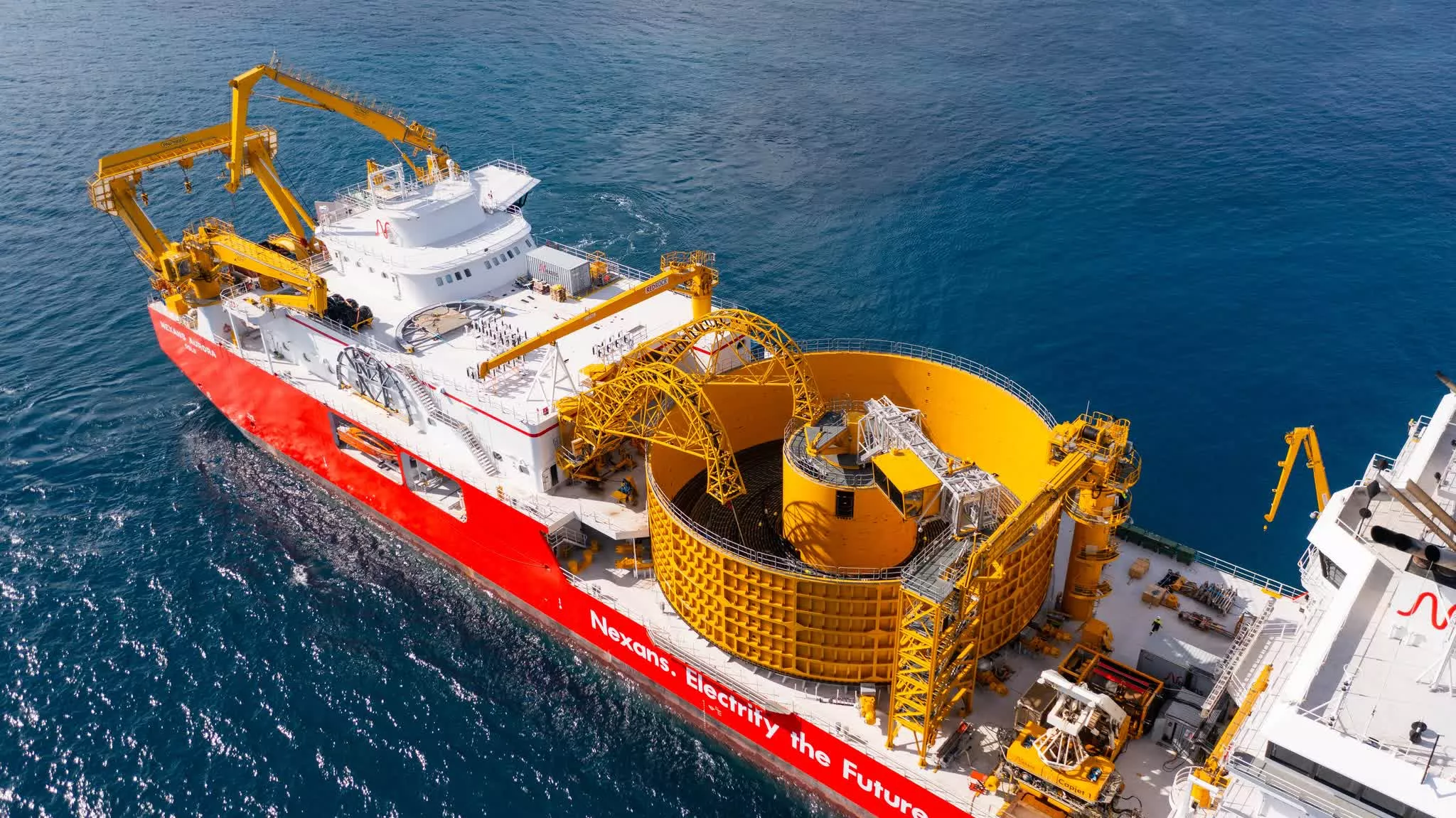
Meta's 2Africa undersea cable project has hit another geopolitical snag, this time in the Persian Gulf. According to Bloomberg, Alcatel Submarine Networks (ASN), the company responsible for laying parts of the system, has declared force majeure (a contractual clause that excuses a party from liability if an extraordinary, unforeseeable event beyond their control makes performance impossible) and told customers it can no longer safely operate in the region.

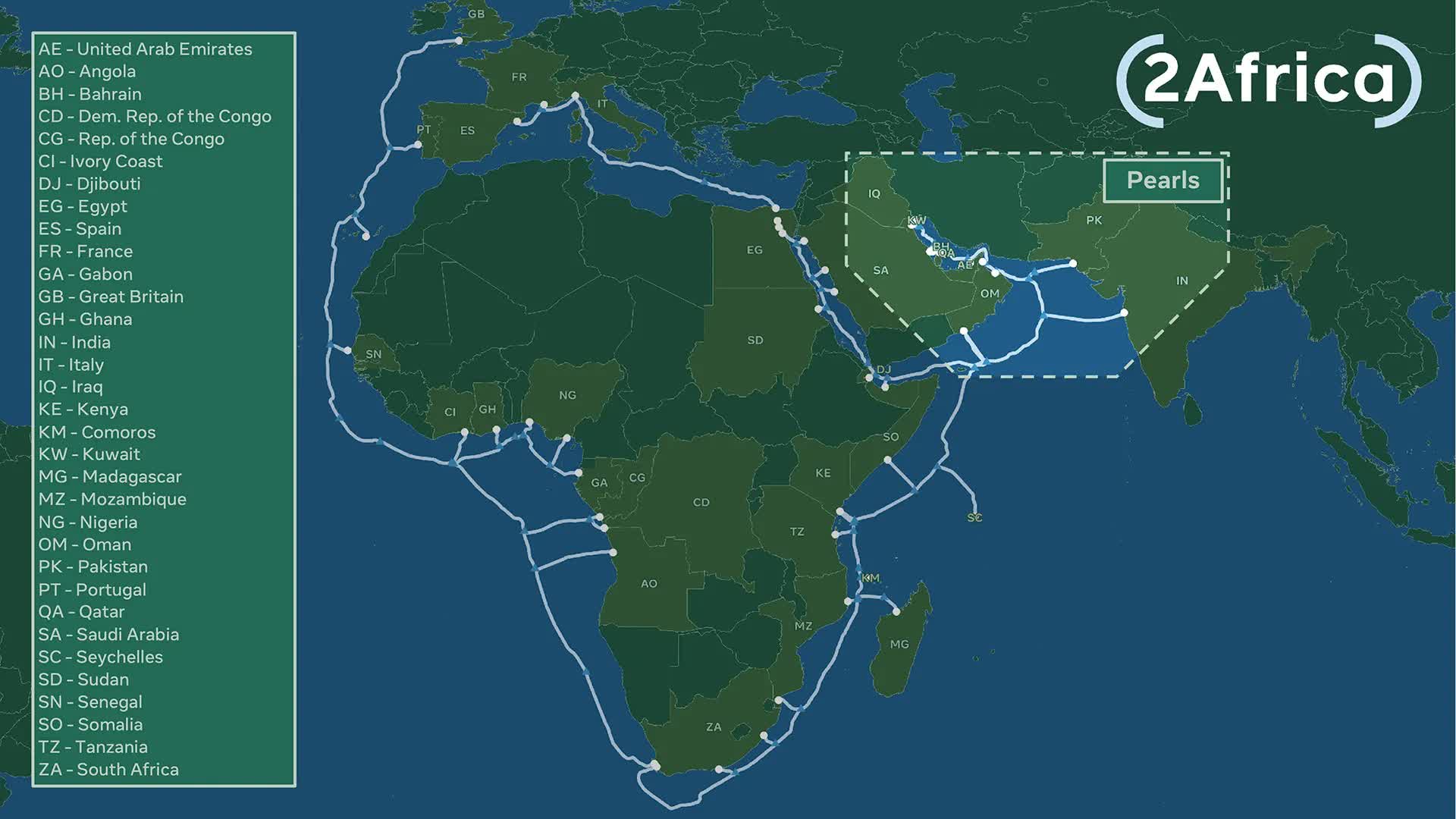
That effectively puts work on the final stages of 2Africa Pearls on hold, delaying a section that was supposed to link Gulf states, Pakistan, and India to the wider 2Africa network.
Much of the cable has reportedly already been laid in the Persian Gulf, but it still needs to be connected to onshore landing stations before the route can enter service. Bloomberg says ASN's cable-laying ship Ile de Batz is now docked in Saudi Arabia and unable to complete the job.

Meta said in November that the core 2Africa infrastructure had been completed, describing it as the world's longest open-access subsea cable system.

The company said the network currently reaches 33 countries across Africa, Europe, and Asia and is intended to serve roughly 3 billion people. The Pearls extension was supposed to finish the job in 2026, pushing total length to around 45,000 kilometers (around 27,961 miles) – longer than Earth's circumference.

The delay matters because Pearls is not some minor add-on. When it was announced in 2021, Meta and Telecom Egypt said it would extend the system into Oman, the UAE, Qatar, Bahrain, Kuwait, Iraq, Pakistan, India, and Saudi Arabia. Essentially, it's the portion that turns 2Africa from a giant Africa-focused cable into a broader Africa-Europe-Asia link.

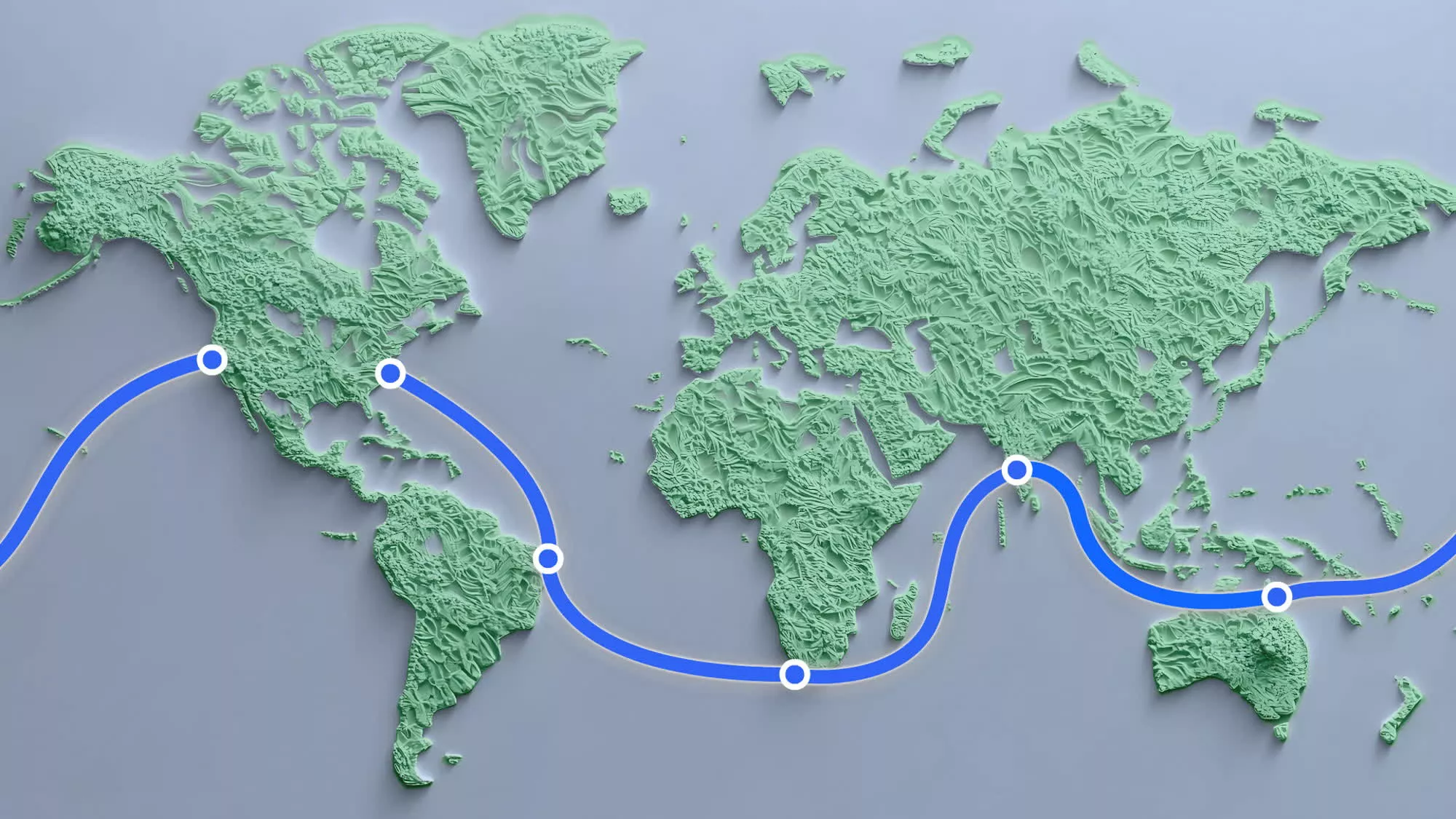
At the start of 2025, Meta announced Project Waterworth. The multi-billion-dollar undersea infrastructure initiative is expected to stretch more than 50,000 kilometers (over 31,000 miles) across five continents and use 24 fiber pairs, giving Meta a route that avoids several of today's most volatile chokepoints while putting more of its global infrastructure under direct control.
Undersea cables are more at the mercy of global conflicts than ever before. Russia has been accused of ordering its shadow fleet tankers to drag their anchors to sever these lines. There were also reports that Yemeni Houthi rebels damaged Red Sea cables in 2024.

Permalink to story:

 
Gotta find a way to fit the Iran war into this site for traffic. Inb4 the incredibly stupid and obvious Russian propaganda bots that Techspot refuses to do anything about come by to ramble nonsensically.
 
I don't know what's more grim: Knowing they're waiting for a war to end, or knowing that they are waiting to more efficiently harvest the personal data of more humans.
 
I don't know what's more grim: Knowing they're waiting for a war to end, or knowing that they are waiting to more efficiently harvest the personal data of more humans.
The war will end sometime.

Whether harvesting personal data will ever end is debatable. Data harvesting certainly won't end if its legal.
 
Iran is kinda dead already, but the future of communications is in space anyway.
Why bother with expensive undersea cables when it's cheaper through satellites?
 
The irony of building the world's longest internet cable only to have it stopped by a war zone is incredible. They literally went around all of Africa and now a ship is just vibing in a Saudi port because they can't finish the last few miles.
 
Gotta find a way to fit the Iran war into this site for traffic. Inb4 the incredibly stupid and obvious Russian propaganda bots that Techspot refuses to do anything about come by to ramble nonsensically.

This is a story about an important internet cable and Meta's investment... what do you expect, having them ignore the story completely because it relates to war, a conflict, politics, or just because Trump or whoever is involved? People see what they want to see.
 
Iran is kinda dead already, but the future of communications is in space anyway.
Why bother with expensive undersea cables when it's cheaper through satellites?
That's like saying who needs ethernet when you got wifi.

I'll take the constant reliability, low latency and higher bandwidth of a cable over the flakiness of a wireless signal in both cases. Just because wireless has become good doesn't mean it's become better.
 
Iran is kinda dead already, but the future of communications is in space anyway.
Why bother with expensive undersea cables when it's cheaper through satellites?
A whole army of technicians and comms experts researched and planned this cable network. If only they had listened to the world leading expert (you) they could have saved themselves billions.
 
That's like saying who needs ethernet when you got wifi.

I'll take the constant reliability, low latency and higher bandwidth of a cable over the flakiness of a wireless signal in both cases. Just because wireless has become good doesn't mean it's become better.
There are too many people who think "new" is always "better.' While Satellite internet does solve a problem, that doesn't mean it's better or a full on replacement. I think many people have a difficult time recognizing that difference. Oddly enough, I do have Starlink and it's good enough to play MMO's on. I typically get around 80-100ms with Starlink but frequently get under 20ms at home on fiber. I wouldn't want to play competitive shooters or DOTA, but I really only play EvE and ESO and it's fine for that. Funny enough, ESO PVP servers have such a latency problem that Starlink isn't bottleneck. And that's unfortunate because ESO PVP is a lot of fun.
 
No, it's not. Satellite Internet will always have a latency problem compared to fiber
Eh? I often get pings under 20ms on my Starlink connection, and it should drop substantially as the constellation further expands.

I think you're confusing the latency of geosynchronous comm satellites -- which have a 70,000+ km round trip -- to the far shorter hops needed for modern high-elliptical orbit satellites. Theoretically, satellite internet (when implemented in this manner) should always be faster ... the speed of light in fiber is not the speed of light.
 
Last edited:
These guys on these ships, any ship work long hours. So, it's time for a beer, extra sleep, or cooking some good food!!
 
Perhaps if the Meta includes Iran a node in this network... laying cables would go smoothly...!

On the other hand... Persian Gulf is perfectly safe except at the Strait of Hormuz... It's the land around it that is unsafe...!
 
Back