What just happened? A team of researchers at Meta believes it has cracked one of augmented reality's toughest challenges: fitting bright, vivid displays into glasses slim enough for everyday use. Their latest prototype, a flat-panel laser display just two millimeters thick, marks a major leap from the bulky systems that have long limited laser-based AR display development.
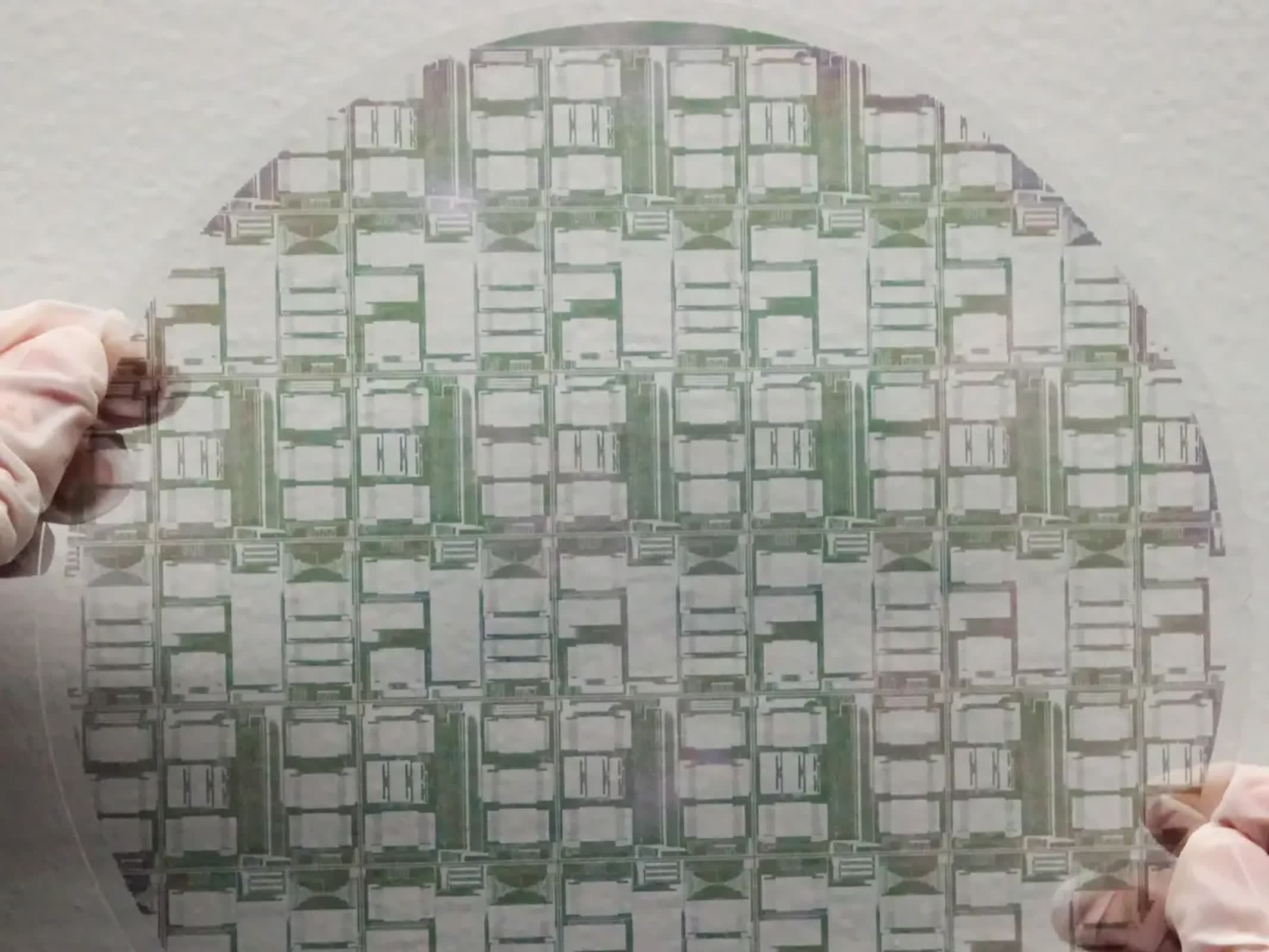
The findings, published in Nature, describe a device no larger than a pencil eraser that projects sharp, high-definition images while remaining just a fraction of the thickness of today's displays. By integrating advanced photonics onto a single chip, the system delivers both compactness and scalability – two key requirements for consumer-ready AR glasses.
Augmented reality relies on displays that stay visible outdoors, where bright ambient light can easily wash out digital overlays. Conventional LED-based systems struggle under these conditions, but laser displays offer the brightness and color richness needed to keep virtual images crisp and clear.
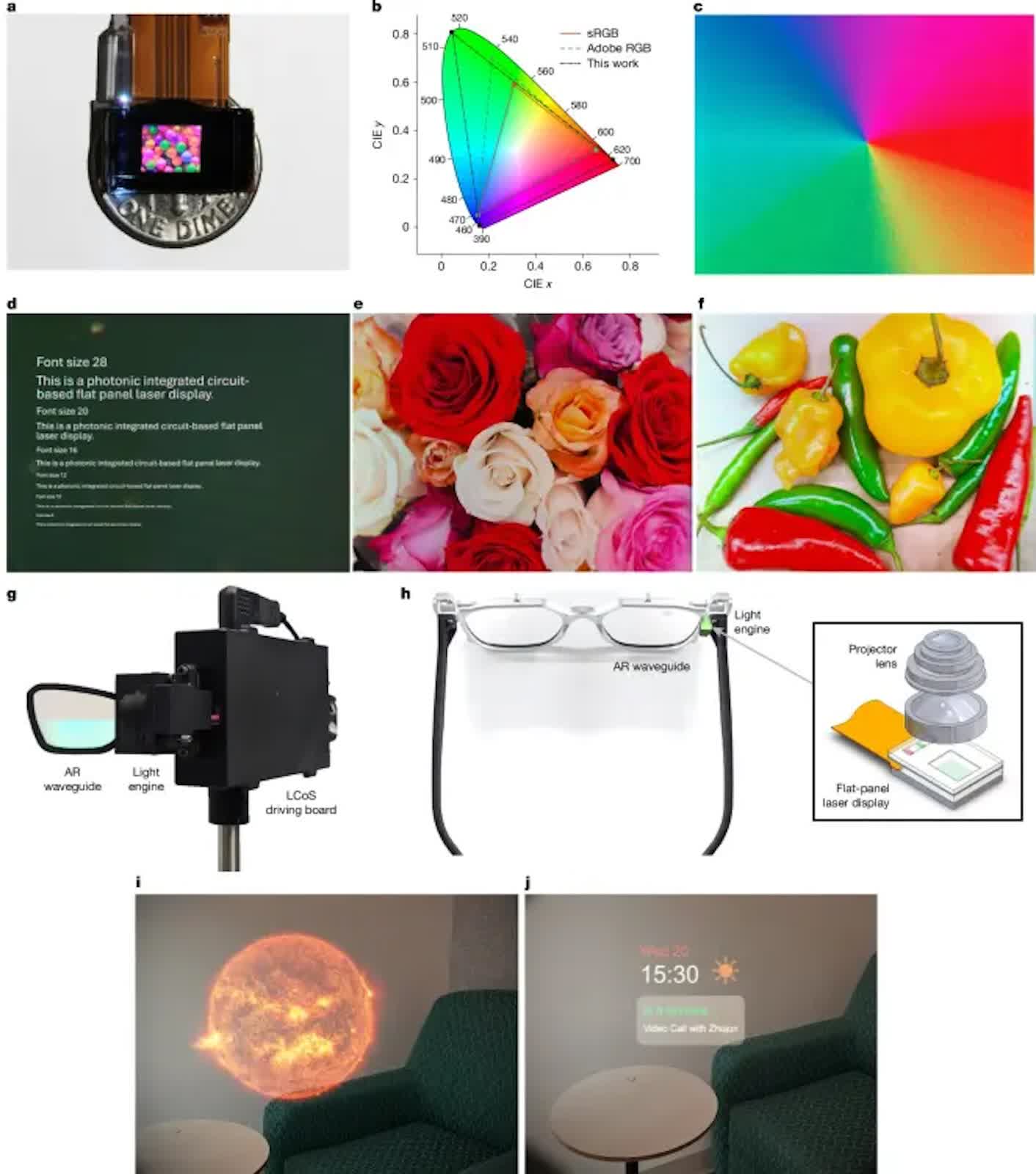
A figure from the study shows Meta's final laser-based display, measuring just 5 millimeters by 5 millimeters, placed on top of a dime for scale. Additional images highlight magnified views of the display in operation.
"The importance of brightness and color is especially pronounced for see-through and outdoor applications," Guohua Wei, an optical scientist at Meta's Reality Labs, told IEEE Spectrum.
Previous designs relied on complex arrays of lasers and bulky optics, making them expensive, difficult to manufacture, and impractical for consumer hardware.
Meta's new approach overcomes those limitations with a photonic integrated circuit, a chip that directs and modulates light using thousands of microscopic optical components. Roughly the size of a fingertip, the PIC pairs with a miniature liquid-crystal-on-silicon panel to produce a 1,920 x 1,080 resolution display. Despite its compact footprint, the system delivers more than twice the color gamut of conventional LCoS devices.
The entire assembly is slimmer than the edge of a credit card, and is less than one-eightieth the thickness of traditional flat LCoS systems. In tests, researchers demonstrated the display in a transparent configuration designed to simulate office-based augmented reality, overlaying digital graphics onto real-world backdrops.
The chips were fabricated using CMOS-compatible processes, the same methods used in high-volume semiconductor manufacturing. By leveraging these industry-standard techniques, Meta suggests the technology could eventually scale for mass-market products, from AR glasses to compact holographic and light-field displays.
However, the approach has its own limitations. Current LCoS platforms impose strict constraints on pixel size, which could leave them vulnerable to competition from emerging display technologies like micro-LEDs unless further advancements are made.
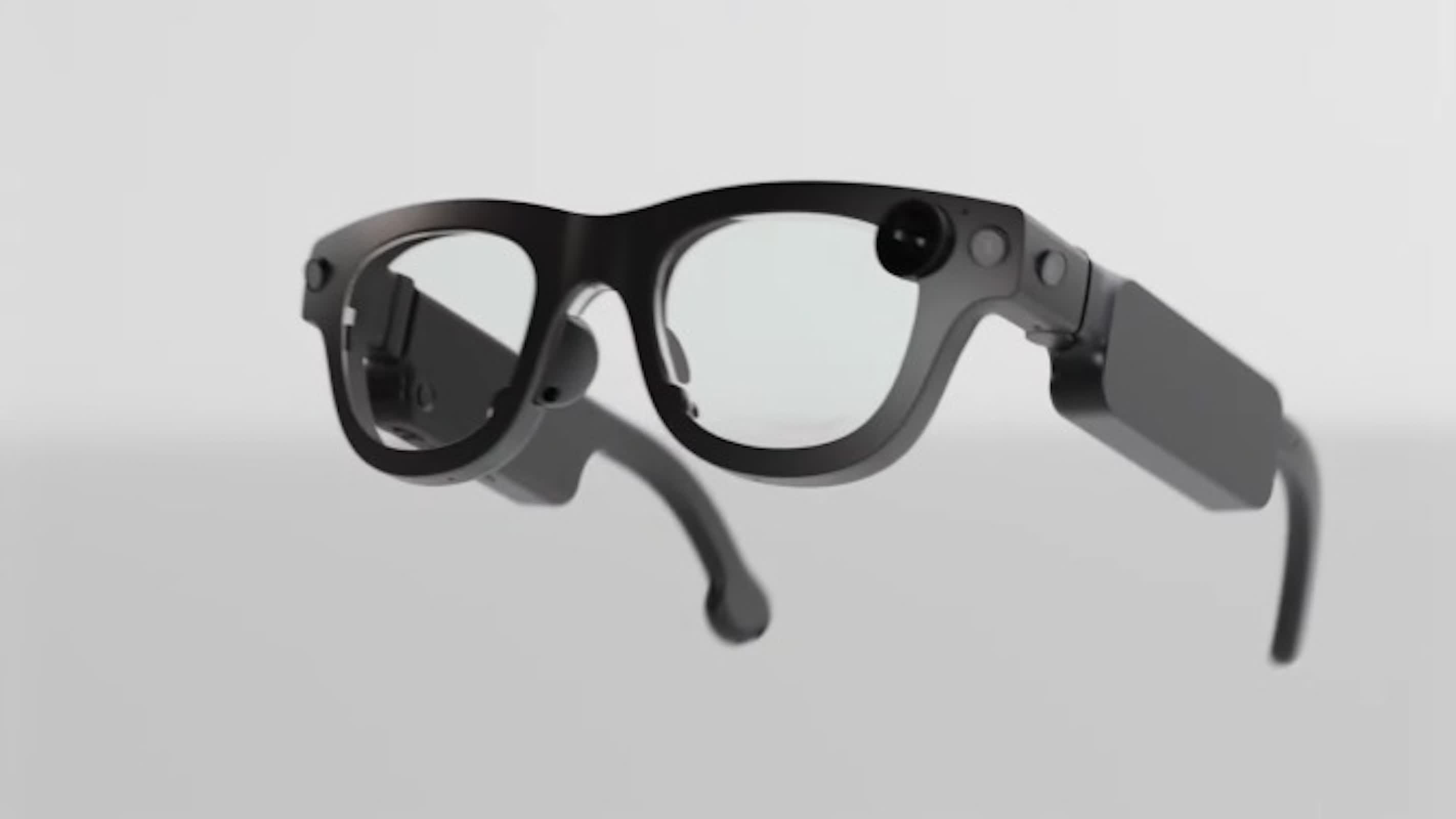
For Meta – already heavily invested in augmented and mixed reality through its Reality Labs division and its Ray-Ban smart glasses partnership – this breakthrough represents another step toward making lightweight, visually compelling AR devices a reality.
Meta's new 2mm display brings everyday AR glasses closer to reality


