Michael Burry of "The Big Short" shutters hedge fund, says the market makes no sense to him anymore

Skye Jacobs

Posts: 2,013   +59
Staff
What just happened? Michael Burry is winding down his hedge fund, Scion Asset Management, after warning that US equity markets no longer reflect underlying economic value. The investor, whose prescient bet against mortgage-backed securities before the 2008 financial crisis was immortalized in the movie 'The Big Short', told clients that he plans to liquidate the fund and return investor capital by the end of the year, apart from a small reserve for audit and tax obligations.
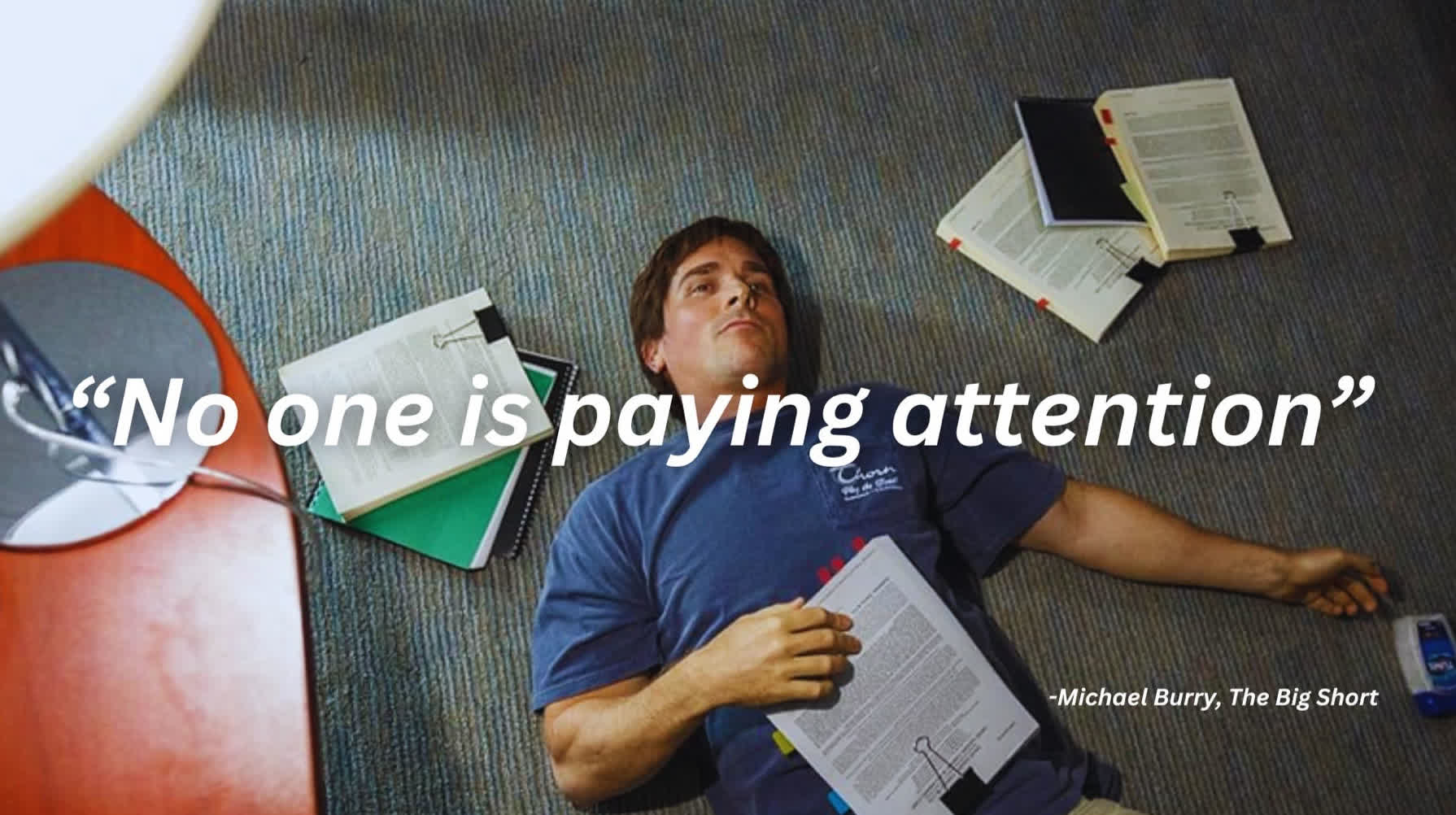
As 2025 draws to a close, Michael Burry's exit reads less as capitulation than as a confirmation of his conviction: when prices move too far from fundamentals, even the most disciplined investors eventually step aside.

According to people who received his October 27 letter to investors, Burry wrote that his view of fair market value has long diverged from prevailing prices. That gap, he said, has grown too wide to justify maintaining positions. Scion formally withdrew its registration with the US Securities and Exchange Commission this week, signaling the fund's closure after a decade of operation.

The decision comes as valuations across equity markets remain elevated despite renewed volatility. On Thursday, the Nasdaq Composite slipped nearly two percent, yet its longer-term trajectory underscores how speculative enthusiasm has overrun traditional valuation benchmarks.
The index's forward price-to-earnings ratio sits near 30 times projected earnings, well above the ten-year average of roughly 25. For seasoned fundamental investors, such as Burry, the disconnect between price and underlying corporate value has made stock selection increasingly difficult.

Heavyweights like Nvidia have soared as investors bet that AI will transform industries from cloud computing to logistics... the gains, however, have also lifted several loss-making or thinly profitable tech firms, complicating the market's risk-reward balance.

This year's rally in technology shares has been driven primarily by optimism about artificial intelligence. Heavyweights like Nvidia have soared as investors bet that AI will transform industries from cloud computing to logistics. The gains, however, have also lifted several loss-making or thinly profitable tech firms, complicating the market's risk-reward balance. In one metric often cited by analysts, a group of 250 US stocks favored by short sellers has climbed more than 50 percent in 2025, leaving many contrarian investors deeply underperforming broader benchmarks.
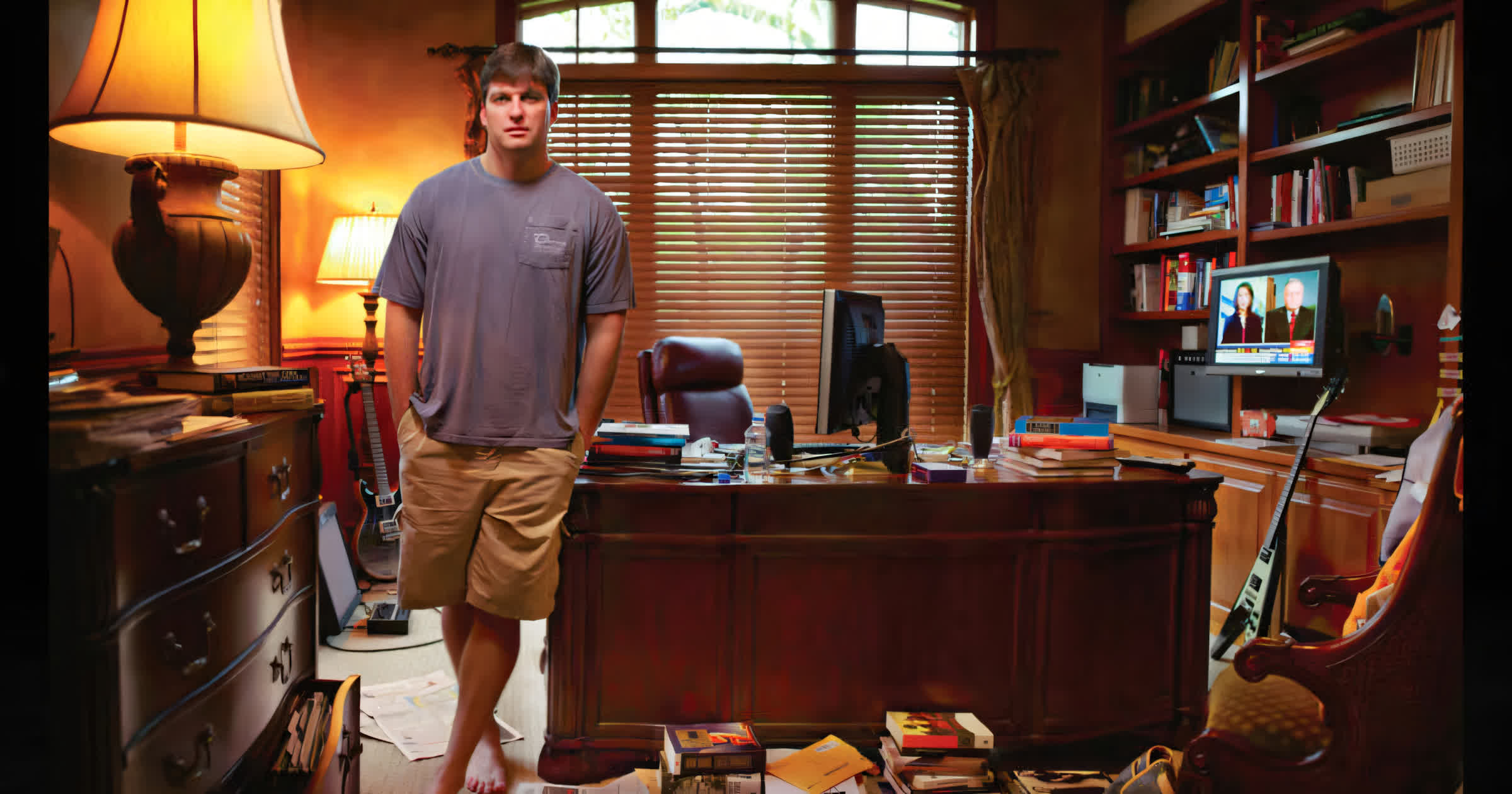
Burry's recent regulatory filings revealed derivatives-based short positions against Palantir Technologies and Nvidia, wagers that would rise in value if share prices fell. Both bets have proved costly so far. Palantir has increased by about 130 percent this year as investors embraced its data analytics tools and AI integration strategy. At the same time, Nvidia continues to dominate the semiconductor sector as demand for its GPUs accelerates.

The retreat from Scion underscores a broader shakeout among prominent short sellers. Jim Chanos, long known for his skeptical approach to high-growth equities, has also wound down his hedge fund. Nate Anderson of Hindenburg Research has faced similar pressures in recent months amid a bull market that has rewarded momentum over caution.

For Burry, the decision marks the second time he has closed a fund amid perceived market excess. After his successful bets against subprime mortgage securities in the mid-2000s, he shuttered Scion Capital in 2008, opting to return investor capital rather than chase what he viewed as unsustainable gains. He later revived the firm under the Scion Asset Management name to pursue a value-oriented strategy.

Permalink to story:

 
I have been watching with disbelief the S&P500 over the last 3 years, sky-rocketing on the backbone of Covid, to the insane level it is at today, which indicates that the 500 largest corporations now own the world, leaving hardly anything left to the rest.

It makes sense why Michael Burry has lost faith in the market. His logic has always been on the basis of financial balance, I.e equilibrium between prices and economical reality. That equilibrium no longer exist for the that largest group of corporations, because today they are the economy, as they have consumed most of the world's finance.

We are entering the new age, in which governments no longer matter, as the largest corporations control everything, just like in that Alien Earth dystopian future, without governments, just mega-corporations and that's it.
 
Last edited:
People have short memories. Every indicator you look at, whether technical or fundamental, just screams that the majestic 7 stocks are in a bubble. We have that ontop of the deregulation of mortgage backed securities and the subprime loan market. They opened up the same gate that lead to the 2008 financial crisis and all we can do is buckle up and go for the ride. Repos, defaults and foreclosures are all way up. I've been preparing for the crash since Q4 2024 and have a feeling that things will really start to hit the wall around Q2 2026
 
Michael Burry got it right once, then got it wrong many times since.

Predicting the markets is impossible.
Prophets do not exist, but when someone is proclaimed as such - they have to choose between denying it outright, the impossible task of maintaining their newly acquired reputation, losing reputation, or quitting to avoid embarrassment.
Burry did not deny it on time, and now decided to quit before completely losing reputation.
 
I have been watching with disbelief the S&P500 over the last 3 years, sky-rocketing on the backbone of Covid, to the insane level it is at today, which indicates that the 500 largest corporations now own the world, leaving hardly anything left to the rest.

The 500 corporations you mention are mostly owned by 3 Steak holders? Meaty portions.
BlackRock vanguard and second state and there's a vanguard UK which makes me think they probably run the world and not just America.

You think GM and ford are enemies but they are owned by the same people because they don't care as long as someone's making them bank.
 
The market feels more and more like a pyramid scheme. Companies just propping each other up with future sales contracts. Imaginary revenue.

Most sensible people think it will crash but yet it just keeps going. Money keeps getting pumped into it. This money is definitely not coming from retail investors. Where is all this money coming from is the real question. Clearly there was way more capital out there slushing around than most of us imagined.
 
People need to understand that Michael Burry is ultimately... a SHORTER. He makes money by betting against the markets. Right now, his job, is to make as much noise as possible to make the investors panic for creating a selloff. That`s how he makes money.

Burry was right on 2008, but he called it in 2003. For 5 years he was screaming alone in the forest to almost bankrupt him. The only reason why 2008 happened was because the investors made the choice. Not to mention 2008 foundation was about people buying home on the promise of valuations raising with no down payment. When everything shifted, the home valuations were less than what was borrowed which lead to banks filling for bankruptcy.

I agree with him about the markets being incoherent, but I don`t agree with him about AI being a bubble yet. The finances of these stocks are sound. Anyone who have been following the business know about the semiconductor industry being circular. I don`t understand why it is a surprise to anyone to see these companies making partnerships when there is literally a request for a forefront on technology by the president against China.

In reality, money, is circular... it is not created unless the government do so. So if you take a step back, seeing the biggest tech companies relying on each others in such a time is entirely normal.

(The expression "the market can remain irrational longer than you can remain solvent" highlights the unpredictable nature of financial markets, suggesting that even if you believe a market is mispriced, it may continue to behave irrationally longer than your financial resources can withstand. This saying is often attributed to economist John Maynard Keynes, although some evidence points to financial analyst A. Gary Shilling as its originator.) - Anthropics
 
Last edited:
I think the bigger issue is "so what?" Even if AI is a bubble (spoiler alert: it is) and even if the economy is basically running on pure hype now (it is), it doesn't matter. In 2008, when everything went to sh*t, the common wisdom was "there are still jobs for people to do", that was true. Not this time.

When the economy tanks and 40%+ of the white-collar workforce is out of a job, the wisdom of yesterday no longer applies. Even when the bubble bursts, the physical hardware that was built during the hype period remains. As far as people seeking "office jobs" are concerned, there won't be an economy―just 500 industrial-grade AI server farms and the janitors that maintain them, to replace them. The days of making 6 or 7 figures―sitting behind a computer for 8 hours a day writing software, preparing presentations and/or prospective business investments or even engaging with "middle-management politics"―are coming to an end.

For better or worse, "the office" is done for.
 
Last edited:
Feeling more and more like it's not just an AI bubble the entire American economy got dragged along with it.
If the bubble pops is not just the AI companies that suffer. Pretty much all of US growth and thus the entire US economy seems to be based on a few companies trading promises and propping up their value to stupendous levels. The foundations are shaky and when DeepSeek got released we saw the first tremor when Nvidia lost 600 million in value in one day.

Now DeepSeek in typical Chinese fashion seems to be have released numbers on a bunch of half truths. But now imagine if China does actually strike gold, what if the next homegrown Huawei AI accelerator actually offers bang a buck. At NVIDIAs current market cap I wouldn't be surprised if a trillion dollars or even two just instantly evaporates.

Most of these companies offer little that others cannot (a slightly tweaked LLM based on another one). Those that offer something unique (like NVIDIA making the actual hardware) will take a massive hit if does happen. I just hope for the US that the company that breaks the Nvidia near Monopoly is another US one (my money is on AMD, perhaps they'll do better at being AI competition than their rather unsuccessful gaming GPU adventure).
 
People need to understand that Michael Burry is ultimately... a SHORTER. He makes money by betting against the markets. Right now, his job, is to make as much noise as possible to make the investors panic for creating a selloff. That`s how he makes money.

Burry was right on 2008, but he called it in 2003. For 5 years he was screaming alone in the forest to almost bankrupt him. The only reason why 2008 happened was because the investors made the choice. Not to mention 2008 foundation was about people buying home on the promise of valuations raising with no down payment. When everything shifted, the home valuations were less than what was borrowed which lead to banks filling for bankruptcy.

I agree with him about the markets being incoherent, but I don`t agree with him about AI being a bubble yet. The finances of these stocks are sound. Anyone who have been following the business know about the semiconductor industry being circular. I don`t understand why it is a surprise to anyone to see these companies making partnerships when there is literally a request for a forefront on technology by the president against China.

In reality, money, is circular... it is not created unless the government do so. So if you take a step back, seeing the biggest tech companies relying on each others in such a time is entirely normal.

(The expression "the market can remain irrational longer than you can remain solvent" highlights the unpredictable nature of financial markets, suggesting that even if you believe a market is mispriced, it may continue to behave irrationally longer than your financial resources can withstand. This saying is often attributed to economist John Maynard Keynes, although some evidence points to financial analyst A. Gary Shilling as its originator.) - Anthropics
If you take a step back, you'll see a huge amount of this new "business" is coming from other companies. The money is not coming from customers, its all from VC and investments from fellow AI companies.

That isnt normal. OpenAI buying AMD shares as payment for GPUs is not normal. nVidia investing in Open AI while OpenAI is buying nVidia GPUs is not normal.

This market is entirely unsustainable, built on the desire to see the market grow evermore, but it cannot sustain trillions of dollars of investment forever. Eventually, you gotta make money, and the CapEx for growth or improvement is insane. Short of getting billions of customers all paying for premium access, none of these companies are profitable.

2008 happened because the unsustainable market finally collapsed under its own weight. Investors didnt "let it happen", they got themselves into a situation where all of the foundations to their financial success were built on lies that began failing at the same time, because the economy was crap, and everyone not blinded by greed could have told them that, many DID, but warning were blatantly ignored because they were so horny for money they were willing to torpedo the US financial system to keep it going It was bound to happen eventually. What Burry didnt count on then was the length people would go to; lying, cheating, ignoring regulations, shifting money through shells, to keep the gravy train rolling. What he underestimated this time was the sheer amount of capital floating in the system to fund these insane projects. But he isnt wrong, this market makes no sense and it WILL fall apart once the funding dries up, which is already starting in private equity funds as tech capex spirals out of control.
The market feels more and more like a pyramid scheme. Companies just propping each other up with future sales contracts. Imaginary revenue.

Most sensible people think it will crash but yet it just keeps going. Money keeps getting pumped into it. This money is definitely not coming from retail investors. Where is all this money coming from is the real question. Clearly there was way more capital out there slushing around than most of us imagined.
They printed out Trillions of dollars during Covid and kept on printing every year since then. Corporations and major hedge funds are sitting on massive war chests.
 
America is $38 Trillion in debt.
The President: Trump, wants the Fed to lower interest rates so that America can just be able to afford to service the debt.
The low interest rates are driving up asset prices.
Simultaneously: expanding the money supply (printing money) is driving the dollar's value down.
Trillion dollar market caps on corporations are the new norm.
Unaffordable houses are the new norm.
$1000 monthly payments on lowly Hondas and Toyotas are the new norm.

Then you add in the Trump tariffs...
The poor job market is putting more and more Americans below the same poverty line China's lifted their people out of. China was allowing America to live a quality of life our own productivity didn't justify.

Then add in AI... mid level management and many other jobs are disappearing. AI can no take over call centers in many cases.

Put it all together and you're getting an elimination of the middle class.

If Trump ever manages to mail me my Doge check and my Tariff Check, I'll be depositing them into my GOLD portfolio.
 
The market feels more and more like a pyramid scheme. Companies just propping each other up with future sales contracts. Imaginary revenue.

Most sensible people think it will crash but yet it just keeps going. Money keeps getting pumped into it. This money is definitely not coming from retail investors. Where is all this money coming from is the real question. Clearly there was way more capital out there slushing around than most of us imagined.

The money is coming from the Fed. They can print it. It's what the Bank of Japan is doing.
 
Why else is Buffet sitting on a record $300 billion in cash and is selling rather than reinvesting. He smells blood in the water, and he’ll end up buying everything pennies on the dollar once the Dow is par with 1 oz. of gold. 0.68 is the actual target. Watch what happens starting in 2026 lasting until 2032.
 
Not to mention 2008 foundation was about people buying home on the promise of valuations raising with no down payment. When everything shifted, the home valuations were less than what was borrowed which lead to banks filling for bankruptcy.

The collapse of 2008 was lenders giving out ARM loans w/ NINA (no income no assets verification) to people who worked at burger king. When the teaser rate expired on those in 2007, borrowers began defaulting and MBS value plummeted.
 
I still think that the most prescient science fiction novel is "The Space Merchants," from 1952. The world is increasingly resembling what its authors wrote in it.
 
Let us not forget who the largest printer of money is? It's the orange stain in the Oval Office right now. https://www.forbes.com/sites/billyb...rump-and-the-fed-are-destroying-the-us-dollar
Funny thing is that the orange stain couldn't give two sh*ts about what he's doing to the economy. He realized that most of the world's money is invested in the US, making it too big to fail. So he can mess around with the economy as much as he wants, nothing bad will happen.

If any other country on the planet started printing money like the US is doing they would've fell apart long ago. Yet when the US does it, the value of the dollar not only does not go down, but in fact goes up. Greed always wins. Same thing with the US national debt, if any other country tried to borrow as much they would default so fast your head would spin. But because all the world's money is tied up in the US economy everyone just looks the other way and pretends the richest country in the world doesn't have a insanely massive debt that can never be repaid.

The US economy is worth around $30 trillion while the national debt is around $38 trillion. Any other country with a national debt higher than its economy would fail miserably. But because so much money is tied up in the US the country must be kept on life support forever.

Anyway, my favorite thing that the orange stain has done is the tariffs. It ensures that plenty of countries and investors will move their money out of the US, opening the door to a possible future bankruptcy. Americans whine and moan how hard their lives are, but they have no idea what it's like to actually live in poverty and hard times. I can't wait until the American house of cards collapses.
 
I have been watching with disbelief the S&P500 over the last 3 years, sky-rocketing on the backbone of Covid, to the insane level it is at today, which indicates that the 500 largest corporations now own the world, leaving hardly anything left to the rest.

It makes sense why Michael Burry has lost faith in the market. His logic has always been on the basis of financial balance, I.e equilibrium between prices and economical reality. That equilibrium no longer exist for the that largest group of corporations, because today they are the economy, as they have consumed most of the world's finance.

We are entering the new age, in which governments no longer matter, as the largest corporations control everything, just like in that Alien Earth dystopian future, without governments, just mega-corporations and that's it.
Its not even the 500 largest companies. The Magnificent 7 tech stocks make up 40% of the S&P500's weight. THAT is what is a bit insane. And they all have spent fortunes on building their AI infrastructure from the products of one company all PC gamers know: Nvidia.

That Nvidia would become the world's most valuable company just a few years after Covid has flabergasted all tech geeks.
 
People need to understand that Michael Burry is ultimately... a SHORTER.

You made perfect sense until you didn't.

'Not to mention 2008 foundation was about people buying home on the promise of valuations raising with no down payment.'

Money is circular? Sure, provided money actually exchanges hands. The AI bubble is reality because it's just like you said about housing crisis - buying on the promise of valuations raising.

AI mania will probably end up causing global financial apocalypse, and if that doesn't happen? AI success will result in global inequality reaching such extremes that 95% of people are unemployed and starving. UBI is only hope but it'll never arrive because why unnecessarily keep useless humans if AI & robotics combined is enough.
 
Its not even the 500 largest companies. The Magnificent 7 tech stocks make up 40% of the S&P500's weight. THAT is what is a bit insane. And they all have spent fortunes on building their AI infrastructure from the products of one company all PC gamers know: Nvidia.

That Nvidia would become the world's most valuable company just a few years after Covid has flabergasted all tech geeks.
People also seem to ignore that the mag 7 made over 80% of GDP growth. We are in a very unhealthy economy. As someone who works in commercial construction and literally build data centers, I find it offensive how they can't even turn the data centers on. Billion dollar facilities that are dark. Well keep building them as long as the money is there, but people refuse to realize that these facilities are useless. It's not just Microsoft, there are dozens of people trying to build data centers that can't even be turned on. As long as the checks keep clearing, we'll keep pouring slabs and building infustructure. The thing is that we all know that one day the checks will stop clearing
 
The 500 corporations you mention are mostly owned by 3 Steak holders? Meaty portions.
BlackRock vanguard and second state and there's a vanguard UK which makes me think they probably run the world and not just America.

You think GM and ford are enemies but they are owned by the same people because they don't care as long as someone's making them bank.
I get it, it looks suspicious when the same big asset managers show up on shareholder lists, but it’s a bit misleading to say BlackRock, Vanguard, and State Street “own” everything or are secretly running the world.

Those firms mostly manage money on behalf of millions of regular investors, retirement accounts, index funds, pensions, etc. They hold shares as custodians, not as actual owners calling the shots. Vanguard, for example, is owned by its fund shareholders, not by a small group of executives.

And while GM and Ford may share some of the same large institutional shareholders, that doesn’t make them part of a single coordinated entity. Almost every big public company will have overlapping institutional investors simply because index funds buy a slice of the entire market.

It’s still fair to criticize how much influence large asset managers have, or how concentrated passive indexing has become, but it’s a stretch to jump from “big firms hold lots of shares” to “they secretly control every company and run global politics.” There’s a big difference between holding diversified assets and directly controlling corporate decisions.
 
Funny thing is that the orange stain couldn't give two sh*ts about what he's doing to the economy. He realized that most of the world's money is invested in the US, making it too big to fail. So he can mess around with the economy as much as he wants, nothing bad will happen.

If any other country on the planet started printing money like the US is doing they would've fell apart long ago. Yet when the US does it, the value of the dollar not only does not go down, but in fact goes up. Greed always wins. Same thing with the US national debt, if any other country tried to borrow as much they would default so fast your head would spin. But because all the world's money is tied up in the US economy everyone just looks the other way and pretends the richest country in the world doesn't have a insanely massive debt that can never be repaid.

The US economy is worth around $30 trillion while the national debt is around $38 trillion. Any other country with a national debt higher than its economy would fail miserably. But because so much money is tied up in the US the country must be kept on life support forever.

Anyway, my favorite thing that the orange stain has done is the tariffs. It ensures that plenty of countries and investors will move their money out of the US, opening the door to a possible future bankruptcy. Americans whine and moan how hard their lives are, but they have no idea what it's like to actually live in poverty and hard times. I can't wait until the American house of cards collapses.
A lot of this mixes real issues with some big misunderstandings about how the U.S. economy works...and sadly, it sounds like the big bad orange stain is living rent free in your head at this point.

No president...Trump, Biden, or anyone else can “do whatever they want” to the economy. The Fed controls monetary policy and Congress controls the budget. It’s not a one man operation.

The U.S. also isn’t “printing money” in the simplistic sense. Every major economy expanded money supply during COVID. The dollar stays strong because it’s the world’s reserve currency, U.S. markets are the deepest and most liquid, and global trade still runs through dollars. That’s structural, not luck.

Debt to GDP doesn’t automatically mean collapse either. Japan is at ~250% and still functions because what matters is the interest burden, productivity, demographics, and the ability to borrow in your own currency. The U.S. checks those boxes, which is why it doesn’t get treated like an emerging market waiting to implode.

Tariffs have costs, but they don’t cause national bankruptcy. Countries don’t go bankrupt like corporations, tariffs mostly shift prices and supply chains.

And honestly, wishing for a U.S. collapse is fantasy. If the U.S. economy actually imploded, it would take the entire global economy down with it. No one benefits from that.

Criticize policy all you want, totally fair, but the doomsday narrative just doesn’t line up with how sovereign finance actually works.
 
Back