The big picture: Micron has started shipping its 12-Hi HBM4 DRAM stacks, which it claims offer not only the fastest HBM4 solution on the market but also the most efficient. The company also announced a partnership with TSMC to produce next-generation HBM4E and is developing 40 Gbps GDDR7 memory for industrial and consumer products.
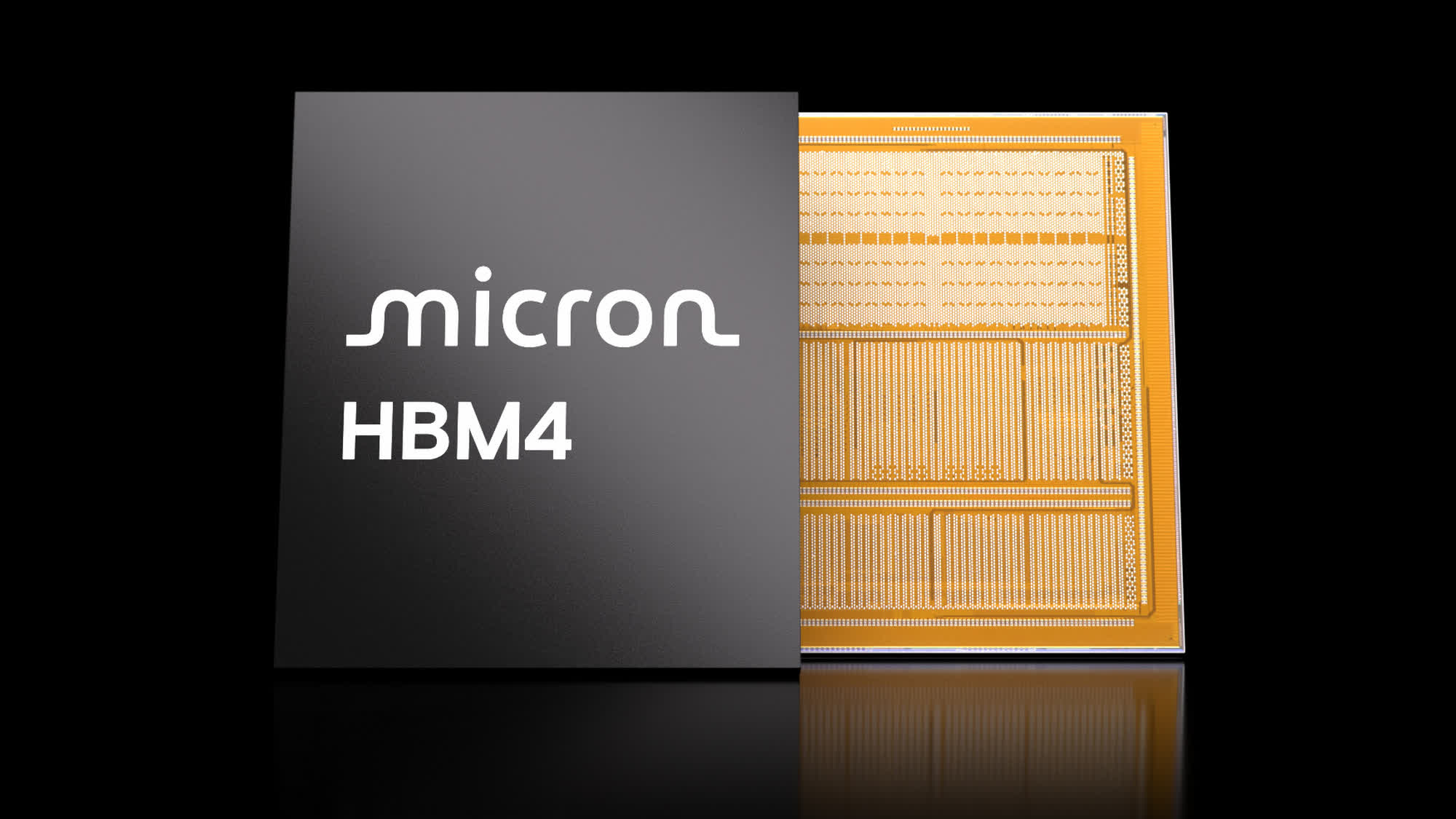
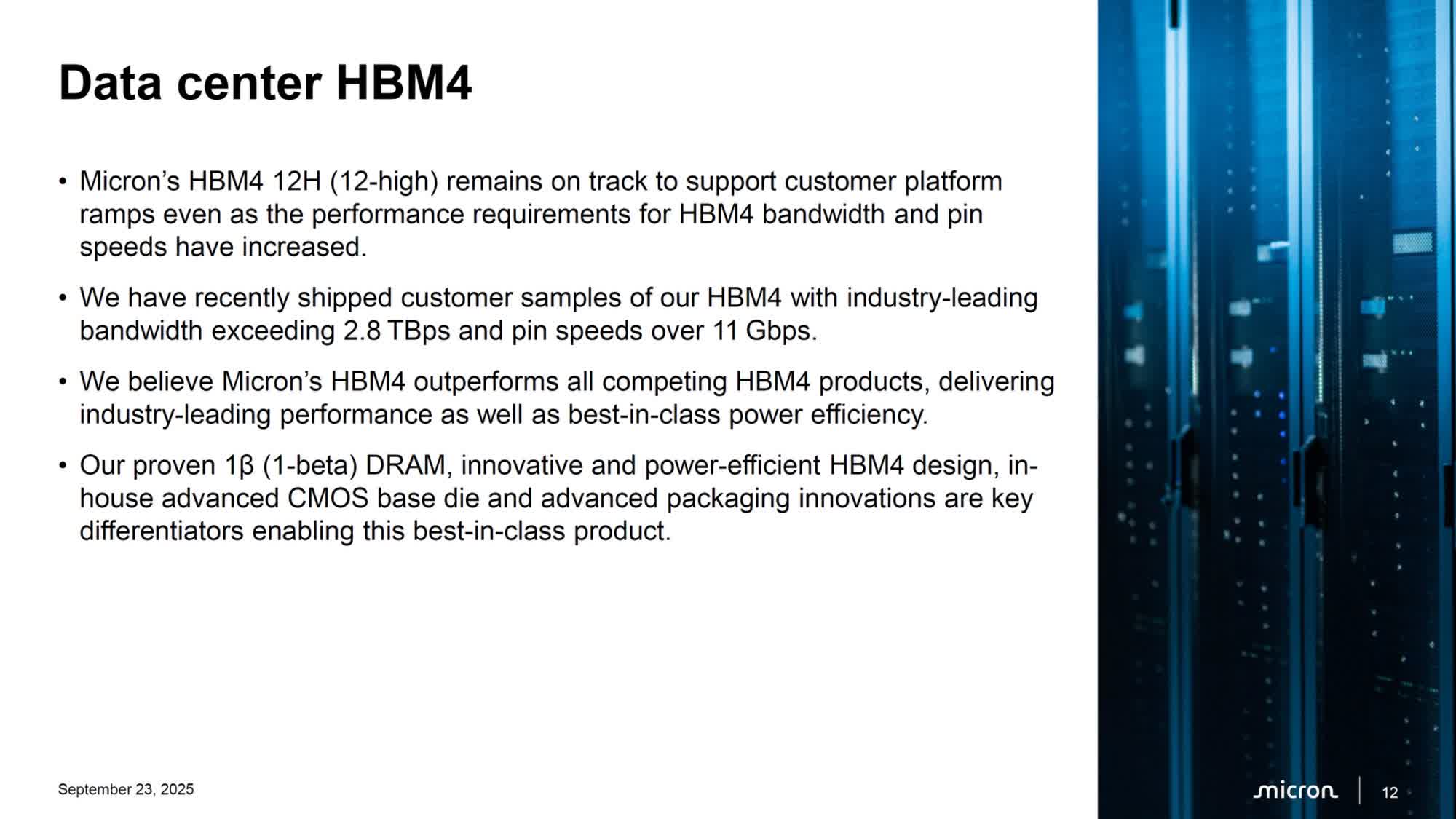
During its Q4 earnings call, Micron claimed that its latest HBM4 stacks deliver pin speeds of more than 11 Gbps and bandwidth exceeding 2.8 TB/s, outperforming competing products in both speed and efficiency. The company attributed these gains to its proven 1-gamma DRAM, a new HBM4 design, its in-house CMOS base die, and advanced packaging techniques.
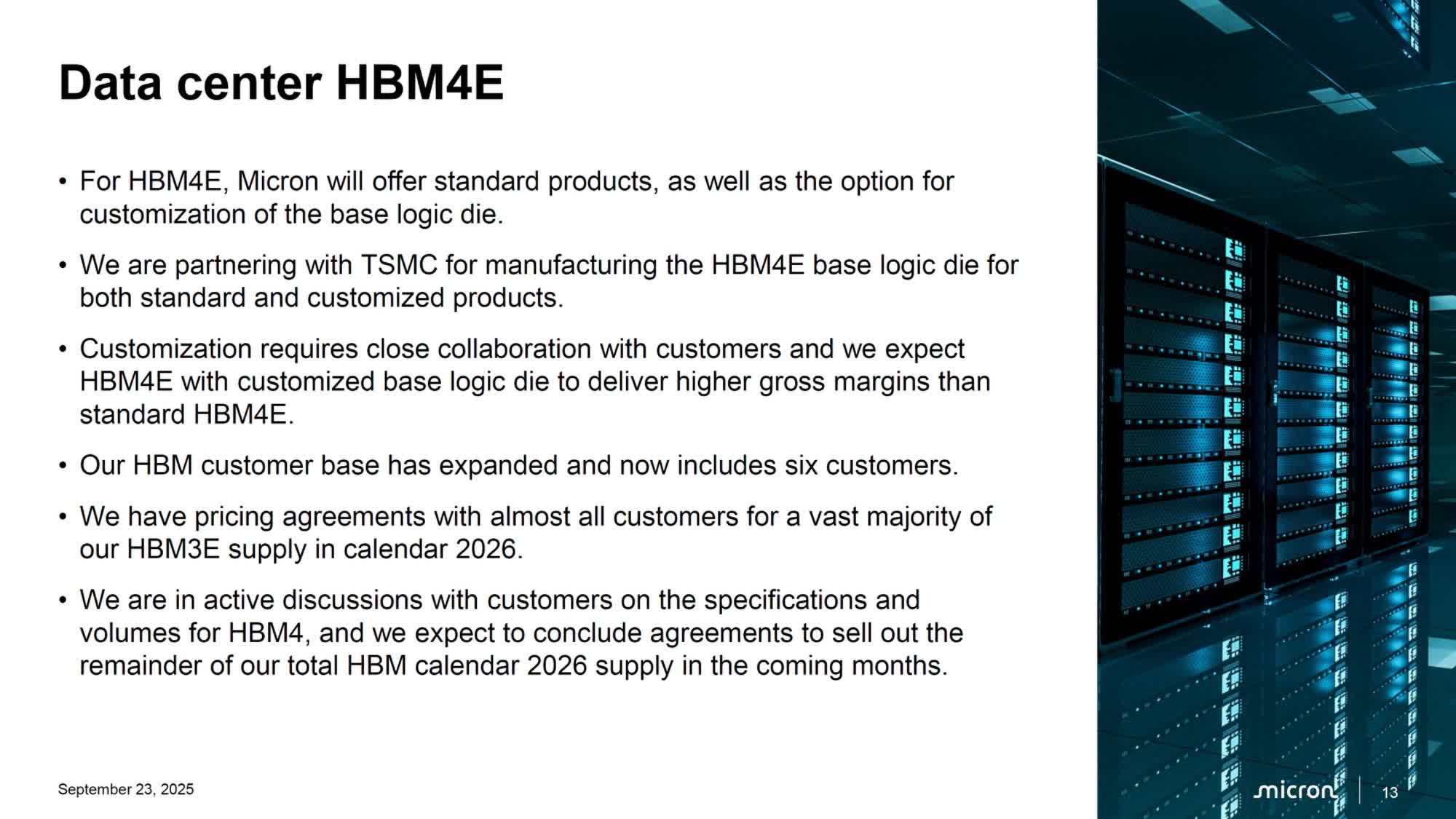
Micron also announced a partnership with TSMC to manufacture the logic base die for its upcoming HBM4E memory. Expected to launch in 2027, HBM4E will be offered in two variants: standard and customized. While the standard version will likely represent the majority of Micron's HBM4E orders, the company expects the customized option to deliver higher gross margins.
In addition to HBM4 and HBM4E, Micron is developing LPDDR6 and GDDR7 memory for AI and client products. The company, currently the sole supplier of LPDDR DRAM in the data center segment, also confirmed a partnership with Nvidia to promote LPDDR memory for servers.
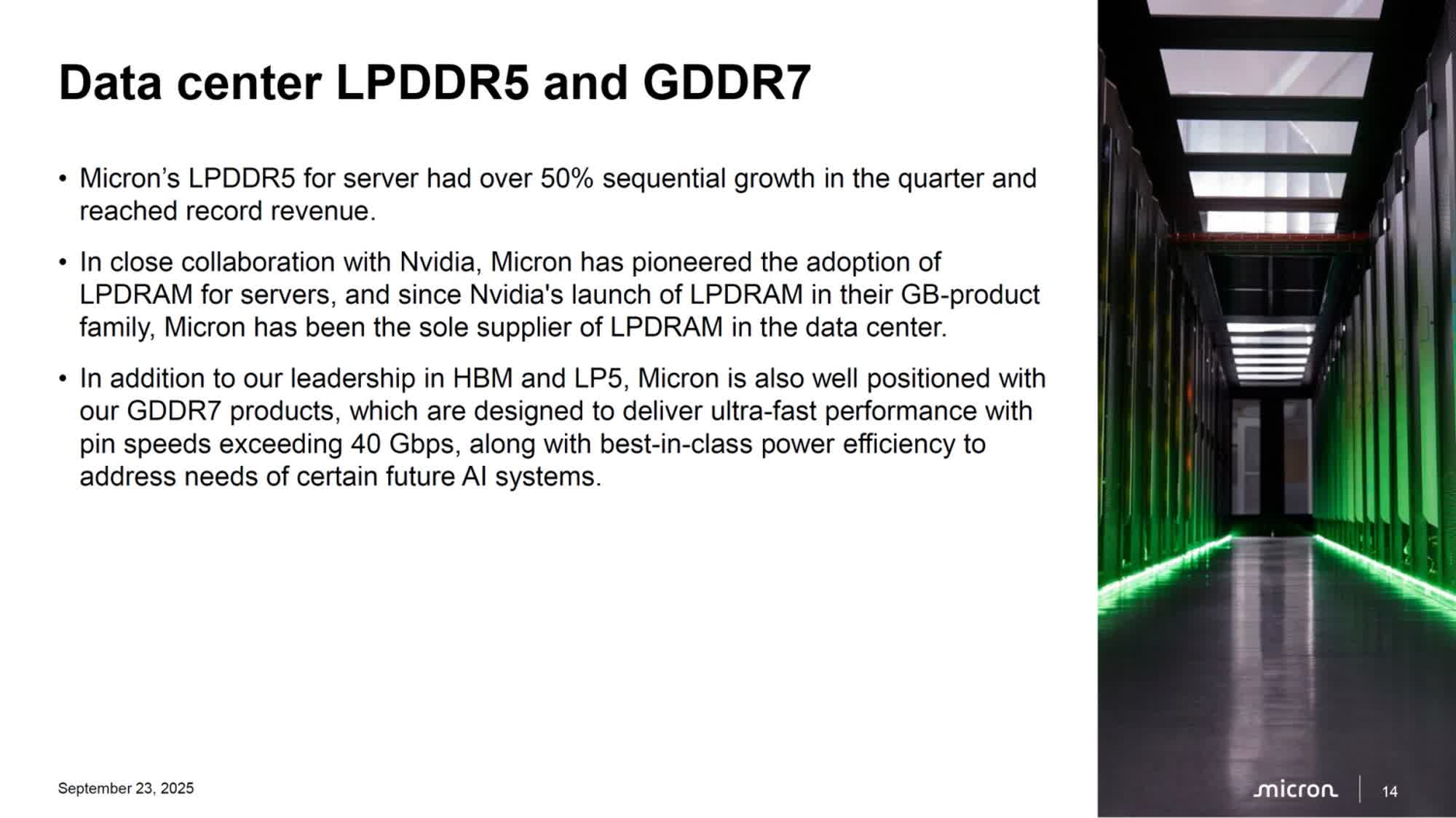
Micron is also developing GDDR7 memory for AI accelerators and gaming GPUs. Earlier this year, the company announced 32 Gbps GDDR7, but it has now confirmed that next-generation chips will exceed 40 Gbps pin speeds and deliver up to 1.5 TB/s of bandwidth. The company also claims they will offer best-in-class power efficiency.
Micron did not specify which products will use the 40 Gbps GDDR7 chips, but if earlier leaks are accurate, they are unlikely to debut in the RTX 50 Super series. While the RTX 60 series could still feature 40 Gbps VRAM, Micron's press release suggests the new memory is primarily aimed at commercial AI workloads.
Finally, Micron announced that its sixth-generation 1-gamma DRAM node has reached mature yields 50 percent faster than its predecessor. Building on the company's earlier 1-alpha and 1-beta nodes, the 1-gamma process will power future computing platforms across both industrial and consumer markets.
Micron ships 11 Gbps HBM4, confirms 40 Gbps GDDR7 in development


