Micron's workers want the AI boom bonuses SK Hynix and Samsung already gave theirs

Daniel Sims

Posts: 2,602   +79
Staff
Bottom line: The profits of DRAM and NAND manufacturers have skyrocketed since the AI boom drove up demand for memory. After SK Hynix and Samsung awarded their employees generous bonuses from the windfall, union members at Micron are now wondering when they will receive their share.

Taiwan-based media recently reported that Micron's two primary unions are dissatisfied with worker compensation amid the company's ballooning profits. The unions could threaten to strike, potentially disrupting an already strained global memory supply and worsening technology-related price increases.
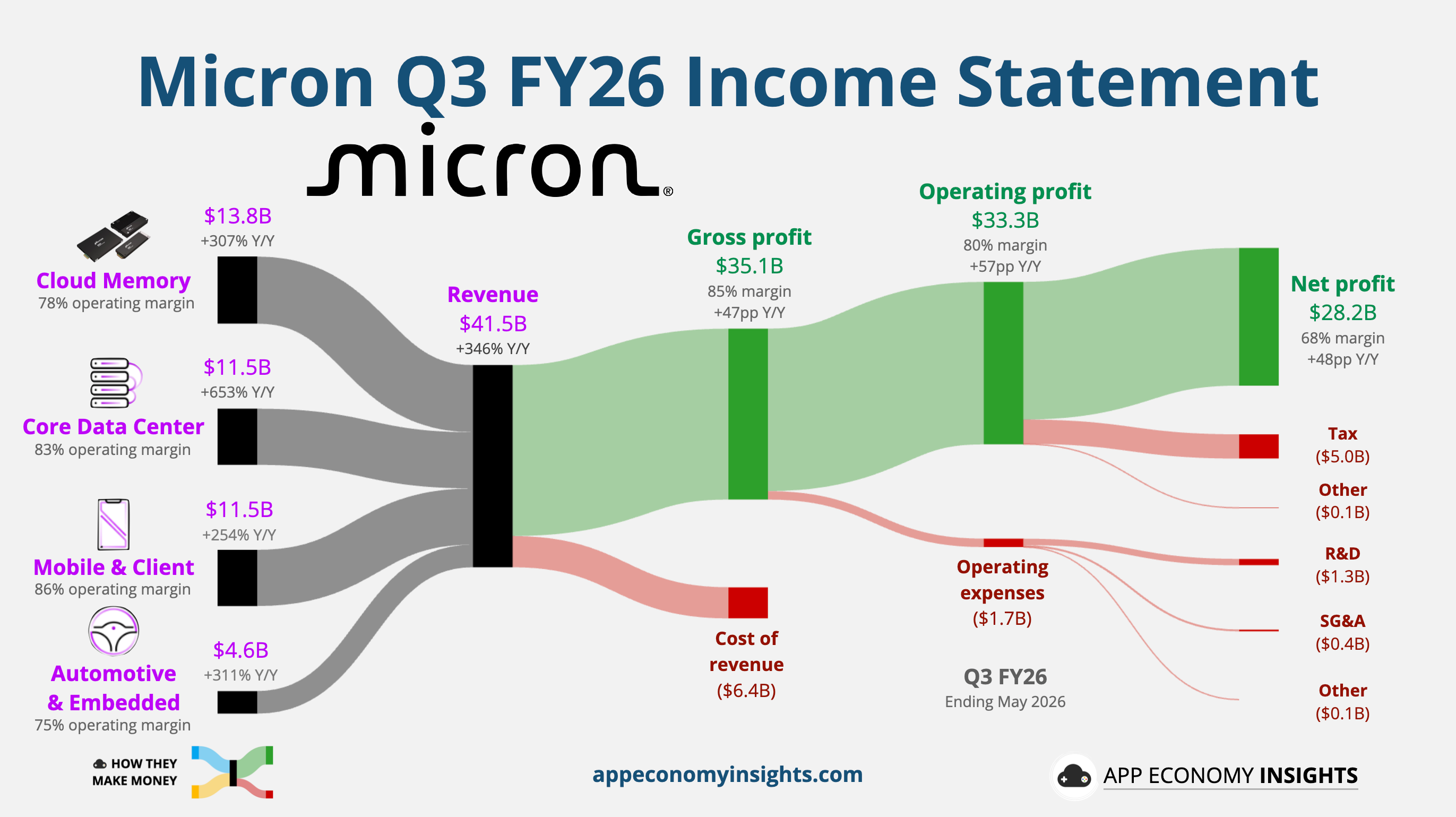
Union chairman Lin Zherui highlighted Micron's record-high profits stemming from the AI boom. Because data centers and other hardware powering large language models require large amounts of memory, data center operators and tech giants pursuing generative AI have reserved much of the DRAM and NAND production capacity from manufacturers such as Micron, SK Hynix, and Samsung.

In response, the Big Three have hiked prices, passing higher costs on to consumers while boosting their profits to unprecedented levels. The boom has pushed Micron's and SK Hynix's market valuations above $1 trillion.

However, bonuses for Micron employees have not increased to match the windfall. According to an alleged union pamphlet circulating on a Taiwanese forum, bonuses remain capped at 200% of salary over a five-month period. The poster who shared the pamphlet claimed that Micron union membership has increased nearly tenfold this year as a result.

Micron employees likely view their counterparts at SK Hynix and Samsung with envy after the two South Korean giants awarded their employees hundreds of thousands of dollars earlier this year. SK Hynix paid out around $477,000 per employee, a figure that could increase to $900,000 next year, while Samsung narrowly avoided a strike by paying out around $340,000.
Even brief work stoppages at Micron's plants could significantly hurt the company's profits and create ripple effects across the supply chain, pushing consumer prices even higher. If the company's unions threaten to strike, their demands could include increasing or removing bonus caps and overhauling retirement packages. Initial talks are expected to begin in mid-September.

Although uncertainty surrounds the sustainability of the AI boom, Nvidia's surging profits have delayed fears of a bubble for now. Amid public pushback against data centers, construction delays, and concerns that AI giants are hiding massive amounts of debt, experts still estimate that memory price hikes will continue beyond 2027, with prices potentially remaining elevated past 2030.

Permalink to story:

 
The crazy part is, the demand isn't even driven by a memory breakthrough. From slow to fast, it doesn't matter, ALL memory is in demand. They are experiencing collateral success, purely by circumstance and their willingness to abandon the consumer market to maximize those margins.
 
This is America, not Korea. Do you think Micron is so willing to just hand over billions of dollars to their workers? Yeah, right. This is going to turn into a legal fight, threats of strikes, etc. before they see a dime.
Did you forget that the Koreans has to engage in a legal fight, threaten strikes, ece to get their bonuses while you were writing that comment, or were you so horny to America bash you ignored all previous articles on the subject?
 
I imagine that, with the full backing of the US "government" the workers will be told to 'go pound sand', as the saying goes over there I believe? You can't beat the jolly old corporate greed.
 
Equity awards and compensation trends in a given market are key factors. Key compensation comes from stock awards and equity growth with growth companies. If they focus on cash payments, short timer mentality and brain drain can set in.
 
By employee, does it mean that it includes the bottom line factory operators too? Those who solder, pack, etc?
 
Just remember that higher paid employees means higher prices for customers.

One stakeholder’s benefit is often another stakeholder’s cost. Everything is trade offs.

https://www.idahostatesman.com/news/business/article314464239.html

To be fair, Micron is spending money expanding. They are building more hangars to house more private jets for the CEO.

The payouts to bottom line workers would not necessairly mean higher prices for customers. US companies have a two-tier compensation structure. The first group of people they pay as much as they can possibly pay. These are your executives and irreplacable employees like subject matter experts. The second group of people they pay as little as they possibly can. Just enough so they don't leave. HR is constantly checking average pays at competing companies. That second group is asking for a pay raise. Micron can distribute more money to the second group from the pool allocated to labor costs.

I never hear people arguing about customer paying higher prices when CEOs get 10s of millions pay raises. I only hear it when people making minimum wage want a pay increase to share in the profit on the company they are working for.

The only way for bottom workers to participate in the profits of their company is to have a 401k and to buy that companies stock.
 
Just remember that higher paid employees means higher prices for customers.

One stakeholder’s benefit is often another stakeholder’s cost. Everything is trade offs.
Higher prices for customers? Rather a moot point, given the already- astronomical prices, don't you think? Let's face it-what percentage of 'normal' people can (or want) to shell out nowadays?
 
This is America, not Korea. Do you think Micron is so willing to just hand over billions of dollars to their workers? Yeah, right. This is going to turn into a legal fight, threats of strikes, etc. before they see a dime.
Well yeah, obviously it will. But I still wish them the best of luck in the fight. It's a fight worth mounting.
 
Higher prices for customers? Rather a moot point, given the already- astronomical prices, don't you think? Let's face it-what percentage of 'normal' people can (or want) to shell out nowadays?
It's not a moot point, because my point is everything has trade offs, not that prices are already high.
 
Back