Microsoft is removing 32GB size limit for FAT32 volumes, this time for real

Alfonso Maruccia

Posts: 2,600   +978
Staff
FAT is Fattening: Some of Microsoft's technical decisions in Windows originated from arbitrary or outdated constraints, many of which could now be removed with relative ease. Case in point: the FAT32 file system, which is now being pushed beyond its traditional limits – provided you are comfortable using the command prompt to configure a new storage drive.
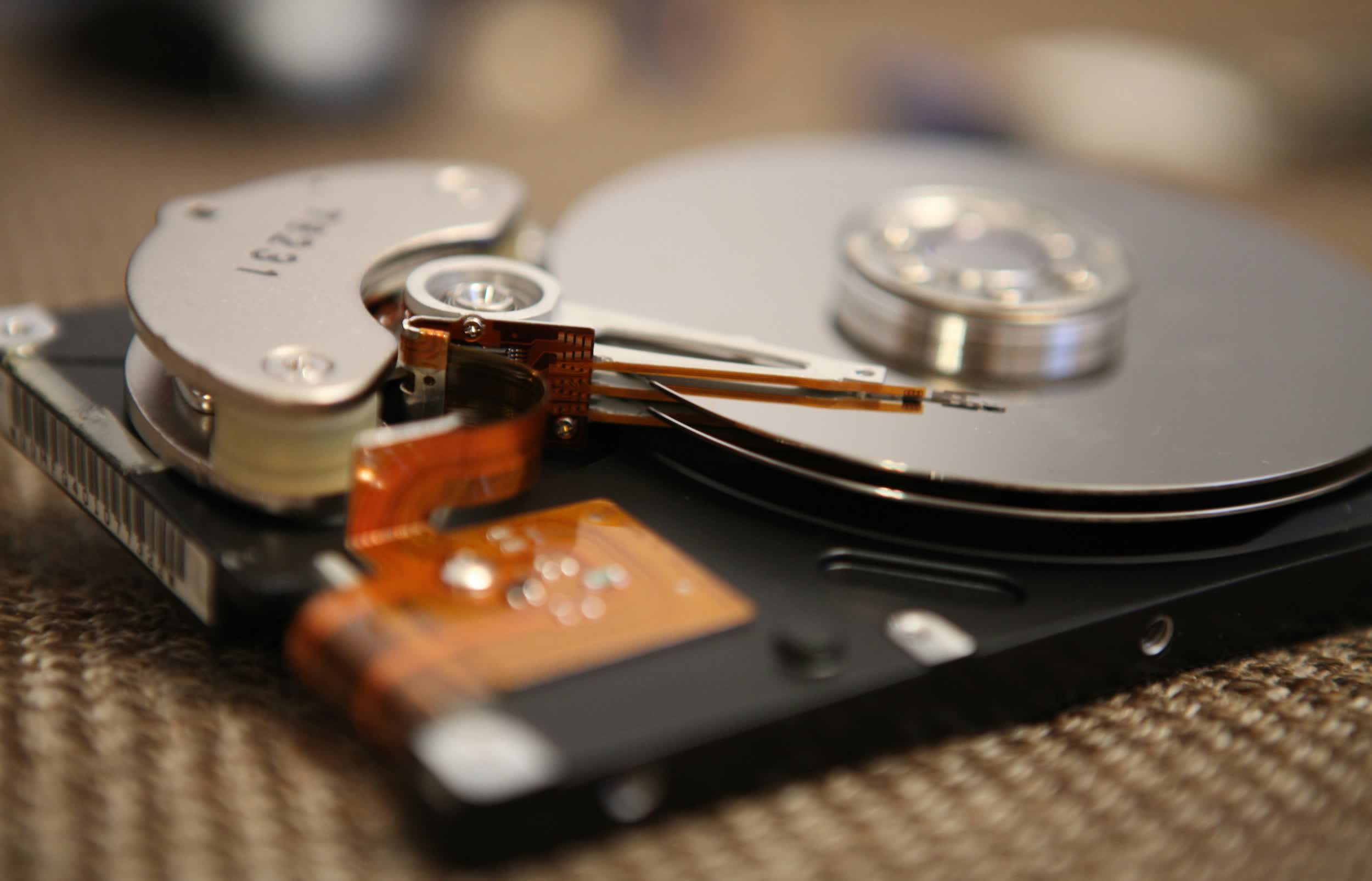
Microsoft recently released a new preview build of Windows 11 for the Windows Insider channels. Users enrolled in the Insider program can now test a somewhat historic change: a new "hard" size limit for disk volumes formatted with the FAT32 file system. This long-anticipated update may improve compatibility and flexibility with external storage devices and other operating systems.

The newly released Windows 11 Insider Preview Build 26300.8170 (KB5083632) includes several changes related to storage, networking, Windows security, and more. Most notably, the build increases the FAT32 formatting limit from 32GB to 2TB. Users will need to use the traditional "format" utility via the Command Prompt to create larger FAT32 volumes, as the graphical interface will continue to enforce the older limit.

Microsoft first announced the FAT32-related change in 2024, but rollout has only now begun reaching a subset of Windows Insider users. Former Windows developer Dave Plummer previously explained that the original 32GB limit was introduced for the Windows 9x format utility, even though the FAT32 specification itself never imposed such a restriction.

Originally introduced with Windows 95 OSR2 (MS-DOS 7.1) in 1996, FAT32 significantly expanded the capabilities of the original File Allocation Table system developed in 1977. The FAT32 boot sector uses a 32-bit field to count the number of sectors in a volume, which limits maximum storage capacity to 2TB for volumes using 512-byte sectors. With a 4,096-byte sector size, the theoretical limit increases to 16TB.

Multi-terabyte storage drives were effectively science fiction in the 1990s, but they are now commonplace in both SOHO and home environments. While Windows 9x and NT have long been capable of supporting FAT32 volumes larger than 32GB, users historically had to rely on third-party utilities to format larger drives.

Despite its age, FAT32 still offers strong compatibility across a wide range of operating systems outside the Windows ecosystem. Microsoft's successor to FAT32, the NT File System (NTFS), is not always the most convenient choice when exchanging data between Windows and other platforms.

In addition to increasing the FAT32 volume size limit, the new Windows 11 Insider build also improves performance when browsing large volumes in the Settings app. Other changes include more reliable network data usage statistics, an improved experience when checking Secure Boot status, and additional refinements.

Permalink to story:

 
Are volumes formatted past 32GB capacity, backwards compatible with older OSes though?

Either way, considering how finicky and fragile the FAT filesystem is, increasing this limit seems like a recipe for disasters...
 
Odd... If AI is doing so well, why are they improving Windows and "legacy" utilities? Shouldn't have AI solved all of their problems and have infinite return by now?
 
Yes - as the article states, the 32gb limit is a Windows issue, not a FAT32 issue…

I’d like to know what kind of “disasters” you foresee…
Gee I wonder how removing a long set legacy limit on partition size in a world where legacy software doesnt always get updated MIGHT cause problems.....

The mind wonders.
 
Either way, considering how finicky and fragile the FAT filesystem is, increasing this limit seems like a recipe for disasters...
I use NTFS even on flash drives for the TV.

I don't think it is possible to have files larger than 4GB using FAT32. It's not an artificial limitation like the 32GB partition size limit.
The last field of a directory entry represents the file size in bytes. It is 4 bytes in length, or 32 bits, so the maximum file size is indeed 2^32-1 bytes, or 4 GB (minus a byte).
 
Can't believe after all this time that the size limit was a completely arbitrary number with no underlying technical reason to exist. I always assumed it was some max byte/word size for some number of heads, cylinders etc... Turns out it was just more MS madness.
 
Can't believe after all this time that the size limit was a completely arbitrary number with no underlying technical reason to exist. I always assumed it was some max byte/word size for some number of heads, cylinders etc... Turns out it was just more MS madness.
In older systems there is a reason, the only reason to still use FAT32 is comparability with ancient hardware (earlier than XP)
 
No NTFS-style journaling means you'll spend hours in the Microsoft ScanDisk shell trying to recover file recording errors? :-D
The lack of journaling actually reduces the chance of corruption for USB drives which can be removed at any time. Or more precisely, it trades a slightly higher risk of individual file corruption against having the journal itself corrupted and losing the entire drive.

In older systems there is a reason, the only reason to still use FAT32 is comparability with ancient hardware (earlier than XP)
It's also faster, has less storage overhead, and performs considerably fewer (drive-degrading) writes than NTFS ... another reason it's used so often on small flash drives.
 
Last edited:
I'm assuming "someone" could make a GUI for the new options? But then I suppose that would be a 3rd party app again.
 
I think they should rename it at the same time as the word 'fat' is offensive to people of larger proportion. I know it stands for file allocation table, so if they want to keep that meaning, at least put periods between the letters so that it is obvious that they aren't body shaming. Something like: "F.A.T. 32"
 
I think they should rename it at the same time as the word 'fat' is offensive to people of larger proportion. I know it stands for file allocation table, so if they want to keep that meaning, at least put periods between the letters so that it is obvious that they aren't body shaming. Something like: "F.A.T. 32"
I heard they were considering Object Bidirectional Expansion Sectional Emergence - but it didn’t roll off the tongue…
 
In older systems there is a reason, the only reason to still use FAT32 is comparability with ancient hardware (earlier than XP)
I've been dabbling with Linux and Android distros this year and those that recommend/use and EFI partition, it is always FAT32. Even though their primary format is not. (almost ready to jump ship!)
So I guess until Microsoft no longer needs to use FAT32 for EFI, it will stay with us? I do understand it is a small & simple, single-purpose partition.
 
Can't believe after all this time that the size limit was a completely arbitrary number with no underlying technical reason to exist. I always assumed it was some max byte/word size for some number of heads, cylinders etc... Turns out it was just more MS madness.
I think we can put that one in the same bin as the old memory limit discussion. There is even an article on Computer World about that in case no one remembers. <https://www.computerworld.com/artic...on-t-go-away-but-did-gates-really-say-it.html>
 
Back