Microsoft Surface RTX Spark Dev Box packs 128GB unified memory and Nvidia's new Arm chip for local AI

Skye Jacobs

Posts: 2,030   +59
Staff
First look: Microsoft is stepping up its pitch to developers who want to run AI locally, introducing a compact desktop designed for sustained, high-intensity workloads without relying on the cloud. The new Surface RTX Spark Dev Box uses Nvidia's Arm-based RTX Spark chips and is built to run at full capacity for long periods, delivering the kind of performance developers need for large, compute-heavy on-device models.
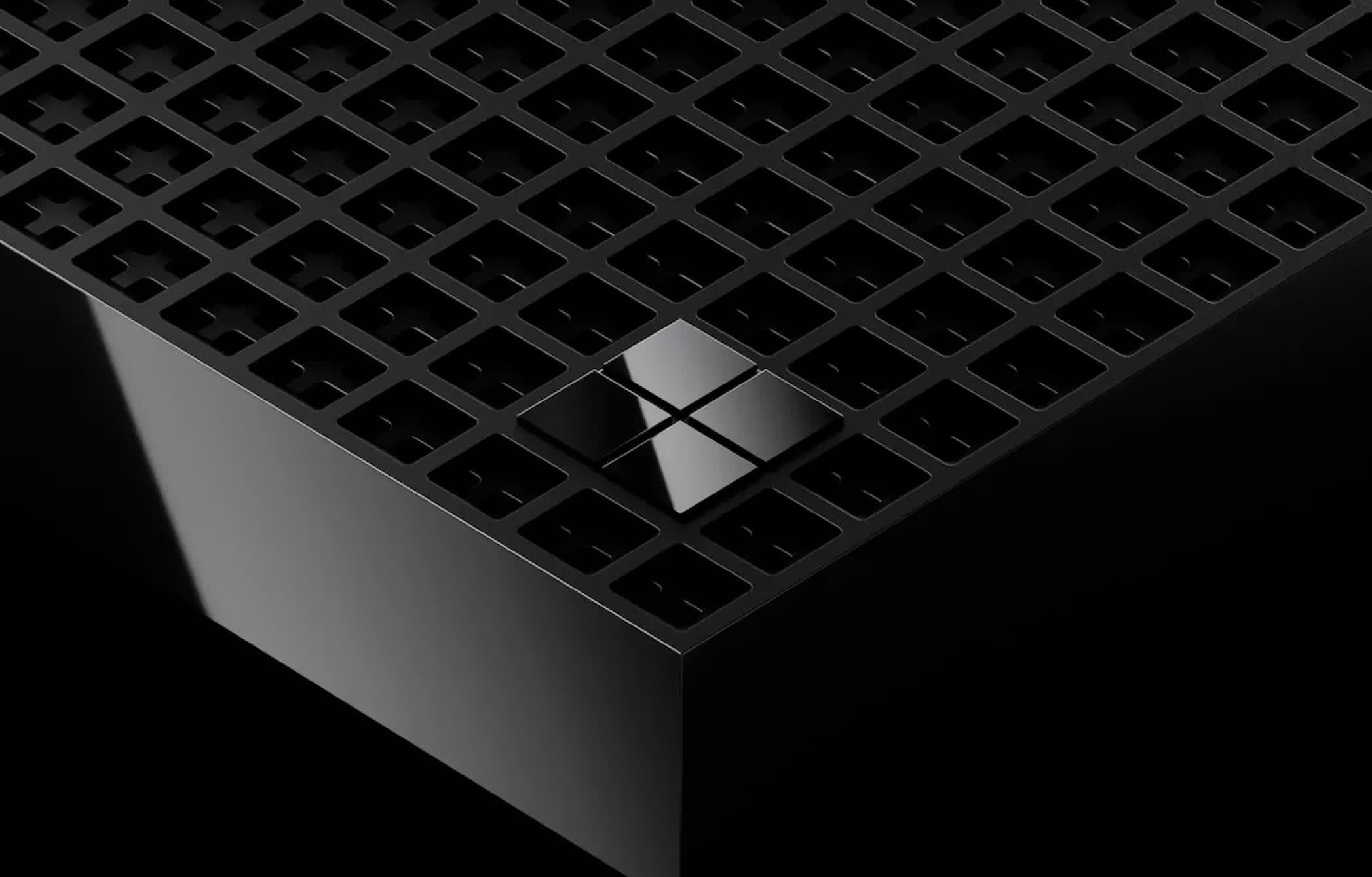
At first glance, the device is understated, with a design that loosely resembles the top of an Xbox Series X. The aluminum casing isn't just aesthetic; it also doubles as a heatsink, helping the system manage a 100-watt thermal envelope. That's slightly above the 45- to 80-watt thermal envelopes typical of RTX Spark-powered laptops. The extra headroom should help the device sustain longer, compute-heavy workloads without needing to throttle performance.

Under the hood, Microsoft is leaning heavily on memory capacity as a differentiator. The company is equipping the Dev Box with 128GB of unified memory, which it says is sufficient to run models of up to 120 billion parameters locally. Taken together, the specs make it clear Microsoft isn't pitching this as a general-purpose desktop, but as a dedicated system for developers building and testing AI locally.

The company is also trying to eliminate some of the usual setup friction. Instead of shipping a blank Windows installation, Microsoft is preloading the system with developer tools such as Visual Studio Code and GitHub Copilot. Even the operating system environment has been tuned with developers in mind.
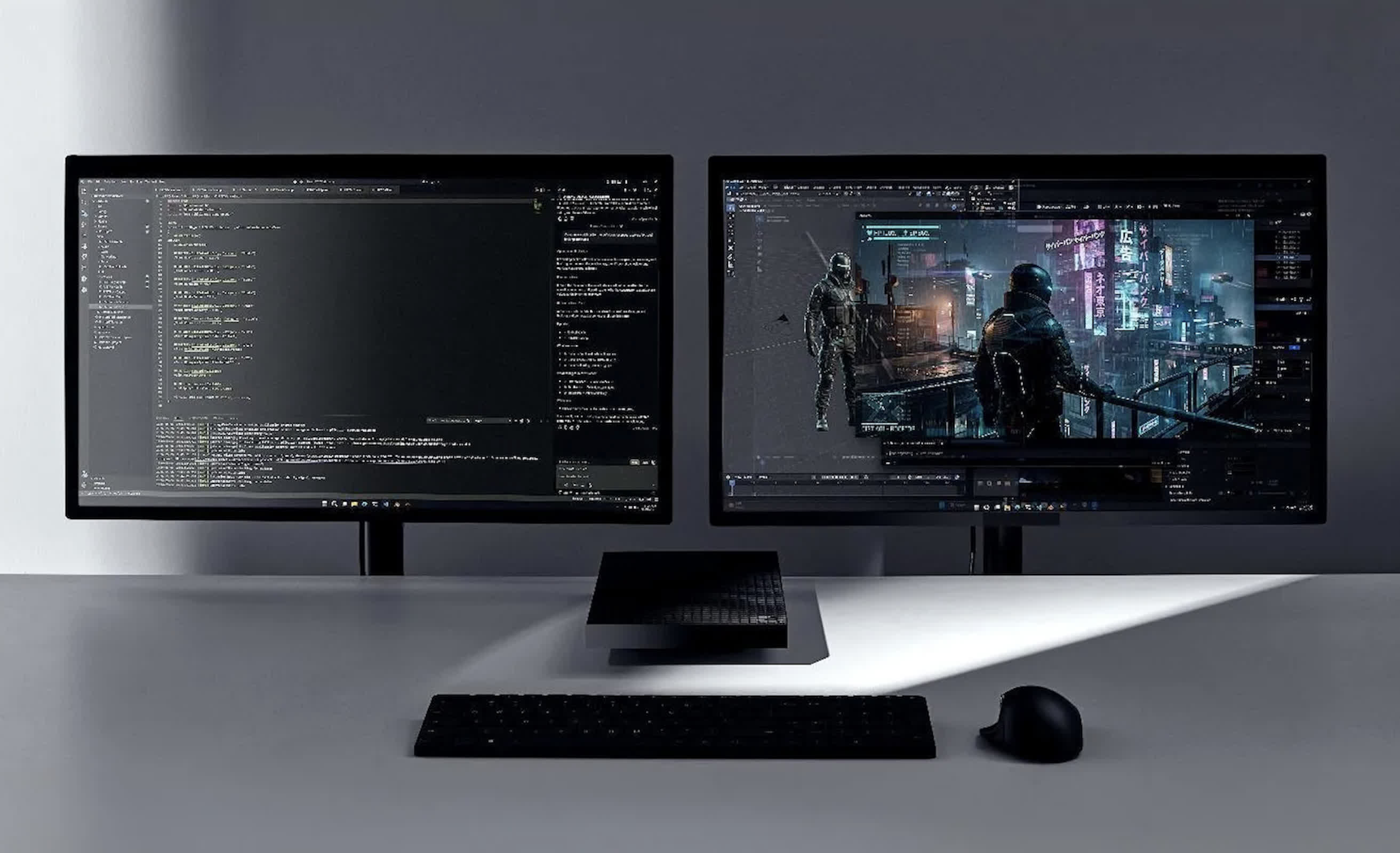
Andrew Hill, corporate vice president of Surface, said the Surface RTX Spark Dev Box comes with Windows 11 Pro pre-configured specifically for developers, with system-level settings designed to streamline workflows. Those defaults include a dark theme, a stripped-down taskbar, widgets turned off, Do Not Disturb enabled, Developer Mode enabled, and PowerShell 7 set as the default shell.

That level of pre-configuration may seem minor, but it reflects a broader shift. As AI development becomes more hardware-dependent, companies are beginning to treat the entire stack – silicon, system design, OS, and tools – as a single, integrated product. Microsoft's approach suggests it wants developers up and running immediately, without the usual hours spent configuring environments.

The timing is also notable. The Dev Box effectively steps into a space that Qualcomm had aimed to occupy with its Snapdragon Dev Kit, a Windows-on-Arm mini PC that never made it to market after running into hardware quality issues. Microsoft now appears to be aligning more closely with Nvidia's ecosystem instead, betting that its chips and software stack can better support the next phase of Windows-on-Arm development.

At the same time, the device enters a growing field of compact, AI-focused systems from various hardware partners built on Nvidia's RTX Spark platform. These machines are all exploring similar territory: how to bring serious AI compute into smaller, desk-friendly form factors without sacrificing performance.

Microsoft has yet to detail full specifications or pricing, but says the Surface RTX Spark Dev Box will go on sale later this year in the US, exclusively through its online store. For developers who want to keep large models on their own hardware rather than in the cloud, it could serve as a more focused alternative to a general-purpose desktop or laptop.

Permalink to story:

 
Who wants to kick me in the nuts? I'm sure I've pissed off enough people on here that SOMEONE wants to...it legitimately seems like a good platform, but I don't want any parts of Nvidia's nonsense. Thanks for ruining the work with massive amounts of AI
 
I still don't get any of this. The emulator is slow and buggy, and the system only works when the software is re-written to run on ARM. Microsoft would have been better off to just write a new ARM OS from scratch then to call these things "Windows" PC's. The only benchmarks out were chosen by Nvidia, and even though Nvidia makes some good GPUs, you have to pay through the nose for the privilege of using them.

It will be interesting to see if Microsoft has written enough native ARM software that the people that buy them that don't know any better start returning them in droves (like the last Qualcomm effort).
 
128GB of RAM. In the Artificial Incompetent sh1thole we are currently forced to live in can you imagine how much this pointless POS is going to cost.
 
Who wants to kick me in the nuts? I'm sure I've pissed off enough people on here that SOMEONE wants to...it legitimately seems like a good platform, but I don't want any parts of Nvidia's nonsense. Thanks for ruining the work with massive amounts of AI
yRaz, I don't want to kick you in the nuts, nor do am I pissed/hate you. most of the things you say I disagree with, sometimes a little, mostly a lot. I want people to disagree with, because it means I have a different opinion and maybe yours is "better" than mine, because I haven't seen or understood something. Only way I'll know is to hear you out and think about it. Keep doing you but remember to listen, take opinions onboard and remember that most people just want to live safe, comfortable lives, where they aren't taken advantage of. I hope I continue to see your opinions into the future and I hope I can sway you to my view points a little more often. Either way, I hope you take it sleezy.
 
I still don't get any of this. The emulator is slow and buggy, and the system only works when the software is re-written to run on ARM. Microsoft would have been better off to just write a new ARM OS from scratch then to call these things "Windows" PC's. The only benchmarks out were chosen by Nvidia, and even though Nvidia makes some good GPUs, you have to pay through the nose for the privilege of using them.

It will be interesting to see if Microsoft has written enough native ARM software that the people that buy them that don't know any better start returning them in droves (like the last Qualcomm effort).
A new ARM OS would contain none of the legacy compatibility that drives windows. They tried that, twice. It never took off, because without legacy support nobody wants to use windows.
 
Cannot figure a reason to spend that much money on a number cruncher and then run Windows on it.
 
A new ARM OS would contain none of the legacy compatibility that drives windows. They tried that, twice. It never took off, because without legacy support nobody wants to use windows.

That's the point, Windows on ARM doesn't have the compatibility either. Most hardware doesn't have drivers, the emulation layer is practically useless, the only reason that the games work better is because Nvidia strong armed the anti cheat developers to port them to native ARM code. Which is why Office and the rest of the apps that do run well, they've been recoded for ARM. Aside from the things that Nvidia got pushed through, it's still no better than the Qualcomm efforts that have not exactly been setting sales records. Add the Nvidia tax on to the price tag and I don't see these getting much traction outside the AI developer realm.
 
Looks like a super exciting product/tech. I really hope ARM can get a foothold in the desktop market. I'd love to see some performance benchmarks on it against traditional x86 gaming PCs. I fear price will be an absolute killer though.
 
Back