
What we know so far: Plenty of ray-traced games still bounce light off cheaper, low-detail copies of their scenery rather than the models players actually see on screen. That's mostly because rebuilding the GPU's ray tracing data for every swaying tree and moving character each frame simply takes too long. A new DirectX feature currently in preview aims to fix that. It could also free up a big chunk of the video memory ray tracing currently eats.

Microsoft detailed Clustered Geometry and a companion feature called Partitioned TLAS on its DirectX developer blog this week, describing the pair as the biggest change to DirectX Raytracing since the API arrived in 2018.
Right now, any time a mesh deforms or streams in at a new level of detail, the GPU has to rebuild that object's acceleration structure from scratch. Clustered Geometry instead splits models into small chunks of up to 256 triangles that get built once and reused. So when an object changes, developers can reassemble existing clusters or rebuild just a handful of them.
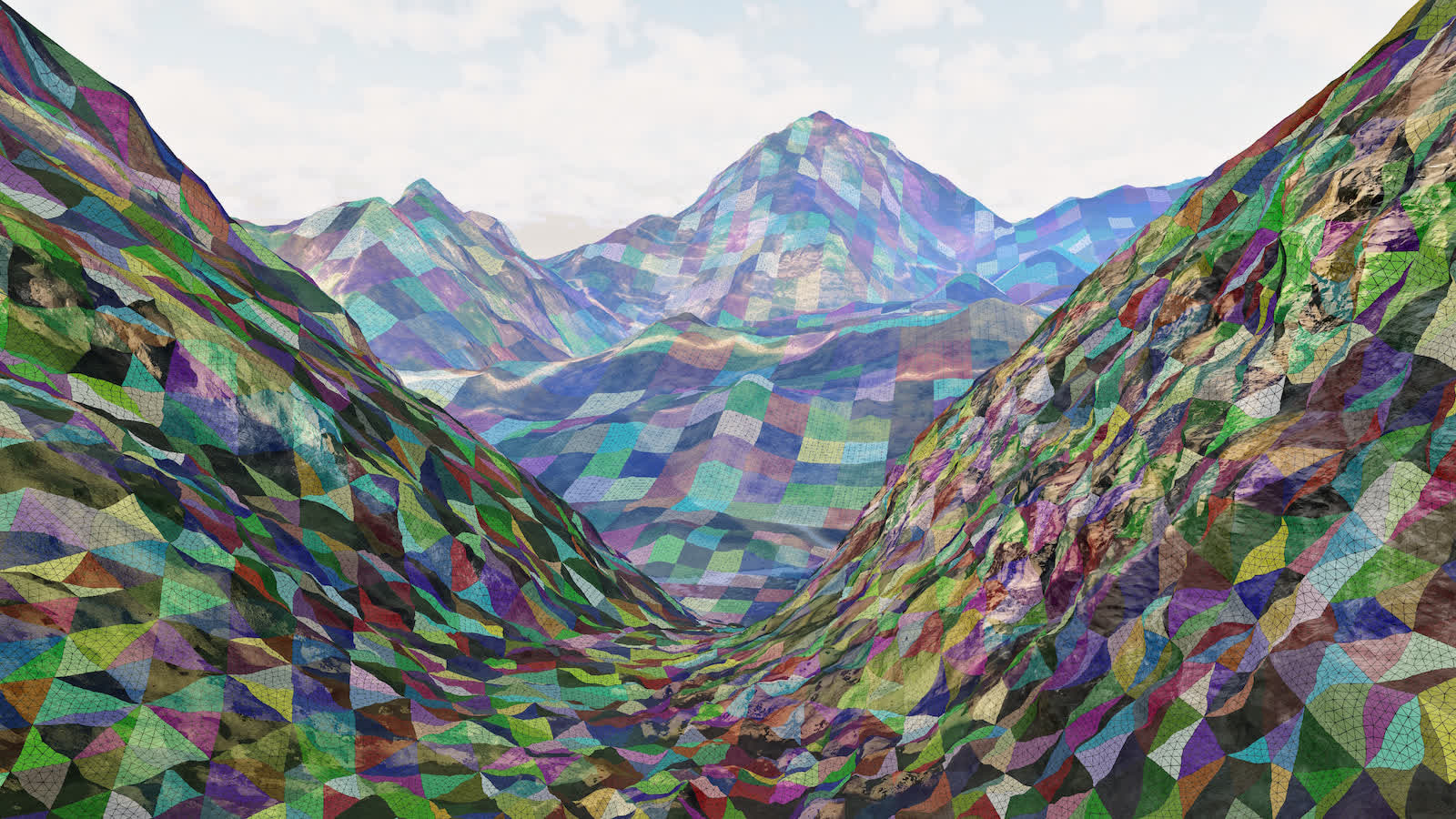
Partitioned TLAS applies similar thinking to the whole scene. It breaks the world into regions so that only the parts where something actually moved get updated each frame.
Microsoft's own test sample makes the gains look enormous. On a Radeon RX 9070, switching from conventional rebuilds to clustered geometry lifted the frame rate from 1.2 fps to 79 fps. Per-frame build time dropped from 788ms to just over 3ms, and memory for those structures shrank from roughly 7.5GB to 774MB, about 90% less. That's ray tracing data alone, though, not a game's overall VRAM footprint.
Still, Microsoft warned in all caps that games shouldn't expect wins anywhere near that size. Clustered builds also need far more temporary scratch memory, so developers will have to plan around that.
Nvidia has actually been shipping the same idea since last year as RTX Mega Geometry. In Alan Wake 2, it improved both frame rates and image quality. Earlier this month, Gears of War: E-Day used it to ray trace Unreal Engine 5's full-detail Nanite geometry instead of the static, low-poly proxies the engine normally falls back on.
The difference now is that it's part of DirectX, so developers get one path that works across vendors. No new hardware is needed, either: Nvidia supports it on every RTX card, and Intel covers its Arc B-series GPUs and recent Core Ultra chips. On AMD's side, though, only the Radeon RX 9000 series made the list so far.
For players, the wait will be a little longer. Everything is still in preview and needs Windows Developer Mode to switch on, so games built around it are some way off. And going by Gears, even Nvidia's version asks for a GeForce card with at least 12GB of VRAM before it can be enabled.
Microsoft's DirectX update could slash ray tracing memory by up to 90 percent


