
What just happened? 3D printing has become very good at making shapes, but making complex machines with moving parts is where most printers tap out. MIT researchers, however, have developed a multimaterial extrusion platform that can produce a fully functional electric motor in a single process, with one small post-print step.
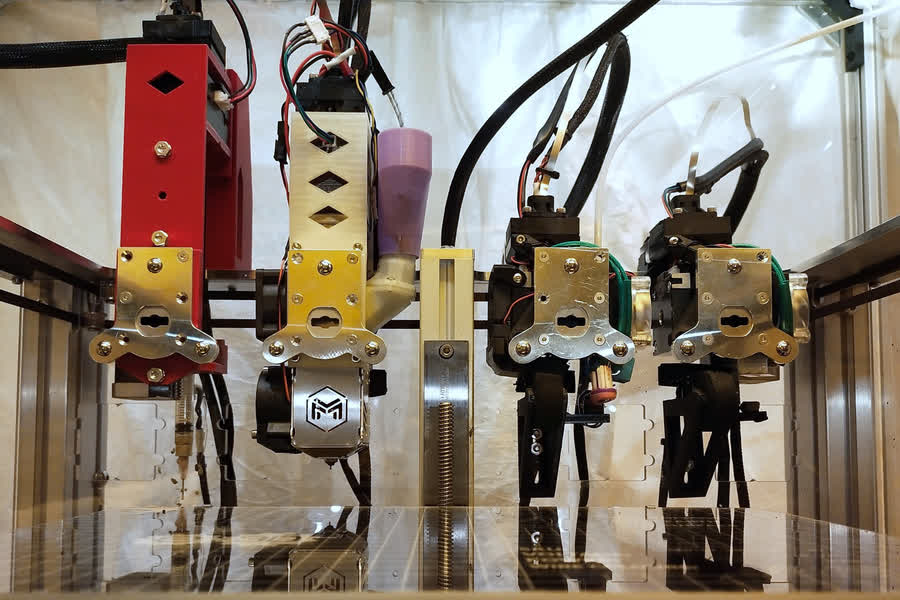
The team, based at MIT's Microsystems Technology Laboratories, demonstrated the system by printing an electric linear motor – the type that generates straight-line motion instead of spinning a shaft.
Linear motors show up in pick-and-place robotics, optical positioning hardware, and conveyor systems, where moving precisely from A to B matters more than RPM.
What makes this different from the usual "multimaterial" pitch is that it's not just swapping between two types of plastic. The printer uses four extrusion tools that can handle different feedstocks, letting it lay down five functional materials in one automated build.
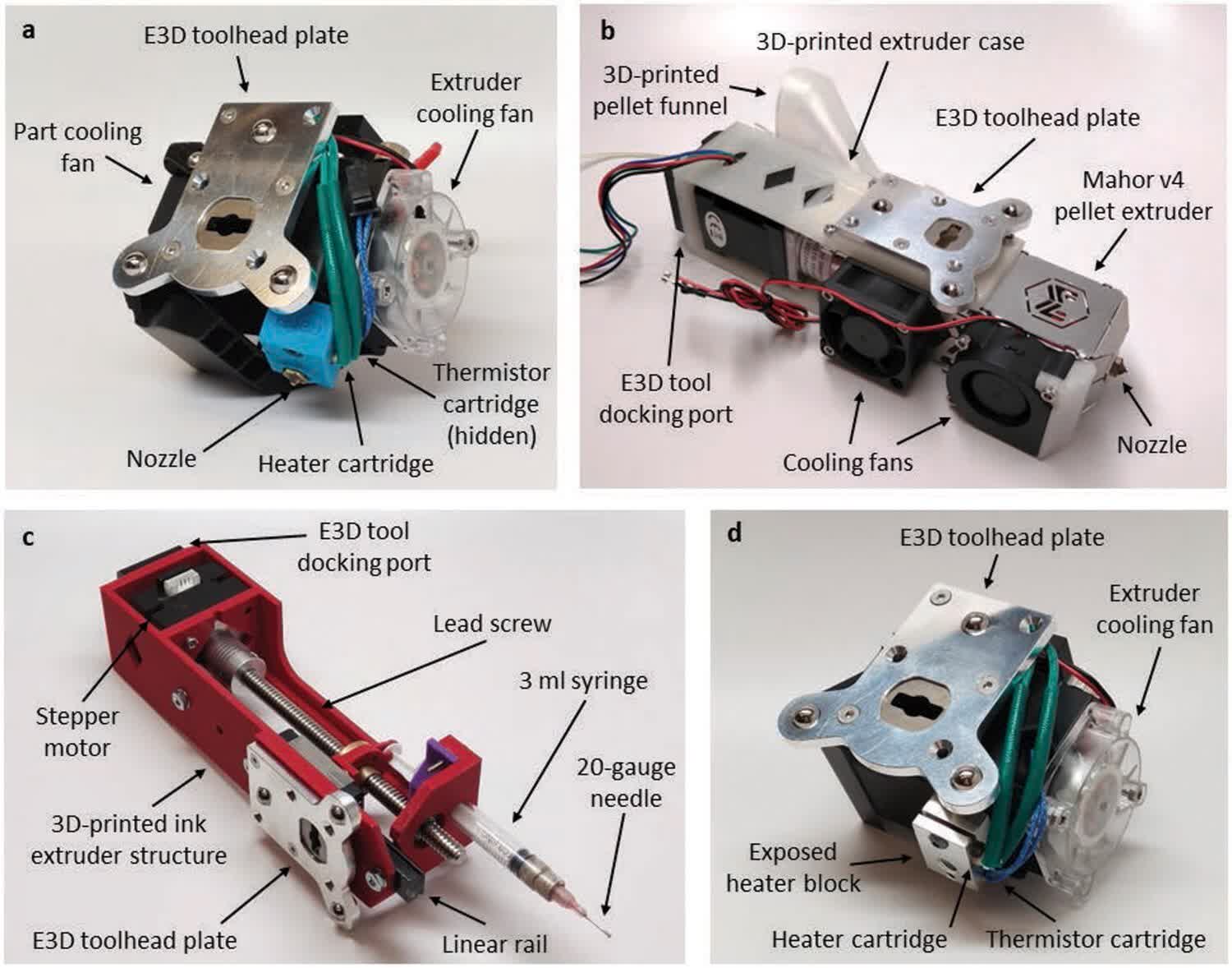
Those include a structural/dielectric material for the body and insulation, conductive material for the current-carrying paths, soft magnetic material to shape fields, hard magnetic material for permanent-magnet behavior, and a flexible material where compliance is useful.
That combination is a headache for typical systems. Conductive materials often work best as inks that need pressure-based dispensing, while standard filament and pellet extruders rely on heat. Insulation can degrade if it's exposed to too much heat or UV during curing. Even small alignment errors between tool changes can turn a motor into something resembling modern art.
MIT's approach leans on sensors and a control framework that makes sure each nozzle swap lands exactly where it should, layer after layer.
The only required post-processing step is magnetizing the hard magnetic material after the print finishes. From there, the motor runs.
According to the researchers, the printed device performed as well as – and sometimes better than – comparable linear motors that require more complex fabrication.
The team estimates that process costs around 50 cents in materials per motor. That doesn't mean industrial motors/actuators are about to be replaced, but it does point to a future where you can prototype or replace custom electromechanical parts on-site without depending on the supply chain.
MIT's next goal is to integrate magnetization into the print process itself and move from linear designs to fully 3D-printed rotary motors. We're not quite at the level of Star Trek replicators, but printing replacement motors in an emergency instead of waiting for one to be delivered has moved a lot closer to reality.
MIT's new 3D printer can create a working electric motor in one go


