Sounding off: NASA is getting ready to send four astronauts around the moon in a capsule whose main safety system has already behaved in an unexpected way. The Orion spacecraft's Avcoat heat shield, which flew once on an uncrewed test, will launch without changes even though the last mission showed cracking and loss of charred material during reentry.
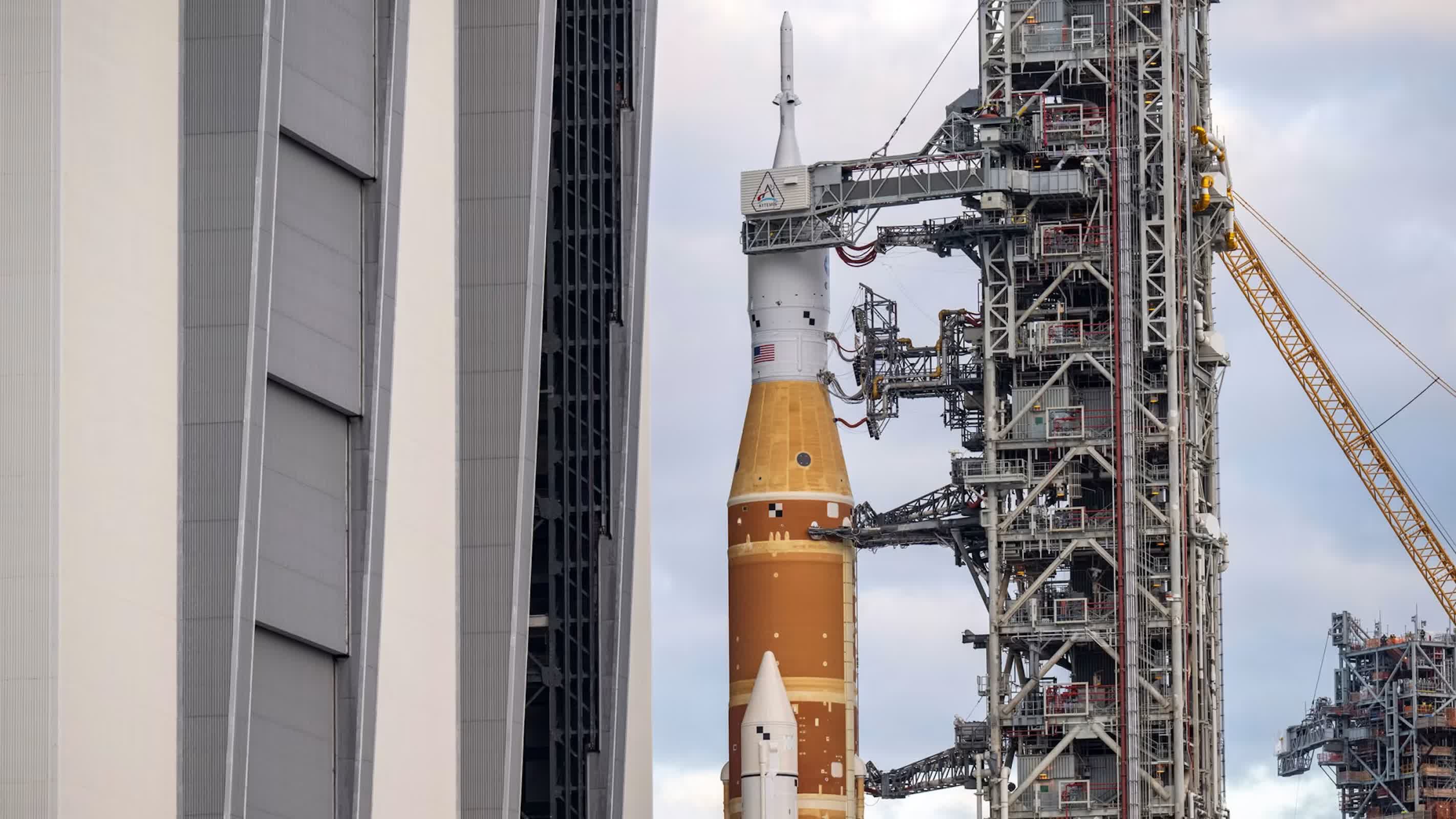
The Artemis II crew comprises NASA astronauts Reid Wiseman, Victor Glover and Christina Koch, and Canadian Space Agency astronaut Jeremy Hansen. They will fly in a 16.5-foot-wide Orion capsule on top of the Space Launch System for a roughly ten-day trip around the moon as early as February 6.
The capsule on the pad uses a heat shield that is nearly identical to the one on the uncrewed Artemis I mission in 2022, which came back with pits and divots where chunks of charred Avcoat had broken off.
Former astronaut Danny Olivas, who served on an independent review team, has called Orion's thermal protection "a deviant heat shield" and said it is "not the heat shield that NASA would want to give its astronauts." He also told CNN that years of analysis have convinced him that NASA understands the problem and can manage the risk.
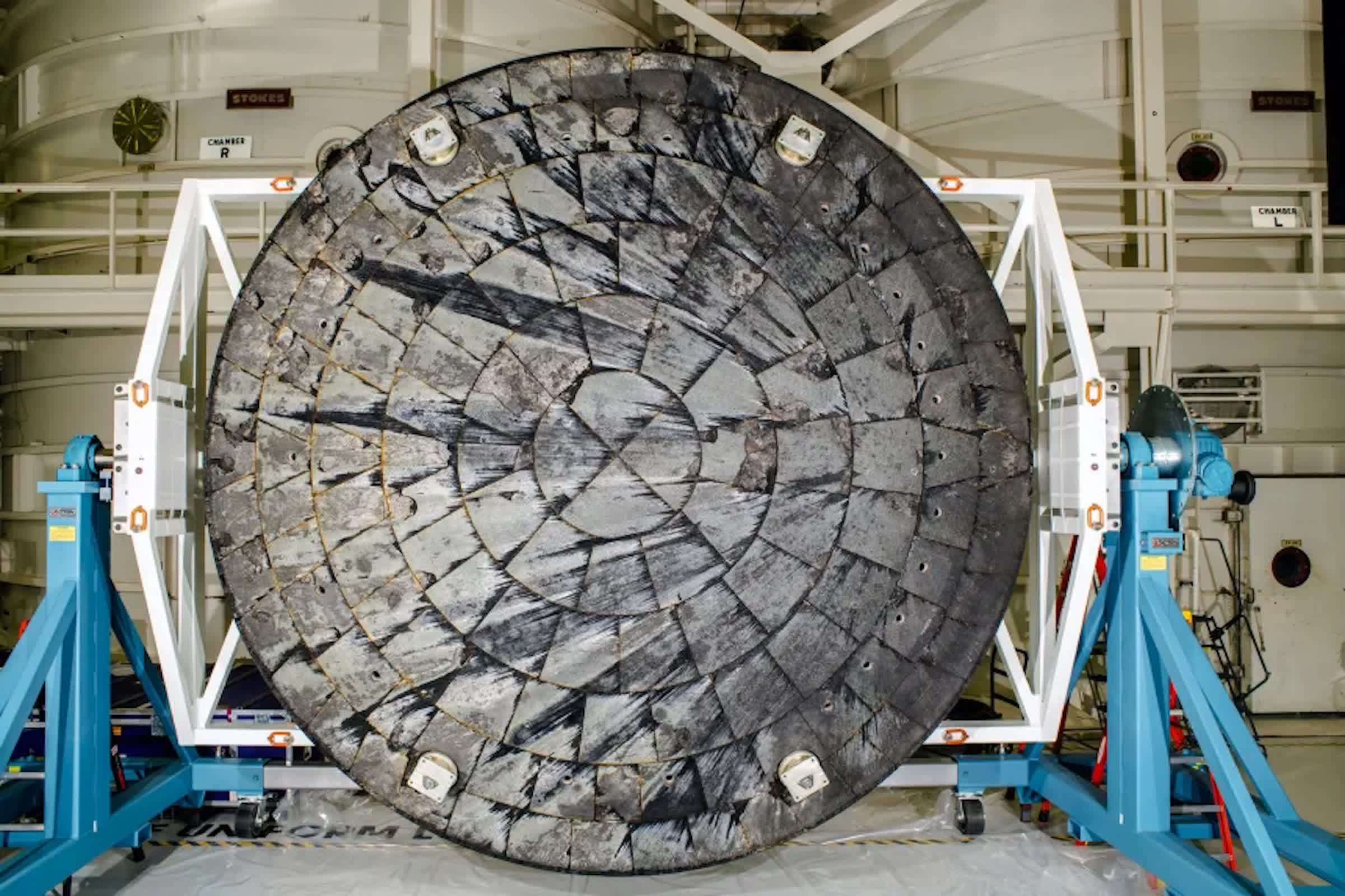
Orion's heat shield uses Avcoat, the same type of ablative material used on Apollo capsules, but in a different layout. Avcoat is designed to char, break down and shed material during reentry, carrying away heat and keeping the structure underneath within safe temperatures.
On a return from the moon, Orion will hit the atmosphere at more than 30 times the speed of sound, compressing air in front of the vehicle and pushing the heat shield surface above 5,000 degrees Fahrenheit while the cabin stays near room temperature.
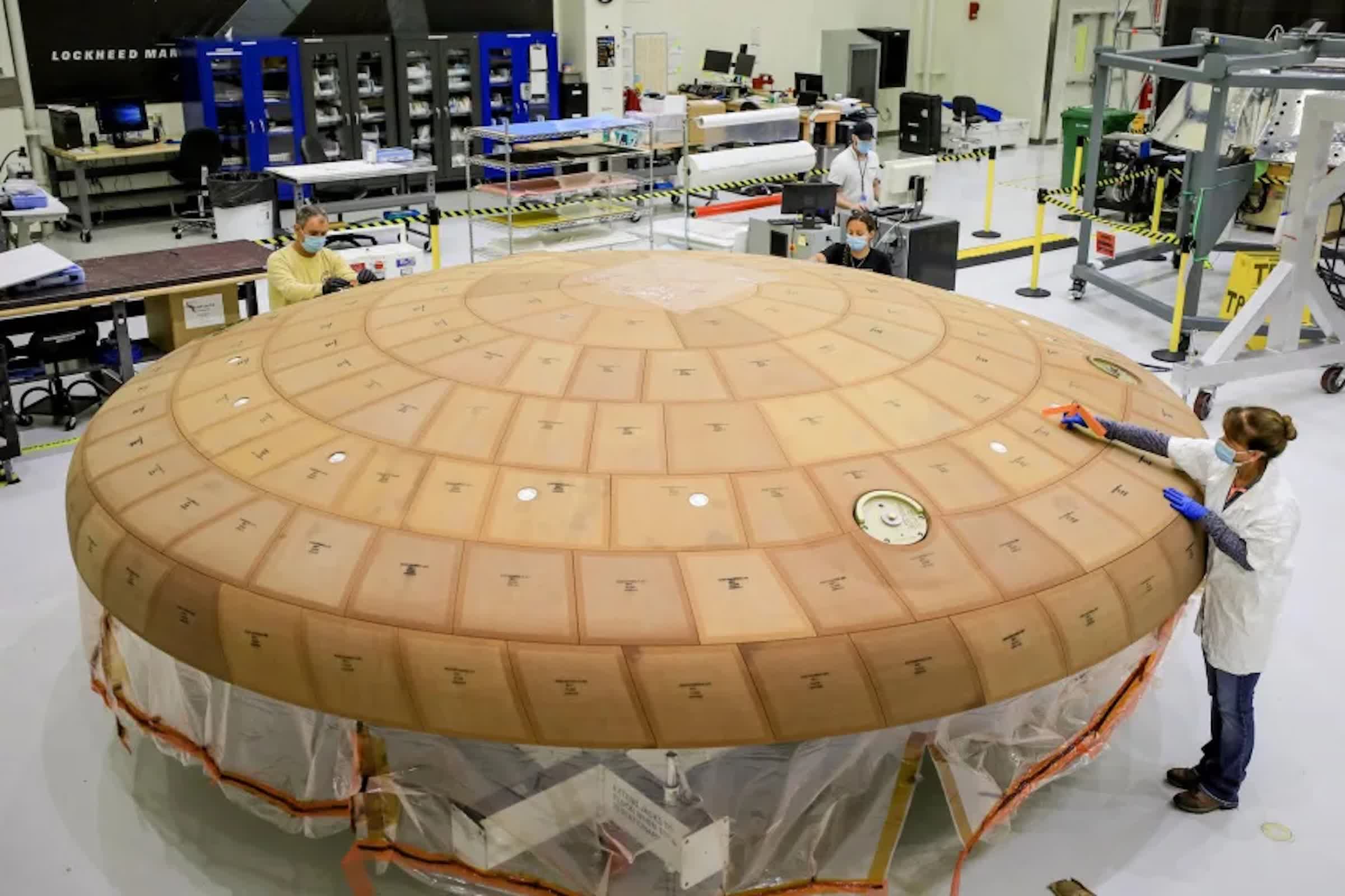
In Apollo and on Orion's 2014 EFT-1 test flight, Avcoat was poured into a honeycomb structure attached to the capsule base, then cured and machined into thousands of small cells. That setup worked but was slow, hard to reproduce and difficult to scale.
For Artemis, NASA and Lockheed Martin dropped the honeycomb and moved to large Avcoat blocks bonded to a composite base, after seeing cracking and uneven curing in the older approach and wanting a design that was easier to build and install.
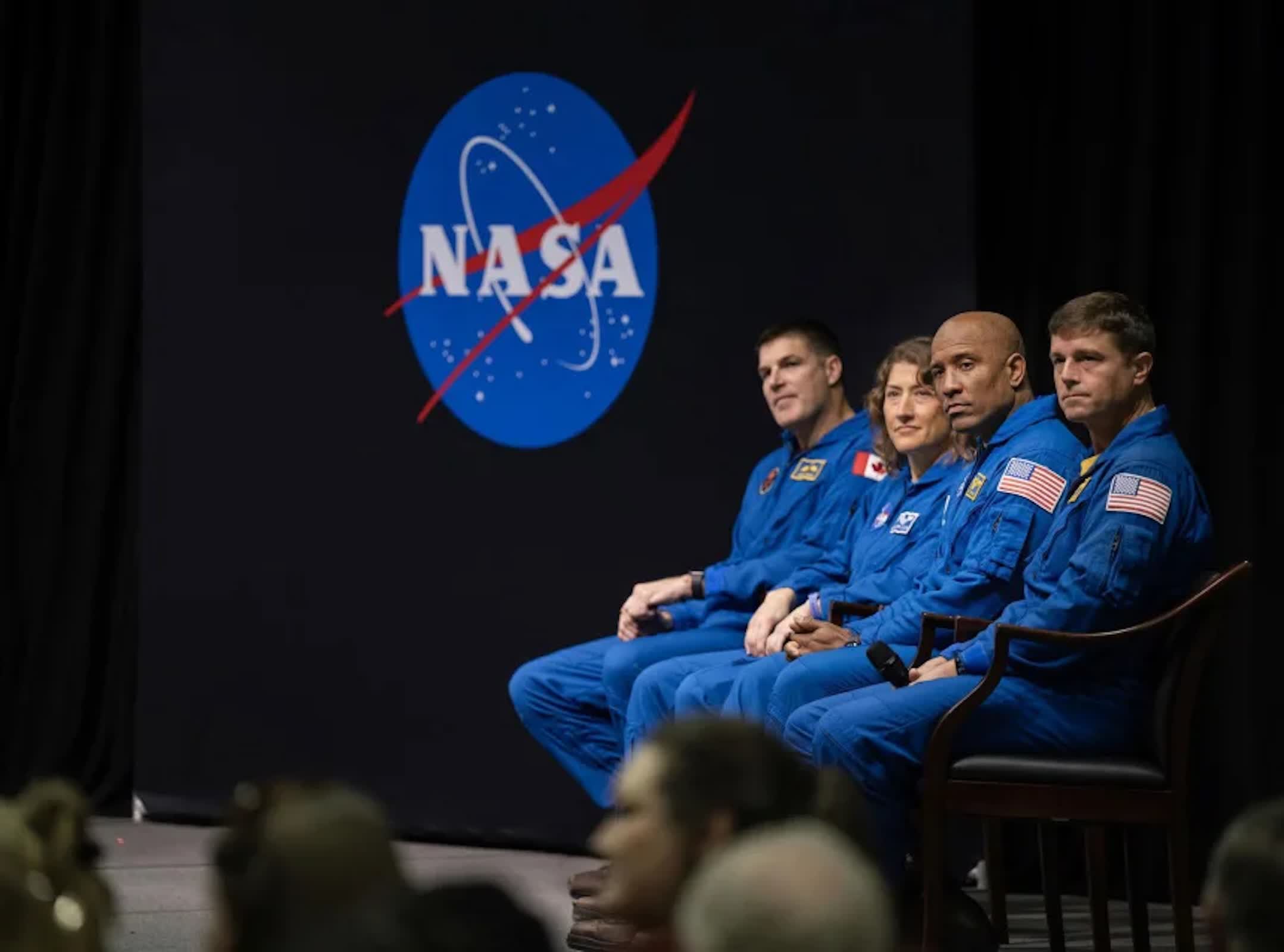
The Artemis II crew.
The Artemis II heat shield was fully installed before Artemis I launched, locking in the block design. Because of that schedule, NASA cannot replace the shield without effectively rebuilding the capsule, so managers chose to handle the Artemis I issue through analysis.
Investigators found that the problem was not simple overheating but a permeability issue inside the Avcoat: If it is too low, pressure inside the material builds; if it is high enough, the Avcoat erodes as intended. NASA's Engineering and Safety Center and an independent review team agreed that low permeability, combined with the skip-entry heating, caused the cracking and char loss on Artemis I.
NASA has opted to change Orion's reentry path. It was designed to use a skip-entry, like a stone skimming across water, to extend range and improve landing accuracy. Flight controllers changed the guidance so Artemis II will perform more of a "loft" than a full skip, with a steeper descent and a lower peak after the first dip. The goal is to reduce the time Orion spends in the temperature and pressure zone where gases built up in the Avcoat during Artemis I.
NASA says this revised path is backed by a large set of tests and simulations, including copies of the Artemis I environment in arc-jet facilities and updates to thermal models using flight data. The agency's formal flight rationale says that the new trajectory, combined with the better understanding of Avcoat behavior, is enough to justify flying Artemis II with crew even without a new heat shield design.
As part of its risk assessment, NASA also used a computer model that estimates when and where cracks may form in the Avcoat as it chars, heats and vents gas. The team tuned the model against Artemis I data and lab tests to track gas production, char formation and internal pressure over time during reentry.
Olivas says his doubts eased after he saw how closely the model's results matched Artemis I flight data and arc-jet tests, including its ability to reproduce the unusual char loss pattern under the original skip-entry profile. He believes the tool is accurate enough to support the new trajectory and define the risk.
Former astronaut and heat-shield expert Charlie Camarda disagrees. He argues that the model NASA used is "simplistic" and can show when cracking starts but cannot map the stresses that drive crack growth or fully model the combined heating and material response.
For Camarda, the argument is not just about physics but also about NASA's culture. He points to the shuttle era, when NASA first estimated a catastrophic failure rate of about 1 in 100,000 but ultimately lost two orbiters and 14 astronauts in 135 missions, or about 1 in 67. He argues that NASA has moved away from the Apollo-era habit of constant questioning toward a culture where engineers feel pressure to support program goals and schedules.
Even so, critics such as Camarda do not think Artemis II is likely to end in disaster. Their fear is that a clean mission could validate what they see as weak risk-management practices, leading NASA to treat success as proof its process is sound rather than as a result that might include some luck.
As Artemis II nears launch, the mission is set to test not only Orion's deep-space systems but also a disputed thermal protection system and the models used to sign off on it. Four astronauts will rely on a heat shield that has already surprised its builders once. Meanwhile, the space community is watching to see whether NASA's mix of trajectory changes, future manufacturing tweaks and trust in its analysis is enough.
NASA will fly Artemis II with the same Orion heat shield that cracked on its last mission


