NBA quietly trials smart basketballs with embedded sensors and AI tracking

Daniel Sims

Posts: 2,464   +74
Staff
In brief: Kinexon and other companies have spent years refining connected-ball technology to enhance sports analytics, improve training, and collect more data than ever. As professional leagues begin adopting the new tech, questions remain about potential minute changes to basketball physics.
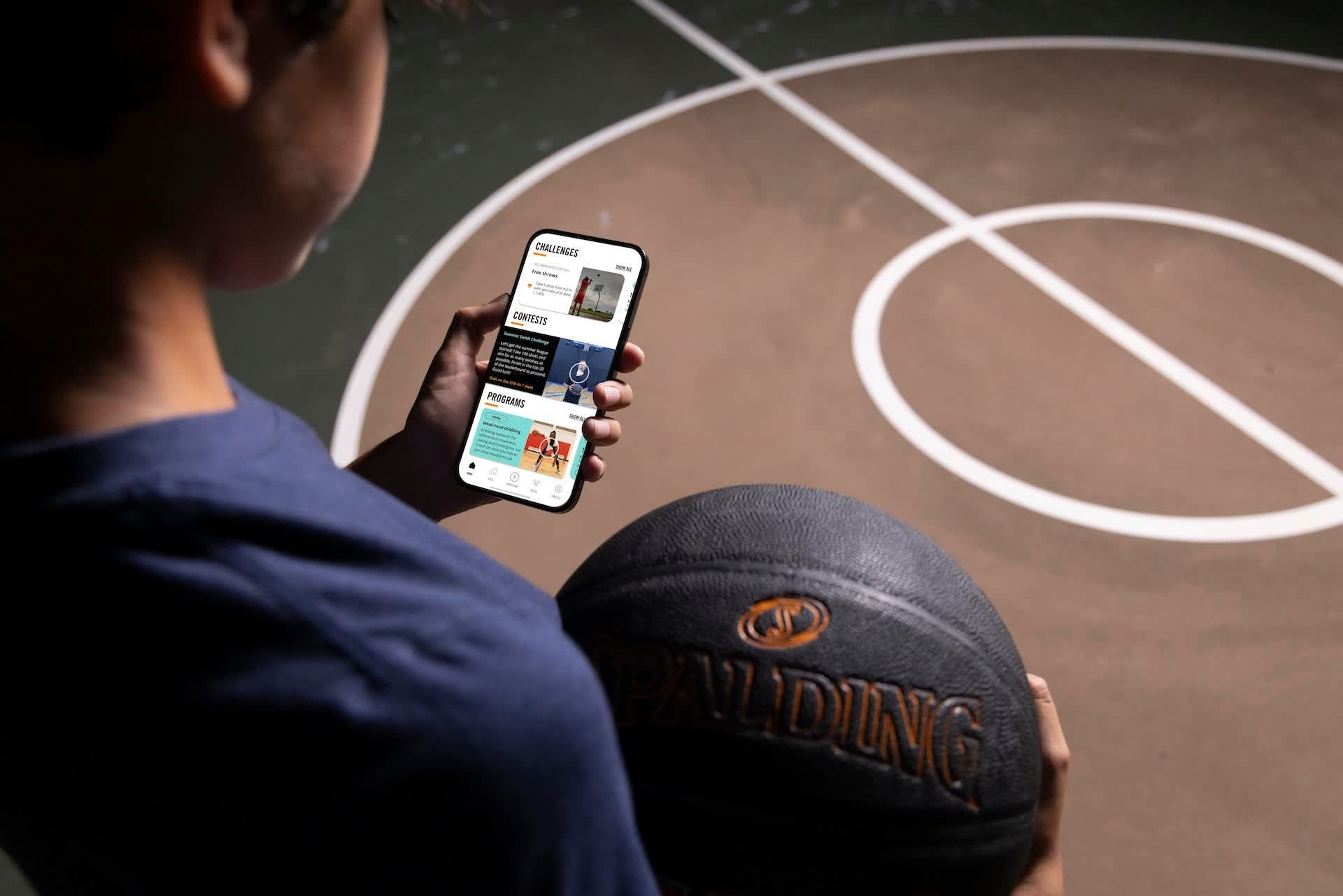
Unbeknownst to most players, about half of the NBA games played in Las Vegas earlier this month used balls equipped with smart tracking technology. The league is considering full adoption, but one company behind the chips admits that some subtle changes to ball physics might be inevitable.

Wired reports that companies such as SportsIQ (SIQ) and Kinexion have been developing the technology for years. Their basketballs and soccer balls contain tiny sensors that detect and transmit speed, angle, release time, and other vital data.

Consumers can already purchase connected balls that use smartphone apps to provide granular performance data and help players improve through challenges. Kinexon and Adidas employed smart balls during the 2022 World Cup.

According to Kinexon, the sensors dramatically increased the amount of data available to players, coaches, referees, broadcasters, and fans. The chips can detect the exact moment a ball enters play, potential fouls, shot accuracy over time, the number of passes, and other information to provide a more detailed look at each match.

Implementing the chips into the subtleties of manufacturing basketballs has been more challenging. A few years ago, the sensors weighed too much, although many players couldn't tell during blind tests. While the latest chips add less than a gram to a roughly 600g ball, Kinexon admits that inserting and connecting them could introduce minor but unavoidable changes to a ball's behavior.

Standard basketballs move slightly differently when bounced from the spot where the air valve creates a tiny imperfection. Players have long been accustomed to this behavior, but adding another dent, no matter how small, could create noticeable changes. Reengineering balls to insert sensors through the air valve without creating an additional hole is another option.

SIQ is optimistic about the technology's future, since no players reported issues after 550 games with the connected balls this month. The company plans to eventually connect its sensors to the NBA's existing Hawk-Eye cameras to track individual players.

MLB is currently deciding whether to formally adopt Hawk-Eye, which could be controversial because the technology defines strike zones differently from human umpires.

Permalink to story:

 
When is enough, enough? Data harvesting of everything it seems. The recent movie War of The Worlds suggests the same: data is their energy source that needs constant harvesting. I’d even take it a step further and bank on us holding or being connected to wireless tech (EarPods, cell phones, Oura rings, etc), that this also siphons off our energy.
 
When is enough, enough? Data harvesting of everything it seems. The recent movie War of The Worlds suggests the same: data is their energy source that needs constant harvesting. I’d even take it a step further and bank on us holding or being connected to wireless tech (EarPods, cell phones, Oura rings, etc), that this also siphons off our energy.
This has nothing to do with harvesting “normal” data but NBA data…

You have to understand that pro sports are no longer “games”. There is FAR too much money involved for anyone to seriously consider that.

Now, with a large percentage of their revenue coming from gambling, more ACCURATE information is essential and technology is now able to deliver. This tech will also remove as many “human elements” from deciding the outcome of a game as possible as any whiff of “game fixing” can destroy a league.

Baseball has already “caved” and will certainly have an automatic strike zone within a year or 2. They’re a data-driven sport anyways so it’s easier for them to adopt.

Basketball has it a little tougher, as referees still have a huge impact on the game and getting a machine to decide if something is a foul or not is still years away - if it’s even possible.
 
Absurdly unnecessary and will undoubtedly add to the inane metric and stat bloat chatter that makes up most of current professional sports broadcasting. Having said that, I wounder if sensors could be added to baseballs to improve the automation systems now being tested for calling strikes and balls? That would be meaningful! The human umps miss way to many calls and my understanding is that the limitation of the current automated systems is that they are 2D based whereas the strike zone is actually 3D.
 
Absurdly unnecessary and will undoubtedly add to the inane metric and stat bloat chatter that makes up most of current professional sports broadcasting. Having said that, I wounder if sensors could be added to baseballs to improve the automation systems now being tested for calling strikes and balls? That would be meaningful! The human umps miss way to many calls and my understanding is that the limitation of the current automated systems is that they are 2D based whereas the strike zone is actually 3D.
The strike zone is and has always been, arbitrary.
A sensor on the ball might help, but MLB just has to make a consistent strike zone - doesn’t matter how it’s defined. Right now, the zone is different with every umpire - and even the best will miss a few calls.

As for basketball, the data will be mostly for scouts and GMs… for now… but fans eat data up as they use it for gambling - which makes up an insane amount of revenue for every major sporting league.
 
Back