New graphene-based flash memory writes data in 400 picoseconds, shattering all speed records

Skye Jacobs

Posts: 1,988   +58
Staff
What just happened? Researchers at Fudan University in Shanghai have unveiled a flash memory device that breaks speed records once thought unreachable. Dubbed "PoX," the device can program data in just 400 picoseconds, or four hundred trillionths of a second, making it the fastest semiconductor charge storage device ever recorded.

To put this achievement into perspective, PoX can perform 25 billion operations per second – surpassing the previous world record for similar technology by a factor of 100,000.

The implications are profound, particularly for the fast-moving field of artificial intelligence. As AI models continue to grow in complexity and scale, their soaring computational demands are pushing existing memory technologies to their limits. Traditional volatile memories like static RAM and dynamic RAM offer impressive speeds – typically writing data in under a nanosecond – but they lose all stored information when power is cut.
Non-volatile memories like flash storage retain data without power and consume significantly less energy than volatile counterparts, but they've traditionally lagged in speed – often requiring microseconds to milliseconds for data access.

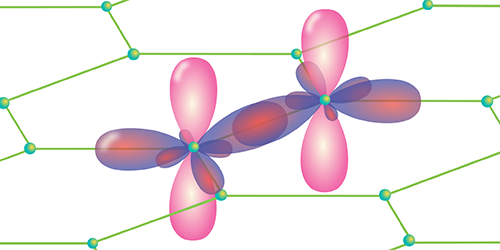
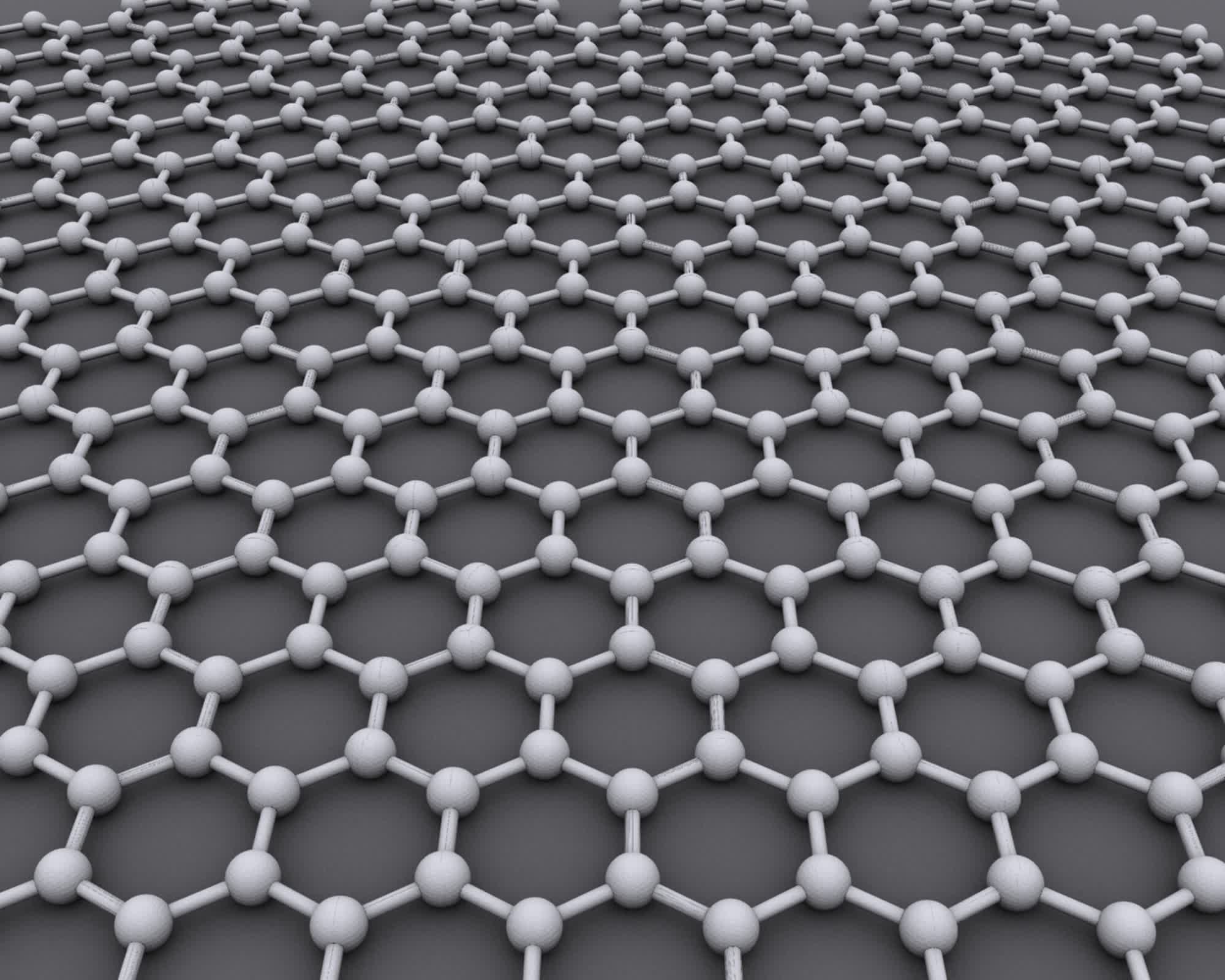
A research team at Fudan University, led by Professor Zhou Peng of the State Key Laboratory of Integrated Chips and Systems, set out to close this performance gap by rethinking the physical structure of flash memory. Rather than using conventional silicon, the researchers turned to graphene – a two-dimensional material celebrated for its remarkable electrical properties – and implemented a Dirac band structure.

By leveraging graphene's ballistic transport behavior and precisely tuning the Gaussian length of the memory channel, they developed a mechanism they call "super-injection." This process enables an almost unrestricted flow of charge into the storage layer, effectively eliminating the speed bottleneck that has limited non-volatile memory for decades.

According to Zhou Peng, the difference is staggering. "This is like the device working 1 billion times in the blink of an eye, while a typical USB flash drive can only work 1,000 times. The previous world record for similar technology was 2 million."

The potential applications for PoX reach well beyond faster consumer electronics. In the realm of artificial intelligence, the speed at which data can be accessed and processed is a key limiter of overall computing performance. As AI models become increasingly data-intensive, storage systems capable of keeping pace with processors are critical. With its unprecedented speed and low power consumption, PoX could enable real-time processing of massive datasets while also curbing the energy demands of data movement, one of the major inefficiencies in today's AI hardware.

Permalink to story:

 
There isn't any "New graphene-based flash memory" yet.

There is a promising lab experiment that may eventually lead to creating new graphene-based flash memory - if it's possible to reliably manufacture this at scale and cheaply enough, if it remains stable within a large temperature range, if it can sustain a reasonable number of write cycles ... and dozens of other if's.

It's a long road from experiment to a usable product.
 
I'll eat my hat if this tech goes anywhere in the next 10 years. It's not enough to be faster than current tech it has to be cheaper too. So yeah, never going to happen. Anyone remember Intel's 3D XPoint (Optane) tech? It was far better than anything we have today, but because it was more expensive it didn't catch on and Intel had to sell off their entire division.
 
I'll eat my hat if this tech goes anywhere in the next 10 years. It's not enough to be faster than current tech it has to be cheaper too. So yeah, never going to happen. Anyone remember Intel's 3D XPoint (Optane) tech? It was far better than anything we have today, but because it was more expensive it didn't catch on and Intel had to sell off their entire division.

Could see it in RT defense analysis. Given that modelling is getting better to use less

Humans advantage is all our synapses with more than just binary

I'm curious if memory can be modelled to represent synapses - ie instead of "flow" down a synapse/wire if flows across a 3D memory - maybe someone more knowable than me can say something

ie what is light - a wave or particle. surely you can create waves in memory
 
I'll eat my hat if this tech goes anywhere in the next 10 years. It's not enough to be faster than current tech it has to be cheaper too. So yeah, never going to happen. Anyone remember Intel's 3D XPoint (Optane) tech? It was far better than anything we have today, but because it was more expensive it didn't catch on and Intel had to sell off their entire division.

I agree with the sentiment but there is a huge difference with XPoint here. XPoint was not faster than volatile RAM- this appears it may be with this speed they're claiming. Meaning it could be a faster RAM and non-volatile while it's at it. If manufactured cheaply enough it'll then go on to be competitive with existing non-volatile storage.
 
Anyons might have something to say about that.
lol... those are particles, not materials... and they only exist in 2-dimensional space...

Our physical world - where any RAM/Memory of any kind would be installed - is 3 dimensional... and there are no 2 dimensional materials that exist in it...

Graphene is often called the world's first 2-dimensional material but this is simply because it's REALLY thin...

It still exists in our 3D world and is thus 3D...

 
lol... those are particles, not materials... and they only exist in 2-dimensional space...

Our physical world - where any RAM/Memory of any kind would be installed - is 3 dimensional... and there are no 2 dimensional materials that exist in it...

Graphene is often called the world's first 2-dimensional material but this is simply because it's REALLY thin...

It still exists in our 3D world and is thus 3D...

you're like that grammar nazi police, only in TECH, you think nobody knows that ? it's just an expression dude.
 
I'll eat my hat if this tech goes anywhere in the next 10 years. It's not enough to be faster than current tech it has to be cheaper too. So yeah, never going to happen. Anyone remember Intel's 3D XPoint (Optane) tech? It was far better than anything we have today, but because it was more expensive it didn't catch on and Intel had to sell off their entire division.
Optane is faster than NAND, but slower than RAM, hence it is not far better than anything we have today. I do agree that it is not cost competitive which led to its demise. Though I think if Intel had retained 3D Xpoint, they may find a lot of buyers for AI workload since it is very fast and for its high endurance.
 
Last edited:
I agree with the sentiment but there is a huge difference with XPoint here. XPoint was not faster than volatile RAM- this appears it may be with this speed they're claiming. Meaning it could be a faster RAM and non-volatile while it's at it. If manufactured cheaply enough it'll then go on to be competitive with existing non-volatile storage.
I am not sure if it is always going to be faster than RAM because the way I read it, they seems to only be focusing on latency. It is true that lower latency is is great, but if you can't compare the with the bandwidth on RAM, then it is not a suitable replacement when you need the bandwidth for your use case.
 
I think they need to fire their marketing guy.

By leveraging graphene's ballistic transport behavior and precisely tuning the Gaussian length of the memory channel, they developed a mechanism they call "super-injection."
I appreciate all these words are in the dictionary but does the author understand this sentence is just nonsense?
 
Last edited:
I wonder where they stole the IP from, it's what China does best. Why be creative when it's so easy to steal someone elses work.
 
Maybe they'll, one day, be able to actually utilise this amazing substance they've been bigging up for about 20 years to actually do something!
 
Back