New invention harvests static energy from waste polystyrene to produce electricity

zohaibahd

Posts: 978   +19
Staff
Why it matters: Over 25 million tons of single-use polystyrene packaging is manufactured annually on a global basis. However, only a tiny fraction gets recycled, with the vast majority ending up in landfills after serving its purpose. Now, scientists have developed an ingenious way to recycle polystyrene – by converting its static electricity into usable power.
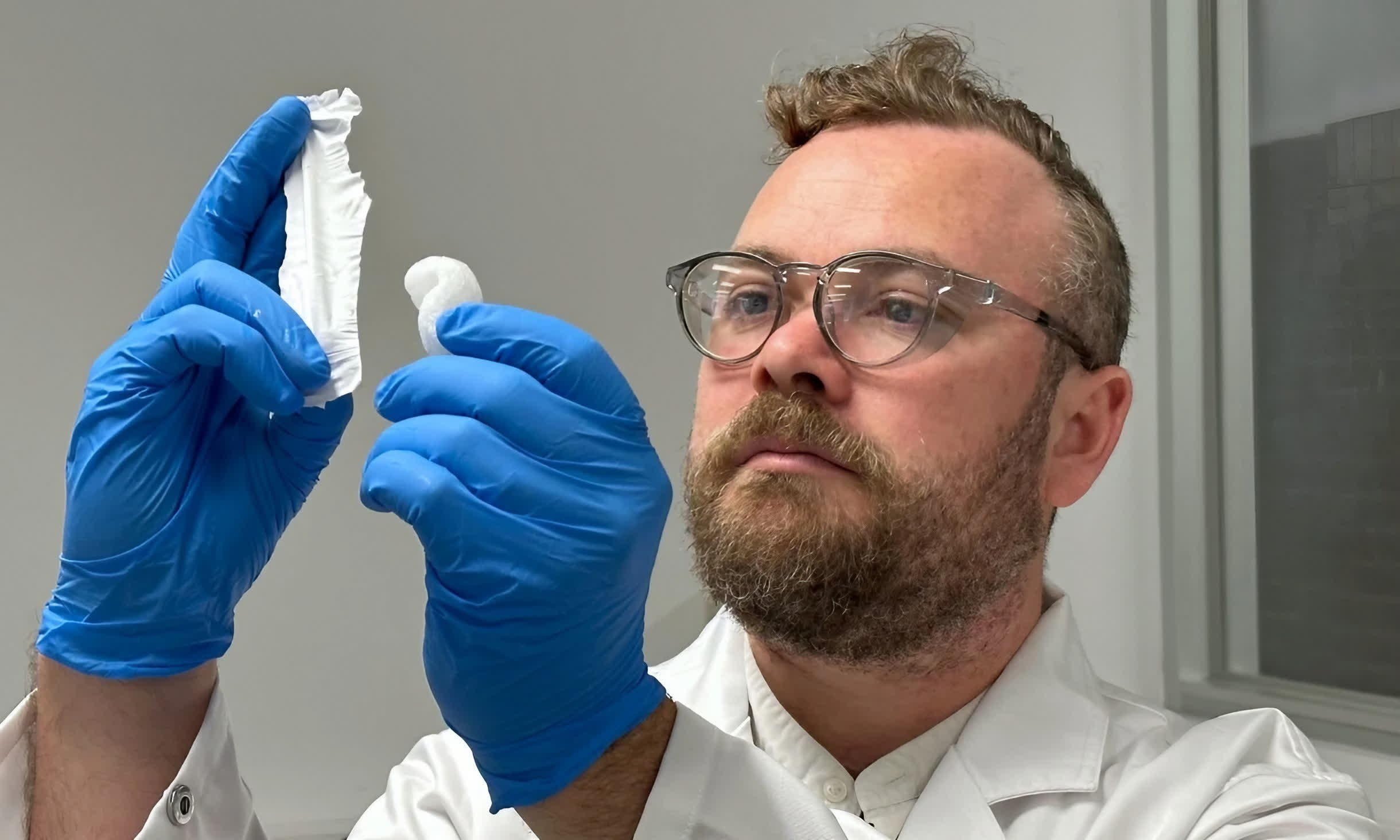
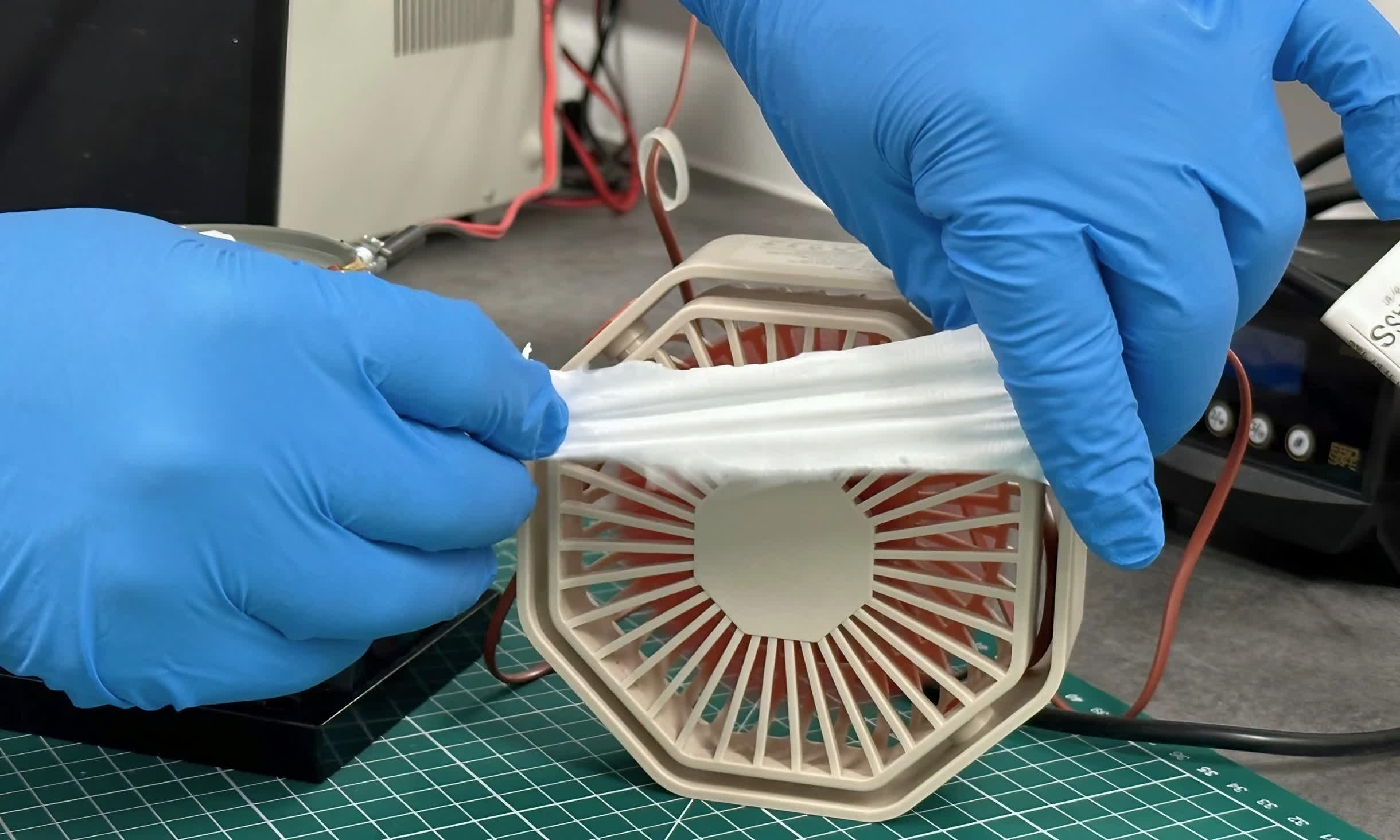
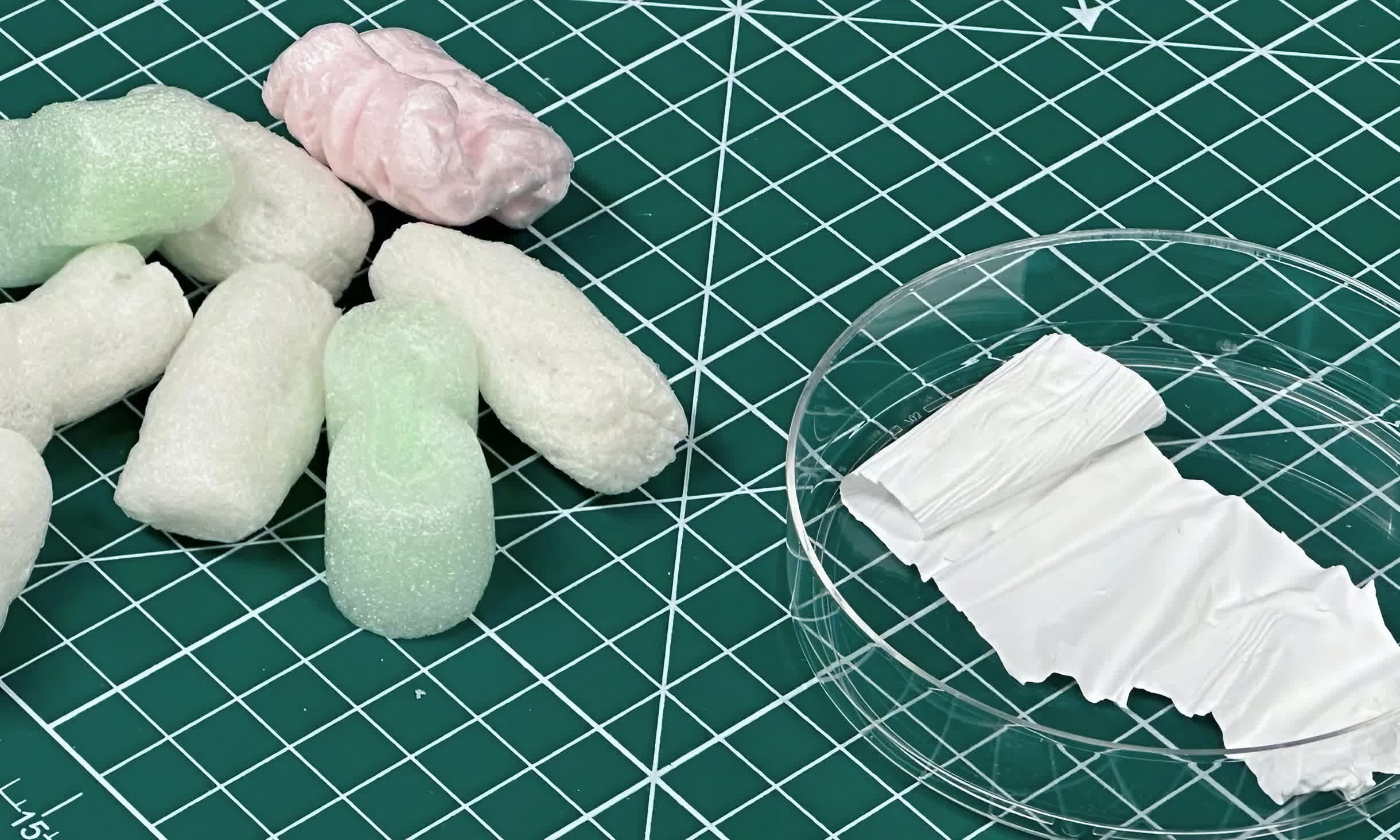
The invention comes from researchers at Australia's RMIT University and was developed in collaboration with Latvia's Riga Technical University. The main innovation is in fabricating patches made from multiple layers of polystyrene, with each layer being around one-tenth the thickness of a human hair. When air flows over these patches, it generates static electricity that can then be harvested and utilized.

Lab testing revealed the patches can produce voltages up to 230V, which is on par with typical household power levels, albeit at lower overall wattage. Faster, more turbulent airflows can also increase that number, while bumping up the number of polystyrene layers could expand the energy harvesting capacity.
Helping the scientists achieve this was the exceptional longevity and durability of polystyrene as a material, which ironically are the same factors that make it so harmful for the environment. They note that while they did explore other disposable plastics for the job, polystyrene came out as the top contender after extensive experimentation.

Essentially, the very properties that make it so persistent and slow to degrade in landfills also ensure these electricity-generating devices can continue operating reliably for extended periods without degradation.

As for usage, the researchers note that integrating these generators into systems like air conditioning units could reduce their energy consumption by an estimated 5%. They also believe that public spaces such as underground walkways could benefit too, making use of incidental air disturbances to produce power and support local power grids.
The research also sheds light on the fundamental science behind static electricity at the nanoscale – a phenomenon we've observed for thousands of years but haven't fully understood at such minute scales.

"We've figured out how to make the insides of reformed polystyrene rub across each other in a controlled way, making all the charge pull in the same direction to produce electricity," lead researcher Dr Peter Sherrell from RMIT said.

Having translated their learnings into a solid invention and even filed a provisional patent application, the RMIT team is now seeking commercial partners to help industrialize and scale up the technology. The full research can be found in the scientific journal Advanced Energy and Sustainability Research.

Image credit: Seamus Daniel, RMIT

Permalink to story:

 
If you ever want to get rid of a ton of Styrofoam just use a beaker of acetone and keep adding.
I have no idea of what the resulting stuff is but I was amazed on how much Styrofoam was consumed by less than a 1/2 cup of acetone.
 
If you ever want to get rid of a ton of Styrofoam just use a beaker of acetone and keep adding.
I have no idea of what the resulting stuff is but I was amazed on how much Styrofoam was consumed by less than a 1/2 cup of acetone.
It's still polystyrene, just without the air/pentane spaces.
 
Voltage alone means nothing. Tell me how many W/gram (W = voltage * amperage) it produces and that'll tell you whether this is useful or a fun experiment. I can find mentions of how many amps are generated in the report, but not how much material was used.
 
Voltage alone means nothing. Tell me how many W/gram (W = voltage * amperage) it produces and that'll tell you whether this is useful or a fun experiment. I can find mentions of how many amps are generated in the report, but not how much material was used.
And energy is always conserved. Even if this method does generate significant amounts of power (doubtful as you mentioned), the energy is coming from the wind.

You might as well put a wind turbine up instead and get a lot more energy out of that same wind.
 
I'm just imagining this material lining the entire inside surface of the metro subway system... feeding back into the electric train system 5% to 10% of the electricity it uses.... Might not seem like much but however with some brief searchingh online I came up with some (VERY LOOSE AND UNVERIFIED) figures...
Each train uses approx $300.00 / hour of electricity on average (2023 Victorian AU electricity prices), so lets say $15.00 / hour conservatively saved...

$15/ hour
X 14 hours avg / day in use = $210.00
X 1400 trains / day pass through the Metro Tunnel system
= $294,000.00 / day in electricity saved for the Metro Rail System

So it might seem like nothing to start with, but commercial situations could benefit greatly from this type of energy assistance....
(Please remember I'm just throwing some quickly searched figures together here... I'm positive its not accurate, just getting my head around the potential commercial savings for places that have wind but cannot put up wind turbines like subways and vehicle tunnels etc... Heck, even coating bridges spanning rivers etc.. )
 
And energy is always conserved. Even if this method does generate significant amounts of power (doubtful as you mentioned), the energy is coming from the wind.

You might as well put a wind turbine up instead and get a lot more energy out of that same wind.
The size makes a difference. Sounds like this stuff could be applied inside tunnels and such (things with a roof but some airflow)
Good luck putting up windmills there.

I wonder if it can be used to turn convection airflows into power as well. Sounds like it doesn't need much wind power to do its thing.

It's a cool concept but the question is how much power does it produce and how much will it cost. If it's cost effective enough to be used in say public buildings then at least there's less styrofoam in the environment.
 
Back