
Rumor mill: As soon as Nvidia unveiled its RTX 50 series graphics cards in January, most expected the company to eventually introduce Super variants, repeating its strategy from the RTX 20 and 40 lineups. However, the first concrete RTX 50 Super leaks suggest that the company is not adding much beyond additional VRAM.
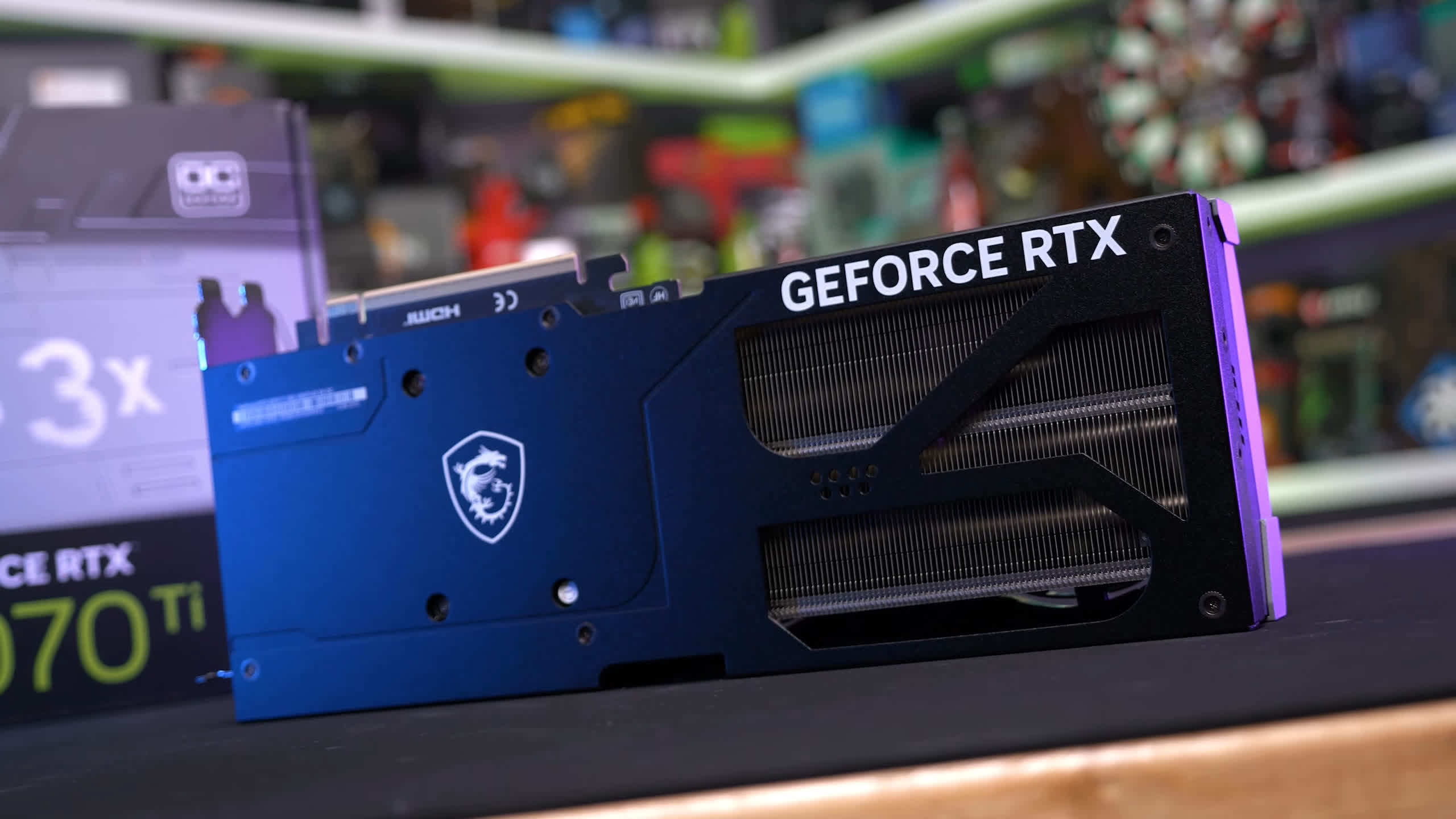
Prominent leaker @kopite7kimi recently shared specifications for upgraded versions of Nvidia's RTX 5070, 5070 Ti, and 5080. Although the GPUs receive memory and wattage boosts, only the 5070 Super receives additional CUDA cores, and the upgrade is smaller than the RTX 40 Super series.
Nvidia's stingy VRAM allocation has been one of our primary criticisms of the RTX 50 series. The RTX 5090 is the lineup's only GPU to include more memory than its predecessor. All 4070 Ti, 4080, 5070 Ti, and 5080 models currently feature only 16 GB, while the 4070, 4070 Super, and 5070 are stuck with 12 GB. Those amounts are technically sufficient for gaming today, but not necessarily in the coming years.
| RTX 5080 | RTX 5080 Super | RTX 5070 Ti | RTX 5070 Ti Super | RTX 5070 | RTX 5070 Super | |
|---|---|---|---|---|---|---|
| GPU Die | GB203 | GB205 | ||||
| CUDA Cores | 10,752 | 8,960 | 6,144 | 6,400 | ||
| Memory Capacity | 16 GB | 24 GB | 16 GB | 24 GB | 12 GB | 18 GB |
| Memory Speed | 30 Gbps | 32 Gbps | 28 Gbps | |||
| Bus Type | 256-bit | 192-bit | ||||
| Total Board Power | 360W | 400+W | 300W | 350W | 250W | 275W |
The RTX 5070 Super specs show a boost to 18 GB, suggesting that Nvidia has unsurprisingly shifted to 3 GB VRAM modules. Meanwhile, the 5070 Ti Super and 5080 Super upgrade to 24 GB, putting them solidly ahead of AMD's Radeon RX 9070 family and making ample space for ray tracing and frame generation at high resolutions.
However, performance improvements from the RTX 50 Super series are otherwise limited. While the RTX 40 Super GPUs each featured more CUDA cores than their base versions, the 5080 Super and 5070 Ti Super show no change in this area.
The 5070 Super includes 6,400 CUDA cores, only 256 more than the standard 5070's 6,144. Although clock speeds for the RTX 50 Super models remain unknown, slight increases in total board power suggest they will be higher, which could result in modest performance gains across all three GPUs.
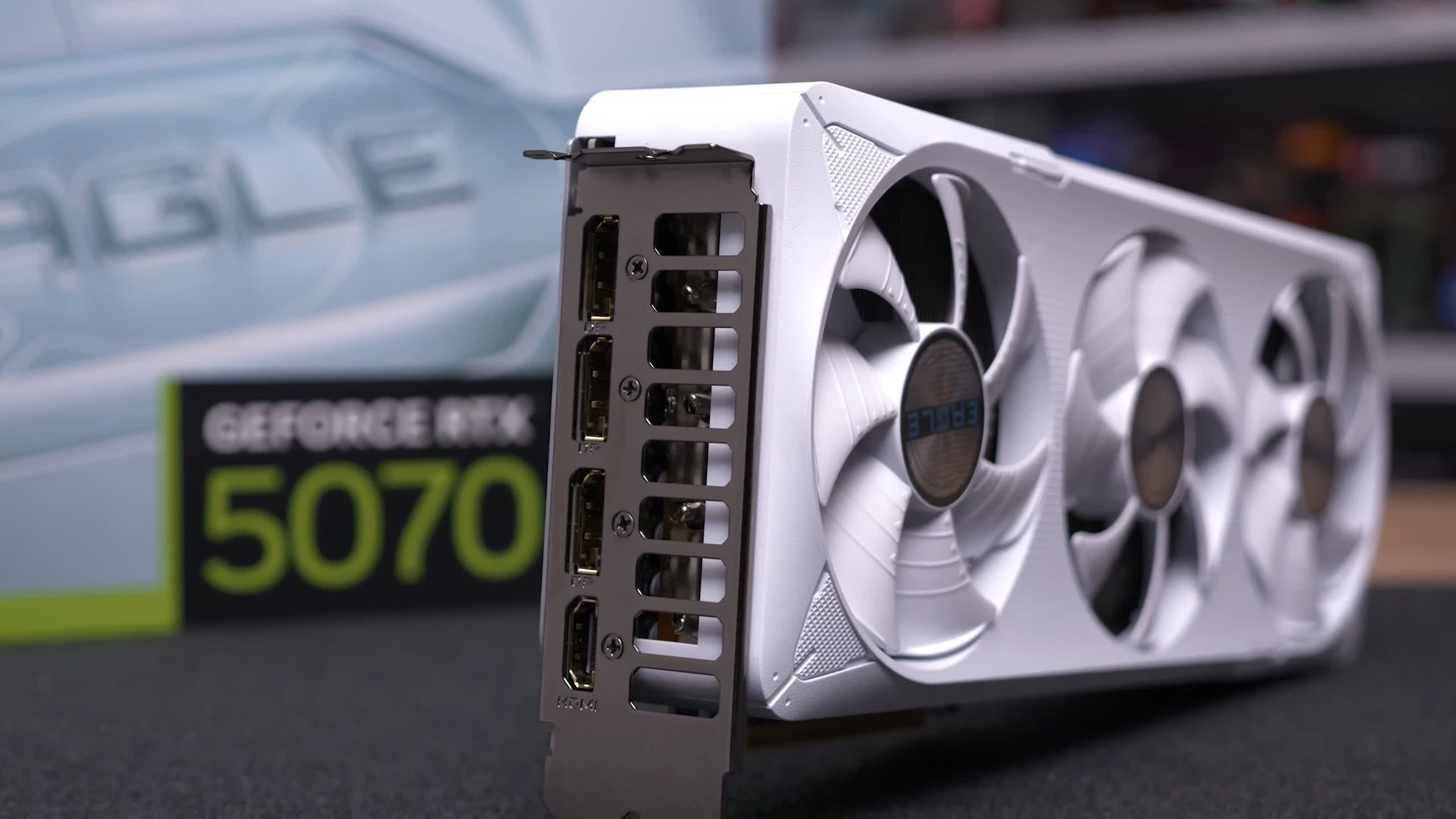
Aside from limited VRAM, other common criticisms of the RTX 50 series include high prices, low availability, and underwhelming performance gains compared to the RTX 40 Super lineup. Notably, the RTX 5070 is nearly identical to the 4070 Super in many aspects.
Also see: Cost Per Frame Analysis: The Best Graphics Cards in Mid 2025
Meanwhile, AMD's competing Radeon 9000 series often matches or outperforms their RTX 50 series counterparts, and those GPUs are finally closing the gap with Nvidia in ray tracing and upscaling.
Pricing and release dates for RTX 50 Super are still unknown, but if it serves as reference, the RTX 40 Super GPUs launched less than a year after the standard models, so RTX 50 Super GPUs could arrive in late 2025 or early 2026.
Nvidia's RTX 50 Super GPUs leak with more VRAM but modest performance gains


