Pat Gelsinger warns TSMC's $100 billion investment will not restore US semiconductor dominance

Skye Jacobs

Posts: 2,007   +58
Staff
Big quote: Former Intel CEO Pat Gelsinger has cast doubt on the effectiveness of TSMC's $100 billion investment in US chip manufacturing, claiming that it will not restore American leadership in the semiconductor industry. In a recent interview with the Financial Times, Gelsinger emphasized the critical role of research and development in maintaining semiconductor leadership.

"If you don't have R&D in the US, you will not have semiconductor leadership in the US," he told the publication. Gelsinger pointed out that TSMC's core research and development activities remain concentrated in Taiwan, with no announced plans to relocate these operations to the United States.

While acknowledging that TSMC's investment will increase US semiconductor production capacity, Gelsinger argued that manufacturing alone is insufficient to regain technological leadership. "Unless you're designing the next-generation transistor technology in the US, you do not have leadership in the US," he said.

Gelsinger conceded that President Donald Trump's tariff threats had been "incrementally beneficial" in incentivizing companies like TSMC to establish facilities on American soil. However, he maintained that this alone would not address the fundamental issue of technological leadership.
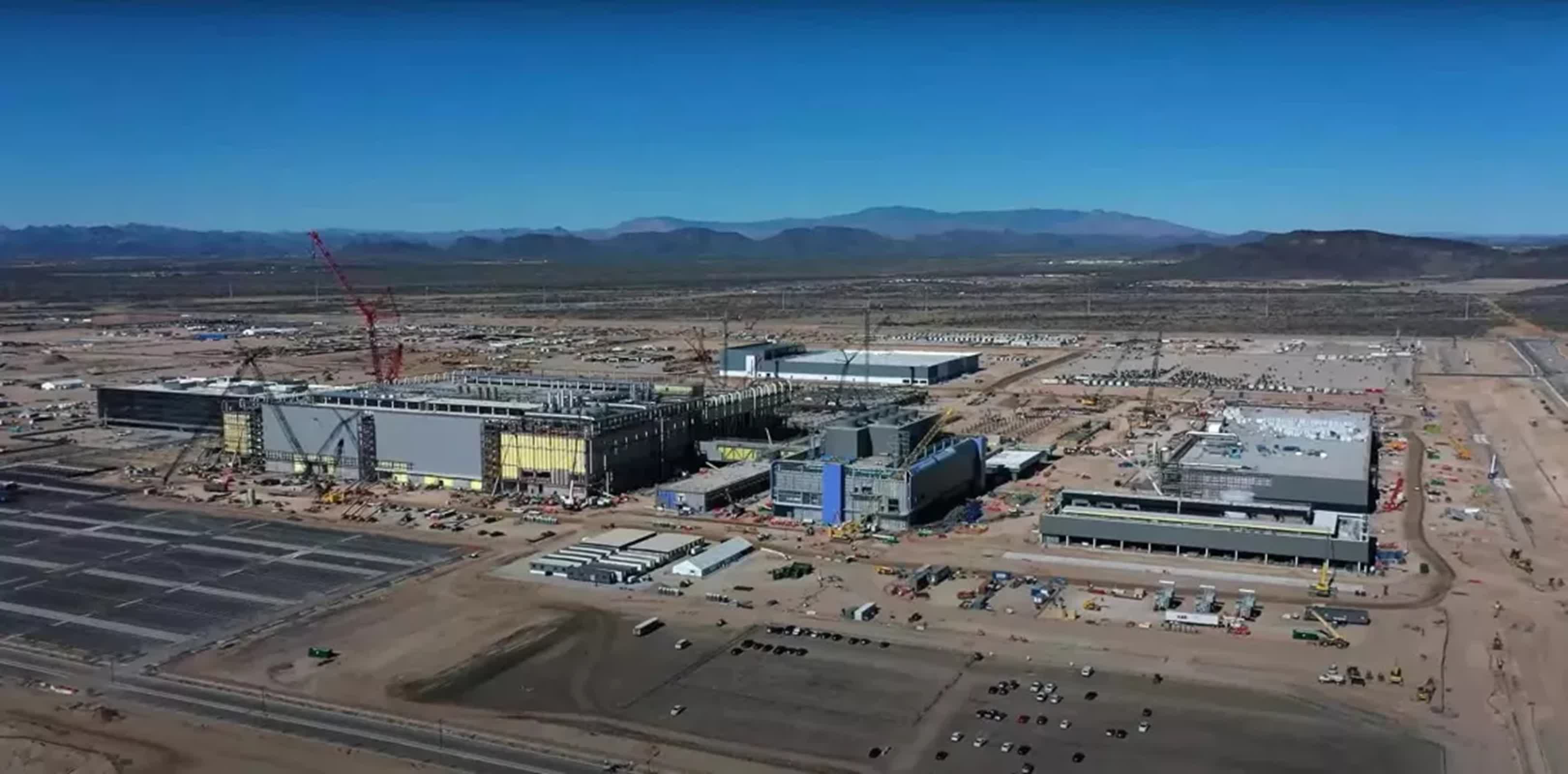
The former Intel chief's comments come in the wake of TSMC's plans to invest an additional $100 billion in the United States, bringing the total planned US investment to $165 billion. This expansion includes constructing three new fabrication plants, two advanced packaging facilities, and a major R&D center in Arizona. According to TSMC CEO C.C. Wei, the investment is expected to create tens of thousands of high-paying, high-tech jobs and drive more than $200 billion in indirect economic output across the United States over the next decade.

Despite the massive scale of TSMC's investment, Gelsinger's critique highlights a crucial distinction between manufacturing capacity and technological innovation. TSMC has indicated that its US development will focus on refining existing processes while its core research and development will remain in Taiwan. This arrangement, according to Gelsinger, perpetuates US dependence on foreign-developed technologies.

Gelsinger's remarks reflect broader concerns about the US semiconductor industry's ability to compete globally. Despite massive investments and government support through initiatives like the CHIPS Act, questions persist over whether these efforts will be sufficient to close the gap with industry leaders.

In addition to his critique of TSMC's investment, Gelsinger touched on other industry developments. He dismissed the achievements of Chinese AI startup DeepSeek as "good engineering" but lacking "major breakthroughs."

He also emphasized the need for new technologies to drastically reduce the cost of AI inference, arguing that current AI solutions are "much too expensive" for widespread deployment.

Gelsinger's comments come as he transitions to a new role as a general partner at Playground Global, a Silicon Valley venture capital firm specializing in deep tech investments. His departure from Intel in December 2024 marked the end of a tenure characterized by ambitious plans to revitalize the company's manufacturing capabilities and challenge TSMC's market dominance.

Permalink to story:

 
Only the Trump supporters believed the lie that these companies investing in the U S would bring jobs back....unless you are willing to be the cleaning lady most of those jobs will be filled by A.I, from engineering and Assembly to Human Resources....

By the way don't be surprised if you get a phone call from an A.I agent serving as a recruiter offering you a job opening on something the very same A.I would end up taking it away anyways.
 
Last edited:
Only the Trump supporters believed the lie that these companies investing in the U S would bring jobs back....unless you are willing to be the cleaning lady most of those jobs will be filled by A.I, from engineering and Assembly to Human Resources....

By the way don't be surprised if you get a phone call from an A.I agent serving as a recruiter offering you a job opening on something the very same A.I would end up taking away anyways.
It's funny because the CHIPS act was passed under Biden.
 
It's funny because the CHIPS act was passed under Biden.
The CHIPS act was never about "bringing" jobs back to the U.S but for the U.S to be the front and center financially backing the technology regardless if the engineers were in the U.S or in Mexico.

Like Obama once said, "Like it or not most of those jobs are never coming back unless U.S citizens are willing to work for half the wages they are accustomed to work for"....and that was before A.I was even a thing.
 
The CHIPS act was never about "bringing" jobs back to the U.S but for the U.S to be the front and center financially backing the technology regardless if the engineers were in the U.S or in Mexico.

Like Obama once said, "Like it or not most of those jobs are never coming back unless U.S citizens are willing to work for half the wages they are accustomed to work for"....and that was before A.I was even a thing.
They aren't directly bringing the jobs back. you build the plants and then cities popup around them with secondary jobs. You need super markets, you need truckers to bring supplies in and out, you need homes to house workers, you have business that help mange properties, bringing resources in and out of the town. You don't build the plant and suddenly we have 100,000 high paying tech jobs.

And do you know what happens when people move to these new cities? they move out of other cities bringing the cost of living DOWN in those other cities.
 
They aren't directly bringing the jobs back. you build the plants and then cities popup around them with secondary jobs. You need super markets, you need truckers to bring supplies in and out, you need homes to house workers, you have business that help mange properties, bringing resources in and out of the town. You don't build the plant and suddenly we have 100,000 high paying tech jobs.

And do you know what happens when people move to these new cities? they move out of other cities bringing the cost of living DOWN in those other cities.
Bringing the cost down in one city is relative in bringing the cost higher on wherever the plants are located among everything else, the more concentration of people equals higher taxes, higher rents, higher cost of living....ask any Bostonian or New Yorker ...they can tell you all about that.

In other words unless companies are going to over pay those "truckers" those employees or the company will be losing money in the long term...that's why those companies left to China and Mexico because it was cheaper and more affordable for everyone involved.
 
Last edited:
Bringing the cost down in one city is relative in bringing the cost higher on wherever the plants are located among everything else, the more concentration of people equals higher taxes, higher rents, higher cost of living....ask any Bostonian or New Yorker ...they can tell you all about that.
The main raise in the cost of housing is from investment groups buying up hundreds of thousands of properties and bleeding people dry who could barely afford to live which is an entirely seperate problem that needs to be addressed. Will this create Jobs? yes. Will it solve an artificial housing crisis created by private equity to bleed the middle class dry? No.
 
Only the Trump supporters believed the lie that these companies investing in the U S would bring jobs back....unless you are willing to be the cleaning lady most of those jobs will be filled by A.I, from engineering and Assembly to Human Resources....

By the way don't be surprised if you get a phone call from an A.I agent serving as a recruiter offering you a job opening on something the very same A.I would end up taking it away anyways.
AI, IMO, is simply not smart enough without significant oversight. Maybe some day, it will be, but at the moment, NO. It's not.
 
The CHIPS act was never about "bringing" jobs back to the U.S but for the U.S to be the front and center financially backing the technology regardless if the engineers were in the U.S or in Mexico.

Like Obama once said, "Like it or not most of those jobs are never coming back unless U.S citizens are willing to work for half the wages they are accustomed to work for"....and that was before A.I was even a thing.
Given the reaction from potential and current employees at TSMC's Chips act supported fab, this is proving to not be true. People have chosen to work there. So, the implication that Obama knows all is specious at best. Those who have had trouble finding work elsewhere will certainly go to a job like this regardless of what they are paid, IMO.
 
Given the reaction from potential and current employees at TSMC's Chips act supported fab, this is proving to not be true. People have chosen to work there. So, the implication that Obama knows all is specious at best. Those who have had trouble finding work elsewhere will certainly go to a job like this regardless of what they are paid, IMO.
Of course there will always be people willing to work anywhere, heck there are people working at Amazon for terrible pay and working conditions, but that doesn't mean they are getting paid enough to sustain themselves in the long term with the high prices in most places in the U.S.

That's why it was more economical for companies to pay less in other countries because the economy in other countries didn't have the high cost of living as it is in the U.S in comparison serving as lower consumer cost for American citizens.

What we see as low wages as Americans, for a Mexican or Chinese is more than enough to live.
 
Of course there will always be people willing to work anywhere, heck there are people working at Amazon for terrible pay and working conditions, but that doesn't mean they are getting paid enough to sustain themselves in the long term with the high prices in most places in the U.S.

That's why it was more economical for companies to pay less in other countries because the economy in other countries didn't have the high cost of living as it is in the U.S in comparison serving as lower consumer cost for American citizens.

What we see as low wages as Americans, for a Mexican or Chinese is more than enough to live.
One thing the people who decide to work for a company like this gain is experience that will count in a future job search. That experience has a monetary value.

And whether its a living wage they are being paid depends on where the facility is. As is well known, location is important in determining the cost of living within the US.

It may have been more economical, however, I think the driving factor was the quest for profit.
 
One thing the people who decide to work for a company like this gain is experience that will count in a future job search. That experience has a monetary value.

And whether its a living wage they are being paid depends on where the facility is. As is well known, location is important in determining the cost of living within the US.

It may have been more economical, however, I think the driving factor was the quest for profit.
Let's be honest, these companies would only place their plants at locations where they can get away with something, lower paid wages, high tax credits, political favors or combination of everything and that usually happens in already over populated costly areas to live such as Texas, Boston, New York.

Let me know the day a company actually does the right thing and place a high profile company in places such as Maine or Rhode Island.
 
One thing the people who decide to work for a company like this gain is experience that will count in a future job search. That experience has a monetary value.

And whether its a living wage they are being paid depends on where the facility is. As is well known, location is important in determining the cost of living within the US.

It may have been more economical, however, I think the driving factor was the quest for profit.
There are also people who are already lined up for retirement and want a job they would enjoy doing that essentially breaks even to pay the bills as their other retirement accounts accumulate interest. The overqualified people that just want to coast by until retirement doing something cool.
 
Let's be honest, these companies would only place their plants at locations where they can get away with something, lower paid wages, high tax credits, political favors or combination of everything and that usually happens in already over populated costly areas to live such as Texas, Boston, New York.

Let me know the day a company actually does the right thing and place a high profile company in places such as Maine or Rhode Island.
Yes, companies will typically choose NOT to build in areas that are hostile to business needs, such as Rhode island or Maine.
 
There are also people who are already lined up for retirement and want a job they would enjoy doing that essentially breaks even to pay the bills as their other retirement accounts accumulate interest. The overqualified people that just want to coast by until retirement doing something cool.

Fess up, without 'work' an slavin all ya all wouldn't feel no worth[iness]. This shall pass [from you].
 
Back