The big picture: With its latest record of 41.6 million concurrent players, Steam's trajectory shows that PC gaming's momentum is far from slowing down. The milestone highlights how digital distribution, increasingly powerful hardware, and shifting consumer preferences continue to redefine the modern gaming landscape.
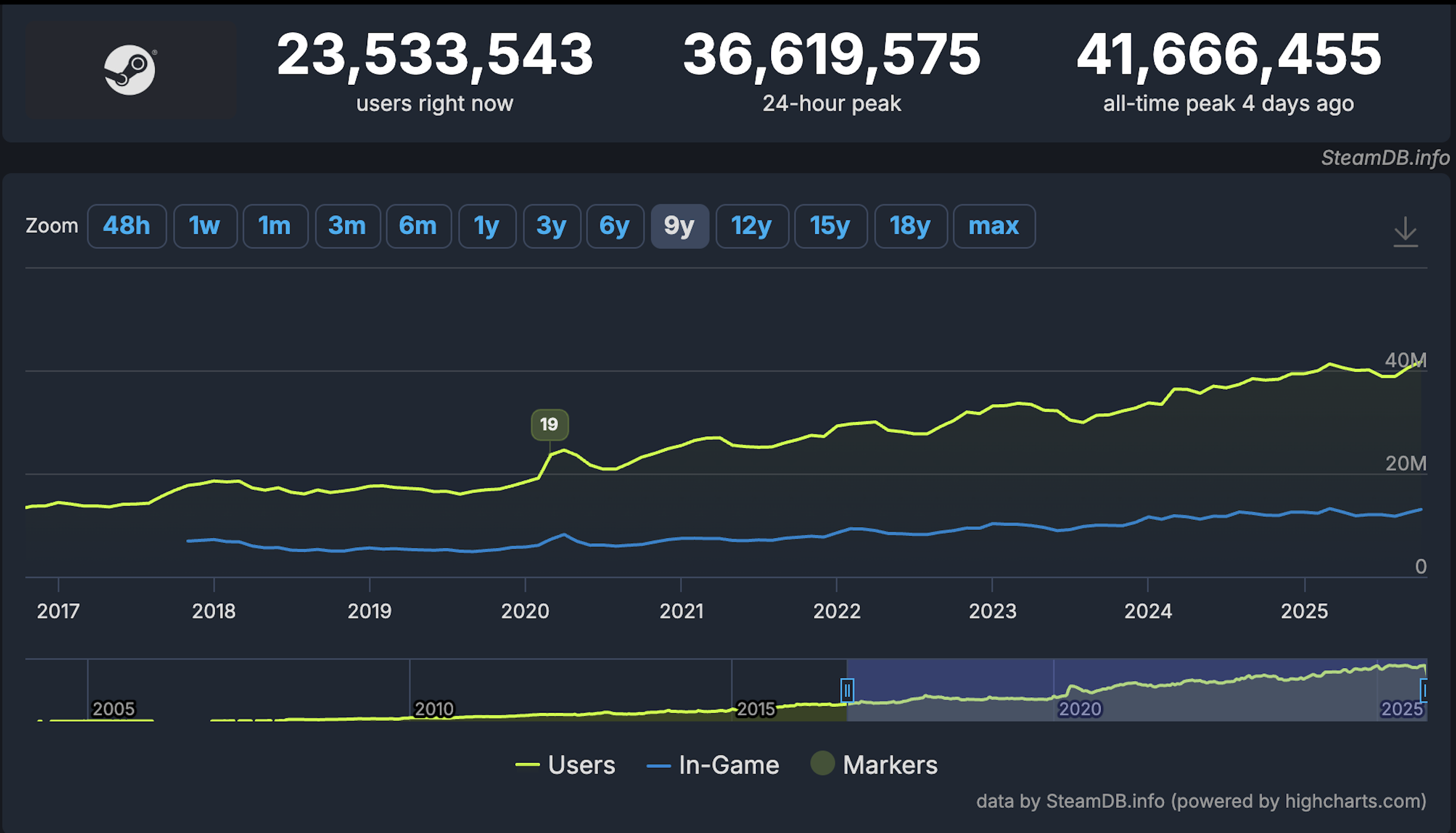
Steam has reached a new milestone that underscores the accelerating momentum behind global PC gaming. Data from SteamDB shows Valve's digital distribution platform recently surpassed 41.6 million concurrent users – an all-time high that more than doubles its peak from five years ago.
The record illustrates just how rapidly Steam's audience continues to expand. In January 2024, the platform hit around 33 million concurrent users, meaning nearly 10 million more have joined in under two years. Before the Covid-19 pandemic in early 2020, the peak stood near 19 million.
Over the past half decade, Steam's concurrent user base has grown by more than 20 million, reflecting a long-term upward trajectory for PC gaming rather than a short-lived pandemic boost.
Steam's success stems from a combination of technology, accessibility, and strategic market positioning. The platform's support for Windows, macOS, and Linux gives players flexibility in hardware choice, while cloud storage, automatic updates, and seamless multiplayer integration maintain a consistent experience across devices. Valve's recurring discount events and seasonal sales also play a key role, drawing millions of gamers seeking affordable access to its extensive game library.
Growth beyond traditional markets has further expanded Steam's reach. In regions such as India, Brazil, and Southeast Asia, improved broadband infrastructure and region-specific servers have made large-scale online play far more practical. Valve's adoption of localized pricing has opened access to premium titles in emerging economies, helping the platform extend well beyond its original dominance in North America and Europe.
Evolving player demographics continue to fuel this momentum. Steam's early user base consisted largely of PC builders and technical enthusiasts, but today it encompasses casual players drawn to indie titles, older users returning to gaming, and newcomers interested in genres like strategy and simulation that thrive on PC. Simplified setup processes, automatic driver management, and more accessible hardware have helped lower barriers to entry, broadening the platform's appeal.
Although console ecosystems such as PlayStation and Xbox remain major competitors, Steam's numbers illustrate how PC gaming has entered the mainstream. Its mix of user-friendly design, flexible pricing, and reliable technical performance has kept Valve ahead, even as rivals pivot toward subscription services and cloud-based models.
PC gaming boom: Steam sets new record with 41.6 million concurrent players


