Petition urges Canadian government to mandate end-of-life protections for video games

zohaibahd

Posts: 978   +19
Staff
In a nutshell: A new petition filed with the Canadian government is demanding legislation to protect consumers' access to games they've purchased, even after publishers end support. With over 3,000 signatures in just a few days, it calls for companies to leave games in a fully functional state and remove any mandatory online requirements once a game reaches its end of life.
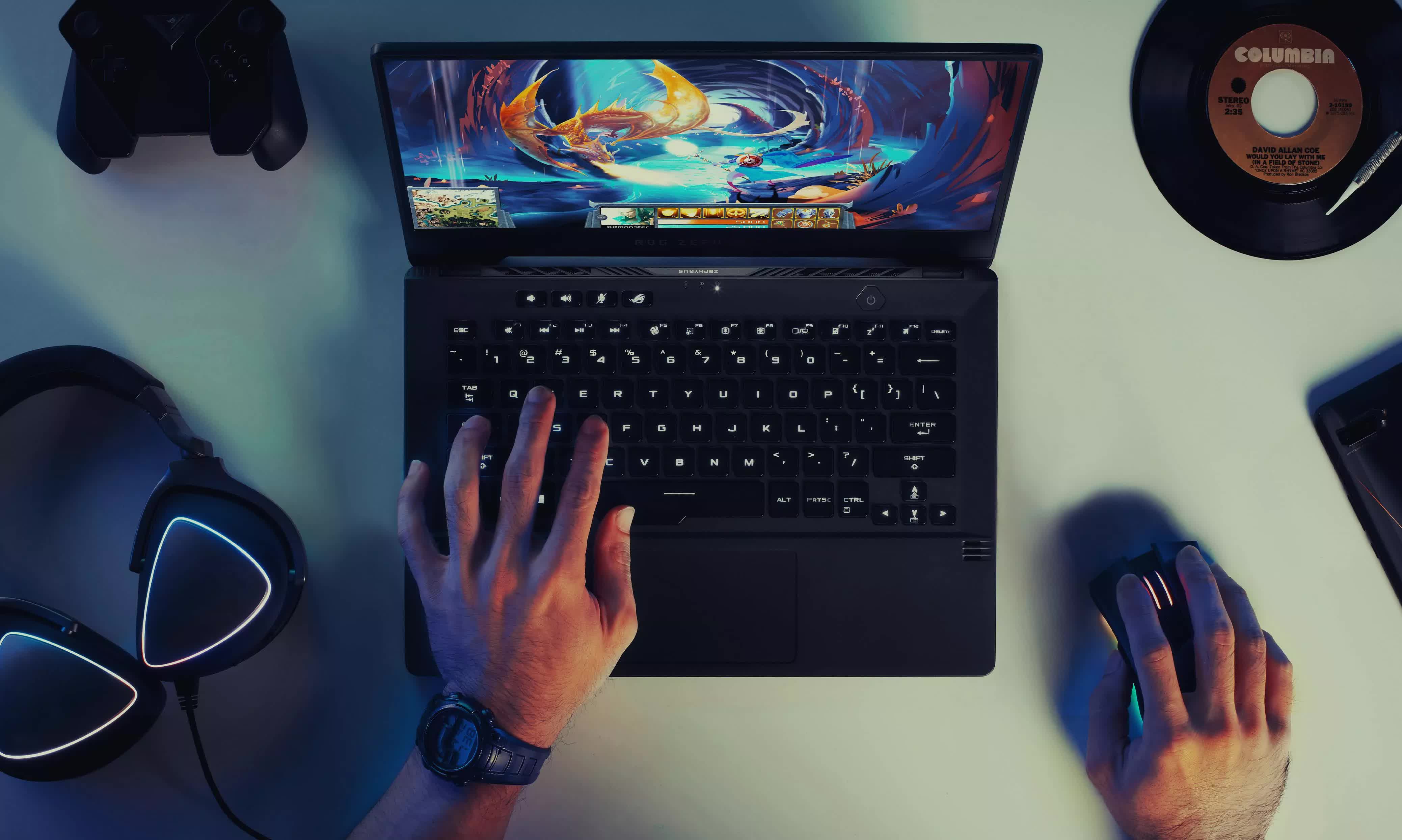
The issue has been brewing for years, but it likely reached a tipping point last month after Ubisoft discontinued support for the online racer The Crew. Not only did this shutdown render the game unplayable, but Ubisoft also took it a step further by revoking owners' rights to even launch the game through its Ubisoft Connect platform. Gamers who had purchased The Crew were essentially left with no way to access the title they paid for.

The Canadian petition argues that this type of behavior "deprives consumers of basic ownership rights while precluding restoration and preservation efforts." It asserts that companies are engaging in "planned obsolescence by withholding vital components and thus preventing consumers from repairing their copies of games."

Petitioners are calling on the government to pass legislation requiring publishers not only to keep games functional indefinitely after ending support but also to remove any dependencies on the publisher's servers. This would prevent situations where an always-online game becomes unplayable after shutdown.
The petition also advocates for this proposed law to override any End User License Agreements (EULAs), ensuring that customers do not forfeit ownership rights simply by playing a game.

A similar petition was recently filed in the UK, gathering over 20,000 signatures. In response, the UK government stated that game sellers must adhere to consumer protection laws by providing clear information if a game is intended to remain playable indefinitely. However, it did not mandate perpetual online functionality.

If a game is advertised as remaining playable even after server shutdowns, the UK government asserts that game companies may need to ensure that an offline mode remains viable under consumer protection regulations. However, there is no explicit requirement for eternal online operability.

This issue touches on the longstanding debate surrounding digital ownership rights for media such as games, movies, and music. With games increasingly adopting an online-centric service model, there is concern that consumers are essentially renting access to entertainment that they believe they own.

It is likely that the Canadian petition will prompt a response similar to that of the UK government, if any response is given at all. However, if by some chance the petition succeeds, it could establish an important precedent for digital ownership protections.

Permalink to story:

 
With games increasingly adopting an online-centric service model, there is concern that consumers are essentially renting access to entertainment that they believe they own.
This is the crux of the issue, you SOLD me the game, I pressed “Buy” not “Rent” when I spent my money.

I think (finally) something might happen around this, it’s getting momentum, some of these publishers should either be forced to release the server code so games can continue functioning after they’ve shutdown servers, OR, they should get fined into oblivion for mis-selling games for the past 15 years…
 
This is the crux of the issue, you SOLD me the game, I pressed “Buy” not “Rent” when I spent my money.

I think (finally) something might happen around this, it’s getting momentum, some of these publishers should either be forced to release the server code so games can continue functioning after they’ve shutdown servers, OR, they should get fined into oblivion for mis-selling games for the past 15 years…
Indeed. The end to standard form contracts (EULAs and the like that don't require your signature, and you often aren't presented a copy with until post-purchase), would also go a long way.
 
Indeed. The end to standard form contracts (EULAs and the like that don't require your signature, and you often aren't presented a copy with until post-purchase), would also go a long way.
Absolutely, at the moment, we "buy" a game, then after purchase, installation etc... we're greeted with "please create account..." then a massive EULA that essentially says we're now renting the thing we bought...

How this has been allowed legally for so many years, I've always been staggered by.
 
Most countries they sell games in usually have some laws that would take issue with selling anything as “buying” a product, vs “renting” a product.
Point I was making nothing is stopping any game company from simply not selling their game if laws come into effect. We've seen this before. Some games can't be sold in certain countries or at times games have to be changed for certain countries. In this case if there was to become a law and if the game company doesn't like it they simply won't sell the game in that country.
 
Never buy an online-only game, or a game that requires connection to the company's server to play. And never buy a game that requires internet to even launch the game.
Downside is a lot of games do require a connection. If all your friends are playing, then you will be to. So it's never that simple as never buy a game that's online only.
 
Point I was making nothing is stopping any game company from simply not selling their game if laws come into effect. We've seen this before. Some games can't be sold in certain countries or at times games have to be changed for certain countries. In this case if there was to become a law and if the game company doesn't like it they simply won't sell the game in that country.
Remember when a handful of EU countries banned lootboxes in games and the big game makers pulled them out of EVERYTHING they sold globally? Yeah me too!

If canada were to pass something like this, and other countries would take interest, guarantee game companies would change behavior overnight to prevent more aggressive pro consumer legislation from being passed in larger markets.
 
"It is likely that the Canadian petition will prompt a response similar to that of the UK government, if any response is given at all."

Did you mean to say... "It is unlikely"...?
 
Downside is a lot of games do require a connection. If all your friends are playing, then you will be to. So it's never that simple as never buy a game that's online only.
I just refuse to play such games. I also prefer to play single player games. If at all, I want to play with my friends, we play with locally hosted servers - like TCP/IP game session in original Diablo II + LoD, for example. Newer games don't have this functionality anyway.
 
I just refuse to play such games. I also prefer to play single player games. If at all, I want to play with my friends, we play with locally hosted servers - like TCP/IP game session in original Diablo II + LoD, for example. Newer games don't have this functionality anyway.
They are becoming, have become* a big part of our culture. You wont, a million of other people wont, 20 millions will. EA's sports game that accumulate billions, mobile service games (trash), they are here to stay because they satisfy the needs of those who spend time and money on them.
 
Many people are fine with "buying but owning" games...
when their games are outdated and obsolete, they will just buy new ones..
This just isn't always true though is it?

I'm a great example, I still have my PS2 plugged in. I still go back to it at least a couple of times a year to play through Timesplitters: Future Perfect.

If in 10-20 years time I cannot turn on my PS5 and play through Horizon: Forbidden West, Pirating and Emulation is literally my only option. For something I paid for and physically own and in possession of. Purely software locked for absolutely no reason at that point.
 
This just isn't always true though is it?

I'm a great example, I still have my PS2 plugged in. I still go back to it at least a couple of times a year to play through Timesplitters: Future Perfect.

If in 10-20 years time I cannot turn on my PS5 and play through Horizon: Forbidden West, Pirating and Emulation is literally my only option. For something I paid for and physically own and in possession of. Purely software locked for absolutely no reason at that point.
Well the problem is that your physical copy is just a copy of the game given to you on physical media. You own the disk that the information is on but not the information. Now, the DCMA allows owners of physical media to make 1 digital copy but your still a slave to the EULA, it's just much harder for companies to take the physical media away from you.
 
It's only going to work if they have significant penalties for violations ..... say, half of the profits earned on the game for the first violation and 1.5x the profits for any subsequent violations. That's a language that ANY of the CEO's can understand .... The other option would be to make the games "owned" by those purchasing them with the ability to file suite against the game makers by anyone. THAT alone would significantly alter the way these game makers treat their buyers.
 
How this has been allowed legally for so many years, I've always been staggered by.
In the U.S., courts are split on the enforceability of EULAs. But even in places where courts have found them to be unenforceable, they have only ruled on specific terms of the contract, not the validity of EULAs in general. There really hasn't been enough of a precedent set to change the practices or affects around EULAs, and even if there were more court cases on the docket, we would likely see a circuit split. (https://en.wikipedia.org/wiki/End-u...#Enforceability_of_EULAs_in_the_United_States)

Legislation around the issue would sure be nice.

I will say that a standard form contract worked out in favor of a Russian, Agarkov, at one point though, though only a bit. A bank sent Agarkov a credit card offer in the mail with terms he didn't like, he scanned the contract, altered it, printed it out, and sent it back to the bank. The bank agreed without reading the contract. Later the bank sued Agarkov for late payments, and the court found the contract valid, only requiring Agarkov to pay back what he spent (no late fees). Later, in an additional suit, Agarkov filed against the bank for not honoring the terms of the agreement, for a sum of about $700,000 (in rubles). The bank tried to terminate the credit card, but the amended contract required that the bank pay the man 6 million rubles. The bank started looking into getting a criminal fraud case against Agarkov. Later both sides withdrew their respective complaints against each other. "This started as a joke in 2008... but the joke has gone too far," said Agarkov.


While a nice story, at the end of the day, standard form contracts are anti-consumer, would be nice if the tables could be turned more generally by prohibiting them.
 
I would like to be able to play all the games I have purchased. That includes Winter Race 3D which was reviewed horribly but I had fun. I wouldn't expect a company to be required to make a game last forever because that will put people out of work. Government mandates do that
 
We need to put a stop to this "Always-Online" scam from these developers and publishers that are ultimately looking to to profit while screwing the consumer.
 
This just isn't always true though is it?

I'm a great example, I still have my PS2 plugged in. I still go back to it at least a couple of times a year to play through Timesplitters: Future Perfect.

If in 10-20 years time I cannot turn on my PS5 and play through Horizon: Forbidden West, Pirating and Emulation is literally my only option. For something I paid for and physically own and in possession of. Purely software locked for absolutely no reason at that point.
you are lucky..
I only have physical PC games that I bought when the PC was still using Windows XP..
currently my PC doesn't have a player for that disks..
and even if it did, it would be difficult for me to play on the latest OS..
 
you are lucky..
I only have physical PC games that I bought when the PC was still using Windows XP..
currently my PC doesn't have a player for that disks..
and even if it did, it would be difficult for me to play on the latest OS..
Oh so do I, I have the original Company of Heroes on disc, With the "DX10 Patch" Disc! I used to have the discs for Half-Life 1, Theme Park World, I think I still have the discs for Sims and Sims 2.

Fact is, you can buy a USB CD drive and chances are, there's a community created patch or guides that take you through the steps of getting them working again.

Games like The Crew, Destiny, Diablo, WoW, New World, Helldivers 2 etc... They are all games that rely on a server the publisher/developer runs, these games, that you purchased outright, simply will stop working one day, and the only thing causing that is the refusal from publishers/developers to release the server code, if a game has a community around it (most games do) someone out there is prepared to do the leg work and get the server running somewhere to continue playing the game.

I'm absolutely not saying publishers/developers should be held to run servers indefinitely, that's not possible really, what I am saying though, these publishers/developers should be thinking about server side, how that works and how you could run it on third party services they do not control because, some day, it will need to be moved off their own systems.
 
"If a game is advertised as remaining playable even after server shutdowns, the UK government asserts that game companies may need to ensure that an offline mode remains viable under consumer protection regulations. However, there is no explicit requirement for eternal online operability."

All games in the UK will just use a slick phrase saying they aren't indefinitely playable, but in a way that sounds like it's not a big deal. If all games have the same disclaimer, then people will just ignore them until it's too late.
 
Back