In a nutshell: Raspberry Pi is one of many companies affected by the ongoing memory shortage fueled by the AI boom. As the DRAM industry shifts focus toward higher margin products for Big Tech's ambitious data center projects, the UK-based foundation has had to adjust chip configurations on its PCBs to prevent further supply issues.
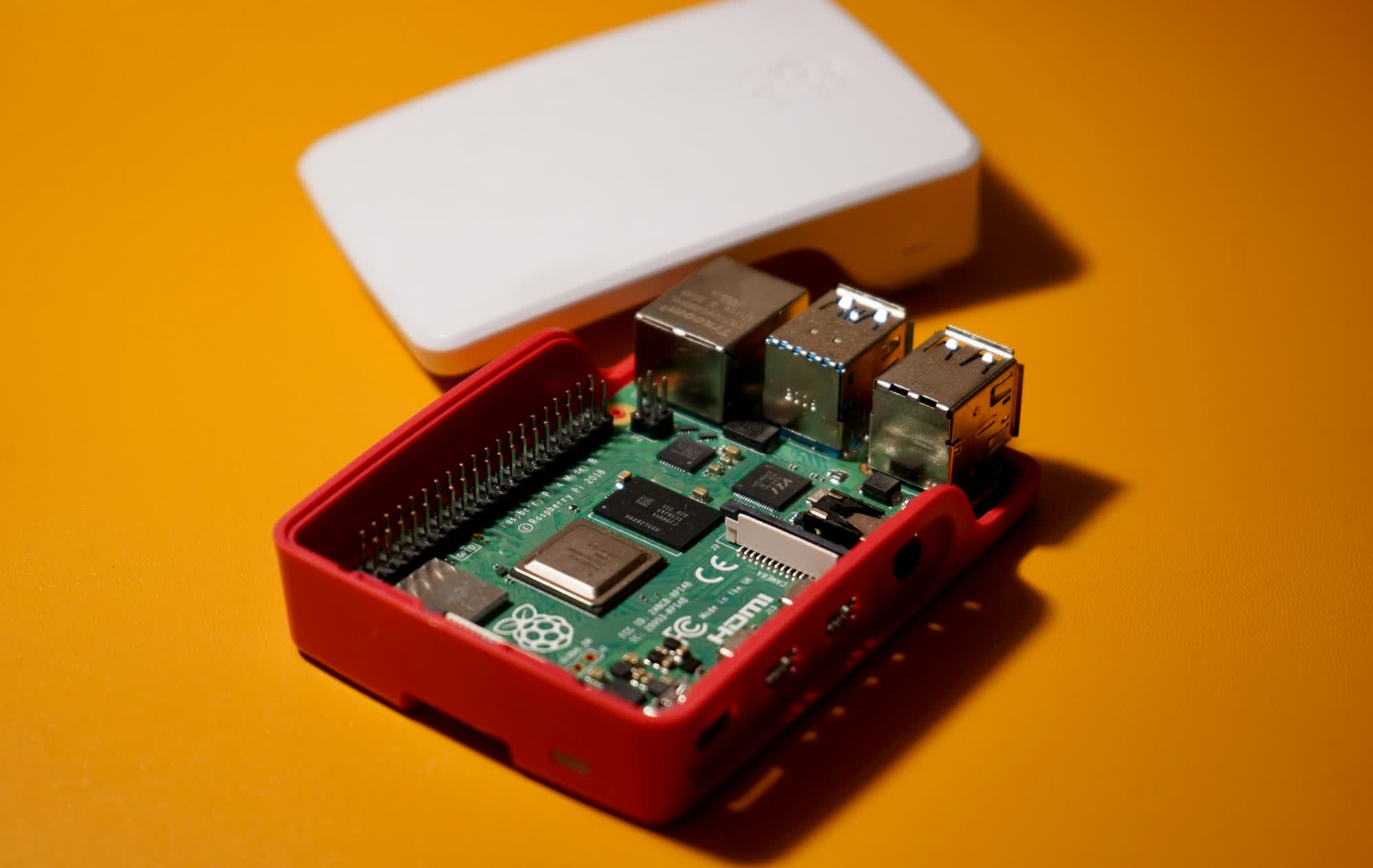
Raspberry Pi recently unveiled a new revision of the Raspberry Pi 4 Model B board. The single-board computer now comes in a "Dual RAM" variant, PCN 45, which adds a second DRAM module while maintaining near-full compatibility with existing software and accessories. The change reflects the current state of the DRAM market, where supply constraints have turned the IT industry into a rigged game favoring Big Tech.
By adopting a dual DRAM configuration, Raspberry Pi says the new SBC variant can stay in production while the foundation navigates between multiple DRAM suppliers. The revised PCB places a second DRAM chip on the back of the board and rearranges a few passive components to accommodate the additional memory.
Raspberry Pi has "extensively" tested the new DRAM modules to ensure they closely match the original parts in both hardware specifications and performance. The latest Raspberry Pi 4 variant also uses intrusive reflow soldering, a technique first introduced with the Raspberry Pi 5, to improve build quality and reduce e-waste. The foundation is now applying this method retroactively to the earlier board to enhance production reliability.
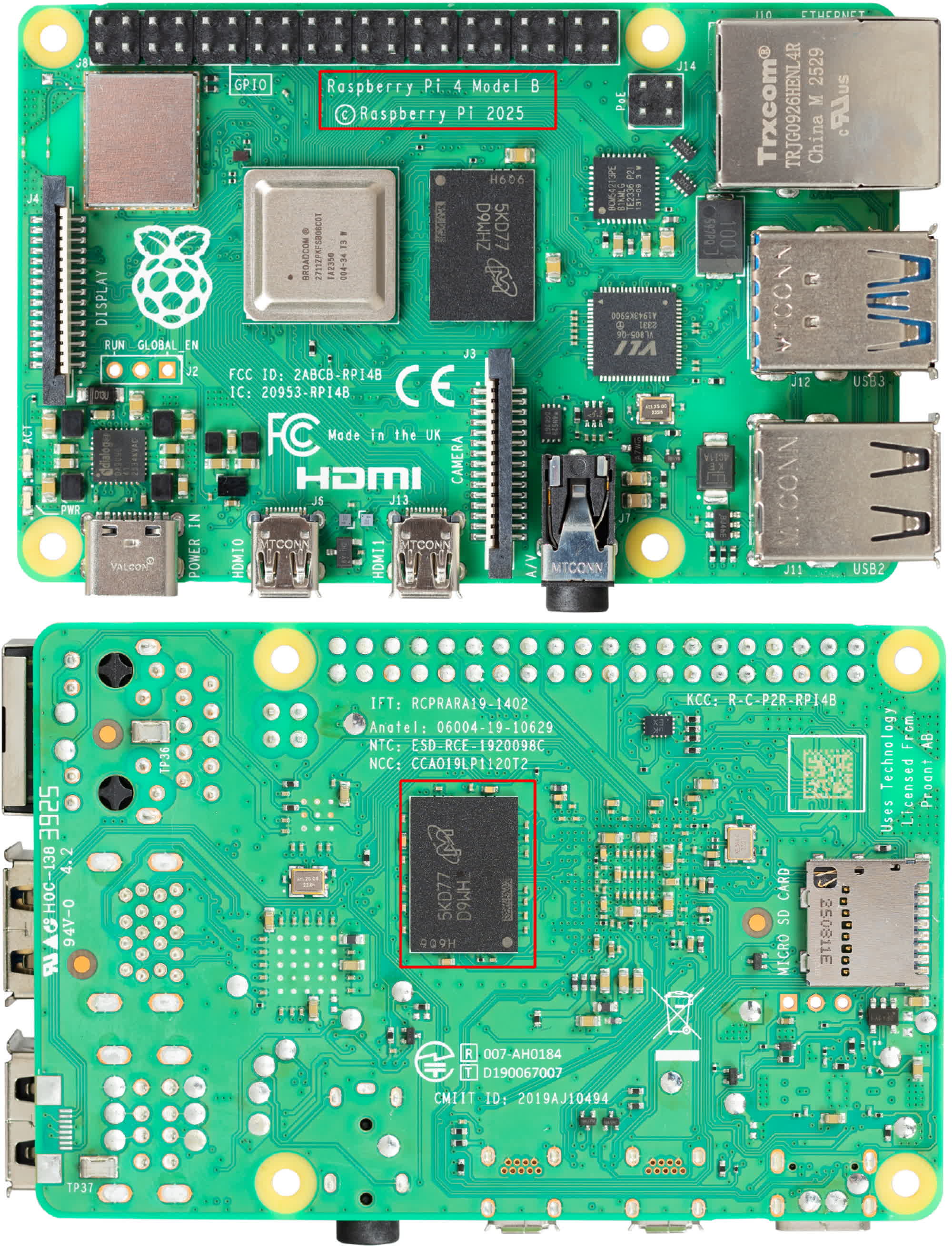
The Dual RAM board does not include any additional hardware modifications, meaning it remains compatible with existing Raspberry Pi 4 modules and add-ons. However, the new board requires an updated bootloader (pieeprom-2026-01-09.bin) to allow the operating system to access the second chip on the back. Raspberry Pi recommends using the latest Linux kernel or the official Raspberry Pi OS for best results.
The organization also cautions that "any RAM size SKU may be built as this dual-chip variant," so production will include a mix of single- and dual-chip boards.
Users can easily identify which revision they have purchased. The simplest method is to inspect the physical PCB: the new variant includes a second RAM chip on the back and displays the date "2025" on the front. Alternatively, running cat /proc/cpuinfo on the latest Raspberry Pi OS will show the "Model" field as "Raspberry Pi 4 Model B Rev 1.5" for the dual RAM version.
Earlier this month, Raspberry Pi raised the prices of its boards for the second time in a short period, a move largely driven by ongoing DRAM supply pressures fueled in part by the AI industry's insatiable demand for memory.
Raspberry Pi 4 variant gains second DRAM chip as memory shortage persists


