Silicon Valley's longevity drug obsession is facing its first real reality check

Skye Jacobs

Posts: 1,991   +58
Staff
TL;DR: The most revealing development in Silicon Valley's longevity movement is not a new compound or breakthrough protocol, but a retreat. That shift comes as some of the movement's most prominent figures begin confronting the limits of a science that has yet to live up to the hype.

Bryan Johnson, the tech entrepreneur who turned his body into a public experiment, stopped taking Rapamycin in September 2024 after several years of self-testing the drug. The immunosuppressant, which is clinically used to prevent organ rejection, had been a cornerstone of his longevity regimen since 2019. Over the years, he experimented with different doses and schedules to determine whether it could slow the aging process.

Over time, Johnson reported intermittent skin infections, elevated glucose levels, abnormal lipid readings, and an increased resting heart rate. "With no other underlying causes identified, we suspected Rapamycin, and since dosage adjustments had no effect, we decided to discontinue it entirely," he wrote on X.

Johnson first gained widespread attention after selling his payments company, Braintree, to PayPal. He later devoted much of his wealth and attention to Blueprint, a highly structured longevity program built around diagnostics, pharmaceuticals, peptides, and strict lifestyle interventions.

He and his team say they want to move beyond simply managing chronic conditions and instead, as they put it, "tackle chronic conditions that current medicine accepts as manageable but not treatable, and to render them treatable through advanced diagnostics and next-generation personalized therapeutics."

His regimen is constantly refined and publicly documented in remarkable detail, transforming what would once have been a private medical record into something resembling an open-source software project.

Surrounding Johnson is a broader tech community that views longevity as an engineering challenge. Founders, investors, and engineers study early-stage research, engage directly with scientists, and then apply elements of that research to themselves. They track biomarkers through custom testing panels, monitor sleep and physical activity, and share charts detailing mTOR inhibitor use, lipid levels, and biological age estimates.

The feedback loop plays out across X, podcasts, YouTube channels, and private group chats, where data, lab results, and personal protocols are exchanged at a pace more commonly associated with software development.

This culture has helped popularize a succession of compounds and interventions long before large-scale human trials or regulators have had a chance to catch up. Exogenous ketone supplements, for example, gained a following in Silicon Valley as a way to raise blood ketone levels, lower glucose, and sharpen focus. They were marketed as premium cognitive enhancers for executives and engineers.

Then, in March, entrepreneur Tim Ferriss and venture capitalist Kevin Rose used their podcast to warn listeners about 1,3-butanediol, a compound found in some of those products. Ferriss pointed to animal data suggesting it could induce a condition resembling fatty liver disease in mice and told listeners, "Treat it like ethanol, like you're drinking moonshine. You wouldn't want to do that every day."

The animal findings have not been confirmed in humans, and some manufacturers dispute that characterization. However, the message to their audience was clear: proceed with caution.

Rapamycin itself illustrates how scientific research and tech culture interact. In animal models, the drug has been shown to extend lifespan by roughly 25% to more than 50% by inhibiting the mTOR pathway, which regulates cell growth and is implicated in aging.

Scientists such as biogerontologist Matt Kaeberlein note that "it works in every animal where it's ever been tested." Small human studies of a related compound, everolimus, have also shown improved influenza vaccine responses and fewer respiratory infections in older adults, suggesting potential benefits for immune function.

Survey research involving people taking Rapamycin off-label has found that users often report a better quality of life. However, the data is self-reported and may exclude people who discontinued the drug because of side effects.

Even scientists who are optimistic about longevity research stress that these findings do not amount to proof that any current intervention can extend human lifespan. "There is no medical intervention that is proven to extend human life by targeting aging itself," Andrew Steele, an independent longevity researcher and author, told Nature.

Nir Barzilai, president of the Academy of Geroscience and a genetics researcher at Albert Einstein College of Medicine, describes many of the compounds used by wealthy biohackers as biologically plausible but not yet supported by clinical evidence. "If you're asking, 'Is he taking something that doesn't make sense?' I would say no. These things are based on biology, but not on clinical evidence," he says of Johnson's regimen.

The gap between early biological signals and rigorous clinical data is what concerns researchers most. Kaeberlein calls it a "signal-to-noise problem": intriguing findings are scattered across animal studies, small clinical trials, and mechanistic research, but they are often buried beneath a much larger volume of anecdotes, marketing claims, and fast-moving online discussion.

For non-experts, separating credible evidence from speculation can be difficult, especially when information is presented alongside technical jargon, biomarker charts, and laboratory screenshots.

Clinicians working at the forefront of preventive and longevity medicine say the tech community's influence is increasingly making its way into exam rooms. At Reborne Longevity, a London clinic founded by entrepreneur Faye Mythen, clients increasingly arrive asking specifically for drugs, compounds, or Blueprint-style protocols they have encountered online.
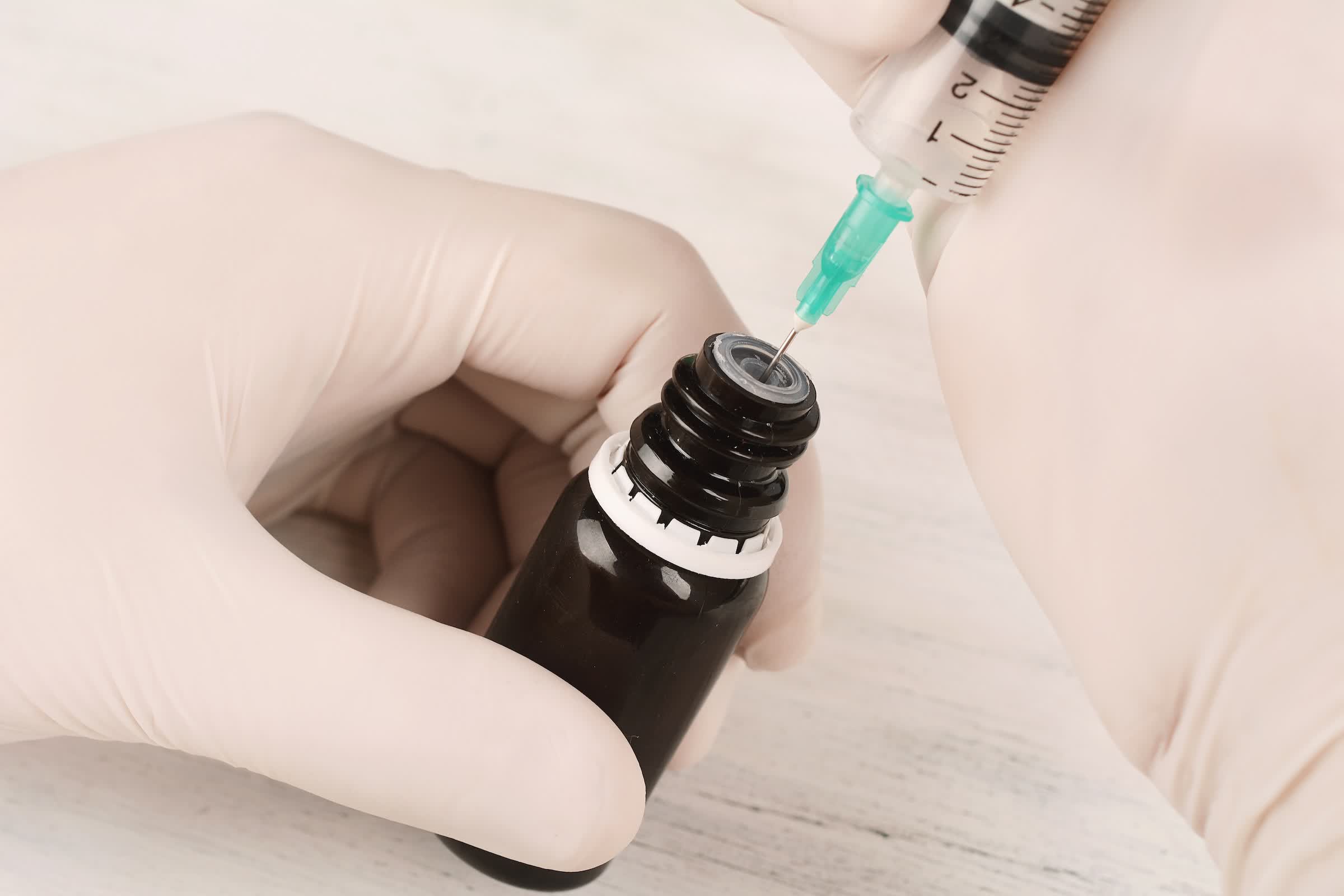
"People ask for 'the Blueprint,' or for a specific molecule by name, before they have had a single biomarker measured," Mythen says. She describes this as a "shadow phase II" problem. Affluent self-experimenters conduct their own uncontrolled trials and, through social media, those protocols can quickly spread to a much broader audience without the safeguards built into formal clinical trial phases.

Researchers who study influencers see a similar pattern. Margje Camps of Utrecht University notes that prominent figures in the longevity space often rely heavily on scientific terminology and data visualizations to justify their choices, making their content persuasive even when definitive evidence is lacking.

Followers, she says, can come away with the impression that supplements or drugs are necessary because "everyone is using them, surely I need one," without realizing that some influencers also sell products under their own brand names, creating financial incentives that are not always apparent.

Within the field, there is broad agreement that a handful of existing approved drugs – such as metformin, GLP-1 receptor agonists, SGLT2 inhibitors, and bisphosphonates – have shown promise in slowing or modifying age-related diseases. Barzilai is leading a major study called TAME, which aims to determine whether metformin can delay the onset or progression of chronic conditions associated with aging. Even so, these efforts move slowly compared with the pace of self-experimentation on social media platforms.

Johnson and his Blueprint science team argue that the tech model – dense, individualized measurement through "n-of-1" experiments – represents a new frontier capable of generating "signals that lie beyond the published literature and constitute first-in-human observations."

Barzilai and other geroscientists counter that "science is not n = 1" and that randomized controlled trials remain the gold standard for determining what works at scale. Steele estimates that a properly powered rapamycin trial in healthy adults could cost tens of millions of dollars – a manageable sum given the fortunes of some longevity advocates. Yet he says he has not found a way to channel the "multibillion-dollar excitement" surrounding longevity into that kind of shared scientific infrastructure.

"It's simultaneously a wellness fad and potentially the greatest revolution in the history of medicine," he says.

For now, the clearest sign of how the tech community is reshaping longevity science may be its own public reversals. A founder abandons a drug after years of advocacy. A popular podcast warns listeners to treat a once-hyped compound like moonshine. These moments highlight both the influence and the limitations of treating aging as just another system to be optimized – and how much formal science still has to do to catch up.

Permalink to story:

 
Rapamycin has been in the news for decades. I'm surprised TS has yet to cover the first human trial of ER-100, a drug to not only slow aging, but reverse it:

 
I love seeing all the wealthy tech bros throw money at aging, something they can't control and affects them just as much as regular joes. There's no evidence that any of these things work and there is ample evidence from centuries of science that random n=1 claims of effectiveness do not pan out.

The only way to find which drug is actually useful is, as always, randomized controlled trials but rich tech bros don't fund RCTs for the poors to participate in. That's fine, they're gonna die in their alotted time just like everyone else but at least they can spread their money around on this and that fad drug to line someone else's pocket in the meantime.
 
I love seeing all the wealthy tech bros throw money at aging, something they can't control and affects them just as much as regular joes.
Schadenfreude isn't a good look.

The only way to find which drug is actually useful is, as always, randomized controlled trials but rich tech bros don't fund RCTs for the poors to participate in.
There are actually several RCTs ongoing right now on rapamycin (the drug used by Bryan Johnson), funded from sources ranging from "rich tech bros" venture capital to crowdfunding to university/government grants. Most of the participants are "regular joes" ... and janes.
 
If you want to live a long time you should listen to your mom and eat your veggies.
The people that live the longest (and in relatively good health) are in the Mediterranean and Japan. In both cases they eat a lot of vegetables and fish and in general unprocessed foods and of course good healthcare.

I vaguely remember some guy that was interviewed on the discovery channel decades ago that claimed that by eating super clean he'd live to 140 or something... wonder if he's still around.
 
Oh, one scam after the other, how riveting.
Scam? Learn what words mean. Neither the human guinea pig here, nor any medical doctor or institute connected with this research is selling the drug for longevity extension, or profiting from their study of it.

This is how research works ... and while Bryan Johnson's statistical universe of one may not be a well-constructed experiment, it's not entirely worthless either.
 
Schadenfreude isn't a good look.

Irrelevant. The economy is at least partially based on people tossing money at all sorts of empty promises. It's nice to see that people with loads of dispensable money are also doing the same as they have an outsized contribution to keeping more money flowing through the system. I wish they would do it more often.

There are actually several RCTs ongoing right now on rapamycin (the drug used by Bryan Johnson), funded from sources ranging from "rich tech bros" venture capital to crowdfunding to university/government grants. Most of the participants are "regular joes" ... and janes.

That's great to hear. The problem is this article is all about people not waiting for results of boutique drugs, many of which are being pushed by tech bros encouraging others to spend. You'd think these trials would have been done years ago and people would be acting on scientifically derived conclusions but yeah, instead there's money to be made on empty promises.
 
Irrelevant. The economy is at least partially based on people tossing money at all sorts of empty promises. It's nice to see that people with loads of dispensable money are also doing the same as they have an outsized contribution to keeping more money flowing through the system. I wish they would do it more often.
A statement diametrically opposite your original post, which hoped that they receive no benefit from the drug, because you yourself aren't.

The problem is this article is all about people not waiting for results of boutique drugs, many of which are being pushed by tech bros encouraging others to spend. You'd think these trials would have been done years ago and people would be acting on scientifically derived conclusions but yeah, instead there's money to be made on empty promises.
You're confused. First, your statement that "rich tech bros" don't fund trials was quite false. Furthermore, if everyone "waited for results" of pharmaceutical research, there would never BE any results ... those come only from the drug being taken by people.

Secondly, no one knew of potential for longevity extension from rapamycin until 2009. Research has been ongoing since, but by the very nature of longevity extension results take decades to appear. You can't give the drug to someone for one year and see it extended their lifespan.

Finally, your statement that "the only way" we can test drugs is through random controlled trials is flatly incorrect, as tens of thousands of published observational studies on pharmacology attest.
 
Last edited:
A statement diametrically opposite your original post, which hoped that they receive no benefit from the drug, because you yourself aren't.

LOL your logic is so twisted up. How is them not controlling their aging in opposition to them spending money on unproven drugs?

You're confused. First, your statement that "rich tech bros" don't fund trials was quite false.

What independent science are they funding? All I see are claims.

Furthermore, if everyone "waited for results" of pharmaceutical research, there would never BE any results ... those come only from the drug being taken by people.

LOL still tangled in your own logic. Scientific research proceeds in a dependable series of steps, all of which need to be followed in order to determine safety and efficacy and repeatability. If you skip those steps then you get something that has no stated function and could be detrimental to health. Feel free to skip all these at your own risk, you do you.

Secondly, no one knew of potential for longevity extension from rapamycin until 2009. Research has been ongoing since, but by the very nature of longevity extension results take decades to appear. You can't give the drug to someone for one year and see it extended their lifespan.

Yes. You need to wait for the results, especially in aging studies. Tough sh•• they take very long by definition. Unless you like experimenting on yourself so again: you do you.

Finally, your statement that "the only way" we can test drugs is through random controlled trials is flatly incorrect, as tens of thousands of published observational studies on pharmacology attest.

Drugs that have actual effects need to be double blind tested and very much are, in order to determine safety, efficacy and repeatability, as I said above. Observational studies are great for finding promising drugs but nothing is determined until double blinded tests are done.

I'm curious what drugs these "tens of thousands of published observational tests" have given us which have not been double blinded tested. If you're referring to things like herbal remedies and homeopathy, etc. then yeah, you go ahead and enjoy those things.
 
I'm curious what drugs these "tens of thousands of published observational tests" have given us which have not been double blinded tested. If you're referring to things like herbal remedies and homeopathy, etc. then yeah, you go ahead and enjoy those things.
Don't hold your breath. Speaking from personal experience, Endy tends to treat scientific research as if it were a fill-in-the-blanks exercise where the blanks are filled in with his/her own conclusions even if researchers never said anything, in publishing their research, that supported making those conclusions.

I'd hunt down a TS discussion in the General forum between it and I if I had more time to waste.

Twisted logic indeed. :laughing:
 
What independent science are they funding? All I see are claims.
Why not try looking instead of making false allegations?

- The ERAP rapamycin study is currently being conducted by the Karolinksa Medical Institute in Sweden, funded by a "tech bros" grant from the NORN group.
- The PEARL rapamycin study, funded by AgelessRX, Rapamycin Press, and Lifespan.io
- The University of Arizona is conducting a Phase 3 rapamycin study, funded by a grant by R. Ken Coit and his Coit Financial Group.

There are others, but these three prove the point. You were wrong; drop it and move on.

LOL still tangled in your own logic. Scientific research proceeds in a dependable series of steps, all of which need to be followed in order to determine safety and efficacy and repeatability. If you skip those steps then you get something that has no stated function and could be detrimental to health.
Was this a joke, or do you misunderstand research so badly? Vague hand-waving about "dependable steps" doesn't change the fact that, at some point one or more humans must be the first ever to take an experimental drug, with no assurances of "safety and efficacy". This is true for every single drug man has ever studied.

From Alexander Fleming who discovered then tested penicillin on himself, to Barry Marshall who deliberately infected himself with h. pylori, all the way up to 2020 when Dr. Huang Jinhai tested his own Covid-19 vaccine on himself, long before it had undergone trials, many thousands of researchers have made crucial discoveries not by "dependable series of steps", but by basic cause-effect experimentation.

Yes. You need to wait for the results, especially in aging studies. Tough sh•• they take very long by definition. Unless you like experimenting on yourself so again: you do you.
Learn logic, Lew. The results you so adamantly demand derive from people experimenting on themselves. Luckily those people exists, else milquetoast bombasts would have no pharmaceuticals whatsoever to rely upon.
 
Last edited:
Eat somewhat healthy and in moderation, don't drink much alcohol, lift weights, do cardio, get proper sleep, it is as simple as that.

Don't get fat. When was the last time you saw a fat old man on the golf course?
 
Why not try looking instead of making false allegations?

- The ERAP rapamycin study is currently being conducted by the Karolinksa Medical Institute in Sweden, funded by a "tech bros" grant from the NORN group.
- The PEARL rapamycin study, funded by AgelessRX, Rapamycin Press, and Lifespan.io
- The University of Arizona is conducting a Phase 3 rapamycin study, funded by a grant by R. Ken Coit and his Coit Financial Group.

There are others, but these three prove the point. You were wrong; drop it and move on.

Asking for proof of a claim is not making a false allegation. And the NORN Group is led by a published scientist with Cell, Cell Metabolism, and PNAS papers. That is actually legit and someone who is a trained scientist in the field his company focuses on, and likely knows the process of science. Not a techbro with big ideas about things but is ignorant about the scientific principles his big ideas depend on.

Was this a joke, or do you misunderstand research so badly? Vague hand-waving about "dependable steps" doesn't change the fact that, at some point one or more humans must be the first ever to take an experimental drug, with no assurances of "safety and efficacy". This is true for every single drug man has ever studied.

From Alexander Fleming who discovered then tested penicillin on himself, to Barry Marshall who deliberately infected himself with h. pylori, all the way up to 2020 when Dr. Huang Jinhai tested his own Covid-19 vaccine on himself, long before it had undergone trials, many thousands of researchers have made crucial discoveries not by "dependable series of steps", but by basic cause-effect experimentation.

Thank you for displaying your incomplete understanding of the scientific process, this is useful.

Research starts with an observation and initial testing of a hypothesis based on those observations. That's what Fleming, Marshall, etc. were doing. But that and their subsequent tests did not prove their hypothesis is correct, it meant their hypothesis was very promising.

It is standardized double-blinded (where possible) testing done by other scientists using Fleming, Marshall's etc. carefully described procedures which prove their hypothesis is correct. It is the independent replication of a procedure or idea which makes it scientific. You need this whole process, not just the first step. Many things are published as very promising which are never replicated, it is only the replicable ideas which become established science because that is the point:

Findings are only useful if they can be repeated and then applied to subsequent research which builds on them. That is the dependable series of steps required for science to progress.

Edit: In addition, standards of care require Phase I, II, and II trials for anything medical related, so any Anti-aging drug will be tested the same: Stage I: test for initial safety and dosing in a small group, Stage II: test for safety and efficacy/side effects in a bigger group, Stage III: large test for drug efficacy, usually vs. established drugs (if available) and placebo. Each Stage usually depends on passing the previous but with aging drugs, they will probably conduct II and III at the same time like was done for the Covid vaccines, as time is of the essence. But you don't get to skip safety and efficacy testing to make your drug. And yeah this will probably take 30 years. Sucks but anti-aging treatments have real bad drawbacks when it comes to testing.

Learn logic, Lew. The results you so adamantly demand derive from people experimenting on themselves. Luckily those people exists, else milquetoast bombasts would have no pharmaceuticals whatsoever to rely upon.

And the ad hominem at the end, so predictable. Experimenting on themselves is great, keep doing it. Again that needs replication by others before it becomes useful to the scientific community.
 
Last edited:
Asking for proof of a claim is not making a false allegation.
Your false allegations, among others, were that "tech bros don't fund studies".

... And the NORN Group is led by a published scientist with Cell, Cell Metabolism, and PNAS papers.
But the NORN Groups is funded by "tech bros". Are you even sure what you're attempting to argue here? Remember complaining that these studies "didn't exist"?

Research starts with an observation and initial testing of a hypothesis based on those observations.
Exactly, which doesn't require "randomized controlled studies". It requires observations .. the core of an observational study.

As the NIH states, "observational studies complement clinical studies, by determining how drugs function in the real world". I'll explain the process. A clinical trial for a particular use of a drug can be motivated by several things, but one of the more common is an observational study. Hold that thought! We'll get back to it.

If initial trials go well, they'll be followed (in the US) by a full three-phase FDA RCT. If those succeed and the drug moves to market, it will be followed -- always and inevitably -- by multiple observational studies, to back up those RCTs. If this non-random, non-controlled research finds negative effects, the drug will be pulled from the market (like thalidomide was). If the observational studies, though, find unexpected positive effects, it will occasion new clinical trials for a new use. But even before this happens, it is often prescribed "off label" by many physicians... many of them the top of their field. And no drug EVER makes it to market without first being used by -- and benefitting -- hundreds, often thousands of individuals.

No, observational studies are not "lacking in merit", but are integral to pharmacological research. All drugs end with these studies, and many begin with them. One recent example is Wegovy, originally approved by RCT testing for diabetes, but which due to observational studies of its effects on weight loss, became Ozempic.

Similarly, rapamycin has already gone through RCT testing and been deemed safe for human use -- as an antifungal medication. What's happening now is to determine its efficacy, if any, for longevity extension.
 
Your false allegations, among others, were that "tech bros don't fund studies".

You posted a link to a published scientist who formed his own company to do and fund this research. Not a tech bro.

But the NORN Groups is funded by "tech bros". Are you even sure what you're attempting to argue here? Remember complaining that these studies "didn't exist"?

Ah so you're adding in more layers. How many layers of money away still makes one a tech bro? Those people aren't funding this research; NORN, whose CEO is a published scientist in the field is.

Exactly, which doesn't require "randomized controlled studies". It requires observations .. the core of an observational study.

As the NIH states, "observational studies complement clinical studies, by determining how drugs function in the real world". I'll explain the process. A clinical trial for a particular use of a drug can be motivated by several things, but one of the more common is an observational study. Hold that thought! We'll get back to it.

If initial trials go well, they'll be followed (in the US) by a full three-phase FDA RCT. If those succeed and the drug moves to market, it will be followed -- always and inevitably -- by multiple observational studies, to back up those RCTs.

The scientific methodology for drugs which I described already. You're last bit is describing Phase IV which is not official but always good as you can find the 1 in a million bad side effects this way. The double blinded and controlled studies are already done by this point, this key part of the procedure has not been skipped. And the savvy will occasionally spot additional effects like you describe below.

If this non-random, non-controlled research finds negative effects, the drug will be pulled from the market (like thalidomide was). If the observational studies, though, find unexpected positive effects, it will occasion new clinical trials for a new use.

Which eventually leads to Phase III trials for that specific indication before the drug receives approval as it's already passed I and II.

But even before this happens, it is often prescribed "off label" by many physicians... many of them the top of their field. And no drug EVER makes it to market without first being used by -- and benefitting -- hundreds, often thousands of individuals.

That's nice and as safe as it's officially indicated use, but it does not prove any of those additional effects of the drug. That is only determined with another Phase III trial for that additional indication. And like all other drugs some of these fail, and some of these pass and the drug gains additional indications. Nothing special here, only the initial data gathering is more efficient as there is better tracking than starting from scratch with an untested drug on few people.

The only proof of the new efficacy is additional Stage III trials for the new indication.

No, observational studies are not "lacking in merit", but are integral to pharmacological research. All drugs end with these studies, and many begin with them. One recent example is Wegovy, originally approved by RCT testing for diabetes, but which due to observational studies of its effects on weight loss, became Ozempic.

I'd argue all drugs start with observational studies. How could anyone get the idea any drug has an effect without some sort of initial observation? But that's just a simple correlation and most often ends up being no more than that, with no direct cause and effect. Only Phase III trials for that specific indication prove any efficacy.

Similarly, rapamycin has already gone through RCT testing and been deemed safe for human use -- as an antifungal medication. What's happening now is to determine its efficacy, if any, for longevity extension.

Which is great, Phase I and II are done. One would hope these longevity trials are double blinded controlled trials because that's the only way to prove it has the effect people want.

And it's probably fine to take rapamycin assuming it's side effects are not generally annoying and you don't mind paying for a guess. But that assumes the financial outlay isn't egregious and there's enough of it not to deprive people access to it for its current indication. That was the problem with the whole horse paste thing. So many people were taking the horse paste that there wasn't much left for the people whose horses needed deworming.
 
You posted a link to a published scientist who formed his own company to do and fund this research. Not a tech bro.
I posted *three* such clinical trials. You couldn't dispute two of them, but in your zeal to win an argument, chose the third. You're wrong on that one also:

Funding for the NORN group comes from:

  • Juan Benet (Founder of Protocol Labs)
  • Robert Rosenkranz (Founder and CEO of Delphi Capital Management)
  • Vitalik Buterin (Co-founder of Ethereum)
  • James Fickel (Early cryptocurrency investor and technologist)
  • Fred Ehrsam (Co-founder of Coinbase and Paradigm)
  • Jed McCaleb (Co-founder of Ripple and Stellar)
  • Michael Antonov (Co-founder of Oculus VR)
Tech bros fund clinical trials. Admit your error and move on.
 
Last edited:
The scientific methodology for drugs which I described already. You're last bit is describing Phase IV which is not official...
Oops! Name one major drug which has not had observational studies conducted. And you're confusing scientific research (which has no "official" requirements) with the legal requirement for drug approval. Do you have any idea how many drugs per day are prescribed by doctors for off-label uses for which no RCT has been conducted for efficacy?

....as you can find the 1 in a million bad side effects this way.
1 in a million? You're 0 for 7 on accuracy so far. Roughly 3-4% of all drugs which pass RCT testing and receive FDA approval wind up being pulled from the market for side effects not initially found -- more than 2,500 such drugs so far.

You're also forgetting that these observational studies don't simply detect bad side effects, but good ones. In fact, the majority of drugs later approved for new uses are found in this manner.
 
One would hope these longevity trials are double blinded controlled trials because that's the only way to prove it has the effect people want.
0 for 8. This couldn't possibly be more wrong. Do you believe a "double blinded [sic] controlled trial" is needed to prove that 1mg of arsenic is fatal? RCTs suffer much less from bias and confounding factors, but are far from "the only way" to prove an effect. A well-constructed long-term observational study of ten thousand participants can easily yield more reliable data than a short-term RCT on seven participants.
 
Last edited:
I posted *three* such clinical trials. You couldn't dispute two of them, but in your zeal to win an argument, chose the third. You're wrong on that one also:

Funding for the NORN group comes from:

  • Juan Benet (Founder of Protocol Labs)
  • Robert Rosenkranz (Founder and CEO of Delphi Capital Management)
  • Vitalik Buterin (Co-founder of Ethereum)
  • James Fickel (Early cryptocurrency investor and technologist)
  • Fred Ehrsam (Co-founder of Coinbase and Paradigm)
  • Jed McCaleb (Co-founder of Ripple and Stellar)
  • Michael Antonov (Co-founder of Oculus VR)
Tech bros fund clinical trials. Admit your error and move on.

I chose your first example and assumed you followed suit on the others, did you already forget what you originally wrote? And go ahead and post more things, I'm not here to correct you as that achieves nothing.

I'm here to argue for one thing: following the scientific method which I have done from the start. It is the best method to prove cause and effect and efficacy, and no amount of excuses, or now creating strawmen change that.

LOL @ your claim of 7 participants at the end of your third consecutive post there. You invented a strawman and knocked it down. Wow, Bravo.
 
As far as I know, the only way to prove the effectiveness of drugs or supplements is the good old fashioned double blind placebo method.

And there is this, why worry about living longer, when quality of life is what should matter most.
 
As far as I know, the only way to prove the effectiveness of drugs or supplements is the good old fashioned double blind placebo method.

And there is this, why worry about living longer, when quality of life is what should matter most.

These (any!) drugs could conceivably give better quality of life even if they don't delay death, anything is possible so it's worth doing the scientific tests.
 
"Then I saw “a new heaven and a new earth,” for the first heaven and the first earth had passed away, and there was no longer any sea. 2 I saw the Holy City, the new Jerusalem, coming down out of heaven from God, prepared as a bride beautifully dressed for her husband. 3 And I heard a loud voice from the throne saying, “Look! God’s dwelling place is now among the people, and he will dwell with them. They will be his people, and God himself will be with them and be their God. 4 ‘He will wipe every tear from their eyes. There will be no more death’ or mourning or crying or pain, for the old order of things has passed away.” Revelation 21:1

The only real remedy for aging and death.
 
Back