SpaceX's classified Starshield satellites are broadcasting on restricted frequencies

Skye Jacobs

Posts: 1,918   +58
Staff
What we know so far: A network of classified defense satellites built by SpaceX is transmitting radio signals on frequencies typically reserved for the opposite direction of communication, a practice that may violate international radio standards. Signals traced to SpaceX's Starshield constellation – a government-operated system that extends the company's commercial Starlink technology into military use – have been detected broadcasting toward Earth within a section of the spectrum normally designated for uplink transmissions from the ground to satellites. The International Telecommunication Union designates the 2025 – 2110 MHz band exclusively for Earth-to-space communications.

The downlink activity was first detected not by a government agency, but by Scott Tilley, an amateur satellite tracker in British Columbia known for uncovering signals from secretive spacecraft. Tilley says the emissions appear to originate from Starshield satellites and may pose a risk of interference with other systems operating in nearby frequency bands.

"Satellites in neighboring orbits could pick up unintended commands or fail to respond correctly to legitimate ones," Tilley told NPR.

Independent experts who reviewed the findings say interference is plausible, though the severity of the impact remains unclear. "I think it is definitely happening," said Kevin Gifford, a University of Colorado Boulder professor who studies radio-frequency management in space systems. "Whether it's causing actual disruption is still an open question."

Both SpaceX and the National Reconnaissance Office (NRO) – the US agency overseeing Starshield's operations – declined NPR's requests for comment.
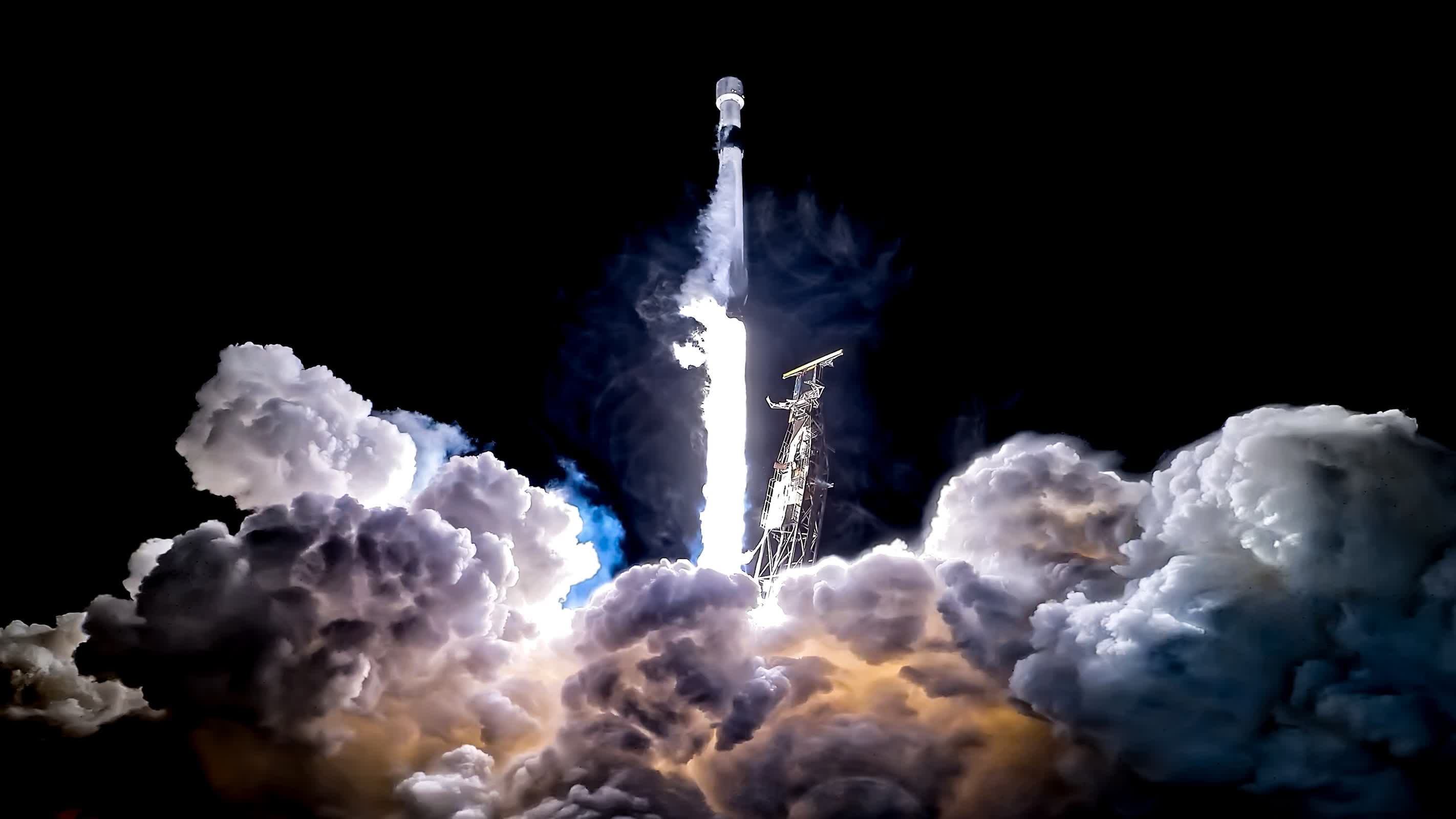
Tilley says he stumbled upon the unusual signals unintentionally while conducting unrelated observations. Monitoring from his home setup in British Columbia, he was recalibrating his equipment when his receiver began scanning a section of the spectrum that's normally quiet.

"It was just a clumsy move at the keyboard," he said. "I was working in the wrong band, the wrong antenna, and suddenly I saw something that shouldn't be there."

By regulation, the 2025 – 2110 MHz range is reserved for transmitting data from Earth-based stations to satellites, not the other way around. Yet Tilley recorded a persistent signal descending from space, occupying part of that band where no downlink should exist.

He captured the data and compared it against a global database maintained by amateur observers who track satellite orbits using telescopes and radio software. When he cross-referenced the signal's timing and trajectory, one name stood out: Starshield.
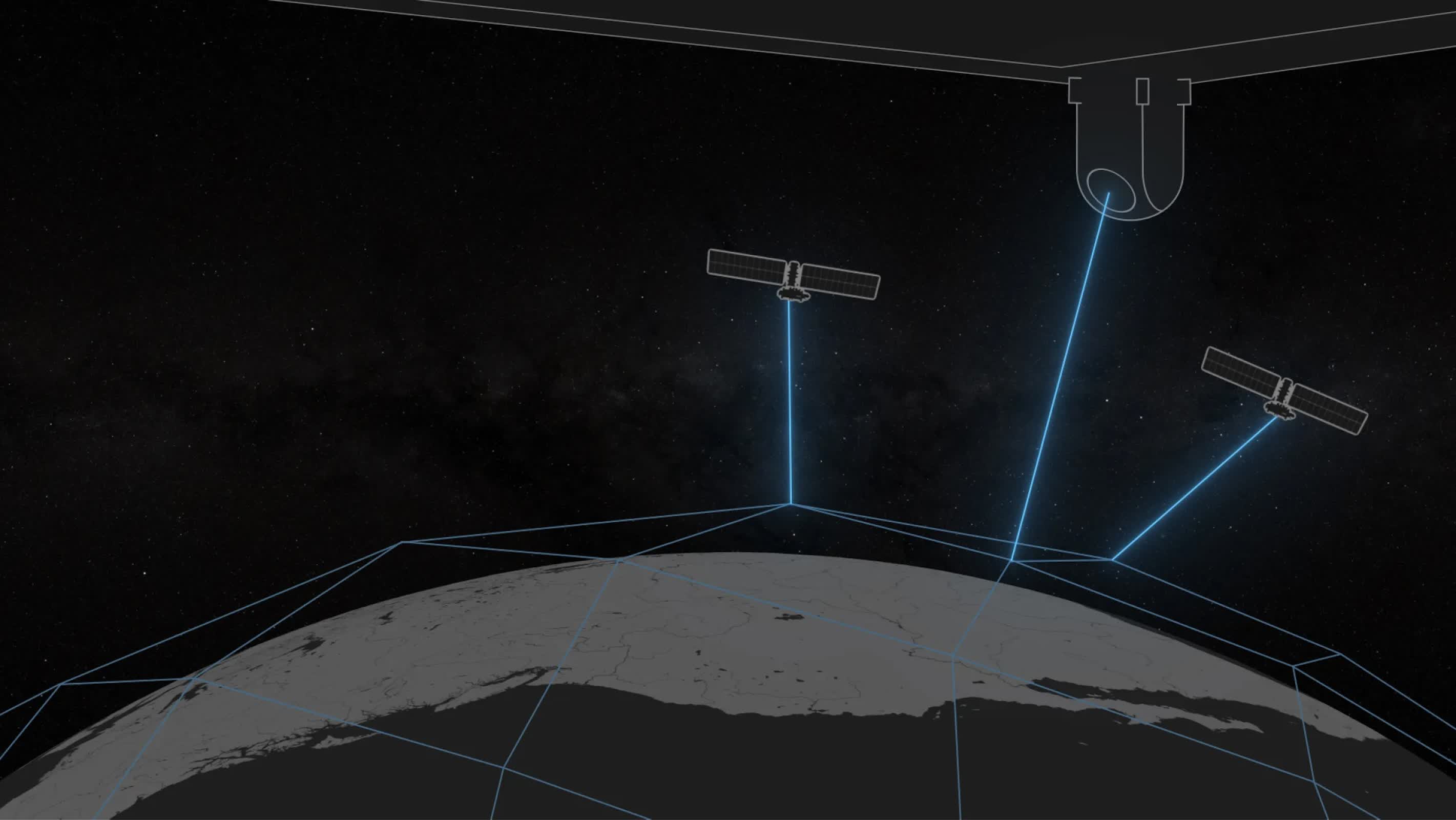
Starshield operates as the classified counterpart to SpaceX's Starlink broadband constellation, which delivers high-speed internet service around the world. While Starlink's network relies on high-frequency bands suited for large volumes of data transfer, Starshield communicates in lower frequencies more consistent with narrowband transmission.

Public information about the system remains limited, but government procurement documents show that the US has invested more than $1.8 billion in Starshield. According to SpaceX, the network supports both Earth observation and secure communications for defense and intelligence purposes.

Since May 2024, the National Reconnaissance Office has launched 11 batches of Starshield satellites, describing the effort as part of a "proliferated system" designed to enhance resilience and reduce latency in military data relay. "With hundreds of small satellites on orbit, data will be delivered in minutes or even seconds," the agency has stated publicly.

Tilley says he has now logged signals from roughly 170 Starshield satellites, all transmitting within the 2025 – 2110 MHz band. The precise transmission frequencies vary between spacecraft and appear to shift over time.

The purpose of these transmissions remains unclear. The lower-frequency band used by Starshield cannot deliver broadband data comparable to Starlink's high-speed connections; at best, Tilley estimates, it could support throughput similar to early 3G mobile networks.

He believes the use of this uplink-only band might be deliberate – a tactic to make Starshield's downlinks less conspicuous. The frequency-hopping behavior, he adds, could further obscure the network's activity from outside observers.

Gifford offers another explanation. He suggests SpaceX may have chosen the band simply because it is relatively quiet. "Those frequencies are usually dark," Gifford said. "SpaceX may have decided to use them first and deal with regulatory questions later."

So far, there have been no public reports of interference affecting other satellite operators. "If it were causing major disruptions, someone would have raised the issue by now," Gifford added.

Still, Tilley argues the international satellite community should be aware of what's occurring. "These are classified objects using nonstandard frequencies," he said. "Their transmissions could affect other legitimate uses of space, even if unintentionally."

Permalink to story:

 
Well, if nothing else, as a classified operation, they are guilty of one of the most egregious things: getting caught!

The whole point of a classified operation is for no attention to be brought to it…
 
A better title would be "Elon Musk endangers space with perilous broadcasts" or something like that, because the obvious purpose of this pile of useless information, hearsay, conspiracies and baseless assumptions is to imply Musk is doing something wrong.

These are military satellites, they can use whatever frequencies they deem appropriate, regardless of the opinion of the imaginary "international satellite community".
 
These are military satellites, they can use whatever frequencies they deem appropriate, regardless of the opinion of the imaginary "international satellite community".
That’s not quite accurate. If they’re operating under domestic and international law, then NO they can’t just use any frequency they want. We’re a country governed by laws, and we’ve agreed to those laws with our neighbors and other nations. The military may have special authority in emergencies, but that doesn’t mean they can act without restriction.

Imagine if another country started transmitting on U.S. public or military frequencies outside of wartime, it would be a serious issue. While the current administration does not seem to respect adherence to any previous agreements or laws, the situation described in the article likely stems from a technical or engineering mistake rather than deliberate disregard. Still, it’s a significant concern when a private company’s satellites (even if built for the US government) interfere with the operations of others, domestically or internationally.

A better title would be "Elon Musk endangers space with perilous broadcasts" or something like that, because the obvious purpose of this pile of useless information, hearsay, conspiracies and baseless assumptions is to imply Musk is doing something wrong.
Not sure what you’re referring to. The article doesn’t mention Elon Musk at all. It focuses on an amateur satellite tracker who detected these signals, which is quite impressive, and discusses the potential implications. This is a technical forum. If you want to vent about conspiracy theories or personalities, there are plenty of other places online for that.
 
Last edited:
That’s not quite accurate. If they’re operating under domestic and international law, then NO they can’t just use any frequency they want. We’re a country governed by laws, and we’ve agreed to those laws with our neighbors and other nations. The military may have special authority in emergencies, but that doesn’t mean they can act without restriction.

Imagine if another country started transmitting on U.S. public or military frequencies outside of wartime, it would be a serious issue. While the current administration does not seem to respect adherence to any previous agreements or laws, the situation described in the article likely stems from a technical or engineering mistake rather than deliberate disregard. Still, it’s a significant concern when a private company’s satellites (even if built for the US government) interfere with the operations of others, domestically or internationally.


Not sure what you’re referring to. The article doesn’t mention Elon Musk at all. It focuses on an amateur satellite tracker who detected these signals, which is quite impressive, and discusses the potential implications. This is a technical forum. If you want to vent about conspiracy theories or personalities, there are plenty of other places online for that.
Which international law exactly, acknowledged by the US, does not allow these frequencies to be used?

The article itself uses ridiculous language - "frequencies typically reserved for", "practice that may violate international radio standards", "normally designated for uplink transmissions", "emissions appear to originate from Starshield satellites", "may pose a risk of interference", "the severity of the impact remains unclear" etc. etc. etc. This means the author has no idea what he/she is writing about. There are no clearly established facts, just a mishmash of hearsay, allusions and conspiratorial bull$ht, mixed with opinions of self-proclaimed wannabe 'experts'.
 
Which international law exactly, acknowledged by the US, does not allow these frequencies to be used?

The article itself uses ridiculous language - "frequencies typically reserved for", "practice that may violate international radio standards", "normally designated for uplink transmissions", "emissions appear to originate from Starshield satellites", "may pose a risk of interference", "the severity of the impact remains unclear" etc. etc. etc. This means the author has no idea what he/she is writing about. There are no clearly established facts, just a mishmash of hearsay, allusions and conspiratorial bull$ht, mixed with opinions of self-proclaimed wannabe 'experts'.
This one:

The International Telecommunication Union (ITU) Constitution and Convention and its regulatory document, the ITU Radio Regulations (RR).

  • The ITU is a specialized agency of the United Nations, based in Geneva. The Radio Regulations (RR) form an international treaty that all member states (including the U.S.) have ratified.
  • These regulations allocate frequency bands to different radio services (e.g., fixed, mobile, broadcasting, satellite communication, Earth exploration satellites, GPS, etc.), and define how countries must coordinate to avoid interference.

  • Countries (called “administrations” under ITU rules) register satellite networks and their frequency use with the ITU.
  • The ITU maintains a Master International Frequency Register (MIFR) that tracks which countries and companies have rights to specific frequencies for satellite use.
  • Before a satellite operator can launch or use a particular band, its government must coordinate internationally through the ITU process to ensure no harmful interference with other nations’ systems.

  • The U.S. is a full member of the ITU and a signatory to the ITU Constitution, Convention, and Radio Regulations.
  • Within the U.S., two main agencies handle compliance:
    • Federal Communications Commission (FCC): regulates commercial and non-federal satellite systems.
    • National Telecommunications and Information Administration (NTIA): regulates federal government satellite systems (e.g., military, NASA).

  • Both coordinate domestically and represent the U.S. at the ITU to ensure adherence to the Radio Regulations.

  • The ITU Radio Regulations are binding international law for member states.
  • The U.S. implements these obligations through domestic regulations, such as:
    • The FCC’s Title 47 Code of Federal Regulations (CFR) (especially Parts 2, 25, and 97 for space communications).
    • The NTIA Manual of Regulations and Procedures for Federal Radio Frequency

  • No satellite operator can legally transmit on arbitrary frequencies.
  • Operators must follow the ITU coordination and registration process.
  • The U.S. generally strictly complies with these rules because:
    • It wants reciprocal protection for its own satellites.
    • It depends on international coordination for interference-free operations.

———-
See - AI is also good for stuff :)
 
Which international law exactly, acknowledged by the US, does not allow these frequencies to be used?

The article itself uses ridiculous language - "frequencies typically reserved for", "practice that may violate international radio standards", "normally designated for uplink transmissions", "emissions appear to originate from Starshield satellites", "may pose a risk of interference", "the severity of the impact remains unclear" etc. etc. etc. This means the author has no idea what he/she is writing about. There are no clearly established facts, just a mishmash of hearsay, allusions and conspiratorial bull$ht, mixed with opinions of self-proclaimed wannabe 'experts'.
That's a really good point. The NPR article TechSpot cites uses none of this language. NPR says:
NPR said:
The use of those frequencies to "downlink" data runs counter to standards set by the International Telecommunication Union, a United Nations agency that seeks to coordinate the use of radio spectrum globally.
The linked document is titled "RECOMMENDATION ITU-R SA.1154". This is the Wikipedia page on the ITU (it doesn't seem to be a governing agency, though): https://en.wikipedia.org/wiki/International_Telecommunication_Union

The NPR article also cites that frequency band reservation by the FCC:
NPR said:
The band of the radio spectrum he found himself looking at, between 2025-2110 MHz, is reserved for "uplinking" data to orbiting satellites. That means there shouldn't be any signals coming from space in that range.
Ironically this very document says that Federal satellites may use this band of frequencies in space-to-space communications (and they're the only one). It's possible that's what this frequency is used for, and it's not well-directed at other satellites.
FCC said:
Federal:
2025-2110
SPACE OPERATION
(Earth-to-space) (space-to-space)
EARTH EXPLORATION-SATELLITE
(Earth-to-space) (space-to-space)
SPACE RESEARCH
(Earth-to-space) (space-to-space)
5.391 5.392 US90 US222 US346
US347 US393
 
Last edited:

That's a really good point. The NPR article TechSpot cites uses none of this language. NPR says:

The linked document is titled "RECOMMENDATION ITU-R SA.1154". This is the Wikipedia page on the ITU (it doesn't seem to be a governing agency, though): https://en.wikipedia.org/wiki/International_Telecommunication_Union

The NPR article also cites that frequency band reservation by the FCC:

Ironically this very document says that Federal satellites may use this band of frequencies in space-to-space communications (and they're the only one). It's possible that's what this frequency is used for, and it's not well-directed at other satellites.

I think the guy that saw the signals excludes space-to-space in his published report and shows they are not co-ordinated with the ITU. https://zenodo.org/records/17373141
 
Which international law exactly, acknowledged by the US, does not allow these frequencies to be used?

The article itself uses ridiculous language - "frequencies typically reserved for", "practice that may violate international radio standards", "normally designated for uplink transmissions", "emissions appear to originate from Starshield satellites", "may pose a risk of interference", "the severity of the impact remains unclear" etc. etc. etc. This means the author has no idea what he/she is writing about. There are no clearly established facts, just a mishmash of hearsay, allusions and conspiratorial bull$ht, mixed with opinions of self-proclaimed wannabe 'experts'.

This is the same guy who writes the "Our green future is right around the corner" articles 2-3 times a week. I'm still waiting for the perpetual battery he promises on a regular basis.
 
Spectrum usage matters, as it can affect actual life-saving emergency responses, trade, military missions around the globe and more.
 
Hmmm. My post was removed! It did contain a goof, though. My bad! Did not want to offend anyone, just called for politeness in a humorous way.
 
Back