Students in China are renting smart glasses to cheat on exams

Skye Jacobs

Posts: 2,026   +59
Staff
Bottom line: On Chinese social media and secondhand platforms, a quiet rental industry has emerged – not for luxury bags or electronics, but for AI-powered smart glasses. The devices, marketed as digital assistants, are becoming tools for students seeking academic shortcuts. Some borrowers use them to scan test questions and receive real-time answers during exams.
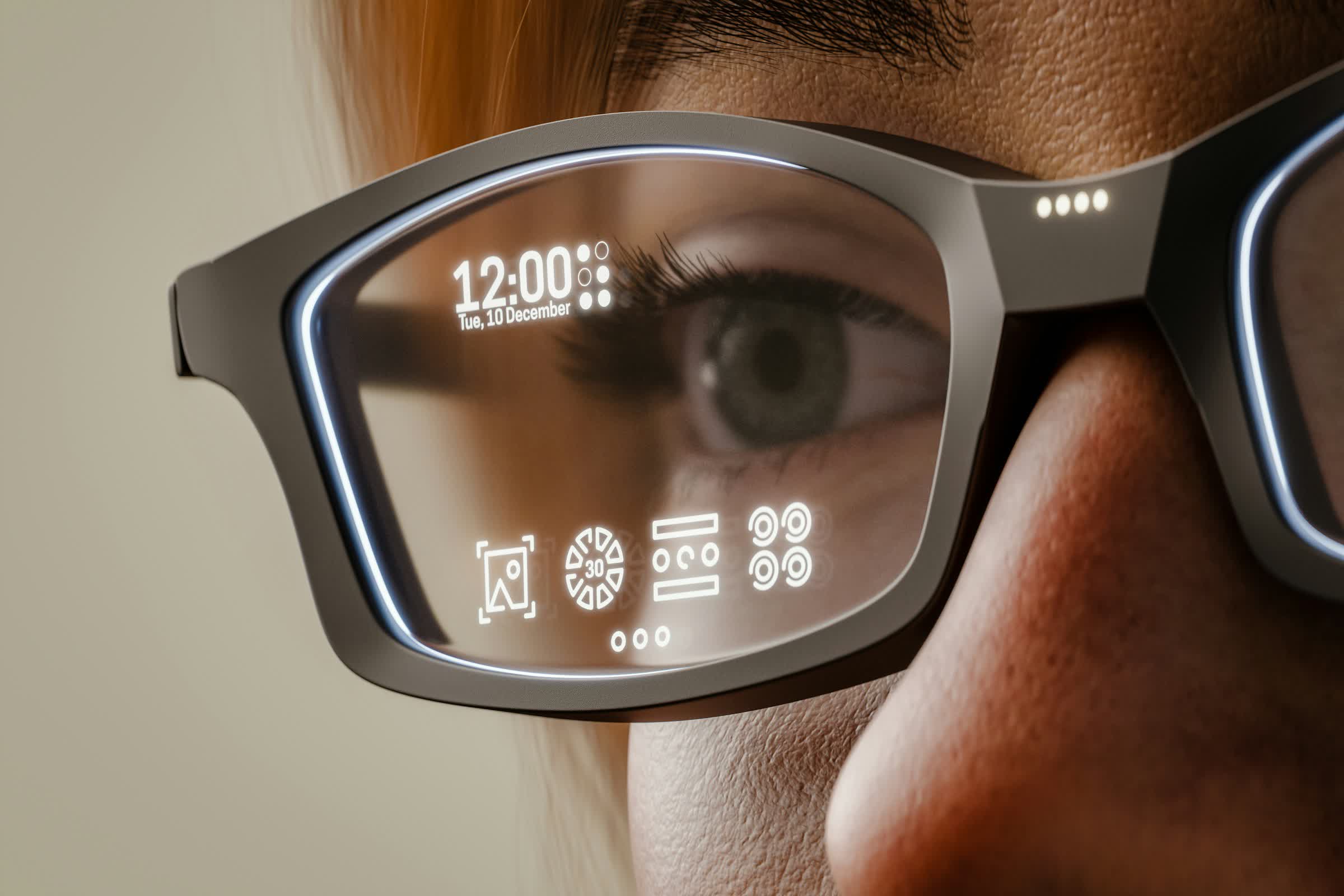
Vivian, a university student in Hebei province who requested a pseudonym to speak freely to Rest of World, said her Rokid glasses help her pass difficult subjects. "Any subject that I may fail at," she said. The glasses can read text from her exam paper and project answers directly onto the lens. She admits some classmates have paid to rent her device for their own tests, even though major national exams in China explicitly ban such technology.

The scope of the phenomenon extends beyond individual exchanges. On Xianyu, a major secondhand marketplace, merchants openly advertise rentals of AI glasses for 40 to 80 yuan ($6 to $12) per day. One of them, Shenzhen-based entrepreneur Ke Changsi, said he has rented out Rokid and Quark glasses to more than 1,000 people in the last four months.

His customers, he said, range from travelers who use the glasses to translate signs abroad to students looking for an edge. "The prices range from 40 yuan to 80 yuan ($6 to $12) a day, depending on the model," he said.

Ke's online posts on Xiaohongshu, a lifestyle platform, highlight how the glasses can solve English and math questions with a discreet hand remote that looks like a ring. While such advertising draws attention from curious consumers, it has also reignited debate over the growing misuse of AI tools in education.

Despite official restrictions, enforcement remains limited. Smart glasses often resemble ordinary eyewear, making them difficult for teachers to detect. At elite universities, students are testing the boundaries. Researchers at the Hong Kong University of Science and Technology recently demonstrated how easily such devices can integrate with large language models.
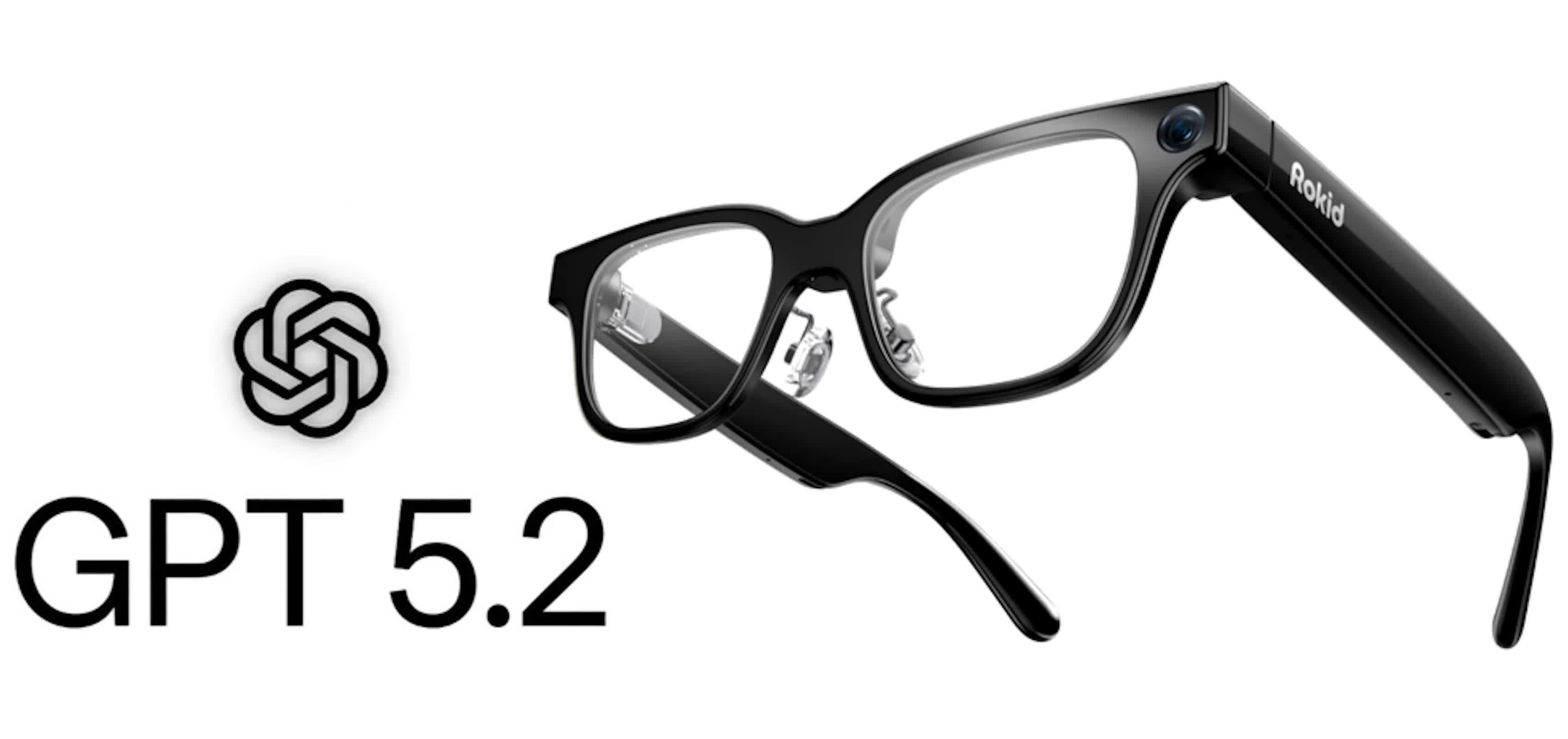
After connecting Rokid glasses to ChatGPT 5.2, a participant wearing them ranked among the top five in a class of more than 100 students. Zili Meng, an assistant professor involved in the study, said that his team is developing systems to help teachers spot the devices. "To broaden the use cases of AI glasses, the industry needs a shared architecture for developers to build more innovative applications," he added.

The widespread interest isn't limited to academia. China's domestic market for AI-enabled eyewear is expanding rapidly. Consultancy IDC reported that 2.5 million pairs were shipped in 2025, accounting for 16.7% of global shipments. Devices from Xiaomi, Alibaba, and Li Auto promise features like real-time translation, immersive movie playback, and meal tracking, while the government has added smart glasses to a national subsidy program offering buyers a 15% discount, capped at 500 yuan ($73).

Even so, technical and practical issues continue to slow full adoption. Smart glasses often feel heavy, warm, and short-lived on battery power. Liu Zhigang, a university student in Zhejiang province who paid 3,300 yuan ($465) for a pair last summer, quickly grew disillusioned. He said he rarely wears them now because they heat up and drain after a few hours. "The functions can be easily done by a smartphone," he said.

As devices become more powerful, questions about fairness and privacy are harder to ignore. Stickers that obscure the recording light of cameras are sold online, letting users capture footage unnoticed. For now, the devices may still be a niche novelty – but in China's competitive academic culture, their appeal as a secret study companion shows no sign of fading.

Permalink to story:

 
Honestly, this might end up being a net positive long-term. Rote memorization has never really been a great measure of intelligence or capability—it’s just been the easiest thing to test at scale. Tools like this are basically the modern version of calculators, and we already learned that banning useful tech doesn’t stop progress, it just delays adapting to it.

If AI is going to be everywhere in the real world (which it clearly is), then teaching students to use it effectively, think critically about its answers, and apply knowledge in practical ways seems way more valuable than forcing them to memorize information they’ll never use—or that’ll be outdated in a few years anyway.

Maybe this is the kind of pressure that finally pushes education toward problem-solving, creativity, and hands-on skills instead of fact regurgitation. The people who really stand out won’t be the ones who can recall the most—they’ll be the ones who know how to ask the right questions and use tools intelligently.

That, or we’re doomed and witnessing the catalyst that takes Idiocracy from movie to prophecy. Either is possible and hard to say which is most likely anymore. I haven’t been entirely sure technology has had a net positive influence on the baseline human intelligence level for some time.

But, here’s to optimism anyway.
 
I'm not surprised and it isn't only the Chinese that think cheating is the way to get ahead and you know what, it works. It's wrong but not enough folk care that it is. It is hard to be insightful so most don't.
 
I was an electrical engineer/software-firmware engineer plus a number of other things for 30+yrs. When I was in college the big thing was to get access to professor's old test. I had 1 friend that got all of the old test (that was her whole thing) she would get multiple test and know most of the actual problems that would be on the test. She focused on getting the best grade she could on those test and not how to actually deduce how to solve the problems, and variation and she couldn't get the answer right. She graduated with honors but turns out she was unemployable because she didn't actually know anything. No one would hire her after they interviewed her and test her knowledge. She never got a job in engineering and end up getting hired in the HR department of a garbage disposal company.

Cheating to pass or ace a test isn't worth it, just learn the material well enough and you can figure out how to solve most real world problems. After all that is what employers want
 
Honestly, this might end up being a net positive long-term. Rote memorization has never really been a great measure of intelligence or capability—it’s just been the easiest thing to test at scale. Tools like this are basically the modern version of calculators, and we already learned that banning useful tech doesn’t stop progress, it just delays adapting to it.

If AI is going to be everywhere in the real world (which it clearly is), then teaching students to use it effectively, think critically about its answers, and apply knowledge in practical ways seems way more valuable than forcing them to memorize information they’ll never use—or that’ll be outdated in a few years anyway.

Maybe this is the kind of pressure that finally pushes education toward problem-solving, creativity, and hands-on skills instead of fact regurgitation. The people who really stand out won’t be the ones who can recall the most—they’ll be the ones who know how to ask the right questions and use tools intelligently.

That, or we’re doomed and witnessing the catalyst that takes Idiocracy from movie to prophecy. Either is possible and hard to say which is most likely anymore. I haven’t been entirely sure technology has had a net positive influence on the baseline human intelligence level for some time.

But, here’s to optimism anyway.
Memorization is only bad in the extreme. You need to actually know some things to problem-solve and be creative in a useful way.

Tools are only useful if you know enough to use them properly. Hand a 5 year old a graphing calculator and they can't studdenly do calculus.

Yes some tests lose nuance being standardized but that is a trade off for reasonable efficiency. I'd love to teach all my students one on one in great depth (like PhD students) but do you know how much college would cost then? At a certain point the student has to actually try to learn.
 
It's no surprise at all. Those kids have been raised in an environment where stealing idea's, IP's and ripping off products from the US and Europe is not only common, its encouraged.
 
Kill internet access to the exam room, problem solved.
How exactly would you do that? You would have to do something crazy like make every testing space into a Faraday cage to block both WiFi and cell signals.

According to Ramsey test.com, “room-sized cages range from $5,000–$10,000”.

I’m not bothering to do further research on this, but I wouldn’t be surprised if there were requirements that forbid blocking Wi-Fi and cell signals in classrooms that don’t have some other way to alert teachers and students of active shooters.
 
How exactly would you do that? You would have to do something crazy like make every testing space into a Faraday cage to block both WiFi and cell signals.

According to Ramsey test.com, “room-sized cages range from $5,000–$10,000”.

I’m not bothering to do further research on this, but I wouldn’t be surprised if there were requirements that forbid blocking Wi-Fi and cell signals in classrooms that don’t have some other way to alert teachers and students of active shooters.
Signal jammers.
 
I'm not surprised and it isn't only the Chinese that think cheating is the way to get ahead and you know what, it works. It's wrong but not enough folk care that it is. It is hard to be insightful so most don't.
Lying your brains out is another path to "success". Especially if you can do it pathologically.
 
How exactly would you do that? You would have to do something crazy like make every testing space into a Faraday cage to block both WiFi and cell signals.

According to Ramsey test.com, “room-sized cages range from $5,000–$10,000”.

I’m not bothering to do further research on this, but I wouldn’t be surprised if there were requirements that forbid blocking Wi-Fi and cell signals in classrooms that don’t have some other way to alert teachers and students of active shooters.

All they need to do is block wifi an cell signals during testing, not everyday class stuff so a signal jammer or even something that sends out junk so nothing comes thru. I'm thinking of a switch on the wall the teacher/professor can flip during testing and then off again once the testing is complete.

A hardwired alarm for an emergency is much more reliable and unable to be blocked with a simple signal jammer.
 
Back