Study suggests our sun could unleash a long-overdue catastrophic superflare this century

zohaibahd

Posts: 977   +19
Staff
In a nutshell: If you thought getting hit by a massive solar flare from our sun was a freak occurrence, there's some bad news. New research suggests that killer superflares may actually be a lot more common than we previously thought.

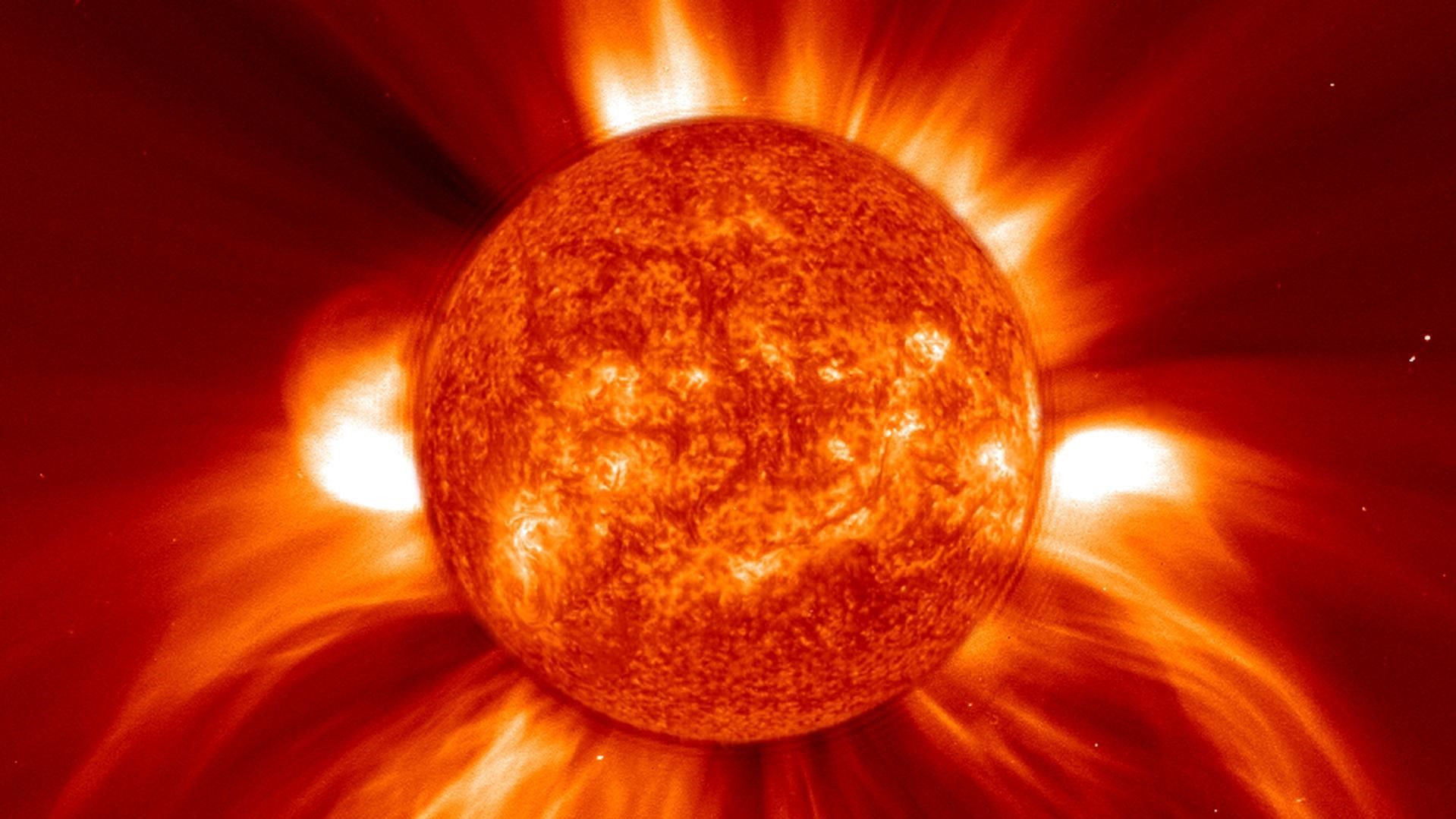
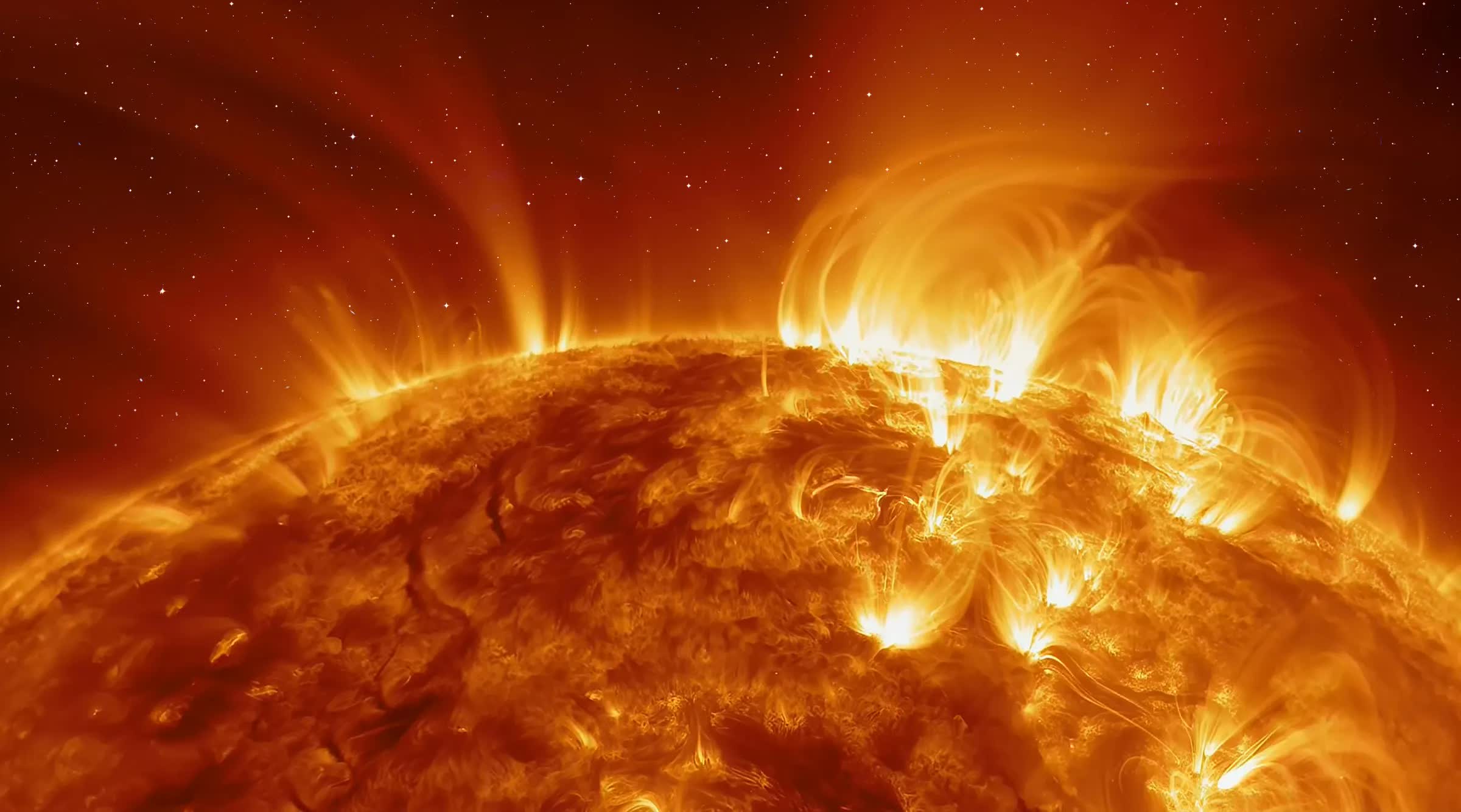
Superflares are intense solar storms up to 10,000 times stronger than regular flares that release intense electromagnetic radiation and energetic particles into space. This radiation can fry electronics, wipe data servers, and send satellites crashing back to Earth. While their effects may not have been so far-reaching a century or so ago, they could prove devastating in a modern world that basically runs on these technologies.

The study, conducted by astronomers at the Max Planck Institute and published in the journal Science, looked at over 56,000 sun-like stars observed by NASA's Kepler telescope between 2009-2013. During that window, they identified a staggering 2,889 superflares erupting from 2,527 of those stars.

Previously, estimates based on more limited samples suggested our type of star might only belch out one of these flares every few thousand years. But this new, more comprehensive analysis indicates sun-like stars likely experience them about once per century on average.
Why the sudden, dramatic jump in projected superflare frequency for our sun? The researchers attribute it to overcoming biases in earlier studies that excluded many sun-like stars by only considering those with similar rotation periods to our star.

"We employed a new flare detection method developed by our group to identify flare sources in light curves and images with sub-pixel resolution, accounting for instrumental effects," Valeriy Vasilyev, the Max Planck doctoral student who led the work, explained to Live Science.

The potential implications for Earth are concerning. The infamous 1859 Carrington Event, one of the most powerful solar storms in recent history, already released energy equivalent to 10 billion single-megaton nuclear bombs when it struck our planet.

Of course, the new study doesn't prove our sun will certainly unleash such an extreme event soon. There are still open questions, like potential differences between the observed flaring stars and our own sun's conditions. One is that 30% of those flaring stars exist in binary pairs which can trigger superflares through tidal forces – something not applicable to our solitary star.

The researchers acknowledge further investigation is needed to nail down the true risk our sun poses to Earth's infrastructure and systems. Better space weather forecasting and monitoring, aided by future sun-observing missions like the European Space Agency's Vigil probe due to launch in 2031, could help provide more clarity.

Permalink to story:

 
I have seen proposal to give Mars an artificial magnetic field, by way of a large electromagnet stationed at its L1 point. Perhaps such a thing should be considered for Earth as well, to provide an extra layer of protection against such solar flares.
 
Just like no scientists were predicting the coastlines would be underwater by the year 2010, there isn't a single prediction in this article. There probably aren't any predictions in the paper this article was based on either.
You makuh my laff
 
All is lost! Hurry up & take vengeance on your enemies while there is still time! :joy:

Seriously, if this is true, can we even do anything about it? Much less anything before the doom befalls us? Seems like an international effort is required, & just how many nations can agree on what to do; who pays for it, etc.?
 
We have 8 min to react once an ejection happens, we monitor the Sun's activity looking for solar flares to warn sat operators. With 8 minutes the daylight side of the earth would need to shut down the grid and disconnect as much vital equipment from the lines as possible in those 8 mins. Night side would have some more time but would need to do the same. The grid would prob still be screwed but you could save the plants by disconnecting them. You would have to rebuild a lot of the grid, especially high voltage long distance lines. Computers indoors would be shielded from this type of EMP but could be damaged by power carried over the mains. They have been hardening the grid a bit to prepare for a larger flare event but carrington or larger are going to cause some havoc and we will be spending prob 2-3 years rebuilding.
 
We have 8 min to react once an ejection happens, we monitor the Sun's activity looking for solar flares to warn sat operators. With 8 minutes the daylight side of the earth would need to shut down the grid and disconnect as much vital equipment from the lines as possible in those 8 mins. Night side would have some more time but would need to do the same. The grid would prob still be screwed but you could save the plants by disconnecting them. You would have to rebuild a lot of the grid, especially high voltage long distance lines. Computers indoors would be shielded from this type of EMP but could be damaged by power carried over the mains. They have been hardening the grid a bit to prepare for a larger flare event but carrington or larger are going to cause some havoc and we will be spending prob 2-3 years rebuilding.

- Best part will be the batshit conspiracy theories about it all.
 
Look up the "Carrington Event" that happened in 1859. Messed up the TELEGRAPH signals in America & Europe. No real electronics back then. Today, something like that would take down the entire electrical power grid, among other things.
 
Just like no scientists were predicting the coastlines would be underwater by the year 2010, there isn't a single prediction in this article.
LOL, what? The link below is just a tiny sliver of the dire predictions made in the last 50 years, from sources ranging from NASA to "world-famous scientific experts" quoted in the NY Times. There's a few in there from the '80s about "entire nations" being underwater from sea level rise, and the 'father of global warming' himself -- Dr. James Hansen -- predicting NYC would be submerged in 30 years.

 
No. It takes 8 minutes for the energy from the sun to reach Earth. It is impossible to detect what's happening before that, to late to do anything.
 
LOL, what? The link below is just a tiny sliver of the dire predictions made in the last 50 years,l
Sometimes doom sayers don't have all the information. Sometimes their alarm incites action. Just to address a few: Predictions of world famine did not come true largely due to improvements in agricultural production, preservation and distribution that began in the 60s. "Global cooling" due to particulate pollution did not take into account the greenhouse affects of CO2 pollution. The ozone hole was predicted to expand globally but hasn't because of global action to eliminate ozone depleting chemicals. Acid rain did kill life in lakes and action was taken to reduce or eliminate the pollution that caused it. Two lakes near my hometown were drained in the 90s because of acid pollution.
Dire predictions not coming to pass is not an indication that they were inaccurate when they were made.
 
No. It takes 8 minutes for the energy from the sun to reach Earth. It is impossible to detect what's happening before that, to late to do anything.
Untrue. While flares themselves can't be detected in advance, the bulk of damage from such events comes from the usually-closely associated CME (coronal mass ejection). These highly charged particles are what cause the most intense geomagnetic storms ... and they take 2 or 3 days to arrive.

Predictions of world famine did not come true largely due to improvements in agricultural production, preservation and distribution that began in the 60s.
Sorry, but this isn't true at all. Those advances started in the 1890s, and were almost entirely the result of two technologies: modern fertilizers and pesticides. In 1890, US corn production ran about 10 bushels/acre. By 1970, it was 100 bushels/acre ... and in that year alone (when overpopulation/starvation fears were at a height), simply expanding US methods to the rest of the world would have allowed us

Your claim is even more absurd when one understands that the environmental crowd demanding action on overpopulation was also working against these two technology advances -- attempting to restrict or even the use of artificial fertilizers and pesticides. And that brings up yet another *****ic prediction: Rachel Carlson's "Silent Spring", which predicted that the use of pesticides would kill all birds on the planet. (and no, DDT doesnt' kill birds).

Acid rain did kill life in lakes and action was taken to reduce or eliminate the pollution that caused it.
I won't address all your claims, but "acid rain" is actually simply a mild lowering of rainfall pH. While that was bad for some species of trees, it was actually helpful for just as many others, leading to increased growth for them. As for your claim that "lakes were drained" because acid rain killed off all life in them, I think you're confusing that with pollution from other sources.
 
Dire predictions not coming to pass is not an indication that they were inaccurate when they were made.
My primary point was global warming. There were many claims in the 1980s - 90s that, within 30-40 years we'd be experiencing dire effects from warming. Yet not only was "no action taken", but global CO2 emissions since then have exceeded even those worst-case estimates by several hundred percent, yet none of these dire predictions came to pass.

QED.
 
Untrue. While flares themselves can't be detected in advance, the bulk of damage from such events comes from the usually-closely associated CME (coronal mass ejection). These highly charged particles are what cause the most intense geomagnetic storms ... and they take 2 or 3 days to arrive.
Not all. Some can get here in around 17 hours.

Sometimes doom sayers don't have all the information.
I have tried that fancy bit of reasoning on quite a few here over the years. That the tech 50–60 years ago was just sad compared to today. But so many predictions of the last 25 years +\- have been shown to be accurate, though. At least so far. (melting polar ice, coral reefs, rising sea levels, warming oceans). Will they care?
Anyway, do you think I should point out that it was Exxon of all companies that first said we would start feeling the effects of man made global warming around the end of the 20th century?
Can you imagine the off-topic, unrelated gibberish that would follow?

EDIT:
Ok, my daughter gave me a few site references to start:
"bursts of electromagnetic radiation that travel at the speed of light, reaching Earth in just over 8 minutes — CMEs travel at a more leisurely pace, relatively speaking. At their highest speeds of almost 1,900 miles per second (3,000 kilometers per second), CMEs can reach Earth in about 15 to 18 hours whilst slower CMEs traveling around 155 mi/s (250 km/s) can take several days to arrive"
"Exxon researchers created a series of remarkably reliable models and analyses projecting global warming from carbon dioxide emissions over the coming decades. Specifically, Exxon projected that fossil fuel emissions would lead to 0.20 degrees Celsius of global warming per decade, with a margin of error of 0.04 degrees — a trend that has been proven largely accurate".

1970s ice age predictions were predominantly media based. The majority of peer reviewed research at the time predicted warming due to increasing CO2


Finally,
Climate predictions in the 1970s and early 80s were often considered "wrong" because they focused too heavily on the potential for global cooling due to atmospheric aerosols, while underestimating the dominant warming effect of rising carbon dioxide levels
 
Last edited:
Not all. Some can get here in around 17 hours.
Sure ... 2-3 days is a maximum. The point is that we do have a degree of warning, and are able to take prophylactic measures. For instance, satellites are regularly placed in full or partial shutdown when a CME is expected.

But so many predictions of the last 25 years +\- have been shown to be accurate, though. At least so far. (melting polar ice, coral reefs, rising sea levels, warming oceans).
But they haven't. Polar ice melting has been occurring for thousands of years; a claim that a long-standing will continue isn't a "prediction" at all. Sea level, in fact, is today rising much slower than it was 15,000 years ago. As for the 1990s claims that all our coral reefs were scant years from dying, we have this:

2022, Scripps Institute of Oceanography: "Central Pacific Coral Reef Shows Remarkable Recovery"

2023, PBS: "Cayman Crown Reef makes Miraculous Recovery"

2022, ABC News: "Great Barrier Reef coral cover at record levels"

"...AIMS' 36-year Long-Term Monitoring Program has seen continued dramatic improvement in coral cover in the northern and central sections of the reef...."
 
Climate predictions in the 1970s and early 80s were often considered "wrong" because they focused too heavily on the potential for global cooling
They weren't "considered" wrong. They were wrong, period. Their predicted results did not match reality.

1970s ice age predictions were predominantly media based. The majority of peer reviewed research at the time predicted warming
It's easy to see this is false. Simply search peer-reviewed papers for the period 1966-1976, and see what pops up:

Nature, Mar 6, 1975: "Cause and effects of global cooling
...."A RECENT flurry of papers has provided further evidence for the belief that the Earth is cooling. There now seems little doubt that changes over the past few years are more than a minor statistical fluctuation. Last year, Kukla and Kukla (Science, 183, 709; 1974) reported satellite observations of the sudden growth of ice cover in the northern hemisphere in the winter of 1971-72, and suggested that the increase was equivalent to one sixth of the change needed to bring about a full ice age."

Nature, Dec 1975:

"Bearing in mind the fallibility of computer simulations, we find overall global cooling and a reduction in precipitation"


American Meteorological Society:

"... the (smoothed) global temperature [was] indicated to be colder in the spring of 1977 than at any time since initiation of the record in 1958... Since the Agung eruption, there is indicated to have been slightly greater global cooling ..."


Present Climatic Cooling and a Proposed Causative Mechanism

 
But they haven't. Polar ice melting has been occurring for thousands of years; a claim that a long-standing will continue isn't a "prediction" at all. Sea level, in fact, is today rising much slower than it was 15,000 years ago. As for the 1990s claims that all our coral reefs were scant years from dying, we have this:
It has NEVER been about if it was happening. It is and was about the accelerated rate of melt.
This is the only thing I'm wasting time on for you. I'm just not up for your BS right now.
The rest is up to you to find and ignore:

Do you realize all you deniers have unleashed on the article even though they never said it WILL happen.
They said it could....... Because they have seen it.

Anyway, you already know what my daughter does for a living. Just ask TO THE POINT questions and I will be happy to let her answer them.

EDIT-
Ok she agreed. I told her you don't think polar ice has been melting faster due in part to human emissions. The coral reefs are not dying off. Sea levels are not rising. The oceans are not warming. All doing so for the same reasons.

Ask away.
 
Last edited:
It has NEVER been about if it was happening. It is and was about the accelerated rate of melt.
Compared to 15,000 years ago -- or even 5,000 years ago -- the rate of polar melting and associated sea level rise is slower today. This is simple fact:

 
Compared to 15,000 years ago -- or even 5,000 years ago -- the rate of polar melting and associated sea level rise is slower today. This is simple fact:

I'm aware of the history. The point is what has happened recently, and what we are seeing now. From the beginning.
Are you even aware that we are at a point in the planetary cycle where the polar ice should be on a bit of a rebound? Definitely not what we are seeing.

So anyway, is that your question?

Because from the article YOU just put up:

"But all these factors still fall in line with the long-term pattern of changes the Arctic has seen in recent decades. Temperatures are swiftly rising, even if they don’t bring all-time records every year. Sea ice is steadily dwindling. And the Greenland ice sheet has been contributing to global sea-level rise for 27 years in a row."

EDIT-

So she has seen it and wants to know what the question is.
Because your own link contradicted your comments.
 
Last edited:
Are you even aware that we are at a point in the planetary cycle where the polar ice should be on a bit of a rebound?
Heh, "a bit of a rebound"? It's far more complex than that. We're actually in the middle of a major Ice Age -- the Quaternary Glaciation. Within that, we're also within a much shorter and warmer interglacial. If interglacials were perfectly uniform, we'd be headed back into an ice age. Very bad news.

At the beginning of the Quaternary, the period between glacials averaged ~40 kYears. It's steadily grown to 100 kYr, with interglacials lasting 10kYr. Within the bounds of experimental error, we seem a little past that now, so either the period has again naturally grown slightly (good news for us) or some other factor (such as anthropogenic emissions) have delayed it (good news again).

You continually misrepresent my position here. To clarify, CO2 indisputably affects climate. The problem isn't the basic atmospheric physics here, but the positive feedback loop popularized by Drs. Hansen and Ruedy back in the 1980s. This boosts the relatively mild -- and quickly damped -- climate sensitivity to CO2 by orders of magnitude. (Hansen was misled by the effects of the reduction of industrial aerosols in the Northern hemisphere).

Hansen's models are what caused the AGW hysteria, with predicted sensitivities in the 10C range. By the IPCC's first report in 1990, this had already been cut to half that ... and subsequent reports keep reducing it further. Why? Because the models keep overpredicting warming. If you doubt this, open the 1990 report, and look at its conclusions. Man has far exceeded even their worst-case scenario for GHG emissions, yet the warming trend hasn't followed suit.

To summarize: yes, the world's getting slightly warmer. No, that's not a problem. The positive effects of warming will almost certainly outweigh the negatives. Let's not forget that all this CO2 that man is supposedly "artificially" adding to the atmosphere was originally there in the first place. Had we not come along and begun burning fossil fuels, the steady decline in CO2 would have eventually killed all life on earth -- photosynthesis stops at around 200ppm.

So anyway, is that your question?
I have no questions. Only answers to yours.
 
I have no questions. Only answers to yours.
And normally I would appreciate that, except answers from you, like from a politician, involve a thousand word attempt at a filibuster with unrelated information and questionable sourcing.

But before I sign off, I think anyone that is curious about the positive feedback loop you mentioned should know what it REALLY is, and marvel at how you used it.

Go ahead and take the last word, again. As always, I have no problem with anyone that wants to check both of our comments. That will speak for itself for anyone like you,
And yeah, I know they won't. It's easier to whine and then disappear when hit with facts.
 
So anyone like many above that might still continue talking about what scientists were saying 50+ years ago, check this out. It may help with future idiocy.


"while some media coverage in the 1970s discussed the possibility of an impending ice age, the majority of peer-reviewed scientific research during that period actually predicted global warming caused by increasing carbon dioxide levels, making the "ice age" idea largely a media-driven narrative rather than a consensus within the scientific community"

"Results showed that despite the media claims, just ten per cent of papers predicted a cooling trend. On the other hand, 62% predicted global warming and 28% made no comment either way."

By 1980, with northern hemisphere smogs a distant memory, the predictions about ice ages had ceased, at least among those working on the science, due to the overwhelming evidence for warming presented
 
So anyone like many above that might still continue talking about what scientists were saying 50+ years ago, check this out. It may help with future idiocy.
Fail. You're quoting a revisionist, sky-is-falling, pro-global warming website. I gave you real-world data. The media didn't invent global cooling, nor did they merely "discuss the possibility". They repeated the results of countleess of peer-reviewed papers that concluded the earth was cooling -- several of which I linked above.

"Results showed that despite the media claims, just ten per cent of papers predicted a cooling trend. On the other hand, 62% predicted global warming
Lying with statistics. The statement is true only if one counts papers from 1976-1980. 1967-1975 was the prime period of global cooling hysteria, in which the "consensus" view was cooling. Simple fact.

The tech 50–60 years ago was just sad compared to today. But so many predictions of the last 25 years +\- have been shown to be accurate, though
Translation: "yes, we were sadly mistaken with our doomsayer predictions of the '60s and '70s. But our current ones are accurate"

Except ... they aren't. I've already shown the 25 year old "coral reefs are all dying" predictions false, as well as those of the 1990 IPCC report. The 1990s predictions of massive hurricane activity increases and thermohaline current shutdown also proved false. In fact, the only "prediction" that did come true wasn't even a prediction at all, just the extension of the already-ongoing trend of mild warming.
 
Back