A hot potato: Swedish Prime Minister Ulf Kristersson has stirred controversy after revealing that he regularly consults AI chatbots in his role as head of government. In an interview with the Swedish business newspaper Dagens industri, Kristersson said he uses tools like ChatGPT and the French platform LeChat to explore alternative viewpoints and consider different responses to political questions.
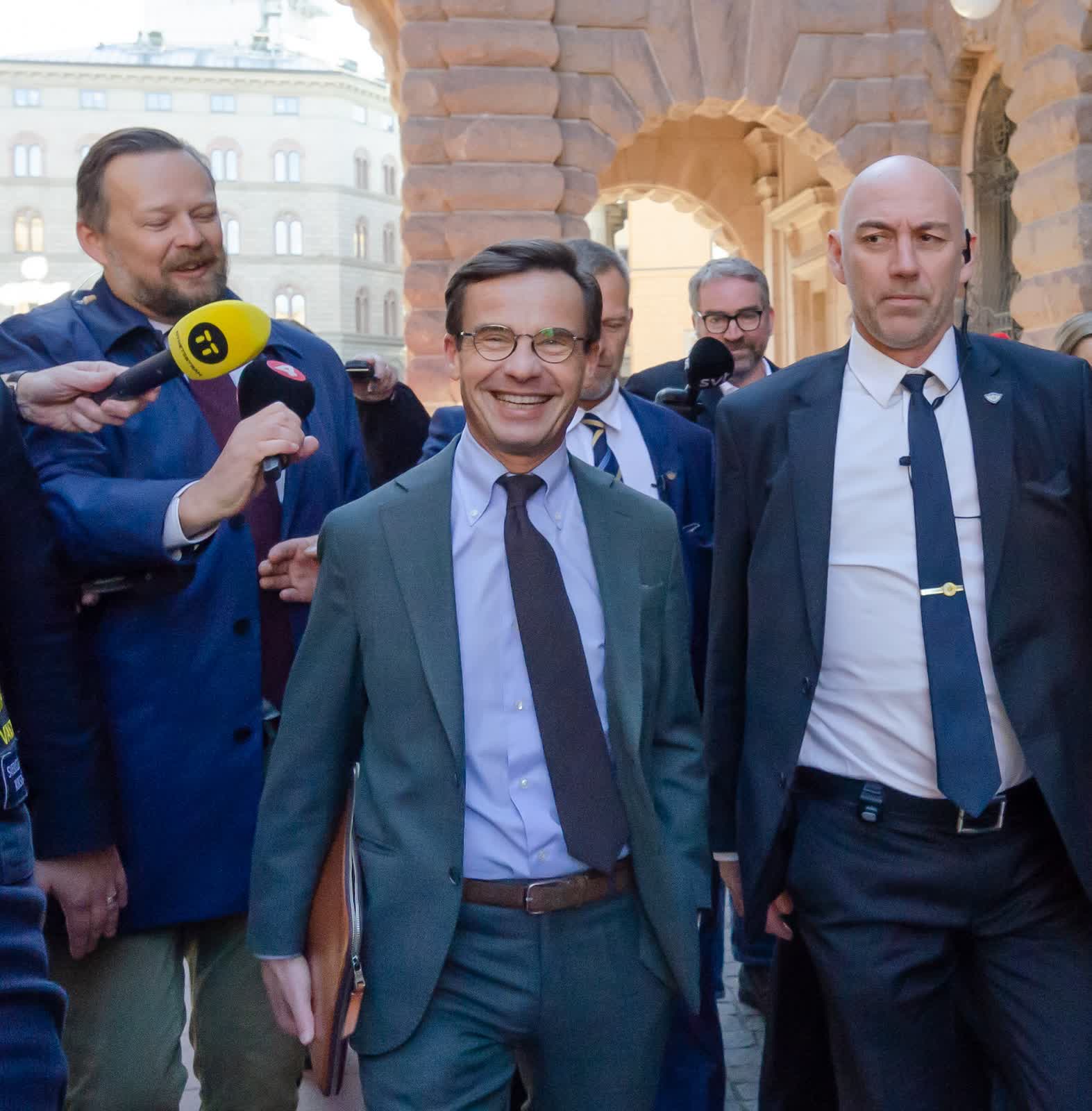
"I use it myself quite often. If for nothing else than for a second opinion. What have others done? And should we think the complete opposite? Those types of questions," Kristersson, leader of the center-right coalition, said, describing the chatbots as digital sounding boards for policy reflection and international comparisons.
The prime minister's openness sparked sharp criticism from across the political spectrum. The editorial board at Aftonbladet, a major national newspaper, accused Kristersson of being swept up in the AI hype promoted by powerful foreign tech firms. They warned that relying on such platforms could expose Swedish policymaking to external economic and geopolitical influence.
In response, Kristersson's spokesperson, Tom Samuelsson, clarified that no sensitive or classified information is ever shared with AI tools. "Naturally, it is not security-sensitive information that ends up there. It is used more as a ballpark," he said.
Nonetheless, critics argue that even routine political discussions could offer valuable insights into government thinking if the data is mishandled, especially since most AI platforms are operated by companies based outside Sweden.
Virginia Dignum, a prominent AI researcher and professor at Umeå University, questioned the wisdom of turning to AI in high-level decision-making. She warned that habitual use could lead to misplaced trust.
"The more he relies on AI for simple things, the bigger the risk of overconfidence in the system. It is a slippery slope. We must demand that reliability can be guaranteed. We didn't vote for ChatGPT," she told Dagens Nyheter.
Jakob Ohlsson, an AI consultant and enthusiast, described the prime minister's approach as unsophisticated. He criticized Kristersson for entrusting political reasoning to a system he didn't understand, operated by a company he didn't control, hosted on servers in a country whose political future he could not guarantee. Ohlsson cautioned that even seemingly innocuous queries might provide enough information for adversaries to infer government strategy.
Aftonbladet columnist Signe Krantz also questioned Kristersson's judgment, arguing that he was replacing trusted human advisors with opaque digital tools. She noted that chatbots often tailor responses to user expectations rather than offer objective insight, and suggested that correcting AI-generated errors can be more time-consuming than starting from scratch. Krantz warned that the prime minister's reliance on these tools could pose both practical and security risks.
Not all responses were negative. Some outlets, including Dagens industri, published editorials offering cautious support. They argued that hands-on experimentation with AI could help politicians better understand its strengths and limitations.
One writer commented, "It's a good thing that we have politicians who are curious about new technologies and have a forward-looking perspective ... If a politician uses the technology himself, he can understand it better than if he only has theoretical knowledge about it." Yet even among supporters, there was a recognition that AI's output cannot be accepted uncritically or as absolute truth.
Swedish prime minister admits to using AI chatbots for insight on political decisions


