Taiwan moves to tighten control over TSMC's advanced chip exports and overseas investments

Skye Jacobs

Posts: 1,918   +58
Staff
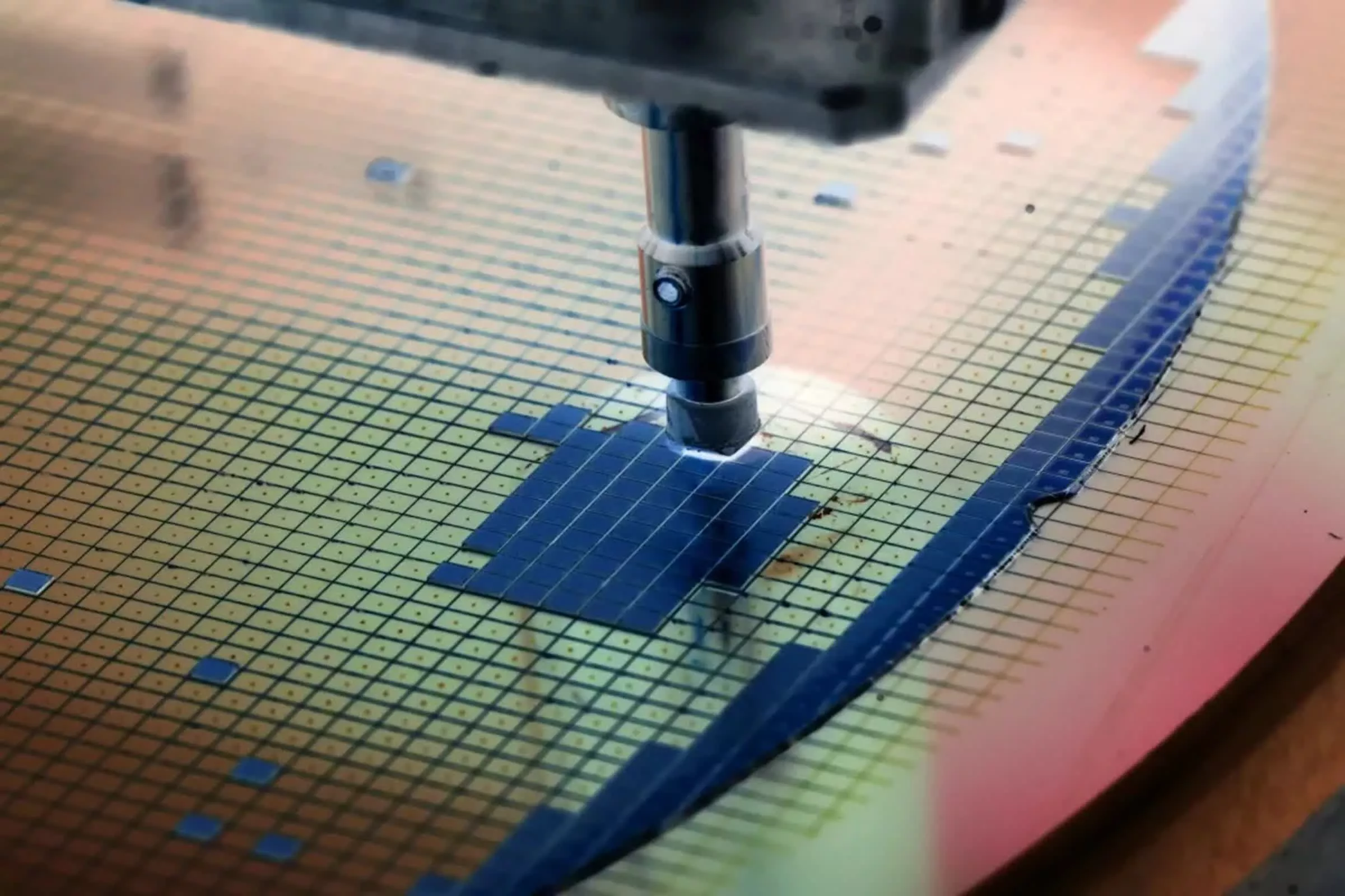
The big picture: Taiwan is moving to strengthen its grip on advanced semiconductor technology and overseas investments, signaling a significant shift in how the country manages its critical chip industry. Lawmakers have passed amendments to the Industrial Innovation Act, introducing strict new controls over the export of cutting-edge process technologies and outbound investments by semiconductor companies, most notably TSMC.

At the heart of the new measures is the so-called "N-1" rule, which prohibits companies from exporting their most advanced semiconductor manufacturing technology. Instead, only technology at least one generation behind what is available domestically can be deployed in overseas facilities.

Premier Cho Jung-tai confirmed this policy, which will directly affect TSMC's planned expansion in the United States and ensure that the company's latest innovations remain within Taiwan's borders.

Previously, Taiwan's regulations did not explicitly restrict the export of advanced semiconductor manufacturing processes. The new rules, enshrined in Article 22 of the amended Industrial Innovation Act, are expected to come into force by the end of 2025.

The government's intent is clear: to maintain Taiwan's technological edge and safeguard national security in the face of rising geopolitical tensions and global competition in the semiconductor sector.

TSMC currently leads the industry with its N3P process node, but it plans to begin producing chips using its next-generation N2 process by the end of this year. Looking ahead to late 2026 and beyond, the company expects two flagship nodes: N2P, designed for client applications, and A16, which features advanced power delivery for high-performance computing.

However, it is still unclear which nodes will be classified as "flagship" and thus subject to export restrictions, or if the government will impose simultaneous bans on multiple nodes when even newer technologies are introduced.

The amendments also empower authorities to reject or revoke overseas investments if they threaten national security, harm economic development, violate international agreements, or result in unresolved labor disputes. The law now formalizes these restrictions, elevating them from sub-regulations to statutory law and introducing explicit penalties for non-compliance.
Under the revised rules, companies investing abroad without prior approval could face fines ranging from NT$50,000 to NT$1 million (up to about $30,800). Repeat or serious violations, such as failing to address risks to national security or economic development after approval, could result in fines of up to NT$10 million (about $308,000).

While these penalties are significant, they are unlikely to deter major players like TSMC, which has announced plans to invest $165 billion in its US operations.

The Ministry of Economic Affairs has stated that the law's implementation date will be set after further regulatory revisions, with enforcement expected no earlier than late 2025.

Permalink to story:

 
Taiwan is tightening control over its semiconductor exports and investments, especially with TSMC.

They have to protect their tech and national security. While this is a big move for Taiwan to stay on top in the chip game, I can see this as a problem for other countries, especially the US and China.

This could slow innovation and impact the global chip supply.

I guess they should have seen this coming. (That was sarcastic)
 
Under the revised rules, companies investing abroad without prior approval could face fines ranging from NT$50,000 to NT$1 million (up to about $30,800). Repeat or serious violations, such as failing to address risks to national security or economic development after approval, could result in fines of up to NT$10 million (about $308,000).
Would TSMC even care about breaking that?

2024 the company made an earning of $42.91 Billion USD, an increase over its 2023 earnings that were of $31.91 Billion USD (pre-tax).
With some napkin math I think that puts them at about $46 million a day? ((42.91 * 0.8 * 0.49) / 365). So that would make that fine rather pitiful by comparison. Just up the prices ever so slightly.

Unless that number is per chip or something it just seems like passive income for Taiwan rather than trying to actually prevent it.
 
Unsurprising.

Taiwan undoubtedly got some beucoup security guarantees from the Biden admin to have TSMC set up shop in the US given the "Silicon Shield" TSMC provides.

With the innept new management in the WH Taiwan realizes that it needs to make sure it has some "pull back" mechanisms as well as some additional funding streams to up it's own defense in the growing likelihood that the US would be just as likely to sell Taiwan out to China for "the art of the deal" as they would to come to Taiwan's defense.
 
Unsurprising.

Taiwan undoubtedly got some beucoup security guarantees from the Biden admin to have TSMC set up shop in the US given the "Silicon Shield" TSMC provides.

With the innept new management in the WH Taiwan realizes that it needs to make sure it has some "pull back" mechanisms as well as some additional funding streams to up it's own defense in the growing likelihood that the US would be just as likely to sell Taiwan out to China for "the art of the deal" as they would to come to Taiwan's defense.
Yeah, no kidding. As soon as TSMC moves their most advanced chip tech to the US the Orange Turd would immediately turn his back on them and let China have its way. It's funny, because the tried to pull this kind of crap the first time around only to be outmaneuvered every time. Even North Korea's dictator-tot realized what the Orange Turd was up to and pulled out of any talks immediately.
 
Risky move. Of course Taiwan is well within their rights to prevent their most advanced technology from being manufactured in the United States. And the United States would be within its rights to not export our own technology to Taiwan, namely, military technology.

Not hard to see how this could escalate here. Hopefully something can be worked out.
 
Unsurprising.

Taiwan undoubtedly got some beucoup security guarantees from the Biden admin to have TSMC set up shop in the US given the "Silicon Shield" TSMC provides.

With the innept new management in the WH Taiwan realizes that it needs to make sure it has some "pull back" mechanisms as well as some additional funding streams to up it's own defense in the growing likelihood that the US would be just as likely to sell Taiwan out to China for "the art of the deal" as they would to come to Taiwan's defense.

It's a fundamentally unstable and unfavorable situation having the United States be dependent upon Taiwan for our chip supply. Even a successful defense of Taiwan would leave a catastrophic situation.

You don't have to be a fan of the administration whatsoever to realize there's a compelling national security interest here in shoring up American chip manufacturing.

We want TSMC's help with that, and they're on board with it. The Taiwanese government wants to keep the best stuff in Taiwan and that's understandable, but they also need the US for their defense. There's no plausible level of military investment Taiwan's government could make on their own that's going to seriously deter the PRC. It's a small country.

So everybody needs to sit down here and hammer out a win-win.
 
It's a fundamentally unstable and unfavorable situation having the United States be dependent upon Taiwan for our chip supply. Even a successful defense of Taiwan would leave a catastrophic situation.

You don't have to be a fan of the administration whatsoever to realize there's a compelling national security interest here in shoring up American chip manufacturing.

We want TSMC's help with that, and they're on board with it. The Taiwanese government wants to keep the best stuff in Taiwan and that's understandable, but they also need the US for their defense. There's no plausible level of military investment Taiwan's government could make on their own that's going to seriously deter the PRC. It's a small country.

So everybody needs to sit down here and hammer out a win-win.

- Yes, we all agree on that.

Based on the tone of the response, I suspect the disagreement might lie in our respective beliefs about the motivations of the current occupant of the White House.

I suspect Donald's soft-pedaling of a resolution to the Ukraine War (in Ukraine's favor) combined with his tariff policy has made Taiwan less willing to outsource their fab capacity to the United States. They're building levers that will allow them some leverage with the US in both trade negotiation as well as military support.

Note that Taiwan did not pass or implement these levers when Biden was president and got the Fabs built in the US (which they easily could have as a pre-condition).

Only seem to need these levers when dealing with a stable genius.
 
There's no plausible level of military investment Taiwan's government could make on their own that's going to seriously deter the PRC. It's a small country.
Small but relatively wealthy country, that is extremely hard to approach due to being an island that outward facing is pretty much all rocky cliffs. There isn't many places you can transfer great numbers of troops and equipment.
It'd have to be biggest amphibious assault in history. If the target was just destroying the place it wouldn't be all that hard but invading it is a tall order. Defenders always have the advantage and with Taiwans geographical advantage that is greatly amplified, invaders would have to be funnelled through chokepoints.

It'd be a great assurance to have the US carriers patrolling the waters but even on its own Taiwan isn't completely helpless.

 
Small but relatively wealthy country, that is extremely hard to approach due to being an island that outward facing is pretty much all rocky cliffs. There isn't many places you can transfer great numbers of troops and equipment.
It'd have to be biggest amphibious assault in history. If the target was just destroying the place it wouldn't be all that hard but invading it is a tall order. Defenders always have the advantage and with Taiwans geographical advantage that is greatly amplified, invaders would have to be funnelled through chokepoints.

It'd be a great assurance to have the US carriers patrolling the waters but even on its own Taiwan isn't completely helpless.
Just to add to this, according to the GlobalFirepower website China currently has just over 2 million active military personnel, with 500,000 in reserve services. Taiwan on the other hand, has 215,000 active military personnel, with 2.3 million serving as reserves. This makes it an even playing field for available military personnel in the event of an invasion.
 
Small but relatively wealthy country, that is extremely hard to approach due to being an island that outward facing is pretty much all rocky cliffs. There isn't many places you can transfer great numbers of troops and equipment.
It'd have to be biggest amphibious assault in history. If the target was just destroying the place it wouldn't be all that hard but invading it is a tall order. Defenders always have the advantage and with Taiwans geographical advantage that is greatly amplified, invaders would have to be funnelled through chokepoints.

It'd be a great assurance to have the US carriers patrolling the waters but even on its own Taiwan isn't completely helpless.

Oh I'm not under the illusion this would be easy for the PRC. You're correct, this isn't Normandy and the English channel, the geography is extremely formidable.

Absent US intervention, however, I suspect ultimately the resource mismatch is insurmountable if China wanted it badly enough. Yes, it would cost them quite a bit but all they need is to establish a beachead and then the outcome is fixed. The Taiwanese forces just don't seem large enough to forestall that from happening indefinitely on their own.

The geographical advantage / disadvantage is interesting though, because while the Strait favors Taiwan versus China, it doesn't favor the US vs. China. To intervene the US would have to project power much further and into an environment within easy range of large quantities of China's land based systems.

I can only hope that China doesn't try it because really, there's no good outcome for anybody once that kicks off. Taiwan ends up in ruins and a sizable chunk of the US Navy ends up at the bottom of the sea even in a scenario where the invasion fails, based on Washington's wargames. And the economic disruption would be disastrous.
 
Last edited:
- Yes, we all agree on that.

Based on the tone of the response, I suspect the disagreement might lie in our respective beliefs about the motivations of the current occupant of the White House.

I suspect Donald's soft-pedaling of a resolution to the Ukraine War (in Ukraine's favor) combined with his tariff policy has made Taiwan less willing to outsource their fab capacity to the United States. They're building levers that will allow them some leverage with the US in both trade negotiation as well as military support.

Note that Taiwan did not pass or implement these levers when Biden was president and got the Fabs built in the US (which they easily could have as a pre-condition).

Only seem to need these levers when dealing with a stable genius.

It's a tricky situation. I agree that on the one hand, having the US not need Taiwan for chips could lead to their abandonment in the security sphere, either under Trump or further into the future.

On the other hand, Trump has made it very clear that he's not keen on subsidizing other countries' defense for free. He expects to get something in return and holding back TSMC's US manufacturing plans could be seen as rejecting that sort of arrangement, which could also lead to withdrawal of support.

As far as the influence of the Ukraine situation, well, the US does not necessarily have the ability to resolve that war in Ukraine's favor, so strictly speaking you can't soft-pedal a resolution you don't control. There's not really a lot of cards for the US to play on that one that haven't been played already.

But I would agree that Trump doesn't seem very keen on the effort and that certainly hasn't escaped Taiwan's notice, which is what I suspect you meant.
 
Last edited:
It's a tricky situation. I agree that on the one hand, having the US not need Taiwan for chips could lead to their abandonment in the security sphere, either under Trump or further into the future.

On the other hand, Trump has made it very clear that he's not keen on subsidizing other countries' defense for free. He expects to get something in return and holding back TSMC's US manufacturing plans could be seen as rejecting that sort of arrangement, which could also lead to withdrawal of support.

As far as the influence of the Ukraine situation, well, the US does not necessarily have the ability to resolve that war in Ukraine's favor, so strictly speaking you can't soft-pedal a resolution you don't control. There's not really a lot of cards for the US to play on that one that haven't been played already.

But I would agree that Trump doesn't seem very keen on the effort and that certainly hasn't escaped Taiwan's notice, which is what I suspect you meant.

- The situation is only tricky because Donald has made it tricky.

You want something that's 100% made in America? Bombs, Guns, Tanks, Warplanes, which we sell in droves to Taiwan.

Ukraine is still an independent country thanks to American military aide under Brandon, so the United States absolutely has outsized influence in the war of Russian aggression.

Donald's willingness to end the war entirely on Vladimir's terms has absolutely undermined the credibility of American security guarantees worldwide.
 
Back