First look: Tesla is preparing to expand its humanoid robot training program beyond California, moving core operations to its Austin Gigafactory, where engineers plan to begin large-scale data collection next month. The shift is a major step in the company's efforts to develop Optimus, its humanoid robot designed to perform industrial tasks on the factory floor and eventually more complex work.
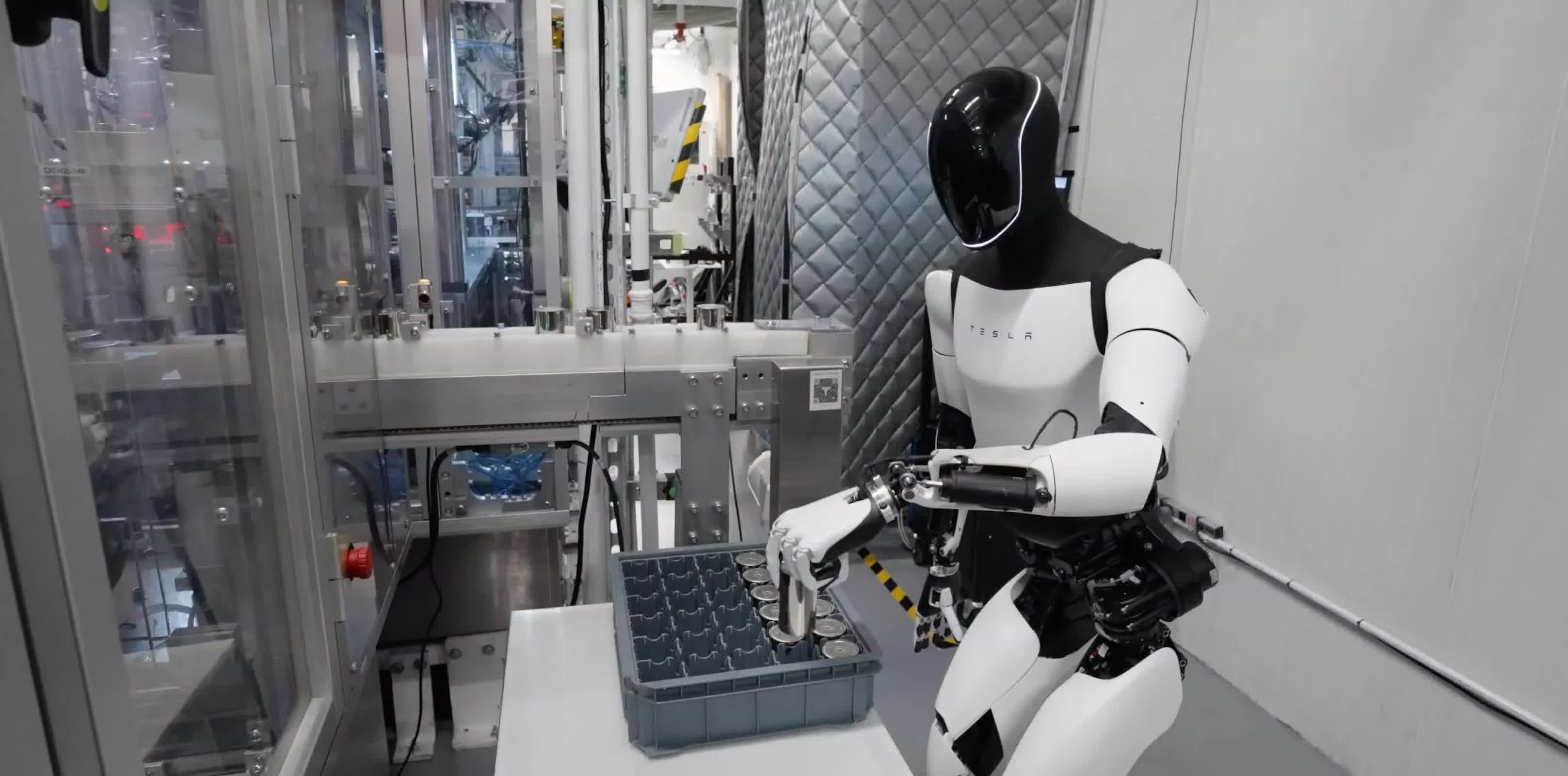
Workers at Tesla's Texas facility were briefed on the plan during a recent town hall, individuals familiar with the meeting told Business Insider. The company intends to train Optimus within the same environment where Tesla builds vehicles, potentially turning one of its largest plants into both a production and learning site for the robot.
In Fremont, California, Tesla has been training Optimus prototypes for more than a year. The process involves data collectors – employees equipped with multi-camera helmets connected to backpacks – who record themselves performing routine manufacturing tasks such as sorting vehicle parts or managing conveyor belts.
These recordings form a video dataset that helps the robot's neural networks learn to replicate human motions through imitation learning. According to people familiar with the program, the collectors typically work in separate areas of the plant to avoid disruptions to production.
Earlier methods relied on motion-capture suits and teleoperation, but Tesla has transitioned to a camera-based approach that generates larger volumes of data more efficiently. The company has also tested lighter recording equipment, including a fanny pack version of the camera rig, though it's unclear whether this configuration will be used for the Austin rollout.
With the important caveat that initial production is always very slow and follows an S-curve.
– Elon Musk (@elonmusk) January 20, 2026
The speed of the production ramp is inversely proportionate to how many new parts and steps there are.
For Cybercab and Optimus, almost everything is new, so the early production...
Elon Musk said in an interview at the World Economic Forum in Davos that Optimus units are already performing "simple tasks" inside Tesla factories. He added that the company expects the robots to handle "more complex tasks" by the end of 2026 and projected that consumer-ready models could be available by the end of 2027.
Despite the optimistic timeline, Musk cautioned on X that both Optimus production and the development of Tesla's Cybercab – the company's planned robotaxi – will progress "agonizingly slow."
Tesla has steadily showcased Optimus prototypes since unveiling the project in 2021. A video released in 2024 showed the robot sorting battery cells at a Palo Alto facility while tethered to an overhead support rig.
Later that year, Tesla announced that two autonomous Optimus robots had been deployed in one of its factories. Musk has described the project as potentially Tesla's "biggest product of all time," envisioning applications from household assistance to operating space-based data centers.
Trying to be useful lately! pic.twitter.com/TlPF9YB61W
– Tesla Optimus (@Tesla_Optimus) May 5, 2024
The Optimus initiative comes amid broader changes at Tesla's manufacturing sites. The company continues to adjust its production lines and construction schedules in Austin while reallocating workers between vehicle programs. Over the past year, reduced demand for the Cybertruck has led Tesla to shorten production shifts and move staff toward Model Y assembly.
A Tesla spokesperson declined to comment on the new data collection program. But the company's expanding focus on robotics suggests that Tesla views its humanoid platform not merely as a side project but as a strategic component of its long-term automation roadmap.
Tesla's Austin Gigafactory becomes a training site for Optimus robots


