
Winners & losers: The problem of students using AI to cheat in schools is well documented, but Fei-Fei Li, aka The Godmother of AI, thinks there's a bigger risk. The Stanford computer science professor believes access to the technology will take away students' motivation and agency to learn. Nevertheless, Li doesn't believe a blanket ban is a good idea.
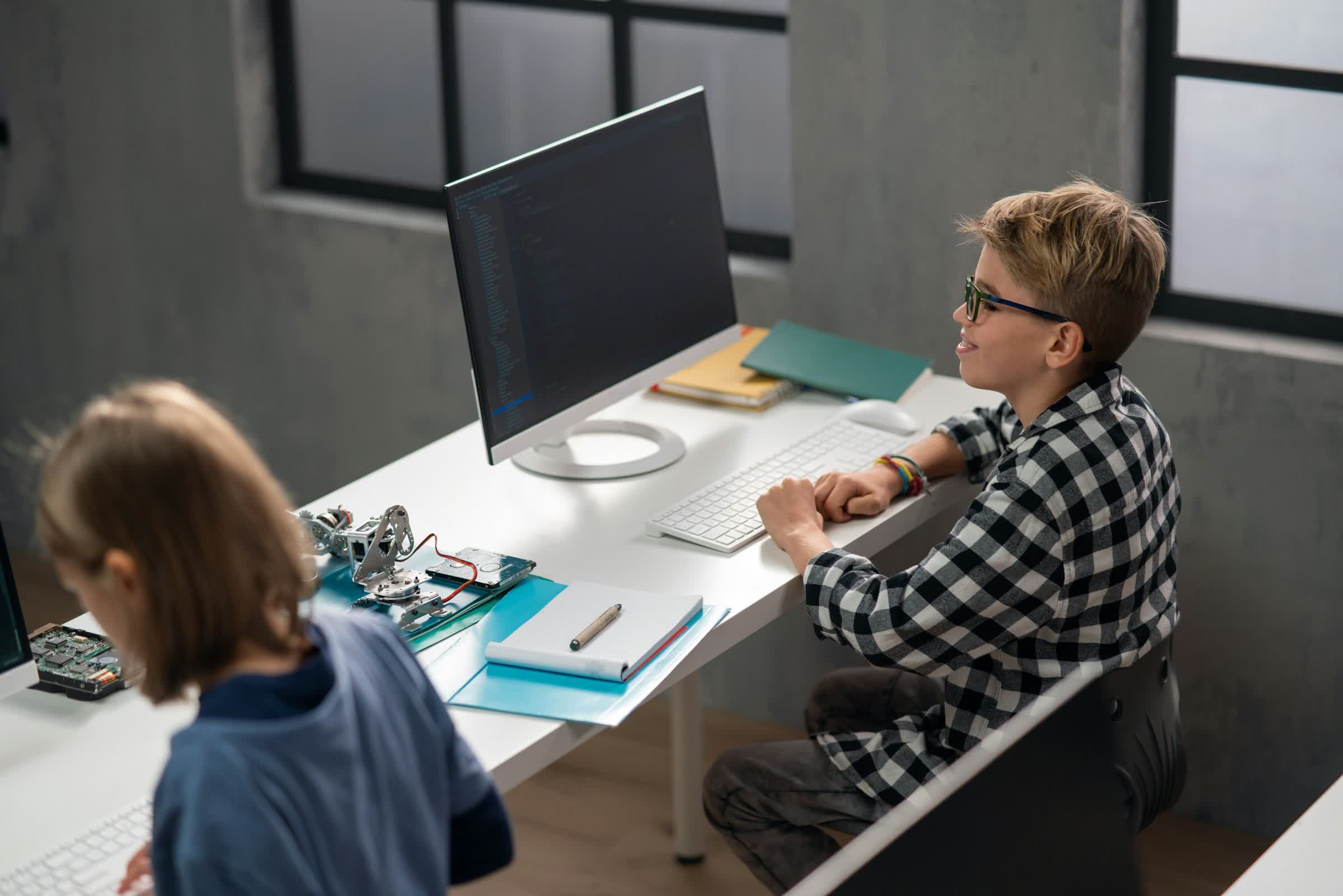
Speaking on an episode of the science podcast Huberman Lab this week, Li talked about the fears around how students are using AI.
"The absolute bad outcome is that our young generation, their agency and human-level motivation of learning and living is taken away by tools," the ImageNet inventor warned. "It should not be taken away by humans nor should it be taken away by machines."
If we see a generation of graduates who have completely relied on AI without actively trying to learn anything for themselves, they risk leaving education without having "properly developed the brain," Li said.
When it comes to AI use in schools, most of the focus has been on cheating. It's been an issue since ChatGPT went mainstream, and it reached endemic proportions back in August 2024 – though one professor recently found a clever way to identify students who were using it.
There's been less conversation about how AI can cause many students to lose both the motivation and ability to learn. Many kids wonder why they should bother learning something when AI can provide the answer instantly.
Researchers have found that AI is making students faster but they're losing their depth of thinking, which makes sense. Vivienne Ming, chief scientist at the Possibility Institute, told Business Insider earlier this year that most of the AI users she studied were using the technology to avoid thinking for themselves.
Li certainly isn't advocating for a complete ban on students using AI. She believes it can genuinely help struggling students who are already engaged in their learning. Li herself noted how she struggled with organic chemistry as a premed student, when teaching assistants and professors didn't have enough time to answer every question.
While there's no obvious solution, Li says we need to find a way to keep children and students' motivation and agency. "Let's find a way to give them the access and the right way of using these tools," she said. Li added that if AI is used properly in education, it could make the students of the future "way smarter than us because they are superpowered."
There have been several attempts to find this balance. OpenAI introduced a study mode designed to encourage critical thinking rather than simply handing over answers, while some computer science professors have shifted their focus from coding syntax to higher-level problem-solving. The UK government has also backed the use of ChatGPT for homework, arguing that it could be especially useful for children who struggle in traditional learning environments.


