The next Xbox could be waiting on the memory market

Skye Jacobs

Posts: 1,991   +58
Staff
Connecting the dots: Microsoft's next Xbox hardware cycle is being shaped by constraints that the division's newly appointed CEO, Asha Sharma, has directly linked to memory supply and costs. In a recent interview with Game File, Sharma said these constraints will affect both pricing and availability for the next-generation console, currently codenamed Project Helix. She added that the company is not yet ready to share a launch timeline as a result.
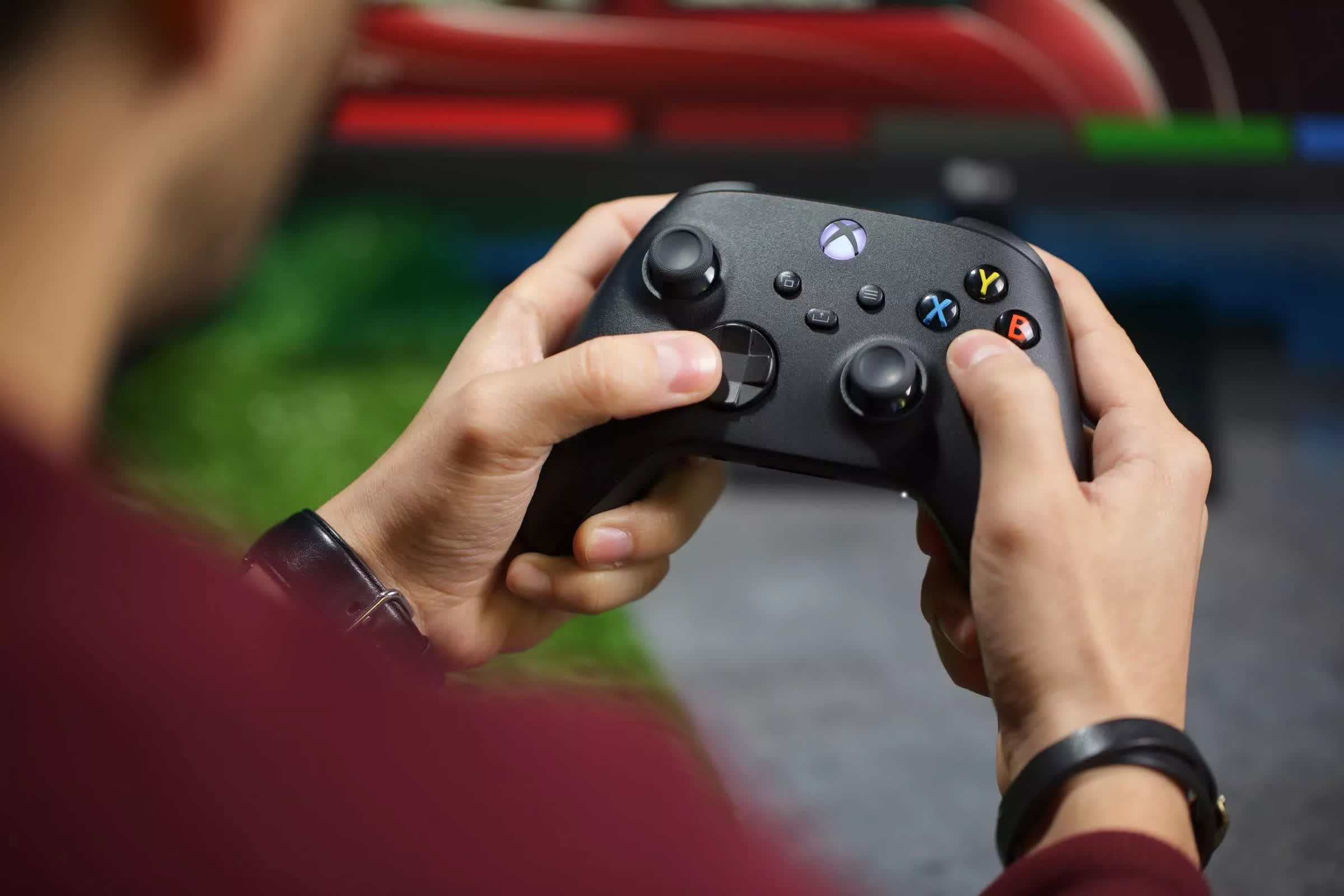
Sharma described the decision-making process as an equation, noting that memory costs influence multiple variables. She said Microsoft's focus is on building a console capable of running great games – including PC titles – while accounting for market conditions that remain in flux.

The issue stems from a sustained surge in demand for DRAM and NAND flash, driven largely by the rapid expansion of artificial intelligence workloads. That demand is tightening supply chains and increasing component costs across industries that rely on high-performance memory systems, from hyperscale data centers to consumer electronics.

Within Microsoft, the impact is particularly complex. The company is simultaneously scaling its AI infrastructure – requiring vast amounts of high-bandwidth memory for training and inference – and developing new gaming hardware that depends on similar components for performance and storage throughput. These parallel efforts are effectively drawing from the same limited pool of resources.

From a hardware design perspective, memory plays a central role in defining console capabilities. Modern systems rely on unified memory architectures that balance GPU bandwidth, CPU access, and storage streaming. As a result, fluctuations in memory pricing can ripple through the entire bill of materials, forcing trade-offs between performance targets, retail pricing, and manufacturing scale. In a volatile memory market, locking in specifications too early introduces significant financial risk.
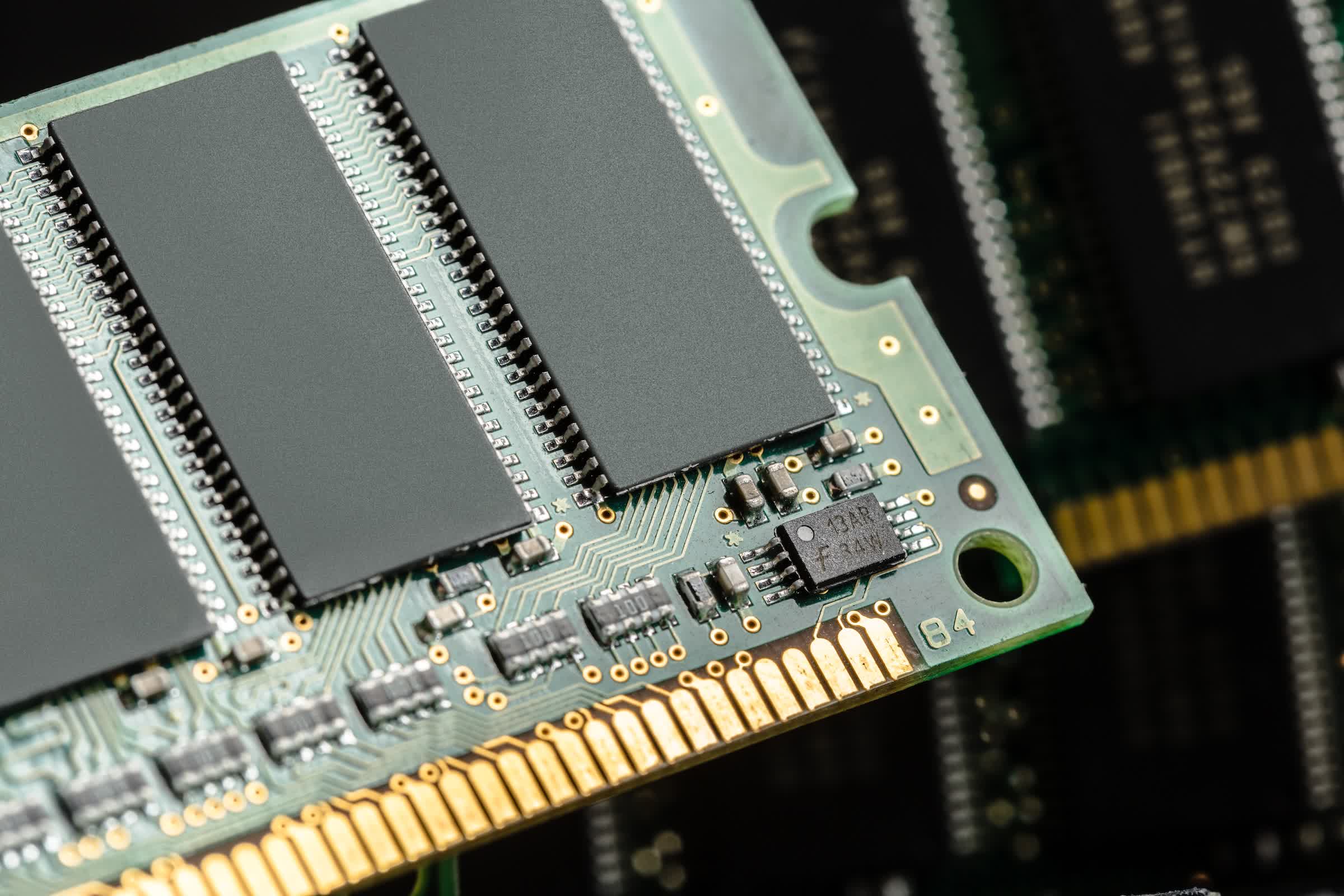
The broader market reinforces that caution. Memory shortages have already driven up prices for entry-level PCs, televisions, and other consumer devices. Manufacturers are increasingly competing with cloud providers and AI companies that purchase memory at massive scale, often securing priority in supply agreements.

For Microsoft, the situation is further complicated by its strategic direction. The company has been integrating its gaming ecosystem more closely with PC and cloud platforms, blurring the boundaries between console hardware and broader computing infrastructure. This approach increases flexibility in how games are delivered and played, but it also ties the Xbox roadmap more closely to trends in enterprise hardware and cloud economics.

While Microsoft has confirmed that development kits for Project Helix are scheduled to reach studios in early 2027, it has not committed to a release window. Industry partners say development is still in progress, with early builds being tested and refined ahead of broader distribution to developers. That approach gives Microsoft room to adjust the design as component supply and pricing continue to fluctuate.

For now, the timeline remains open-ended. The next Xbox is progressing, but its launch will ultimately depend on factors extending well beyond gaming – into the global competition for memory that is reshaping the pace and economics of modern hardware development. Sharma said her focus is on what Microsoft can control, suggesting the company will not lock in a release date until the memory market stabilizes.

Permalink to story:

 
Ultimately: PC gaming is the future.
These consoles have proved in the 9th, 8th and 7th generation that they are no match for the PC, and they can't keep up enough exclusive IP to differentiate themselves from the PC market.
Now that you're seeing Apple putting out the Neo with an iPhone CPU that can run PC games at decent quality, my belief is the PC will pull further and further ahead and the consoles will become more and more irrelevent.
 
Last edited:
Ultimately: PC gaming is the future.
These consoles have proved in the 9th, 8th and 7th generation that they are no match for the PC, and they can't keep up enough exclusive IP to differentiate themselves from the PC market.
Now that you're seeing Applke putting out the Neo with an iPhone CPU that can run PC games at decent quality, my belief is the PC will pull further and further ahead and the consoles will become more and more irrelevent.
Nope. Most people don't care to spend $5K to make their little cartoon character run at 120fps. That's a niche product. Consoles will continue to thrive. Normal people just want good games
 
Nope. Most people don't care to spend $5K
PCs don't cost $5000.

That's a niche product.
Steam has an estimated ~190 million monthly active users. That's comfortably the largest user base between PC, Playstation and Xbox (Playstation is second at around 130 million PSN monthly active users, PS4 + PS5). And more importantly, PC is the only one of the three that is growing. It's the opposite of "niche".

Consoles will continue to thrive.
While consoles will not cease to exist, they couldn't be further from "thriving". Playstation is completely stagnated, with the PS5 slightly trailing the PS4 in sales, unable to grow gen-to-gen. Xbox is even worse, having a disastrous generation and shrinking considerably compared to last gen. Meanwhile, since the pandemic, Steam has grown explosively, with peak concurrent users growing ~50% since then (~28 million in december 2021, ~42 million now).
 
The issue stems from a sustained surge in demand for DRAM and NAND flash, driven largely by the rapid expansion of artificial intelligence workloads.
Ms. Sharma is the living embodiment of "speaking out of both sides of your mouth". She is the CEO of a company directly affected by the very chip shortages she's supposed to praise, because those dried-up supply chains mean AI is extremely in demand.

She's part of the problem AND part of the solution.
 
The good thing about gaming consoles is that it forces game manufacturers to optimize their games for a specific set of hardware. Meanwhile, on the PC, they don’t do that optimization because they can just assume that if you want the best of the best performance, you’re going to shell out for a whole lot of expensive hardware.
 
The good thing about gaming consoles is that it forces game manufacturers to optimize their games for a specific set of hardware. Meanwhile, on the PC, they don’t do that optimization because they can just assume that if you want the best of the best performance, you’re going to shell out for a whole lot of expensive hardware.
I used to think that as well, but I'm less inclined to now. I do not believe that "optimization" is what makes consoles more desirable than PCs; it's a nice side-effect, but it's not the main course. Instead, I think the reason game publishers like consoles is because piracy is more difficult. While game sales are never guaranteed, there is a higher likelihood that a PS5 owner will buy a copy of God of War: Ragnarok for full price, than that they will do the same on PC―if they buy it at all―because jailbreaking a console is still hard.

The fact that consoles are a fixed-cost unit means that the hardware doesn't change, but it also reduces their utility. A $900 gaming laptop can do more than simply play games, while a console can only play games and maybe stream movies from Amazon or Netflix, but you're not getting any work done.
 
Nope. Most people don't care to spend $5K to make their little cartoon character run at 120fps. That's a niche product. Consoles will continue to thrive. Normal people just want good games


#1 PCs don't cost $5000.

OK - mine did because it's a 5090, 285K, 64GB DDR5 and had a large SSD, but most PC do not cost that much.

#2 A computer is almost mandatory for elementary and high school kids. A Console isn't. Considering games like Minecraft, Fortnite and a bunch of others can run on $800 (or less laptops and desktops - and the price of capable consoles continues to drift upwards - I insist, the PC is the future.

#33 Apple's $500 Neo shows that the race to compete on price doesn't mean that the computer becomes less capable. As time progresses, the machines become less expensive and more capable.
 
it's a nice side-effect
It's definitely a nice side-effect.

I personally think that having the kind of computer hardware that we have today has largely made game manufactures lazy. Why put the time into optimizing stuff when you can just throw more hardware at it.

Well, with what we've been seeing as of late in not only the cost of RAM but the limits of physics itself, the days of saying "Oh, we'll just throw more hardware at it" may very well be numbered.

With that being said, having a specific set of hardware to target, does force optimization.
 
By the time they decide to release it, it will be 3 generations behind PS, and everybody will forget xbox exists.
Seriously, Xbox need a new console NOW, when they are already behind PS.
Just kill it or manage it properly. And I don't doubt they considered ending it,
on a rise of ideas such as cloud gaming and a different sort of business with GP
in the center.
Just decide and stick to one plan. The only, and really only one good reason to wait is
where they decide to sell it at a small loss to gain fans for their gaming pass subscription.
As people switch to a cheaper, and equally powerful console, more and more will consider Game Pass.

But something tells me this never happens.
 
Seriously, Xbox need a new console NOW, when they are already behind PS.
I'm increasingly convinced that Xbox doesn't want to ship product anymore. Asus made the ROG Xbox Ally X and now it's very possible that the next Xbox will be launched by Microsoft AND Asus and MSI. It seems that they are slowly testing the waters, with how much of their R&D and brand they can get away with outsourcing to other companies.

Honestly, Microsoft needs to rip off the bandage already and divest itself of the Xbox brand. They clearly want to be a software publisher (or have to be, after spending so much on Activision/Blizzard) and developing their own in-house designs is proving too costly. They still have to contend with that $80 billion investment they sank into OpenAI, which appears to be going nowhere―despite them shoving ChatGPT into their entire product stack, in order to (unsuccessfully) force adoption. There's too many cooks in the kitchen and orders aren't being fulfilled in a timely manner.

Which is to say, Project Helix (or whatever the actual name is) might be it. I don't see them making another console. This thing needs to print benjamins, because they aren't making nearly enough on Game Pass subscriptions, or they might just shutter Xbox completely.
 
Back