The takeaway: At a time when investors are placing multibillion-dollar bets on humanoid robots, the people building them describe a more complicated picture. Engineers and executives working on the front lines of robotics say the field's breakthroughs have been significant, but the road from prototype to practical worker is longer than venture capital projections suggest.
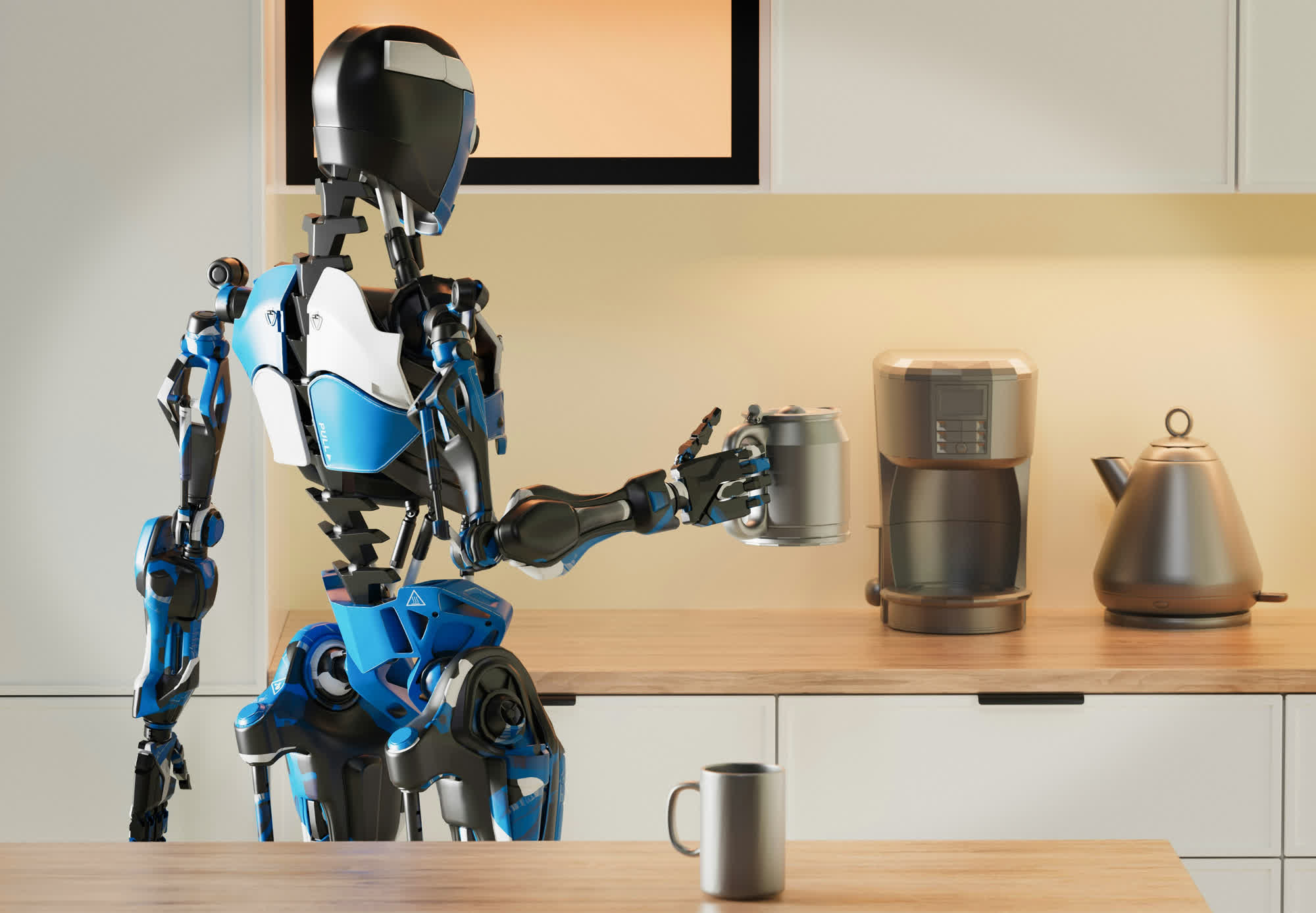
Humanoid robots have drawn renewed attention this year as companies such as Agility Robotics, Tesla, and Figure AI showcase machines walking, running, and handling warehouse tasks with increasing fluidity.
Agility, whose Digit robot is already being used by Amazon and auto-parts supplier Schaeffler, has deployed hundreds of units to pick up and transport items across warehouses. Still, the company's chief technology officer, Pras Velagapudi, told The Wall Street Journal that the goal isn't just to make a robot that looks human, but one that "does useful work."
Moving boxes in controlled settings is feasible, he noted, but tasks closer to human service – like an at-home robot butler – remain out of reach because current systems are unreliable for complex jobs.
Cost is another limiting factor. According to Ani Kelkar, a partner at McKinsey, the largest obstacle to wider robot adoption is not just hardware expense, but installation and safety infrastructure. "For every $100 spent on deploying robots today, only around $20 is the actual machine," he said, with the remaining $80 covering safety systems designed to protect humans from high-speed, heavy equipment.
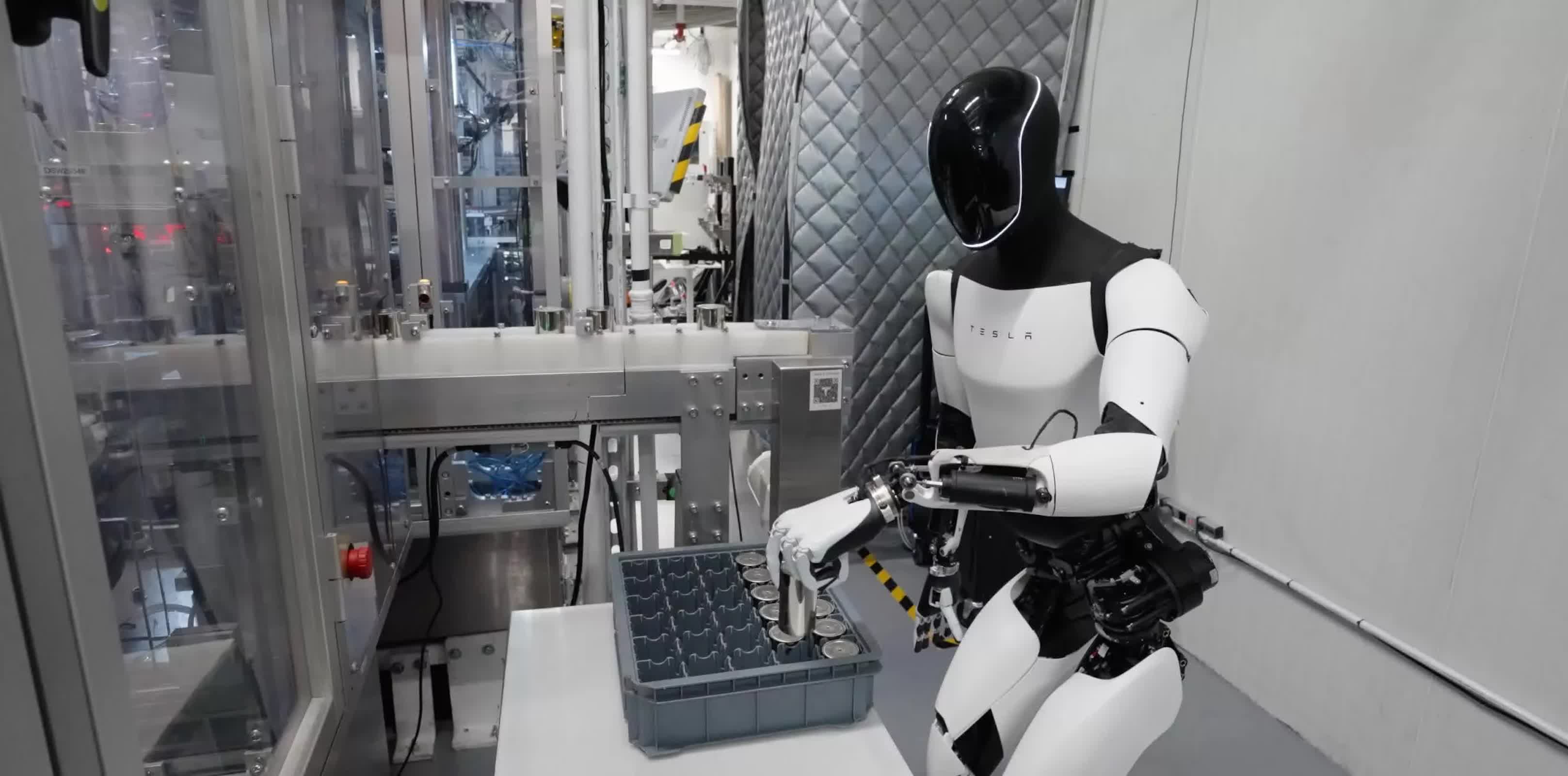
In theory, humanoids could avoid some of those expenses because they weigh much less. Tesla's Optimus stands about 5 feet 8 inches tall and weighs 125 pounds, while Unitree's G1 measures roughly 4 feet and 77 pounds. But Kelkar cautioned that the leap from impressive demonstrations to reliable performance is far from guaranteed. "We're doing a big extrapolation from watching videos of robots doing laundry to a butler in my house that can do everything," he said.
That divide between expectation and capability was a central theme at the recent Humanoids Summit in Mountain View, California, billed as the world's largest event dedicated to human-shaped robots. In a conference demo, Gatlin Robotics CEO Isaac Qureshi guided a cleaning robot with a virtual-reality headset as it attempted to scrub a brick wall.
He described the company's plan to teach its machines "more things, like starting with dusting, surface cleaning, trash bins, and then the toilet," calling toilets "a big North Star."
Speakers across sessions sought to temper excitement about a humanoid revolution. Kaan Dogrusoz, a former Apple engineer who now leads Weave Robotics, said there is "a lot of great technological work happening," but that humanoids "are not yet well-defined products."
Dogrusoz compared the field to Apple's early personal digital assistant, the 1990s-era Newton, which failed commercially before smartphones a decade later fulfilled the same vision. "Full bipedal humanoids are the Newtons of our times," he said.
Companies such as Weave, which makes laundry-folding robots used in several San Francisco laundromats, are finding limited traction in repetitive, narrowly defined use cases. Even so, its leaders and others expressed concern about overstating readiness.
Persona AI CEO Nicolaus Radford warned during a keynote that the industry must maintain realistic "adoption timelines." His company is developing a welding robot for a shipbuilder – a job well-suited for automation, he said, because of its hazards and difficulty in recruiting human workers. But, like others, Radford emphasized that tasks such as home assistance remain far beyond current capabilities.
That caution contrasts sharply with the public optimism of major technology executives. Elon Musk has predicted "insatiable" demand for humanoid robots and said Tesla's Optimus could reach a production level of one million units per year by 2030.
Nvidia CEO Jensen Huang voiced similar enthusiasm, claiming that "humanoid robots, the technology that makes it possible, is just around the corner." Both executives point to converging trends: vast data center investments to train AI models, shrinking labor forces in aging societies, and government interest in reshoring manufacturing.
Hardware advances also feed expectations. Progress in batteries and electric motors has enabled longer runtimes and smoother, more humanlike motion. Earlier this month, Figure AI's CEO posted a video of the company's robot jogging with an uncanny resemblance to a person. Such imagery, reinforced by roughly $5 billion invested in humanoid-robot startups this year, has sustained market excitement, according to McKinsey's Kelkar.
Analysts at FEV Consulting, which advises robot manufacturers, forecast about one million humanoid robots working globally by 2035. Yet many startups still rely on manual teleoperation methods – such as having humans wear VR headsets to train robots – to generate sufficient data.
Others experiment with 3D-modeled environments to accelerate learning. Dominik Boemer, a manager at FEV, said there is no clear benchmark for how much training a robot needs to progress from folding shirts to performing multiple household chores.
Some technologists believe the humanoid form itself may be a constraint. Robots that balance on two legs are prone to tipping, and replicating the dexterity of a human hand continues to challenge engineers.
Tactile feedback – the human ability to sense touch and pressure – remains an unsolved problem. For that reason, Max Goncharov, chief technology officer at RemBrain, argued that robotics design should move beyond mimicking humans. "My point of view is that we are sticking to the humanoid form too much," he said, adding that in factories, "efficiency means more specialized robots." He predicted that humanoids "will do a tiny layer of tasks in factories in the future."
Jeff Mahler, chief technology officer at Ambi Robotics, summarized the prevailing mood among engineers who spoke at the summit: humanoids might solve niche problems, but expectations for a near-term revolution are misplaced. As research refines motion control, balance systems, and tactile perception, the field's central question remains unresolved – whether robots truly need to look like us to perform the work we hope they'll do.
The people building humanoid robots say the hype is running ahead of reality


