The real end of Moore's Law and the true cost of a monopoly

Jay Goldberg

Posts: 99   +2
Staff
Editor's take: If TSMC raises its prices as high as we are hearing they intend, then many companies will have no choice but to step off the curve of Moore's Law. Maybe having an alternative like Intel is not such a bad idea.
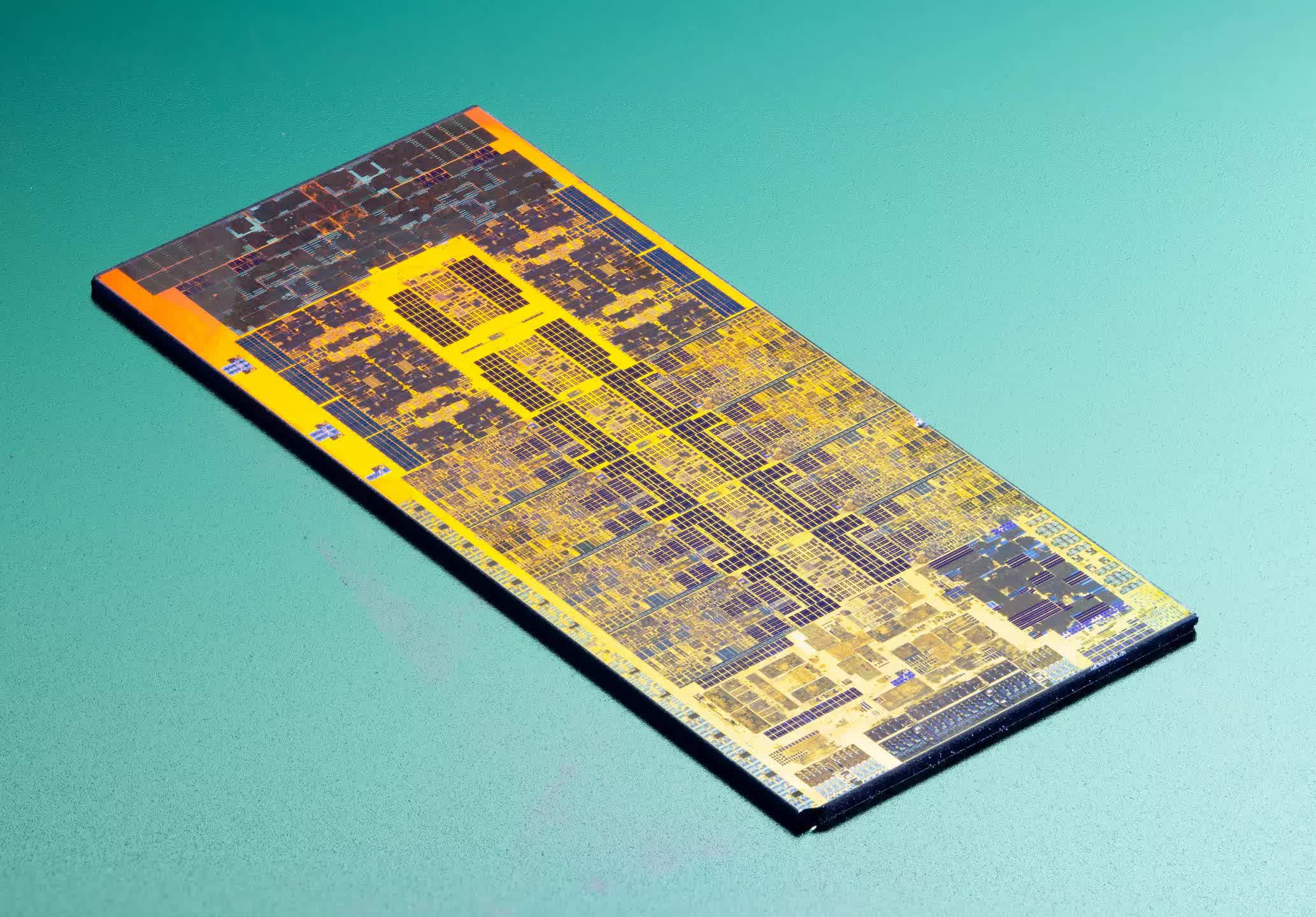
In recent weeks we've been hearing about some of the proposed price increases coming for TSMC's N2 process starting next year. We have been thinking through the implications of this since then, and in light of the developments at Intel, we believe their significance has become even more relevant.

Editor's Note:
Guest author Jonathan Goldberg is the founder of D2D Advisory, a multi-functional consulting firm. Jonathan has developed growth strategies and alliances for companies in the mobile, networking, gaming, and software industries.

Put simply, in the absence of viable competition, TSMC transitions from being an 'effective' leading-edge monopolist to a true monopolist. This allows them to raise prices as high as they want. Work through the math on that, and it quickly becomes apparent that many companies designing chips at the leading edge today will have to step off the Moore's Law curve because it is no longer economically viable.

Of course, TSMC is not going to raise prices to infinity and cut off all demand, but they will price to maximize their own value extraction. This will likely lead to a much smaller pool of customers who can afford to design chips at the leading edge.

Let's use an example. Imagine a sizable TSMC customer – not in the Top 3, but maybe in the Top 10. They likely pay TSMC $20,000 per wafer today, with lower-volume customers paying closer to $25,000. Let's say this company has a chip that is 170 mm². Using the handy Semi-Analysis Die Yield Calculator, that works out to 325 chips per wafer, or $61 per chip. If the company prices the chip at $140, they achieve gross margins of 55%, which is good but not great.

Now suppose TSMC raises its price to this customer to $40,000 for its next process. Estimates for density improvements for N2 are still coming in, but let's assume a 15% increase in die per wafer (375 KGD). The cost per chip, however, jumps to $107. This is the heart of the Moore's Law slowdown – density increases now greatly lag price increases. If the design company cannot pass on cost increases to customers, and is stuck at that $140 price, gross margins fall to 22%, which is not good.

We can play around with the numbers and debate the extent to which chip designers can pass on these costs to their customers, but the conclusion remains the same: as TSMC raises prices, producing chips at the leading edge becomes increasingly unfeasible for a growing segment of customers.

The example above is loosely based on Qualcomm, so they would fall into this category, but the same applies to AMD. The hardest hit will be customers with smaller volumes, spanning from start-ups to hyperscalers. For many, Moore's Law becomes extremely challenging. Of course, Nvidia and a few other companies have significantly more flexibility to absorb these costs, but many – if not most – companies do not.

We expect that TSMC is unlikely to push its customers this hard, but the reality is that they could.

Some might argue that TSMC has effectively held a monopoly for several years and could have raised prices in this way long ago. The fact that they haven't suggests they won't in the future. However, conditions are changing.

Until recently, a cautious and paranoid TSMC needed to worry about Intel or Samsung becoming competitive again. That now seems increasingly unlikely. And this is why Intel Foundry matters. Today, some may credibly argue that there is no commercial necessity for Intel Foundry in the industry – that customers do not need a second source beyond TSMC.

But look ahead a few years, to a world where TSMC can freely raise prices. In that scenario, everyone will be desperately searching for an alternative.

Masthead credit: Fritzchen Fritz

Permalink to story:

 
Now we see why AMD's chiplet strategy pays off. Instead of a 170-200mm2 monolithic cpu they have a 70mm2 compute die and 130mm2 io-die. They build the compute die on a fairly cutting edge node and the io-die on a trailing node. sure, they incur some cost related to assembly but save a lot on wafer cost. plus they have more flexibility in building multicore chips from the same building blocks. So, if a good zen die costs $25, a next gen compute die on the next node would be $37. I think it's not that bad for them.
 
Until the transition to 14nm and beyond, the cost per wafer remained relatively stable despite significant density improvements. Plus, the table above does not account for the full range of costs involved in chip design:

Back in 2018, the last time anyone made such an estimate, IBS published the chart shown in figure 1. This pegged the cost of a 5nm chip at $542.2M. https://semiengineering.com/what-will-that-chip-cost/

 
Now we see why AMD's chiplet strategy pays off. Instead of a 170-200mm2 monolithic cpu they have a 70mm2 compute die and 130mm2 io-die. They build the compute die on a fairly cutting edge node and the io-die on a trailing node. sure, they incur some cost related to assembly but save a lot on wafer cost. plus they have more flexibility in building multicore chips from the same building blocks. So, if a good zen die costs $25, a next gen compute die on the next node would be $37. I think it's not that bad for them.

Funny how Radeon 7000 failed when it comes to MCM and they go back to Monolithic with Radeon 8000 then.
 
What you are going to see is more and more companies just backing off the leading edge of chip design. Because lets face it: In the consumer space, is there *really* that much of a difference?
 
Funny how Radeon 7000 failed when it comes to MCM and they go back to Monolithic with Radeon 8000 then.
The MCD has the same problem that the I/O dies on ryzen CPUs have when handling high speed memory. It's just that graphics memory is significantly faster(and more important). Since the same problem is present on Ryzen CPUS, they're not planning on moving back to a chiplet GPU design until after they fix the memory speed issues on the I/O die with zen 6.
 
Funny how Radeon 7000 failed when it comes to MCM and they go back to Monolithic with Radeon 8000 then.
Not that funny if you consider the number of distinct dies and the area of the io/cache dies vs the area of the GPU. Also they used different packaging that was probably more expensive.
 
Missed the middle paragraph was literally posted twice with variations, the one discussing wafer costs at $40,000 and 22% margins, which is not good.

Ed. note: Thanks, fixed :)
 
Do you know how much a taiwan foundry worker or EE engineer earns? Its not much (1/4 of what western designers earn). The free ride for western chip designers is over.
 
Humanity sure does love putting important things in one basket, then acting surprised when the basket gets too powerful and bitchslaps us.
Yeah, that Russian gas drama was pretty interesting lol ;p And many other things like this. Even my friends put all their info on 1 drive and then when that drive dies... (no backups!) guess what happens :P

It must take a genius to think about diversity and backups in case something happens. I rarely see people doing that too, so it must be a really special thing.
 
The MCD has the same problem that the I/O dies on ryzen CPUs have when handling high speed memory. It's just that graphics memory is significantly faster(and more important). Since the same problem is present on Ryzen CPUS, they're not planning on moving back to a chiplet GPU design until after they fix the memory speed issues on the I/O die with zen 6.
High speed memory with mediocre timings is useless anyway. Who cares.
I run 6400/28 on my 9800X3D at 1:1 which is preferable for best performance anyway.

You can put fast CUDIMMs (with slow timings) in Arrow Lake, spend 800+ dollars on memory alone, and I will still wipe the floor with it.

If I needed actual produtivity perf, I would buy 9950X or Threadripper over anything Intel right now as well.

High speed memory is waste of money for most people and gamers want tight timings over clockspeed anyway. You don't get both and you get to pay big money for high speed kits even if timings are subpar. Worst money you can spend.
 
Last edited:
28nm is still widely used, and available. It's only for those who need the latest, cutting edge nodes to maximize performance.
 
Is it that Moore's Law has slowed down so much, or is it that Moore's Second law (aka Rock's Law) - the price of a fab doubles every 4 years - has sped up? Probably a mix of both. The second law is often forgotten about in conversations around the first, but monopoly or no, it's no surprise that prices are rising. Still, Intel and Samsung really need to deliver some wins, as TSMC, like Nvidia, really are behaving like monopolies in how they price their products.

https://en.wikipedia.org/wiki/Moore's_second_law

 
I hate to inject a political discourse into this, but, it's unavoidable.

What about trimps proposed tariffs? has anybody bothered to cost them into this?
 
We need socialist chip makers that make them strictly for DEI. Then they will be affordable
Someone as obviously well educated as yourself, should understand that Socialism is a governmental construct that has absolutely nothing to do with DEi practices.

"Socialist", is just something that MAGAts yell at trimp rallies at anything they disagree with. Albeit with absolutely no understanding of the underlying concept.

What we "need", is to get these fabs currently under construction on US soil, up and running.
 
Last edited:
What about trimps proposed tariffs? has anybody bothered to cost them into this?
Most of Trump's tariff's are conditional upon some foreign government failing to take some necessary action, like lowering their own trade barriers with the US, or (in the case of Mexico) failing to halt the millions of illegals they're allowing to pass from Central America through the entire length of their country into the US. Since these nations will in general agree to these demands, most of these tariffs will never come to pass.

I'll note that Trump's last round of tariffs on China worked so well that Biden kept them in place .. and even added a few of his own.

Someone as obviously well educated as yourself, should understand that Socialism is a governmental construct that has absolutely nothing to do with DEi practices.
In theory. In practice, modern US socialists almost always strongly favor DEI.

"Socialist", is just something that MAGAts yell at trimp rallies at anything they disagree with. Albeit with absolutely no understanding of the underlying concept.
So when Bernie Sanders and Alexandria Ocasio-Cortex call themselves socialists, you're saying they don't understand what they support?
 
Most of Trump's tariff's are conditional upon some foreign government failing to take some necessary action, like lowering their own trade barriers with the US, or (in the case of Mexico) failing to halt the millions of illegals they're allowing to pass from Central America through the entire length of their country into the US. Since these nations will in general agree to these demands, most of these tariffs will never come to pass.
I think he also pushed the concept that these aliens were all criminals and drug pushers. However, the majority of arrests for fentanyl trafficking made at the US-Mexico border, are of US citizens.

As far as any of it goes, it probably would be wise to consider Elon Musk POTUS, with trimp as VP, with Vance basically jobless, ignominiously running around telling the lies he's been ordered to tell.

Something else worth pondering is the fact that some of these Latin cartels, are actually grown right here in Los Angeles. "MS13" is one example, that exported itself to (IIRC) Venezuela.
I'll note that Trump's last round of tariffs on China worked so well that Biden kept them in place .. and even added a few of his own.
Well, Biden is a compromising sort of politician. So maybe he simply didn't want to rock the boat. BTW, did you know that the tariffsr/trade embargo merry-go-round caused quite a few US soybean farmers to go bust?
In theory. In practice, modern US socialists almost always strongly favor DEI.
Well, "in theory", a racially pure culture could just a well be a social democracy also. So, DEI isn't inherently tied to the concept.

There's this I'm sure ugly to you concept in the Declaration of Independence which goes something like, "with liberty and justice for all". I guess you could consider that a "rider", imposed on modern multi-racial cultures over top of socialism.

FWIW, I don't support DEI hirings if they start to implement "reverse discrimination". If the white guy is more qualified, he gets the job. If the reverse is true the black guy, (I'm sorry"African-American), wins. Equal opportunity, si, quotas no.
So when Bernie Sanders and Alexandria Ocasio-Cortex call themselves socialists, you're saying they don't understand what they support?
This sentence requires a bit of touch up in the syntax It's basically unclear (as is somewhat typical), who exactly "they" is.

If "they" are the 1st person subject, then it isn't at all amazing that "they" can recognize someone who freely admits they're a Socialist.

What they can't recognize is a Fascist.

As far as "DEI hires" go, Satan Nadella is a prime example. He comes from a culture generally far more ruthless in business tactics than the average American. (Which is not to say American businesses aren't capable of the same tactics). It's just that M$ got him far cheaper than Bill Gates/ See, so foreigners are taking our jobs :rolleyes:
 
I think he also pushed the concept that these aliens were all criminals and drug pushers.
Every illegal is a criminal, by definition. 100%. And they're not all "drug pushers", but it's not 2005 any longer, when most were Mexican itinerant farm workers. A growing portion are Central American gang members and violent criminals.

However, the majority of arrests for fentanyl trafficking made at the US-Mexico border, are of US citizens.
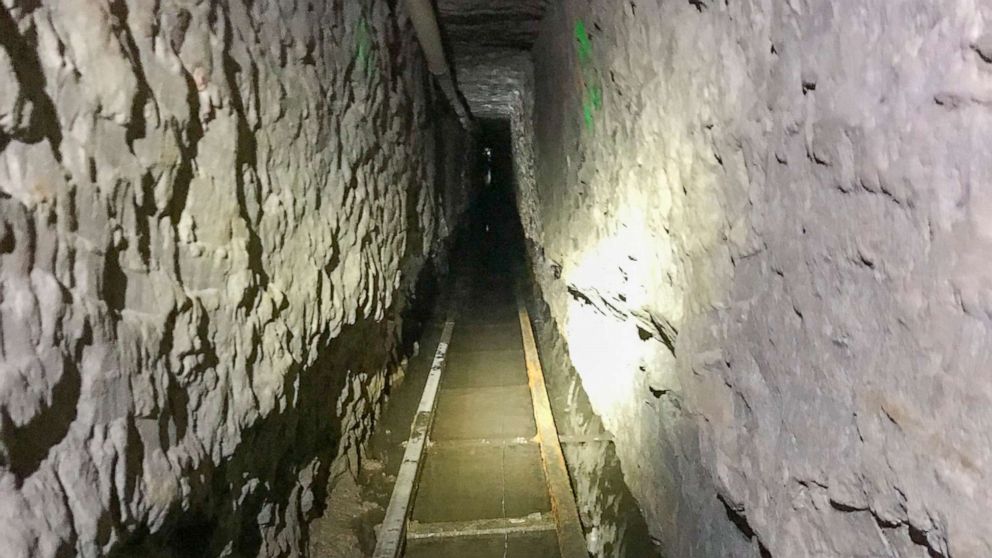
A great example of how to lie with statistics. Most drugs seized are at legal ports of entry: small quantities carried by amateurs . The cartels work at a much larger scale. As example, one smuggling tunnel alone found in 2022 -- nearly a mile long, with an electrical and ventilation system -- was capable of smuggling 10+ tons per day. The cartels -- tipped off beforehand -- had evacuated it before CBP arrived, and not even a single ounce of illicit drugs were actually seized from it, nor any arrests made:


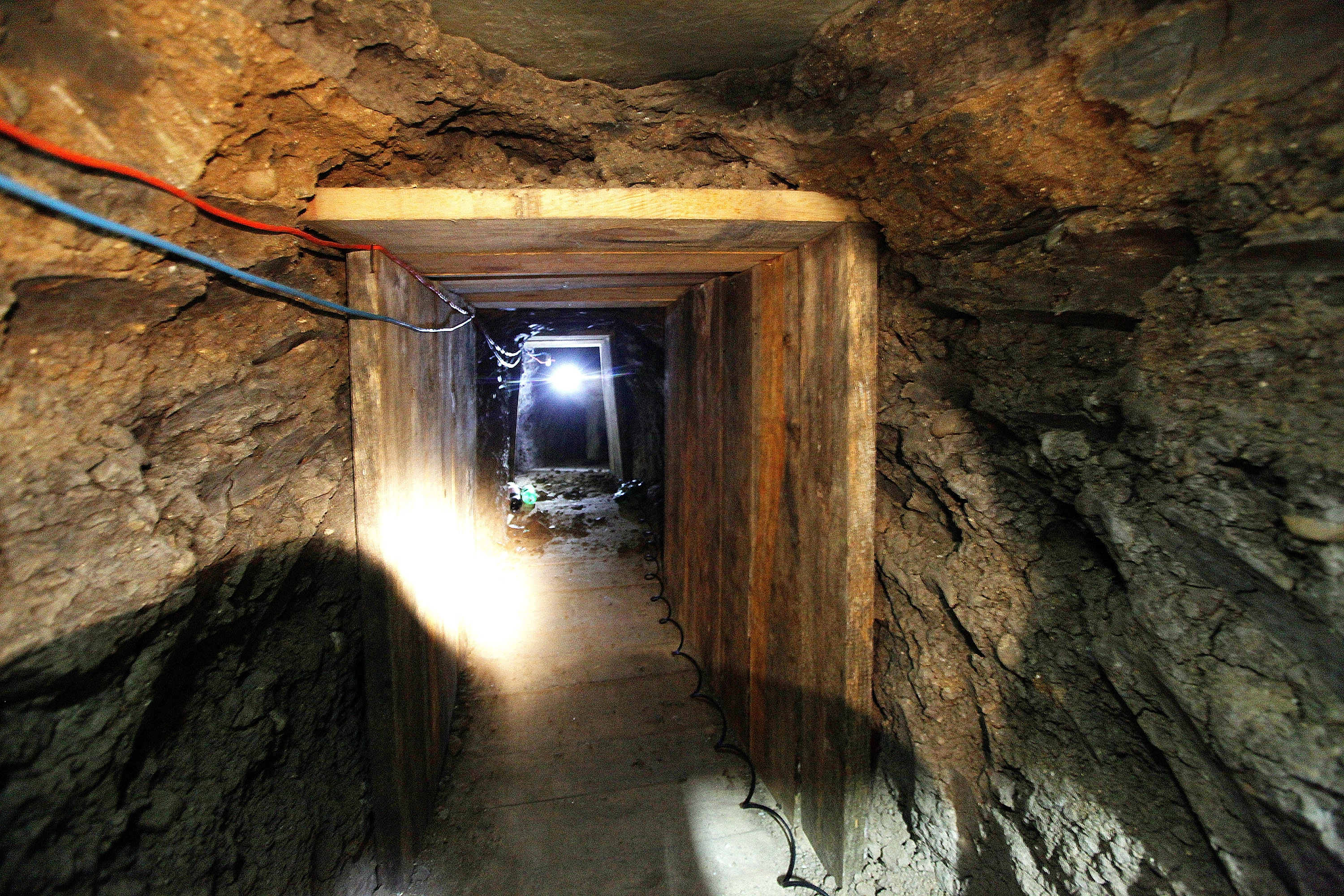
Another tunnel two years later was found to be smuggling cocaine in 1-ton shipments -- straight into a US warehouse:

 
some of these Latin cartels, are actually grown right here in Los Angeles. "MS13" is one example, that exported itself to (IIRC) Venezuela.
LOL, you didn't make the point you think you did. MS13 was founded by illegal migrants:

"Mara Salvatrucha (MS-13), international gang involved in drug and human smuggling, prostitution, murder, and extortion,...It was founded in Los Angeles by immigrants from El Salvador and later spread throughout the United States, Central America, and Canada, gaining a reputation for extreme violence...."

There's this I'm sure ugly to you concept in the Declaration of Independence which goes something like, "with liberty and justice for all".
"Liberty and justice" for all is the exact opposite of "special advantages and privileges to some", which is what DEI entails.
 
Since these nations will in general agree to these demands, most of these tariffs will never come to pass.

I have no desire to pay for these tariffs, so I hope they will never come to pass. But, what makes you think that these nations will in general agree to the demands? Not disagreeing with you, but I haven't seen evidence that they would, and am curious what that evidence is.

In China's case, the geopolitical tensions keep rising, so I don't expect much of a reversal there. As long as there is broad political support to "contain" China (and Russia for that matter since they are allies), which I don't expect to change at least as long as Taiwan and TSMC continue to deliver semiconductor "gold" (or oil - use whatever analogy you like), those tariff back-and-forths are likely to continue IMO.

In Mexico's case, even an intention to meet Trump's demands is probably not enough. In fact, I imagine that they have been trying to meet this for some time now, for similar reasons that the U.S. would - nations don't want huge uncontrolled groups of people moving through them, either as the destination or en-route to another country. In other words, I'm not sure they are equipped to follow through. The corruption and organized crime is so rampant that their public statements of improving the immigration situation hasn't been followed through.

In Canada's case, I saw a headline (didn't read the whole article) that said they would threaten to cut off power to Americans that get their energy from Canada in response, and it would affect something like 1.5 million people (or maybe 15 million, I don't remember the number in the article). Point is, Canada seems less willing to meet Trump's demands.

Lastly, not sure if India is being targeted with these tariffs or not, but India has a larger population than China, and many view that country as the "next China", in terms of moving manufacturing and labor and getting exports from there. India is a bit more neutral on the geopolitical side, with both Russia and the U.S. trying to woo over support (India and China share borders and have some territorial tensions in places, remains to be seen how that shakes out). Anyways, supposing the tariffs with China continue/increase, it seems to me that instead of jobs and manufacturing coming back to America (outside of what direct subsidies like the Chips act encourage), most of it will just move to India (or other places). Will take time, of course.

Anyways, back to my original question - you stated that you expect these countries to agree to Trump's demands. I don't see evidence of that happening, so, what am I missing?
 
Though it may be true, I don't see where there is anything to do about it. Intel has now shown multiple times that though reducing spending on R&D years ago to suck out profits and pump stock probably caused their multiple new generation failures, spending more can't fix it or might take another decade to deliver results. They no longer have the expertise. They dumped it. They need to start by rebuilding their engineering department, not building plants. The engineers don't exist. So the real start is to rebuild some university departments to produce chip engineers. They need to get back to at least three simultaneous generations being engineered and, since the tech is harder now as we push limits, probably some backup plans being engineered at the same time too. TSMC didn't do this to Intel. Intel did this to Intel. All TSMC did was make large, risky investments (almost Musk-like bet the company deals) while others destructively cut back thinking the laws of physics would slow everyone down more. TSMC's strategy paid off.

When an athlete takes a multi year break, they rarely succeed in comebacks.
 
Back