Facepalm: New research shows that threats to privacy and security don't always travel by wire. Increasingly, they come from above – hidden in satellite signals few had ever thought to inspect. Most organizations notified about these vulnerabilities have since moved to encrypt sensitive satellite links. Yet with so many technologies dependent on orbital infrastructure, countless transmissions remain exposed to exploitation.
A new academic investigation has exposed a widespread and largely overlooked vulnerability in global satellite communications. Researchers from the University of California, San Diego, and the University of Maryland found that a significant share of geostationary satellite signals – responsible for transmitting vast amounts of sensitive data every day – remain unencrypted.
The findings raise urgent questions for telecommunications providers, infrastructure operators, and national security agencies worldwide.
Over a three-year period, the research team installed a commercially available satellite receiver atop a building in La Jolla, California. Using equipment that cost less than $800, they intercepted radio transmissions from satellites orbiting above North America and adjacent ocean regions. By methodically repositioning their dish and analyzing the resulting data, the researchers determined that roughly half of the geostationary satellites within range were transmitting unprotected data.
The intercepted content covered a broad spectrum of communications. Captured data included fragments of Americans' voice calls and text messages on the T-Mobile network, passengers' internet traffic from airline Wi-Fi services, and internal operational messages from electric utilities, offshore oil and gas platforms, and even military and law enforcement units. The absence of encryption, the researchers noted, was not limited to civilian or corporate traffic – it extended to the operational communications of critical infrastructure and sensitive government entities.
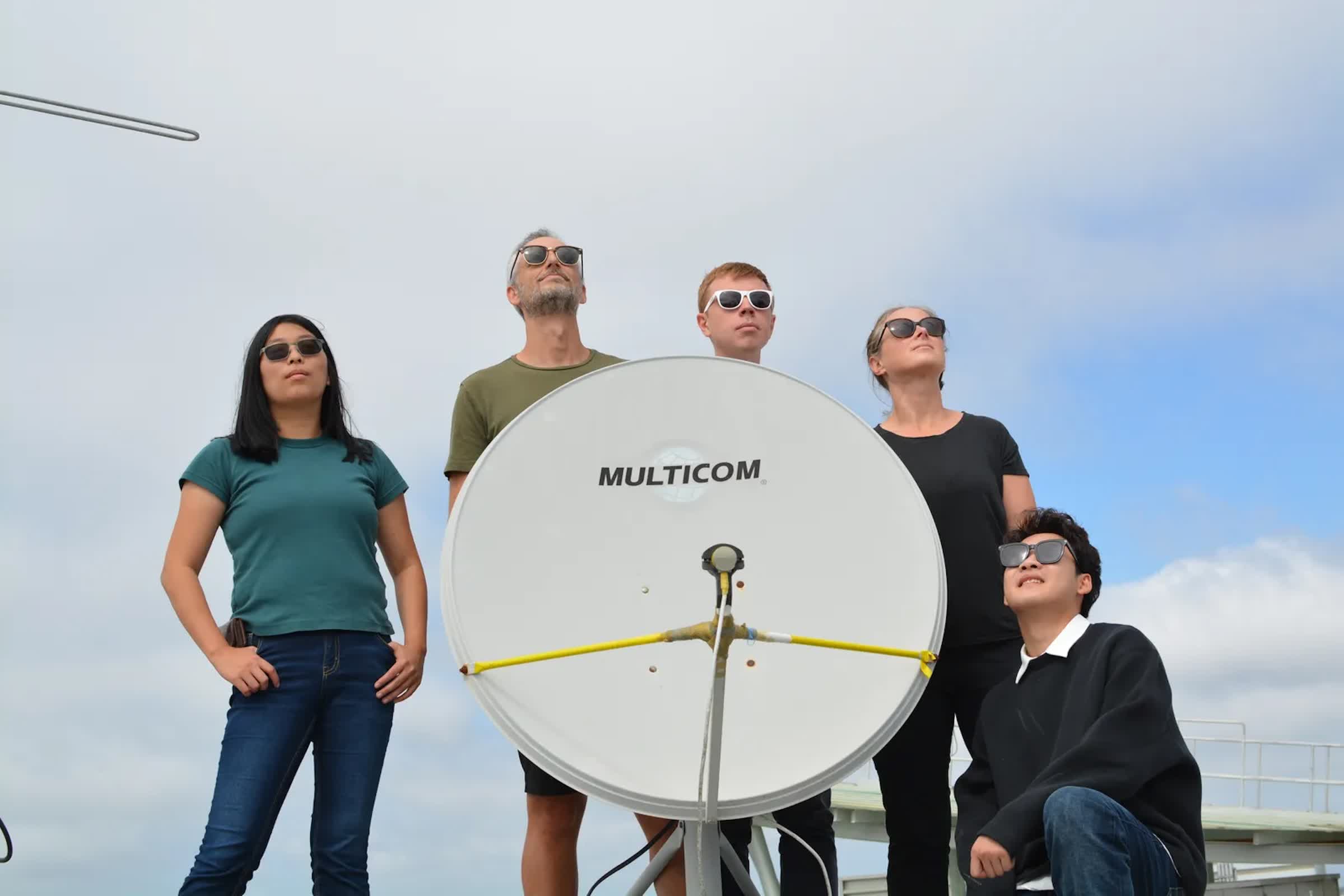
Researchers pose with their satellite receiver system on the roof of a university building in San Diego.
Aaron Schulman, a UC San Diego faculty member who co-led the study, expressed astonishment at the scope of the exposures. "Critical infrastructure depends on these satellite links," he told Wired, "yet we found case after case where communications were simply not secured."
The vulnerabilities stem from the routine use of satellites as communication relays for remote or mobile systems. In areas where traditional wired connectivity is unavailable such as deserts, oceans, or sparsely populated regions, cellular towers and remote infrastructure often rely on satellites for data backhaul. When these transmissions are broadcast unencrypted, anyone with similar receiving hardware within the satellite's coverage area can intercept the data.
According to Matt Blaze, a cryptography expert at Georgetown University, the vulnerabilities are not technically novel but have been overlooked in terms of practical risk. Many organizations assumed that obscurity or lack of apparent interest would suffice as protection. "This was not a matter of needing intelligence-agency level budgets – the same setup as a home satellite TV user was enough," Blaze said.
In one notable example, analysis of T-Mobile traffic over a nine-hour window revealed the phone numbers of thousands of subscribers, as well as the content of calls and texts sent to remote towers. Technical limitations of the interception meant that only one side of these conversations – the link from user tower to the core network – was accessible.
AT&T Mexico and Telmex, a Mexican telecom, were also found to transmit large volumes of unencrypted data, according to the report.
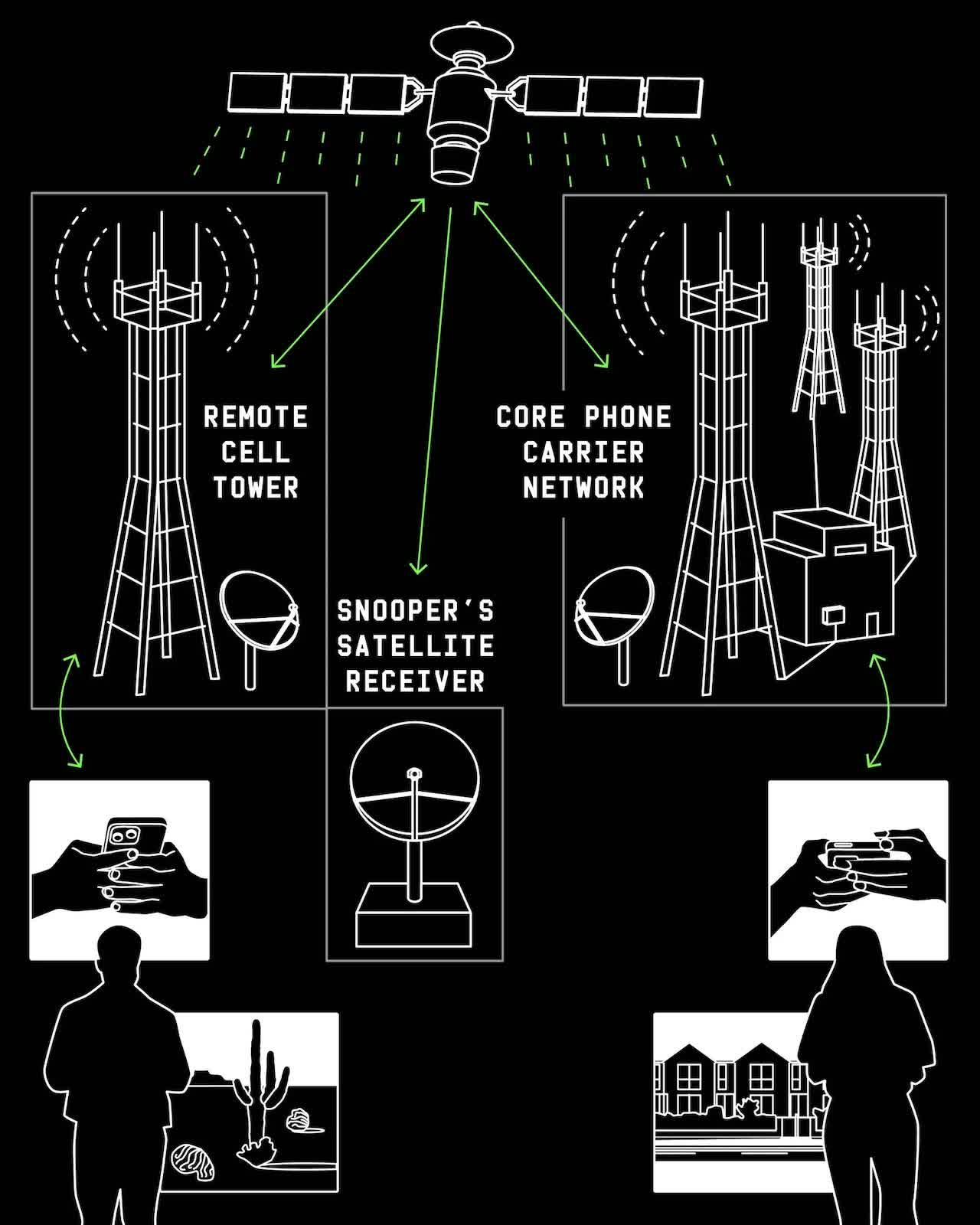
Following disclosure from the research team, T-Mobile encrypted its satellite transmissions, reducing exposure. AT&T stated that a small number of cell towers in remote Mexican regions had experienced a vendor misconfiguration, which has since been resolved. Telmex did not provide a response. The researchers also noted the absence of unencrypted Verizon or AT&T US traffic in their samples, though it is possible that similar security gaps exist in regions outside the study area.
Beyond telecommunications, the investigation uncovered unencrypted transmissions involving industrial control systems and military logistics. The researchers' satellite receiver captured communications from US Navy vessels, as well as detailed asset tracking and logistical records for Mexican military and law enforcement agencies. The data revealed not just routine exchanges, but specifics about equipment locations, deployments, and mission-critical logistics for helicopters and patrol vehicles.
Equally concerning were the findings related to Mexico's Comisión Federal de Electricidad, the state electric utility. The CFE's satellite links broadcast unprotected work orders containing customer details, internal discussions of equipment failures, and even safety reports, information that could reveal sensitive intelligence about Mexico's power grid. The researchers also identified unprotected data from offshore oil platforms and commercial air travel, including in-flight Wi-Fi metadata and live broadcast audio streams.
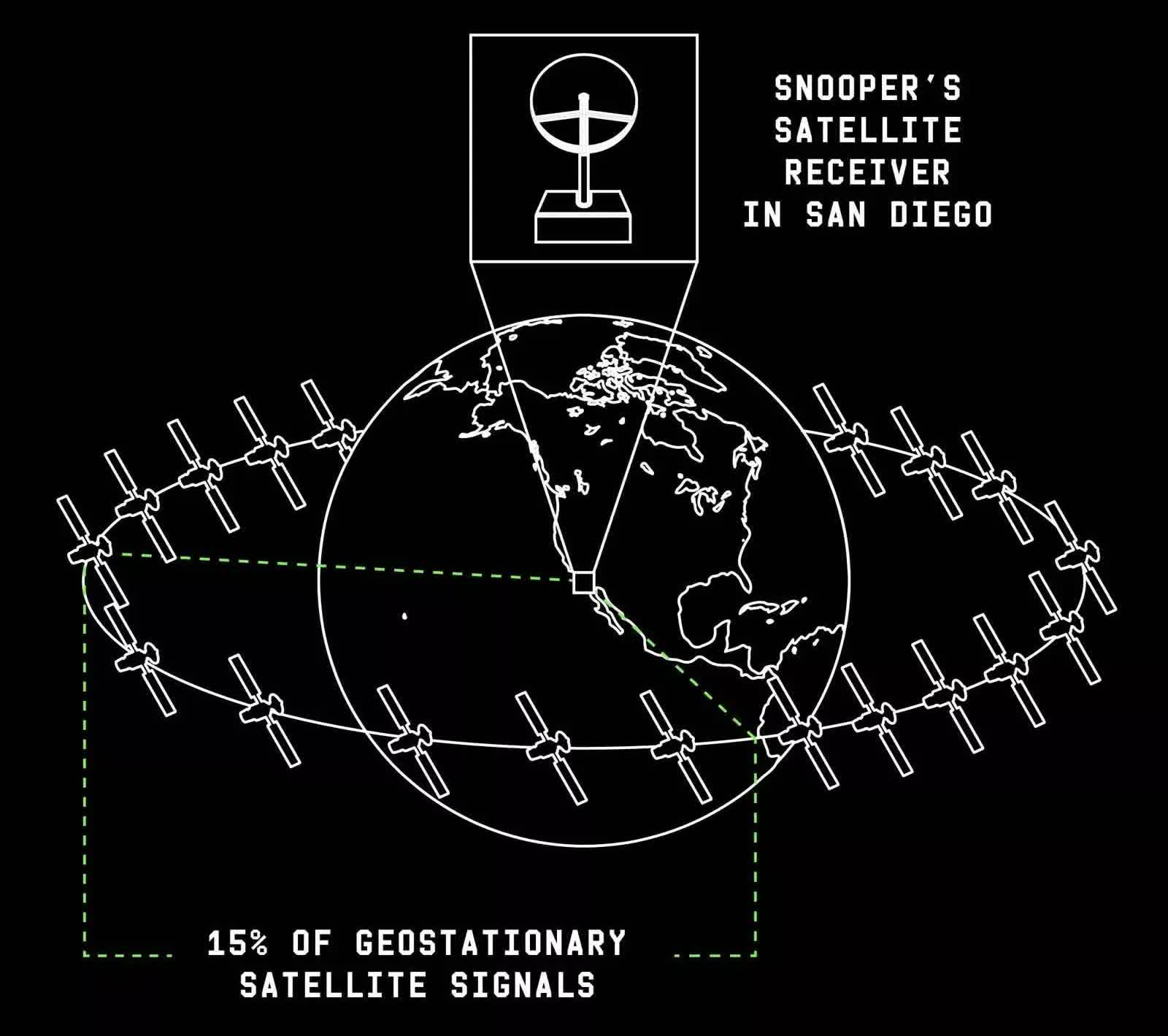
The scope of the investigation was primarily limited by geographic and technological constraints. The researchers estimate that their antenna system could access signals from only about 15 percent of all geostationary satellites globally, concentrated over North America and parts of the Pacific. Nonetheless, the diversity and sensitivity of the information captured from this narrow slice suggest a far broader worldwide risk.
The exposure is particularly serious because exploiting it requires minimal equipment or expertise. The team's setup relied on readily available hardware rather than advanced or custom-built intelligence systems.
It will also become easier to access and analyze the data as the researchers plan to publish open-source tools for interpreting intercepted satellite signals. They argue this step is necessary to drive industry reform, though it may also lower the technical barrier for potential adversaries.
The researchers acknowledge the risks their disclosures carry but maintain that the only way to prompt real change is through public pressure and technical transparency. "Encryption is not just best practice – it's essential," said Schulman of UCSD.
Image credit: Wired
This $800 experiment caught unencrypted calls, texts, and military data from space


