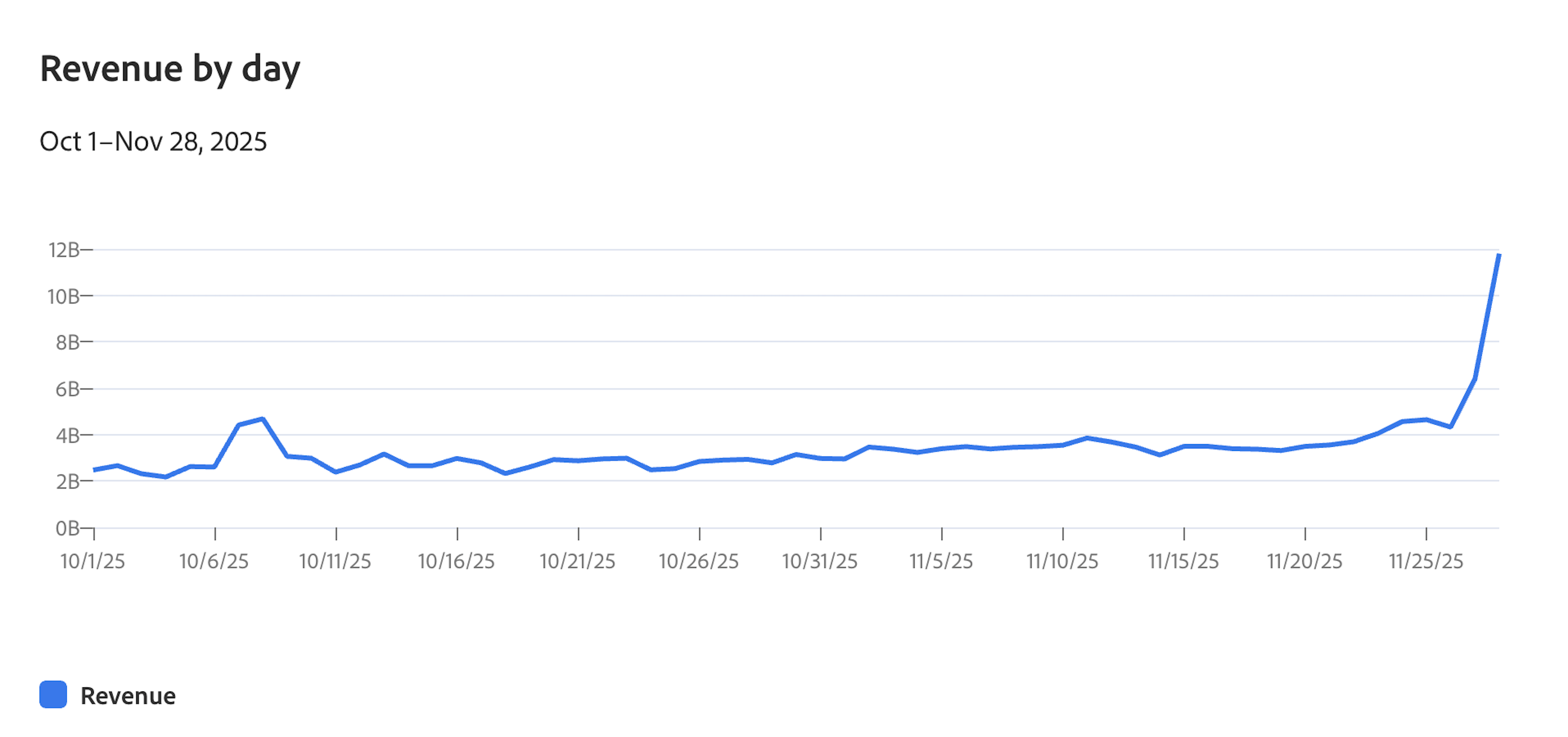
What just happened? US consumers are on track to turn this year's Black Friday into the biggest online shopping day on record, with $8.6 billion spent on e-commerce by early evening and a final total now projected between $11.7 billion and $11.9 billion, according to Adobe Analytics. The figures point to an almost entirely digital story for the unofficial start of the US holiday shopping season, even as many households remain wary of overspending amid persistent inflation and labor-market uncertainty.

By 6:30 pm Eastern on Black Friday, online spending was running 9.4% ahead of the same point a year earlier, already surpassing Adobe's earlier forecast of 8.3% growth for the whole day. Its updated estimate of $11.7 billion to $11.9 billion in total Black Friday e-commerce would set a new single-day record for US online retail sales.
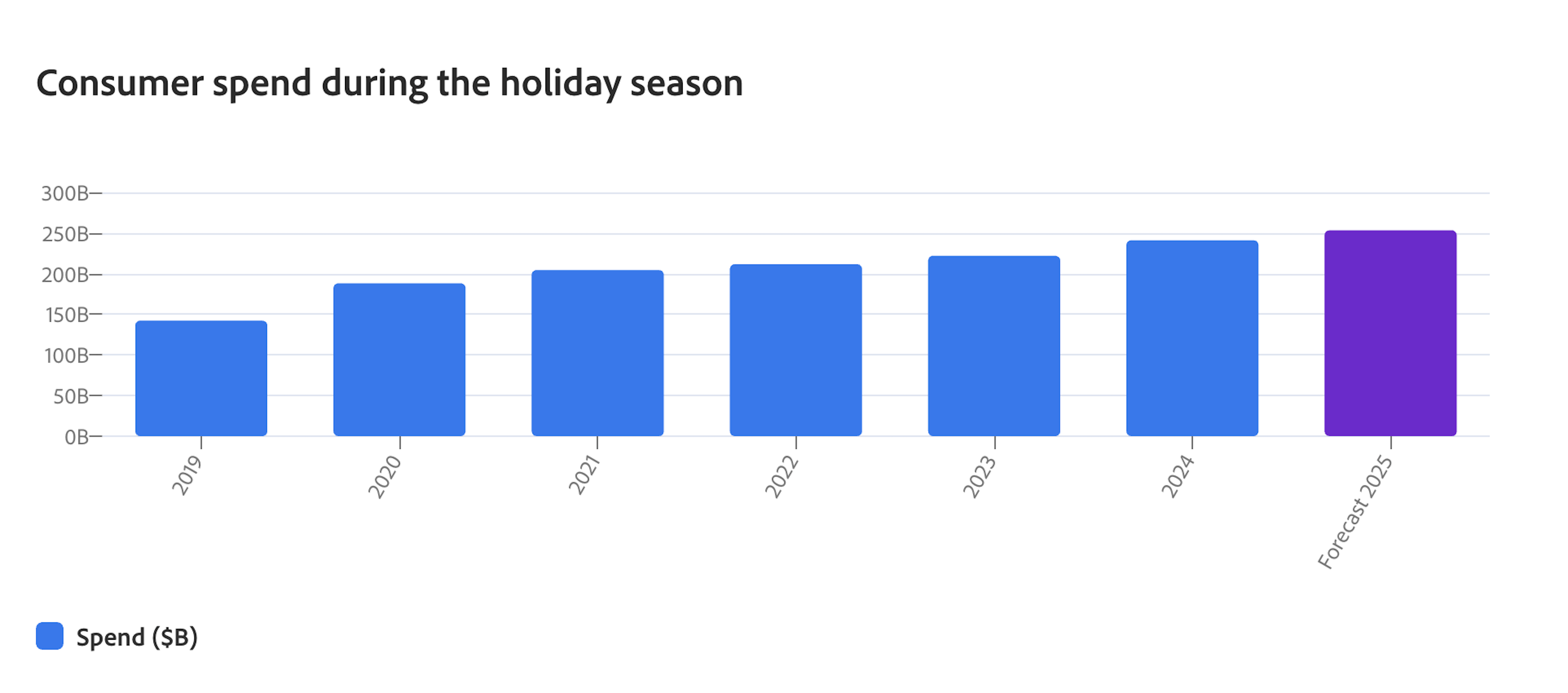
The company, which had previously projected Black Friday online sales at $11.7 billion, expects overall US holiday online sales growth to slow this year compared with prior seasons, reflecting cautious consumer behavior amid higher prices and policy uncertainty.
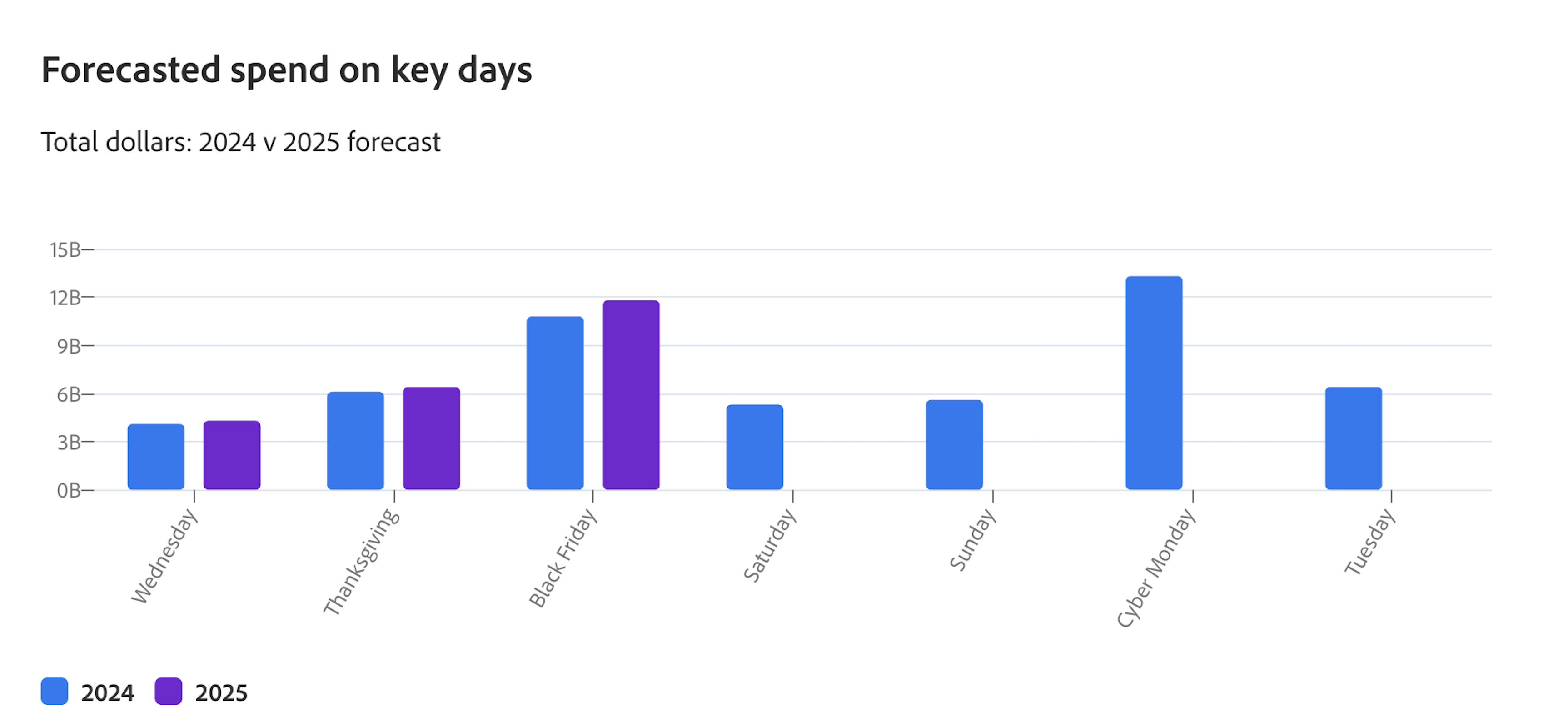
The record-setting Black Friday is also shaping what Adobe describes as a strong "Cyber Week," the five-day span from Thanksgiving through Cyber Monday. The firm projects that Cyber Week will generate about $43.7 billion in online spending, or 17.2% of the season's digital sales, up 6.3% from last year.
Cyber Monday itself is again expected to be the largest online shopping day of the year, with an anticipated $14.2 billion in sales – also up 6.3% from 2024.
The year's digital Black Friday has been driven heavily by aggressive discounting, particularly in electronics. Adobe's data shows electronics registering the steepest price cuts, with markdowns reaching up to 29% off typical list prices, followed by toys at 28%, apparel at 25% and televisions at 24%. Other categories, such as computers, appliances, furniture, and sporting goods, have seen typical discount ranges of roughly 19% to 23%.
Within that promotional environment, several specific products have emerged as breakout sellers. Adobe reports very strong demand for televisions and flagship consumer electronics, including the Nintendo Switch 2 console, Apple's fourth-generation AirPods, and the latest Oura Ring smart ring.
Kitchen gear such as KitchenAid stand mixers and food-storage systems has also moved quickly, alongside big-ticket durables such as washers, dryers, bicycles, and basketball hoops.
One of the most striking shifts beneath the surface of this year's numbers is how shoppers are using artificial intelligence throughout the discovery and decision process. Adobe estimates that AI-driven traffic to retail sites – defined as visits initiated when users click through from AI assistants or chatbots – will grow by about 600% year over year on Black Friday.
In survey responses, nearly half of consumers said they have used or plan to use AI in their holiday shopping, typically to surface deals, compare products, and gather recommendations before committing to a purchase.
Mobile has continued to consolidate its position as the dominant channel for US online retail. Adobe reports that phones and tablets account for 58.6% of Black Friday e-commerce revenue so far, representing $5.1 billion in spending and an 11.3% year-over-year increase in mobile sales. That share is higher than last year's Black Friday, when mobile devices captured about 55% of online purchases, and aligns with Adobe's broader seasonal forecast that mobile will reach a record share of holiday revenue.
Despite the headline growth, Adobe's data sits against a backdrop of uneven confidence. Surveys and store-traffic reports indicate that physical retail visits were softer than many chains anticipated on Black Friday morning, as shoppers weighed inflation, higher borrowing costs, and uncertainty around trade policy and employment. That tension between strong digital numbers and cautious household budgets suggests that some of this year's demand is being pulled forward into deep-discount windows rather than signaling broad, sustained strength in consumer spending.
Over the remainder of the weekend, Adobe expects online shoppers to spend about $5.5 billion on Saturday and $5.9 billion on Sunday, year-over-year gains of 3.8% and 5.4%, respectively, as promotions remain elevated across key categories.
If those projections hold, the holiday period will be defined as much by how people are shopping – on mobile devices, with AI assistance and via installment payments – as by how much they ultimately spend.


