Looking ahead: High-performance electronics have long faced the same Achilles' heel: extreme heat. For engineers designing chips meant to operate in scorching environments – from deep within Earth's crust to the surface of Venus – electronics typically fail when temperatures climb past about 200 degrees Celsius. A new study from the University of Southern California suggests that barrier may finally be coming down.
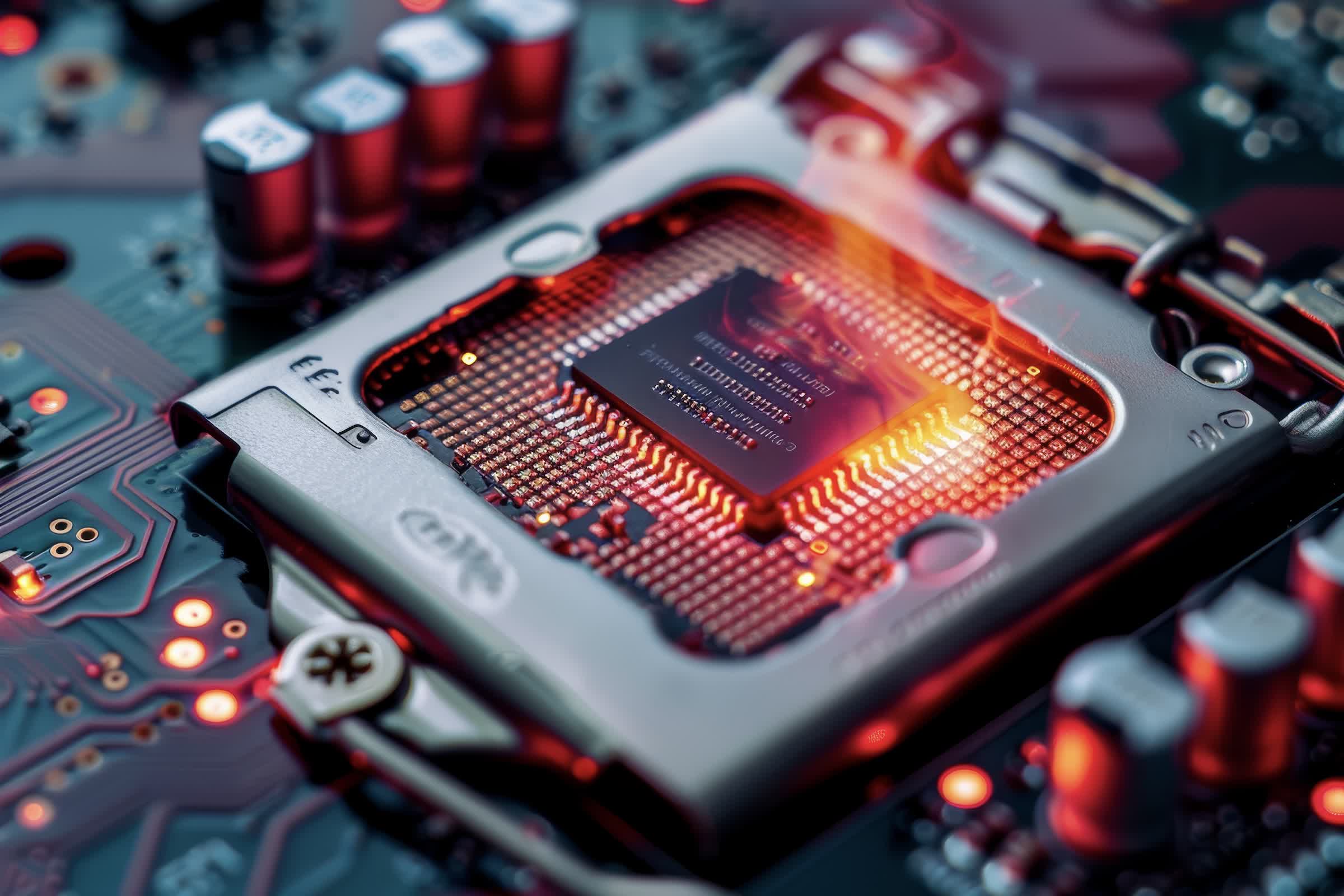
Researchers at USC's Viterbi School of Engineering have demonstrated an electronic memory device that functions far beyond previously known thermal limits. In experiments, the device remained stable at 700 degrees Celsius – hotter than molten lava – without showing signs of degradation.
"You may call it a revolution," said Joshua Yang, Arthur B. Freeman Chair Professor in USC's Ming Hsieh Department of Electrical and Computer Engineering and senior author of the study published in Science. "It is the best high-temperature memory ever demonstrated."
The breakthrough relies on a nanoscale component called a memristor, which can both store and process data. The team's design uses what Yang describes as a "sandwich" of materials: tungsten on top, hafnium oxide in the middle, and a single atomic layer of graphene at the bottom.
Each material plays a distinct role. Tungsten's high melting point provides durability, hafnium oxide offers stability as a ceramic insulator, and graphene's resilience and unique chemical properties prevent the device from short-circuiting under extreme heat.
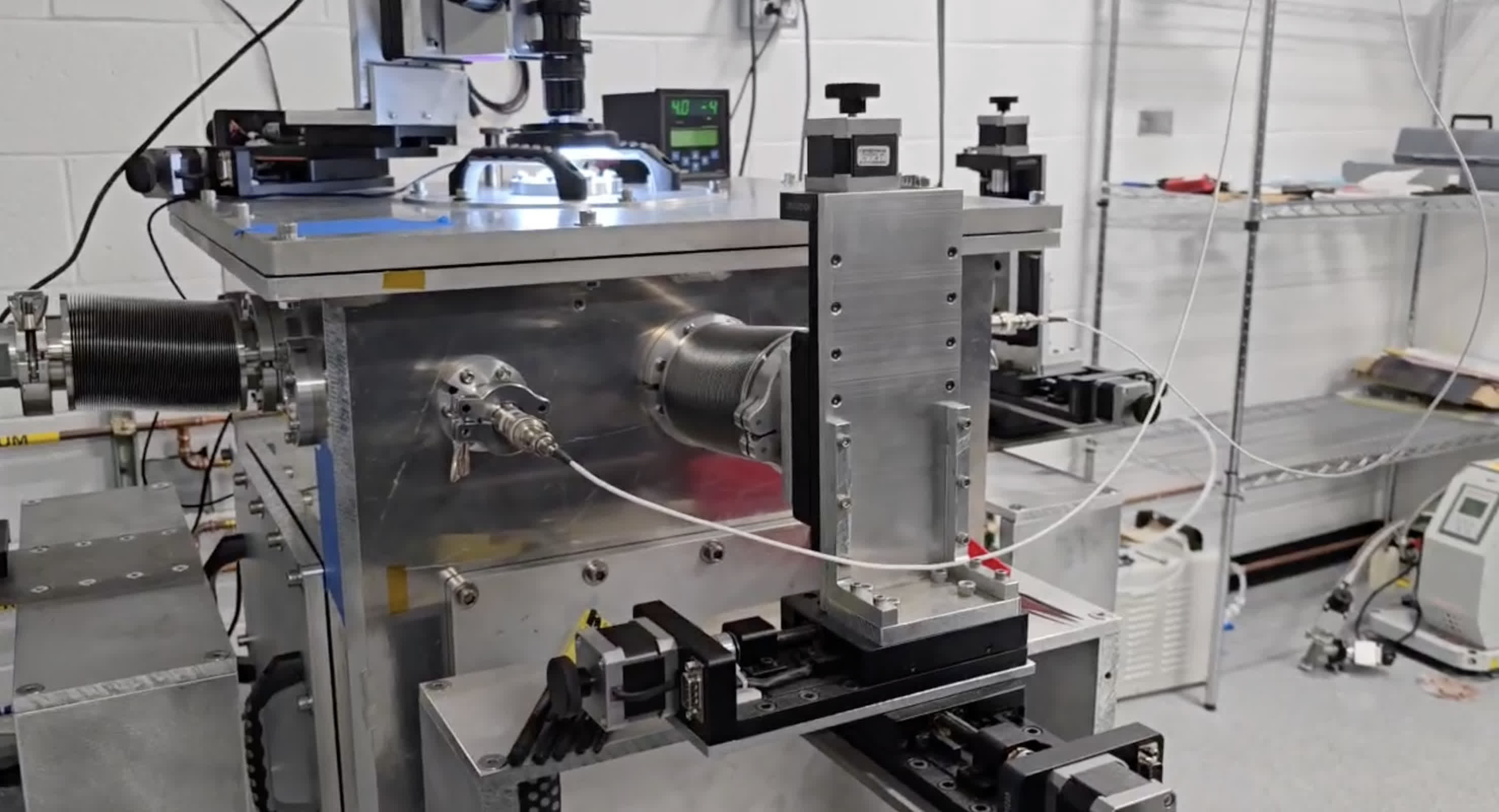
According to lead author Jian Zhao, the device held data for more than 50 hours at 700 degrees Celsius without refresh cycles, tolerated over one billion switching events, and operated on just 1.5 volts at nanosecond-scale speeds. Importantly, the researchers never reached its failure point – the test equipment itself was the limiting factor.
What makes the work especially notable is that the discovery was unintended. "To be honest, it was by accident, as most discoveries are," Yang said. The team had been experimenting with graphene-based designs for a different purpose when they stumbled upon the effect.
Subsequent analysis using advanced microscopy, spectroscopy, and quantum-level simulations revealed why it worked: graphene resists chemical bonding with tungsten, preventing the migration of metal atoms that typically destroy high-temperature electronics.
Yang's group now sees broad implications for the finding. Space exploration agencies have long sought hardware capable of operating above 500 degrees Celsius – the approximate surface temperature of Venus. With their prototype already stable at 700 degrees, the technology could enable planetary probes, geothermal drilling systems, or nuclear reactors to include on-site computing hardware rather than relying on distant control systems.
The work also carries promise for artificial intelligence. Because memristors perform matrix multiplication – the foundation of most AI algorithms – through direct physical processes governed by Ohm's Law, they can execute those operations at much lower power and greater speed than conventional chips. "Over 92% of the computing in AI systems like ChatGPT is nothing but matrix multiplication," Yang said. "This type of device can perform that in the most efficient way, orders of magnitude faster and at lower energy."
Yang has already co-founded a startup, TetraMem, with three of his co-authors, aiming to commercialize memristor-based AI hardware for room-temperature operation. Still, he acknowledges that practical systems are some distance away. "This is the first step," he said. "It's still a long way to go. But logically, you can see: now it makes it possible. The missing component has been made."
Two of the materials, tungsten and hafnium oxide, are already standard within semiconductor fabrication, while industrial production of graphene is advancing through companies such as TSMC and Samsung. The research is part of USC's Center for Neuromorphic Computing under Extreme Environments (CONCRETE), supported by the Air Force Office of Scientific Research and the Air Force Research Laboratory, with additional contributions from collaborators in Japan.
For Yang, the results go far beyond the technical achievement. "Space exploration has never been so real, so close, and at such a large scale," he said. "This paper represents a critical leap into a much larger, more exciting frontier."


