This couple heats their home using a garden shed data center filled with Raspberry Pi boards - saving a fortune

midian182

Posts: 11,628   +176
Staff member
In brief: A couple in the UK has become the first people in the country to heat their home using a small data center in their shed, part of a trial scheme for low-income households to transition to net zero. The system uses clusters of 56 Raspberry Pi boards, and has reduced the home's heating bills to just £40 ($52) per month.
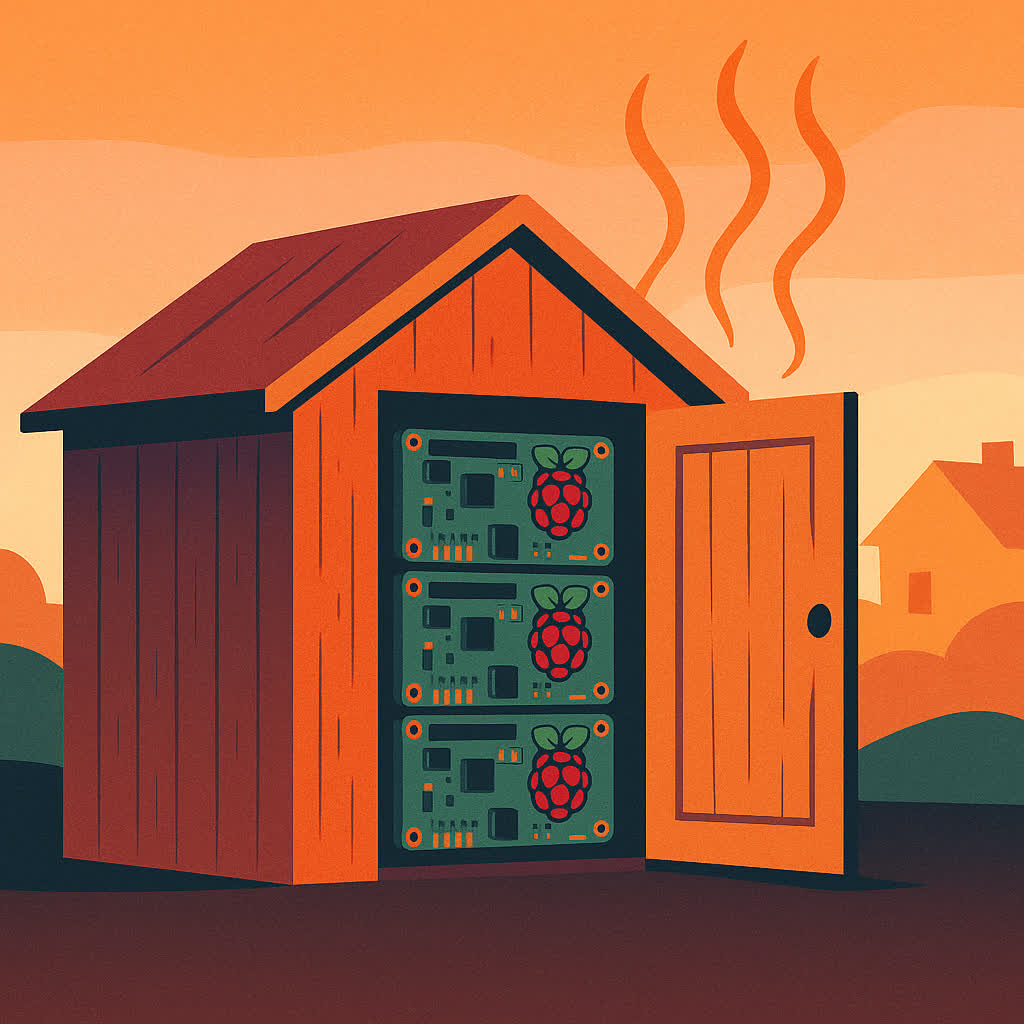
Terrence and Lesley Bridges, an Essex-based couple, have become the first people to use the HeatHub system, reports the BBC.

Developed by Thermify and part of the UK Power Networks' SHIELD project, the shed-based data center isn't designed to run AI workloads – these are Raspberry Pis, not Nvidia GPUs – but it can still be used to run apps or analyze large volumes of data.

Thermify co-founder and CEO Travis Theune says the installation will eventually become part of a remote and distributed data center, one of many locations processing customer data. Clients will pay HeatHub for processing their data – once the pilot phase ends.
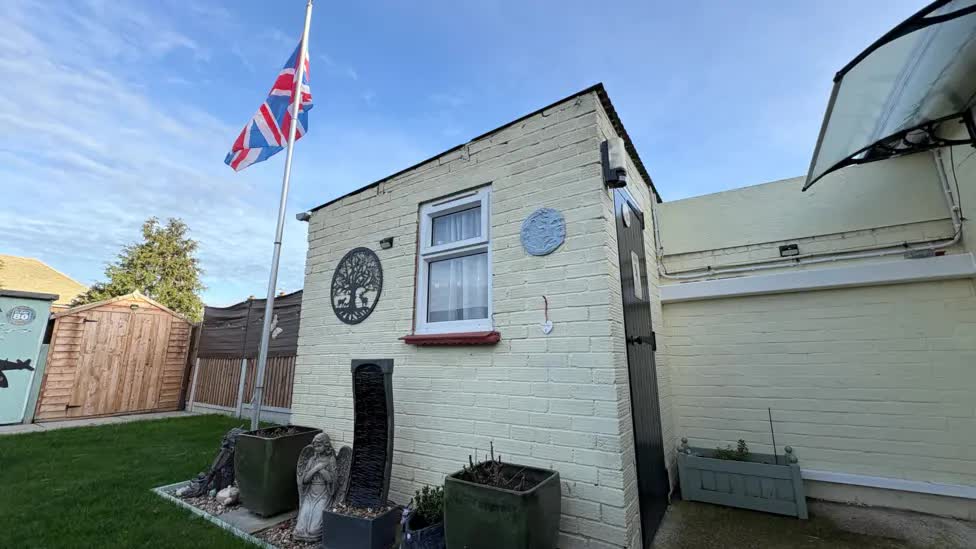
Theune said the system provides both clean and affordable energy. By transferring the heat from the server workloads to the Bridges' hot water system, the couple's energy bills have dropped from £375 ($492) a month down to as low as £40.

The system is especially beneficial for Lesley Bridges, who has spinal stenosis and is in "a lot of pain" when it gets colder.

While it sounds like an enticing way of reducing energy bills, homemade data centers aren't really something a person can safely or cheaply recreate themself. The setup in the trial uses professionally managed servers, proper heat-exchange systems, controlled ventilation, and a business model where the operator, not the homeowner, typically pays for the electricity.

A DIY version means the creator would be paying to run power-hungry computers just to get heat, which could cost far more than it saves. There are also legal, insurance, building permit, and liability issues – if your improvised heat-capture system causes a fire, moisture damage, or equipment failure, you may not be covered.

A major practical concern is electrical load. UK homes typically have a 60 – 100A main fuse. A rack of servers can easily draw several kilowatts continuously, and even a handful of powerful machines can push a home's electrical system close to its limits. Overloading circuits, using inadequate cabling, or running multiple high-load devices on the same ring circuit can lead to overheating, tripped breakers, or, in the worst case, a fire. The trial's setup would have been installed with proper electrical engineering and safety systems, something a DIY approach cannot easily guarantee.

We've seen data-center heat used for practical purposes like this before. In 2023, a washing machine-sized data center was installed at a public swimming pool in the UK. The heat it generated was used to keep the pool at about 86 degrees Fahrenheit for 60% of the time.

Permalink to story:

 
“and a business model where the operator, not the homeowner, typically pays for the electricity.”

So it’s not cheaper because it’s better or more efficient, it’s cheaper because someone else is paying the bills.

Talk about a misleading article title.
So much made up fear mongering at the end of the article.

Next up explain how one shouldn’t DIY regenerative braking into their ICE vehicles. Embarrassing.
Because regenerative breaking is useless in an ICE system?
 
Most UK homes are 100amp @230v, a few kilowatts isn’t anything concerning as long as it’s on its own ring. I easily have an oven, electric hob, gaming PC’s and surround sounds all on at the same time no issue and according to the meter, pulling 6-7 kilowatts.

A few hundred Pi’s wouldn’t be an issue for any standard mains power in the UK, it’ll just need its own ring from the main distribution board.

Moving into the future though with electric cars, heat pumps and solar panels, three phase will need to become more of a thing, it already is in Europe, just not in the UK yet.
 
While my rack peaks at 9.4KW, it typically "idles" between 1.2 to 1.5Kw. for 11 systems and over 200 cores, I'd argue I'm not doing too bad energy wise. Maybe I should try connecting my rack to the furnace, they're both in the garage and my garage isn't Air conditioned. It gets hot as hell in the summer, but I'm wasting electric not trying to recycle all that power. Sure, it costs me about $100US a month to keep it running but I'd argue that's fairly cheap for a hobby.

Also, what the hell are they doing with all those Pi's? Unless you need a minimum viable PC or are experimenting with cluster computing, they're fairly useless. You're also limited by the ARM chips inside them. I have a pi and it's more a novelty than anything.
 
I would gladly lease out space in my basement with the HVAC system to have my heating covered. Right now I'm just setting natural gas on fire and I'd prefer that it comes from something actually useful instead of burning dinos.
 
I have never spent a cent on heating and haven't had a positive electricity bill in 4 years. Amazing what solar and a battery can do for you.
 
I would gladly lease out space in my basement with the HVAC system to have my heating covered. Right now I'm just setting natural gas on fire and I'd prefer that it comes from something actually useful instead of burning dinos.

Most oil reserves were formed between 65 and 252 million years ago. While this does overlap with the ‘dinosaur times’, oil is a marine sediment made of the remains of algae and plankton.

https://www.sciencefocus.com/planet-earth/dinosaurs-in-fossil-fuel
 
I was under the impression that gas heating was more efficient than electric, how is heat as a byproduct more efficient? And good lord, $500/month? That is absurd... My winter gas is $70/month and we get well below freezing... Y'all should revolt, lol
 
And good lord, $500/month? That is absurd... My winter gas is $70/month and we get well below freezing... Y'all should revolt, lol
We‘re British not French, the younger generations are kind of revolting though, less and less go to work and the ones that do, it’s getting rare to find a young person willing to work for free, out-of-hours and generally try particularly hard.

The younger generations have been told to not buy cars, they’re bad and expensive, you will never own your own home, you’ll never retire but if you somehow manage to retire, your pension won’t cover your rent so it’s not worth retiring anyway.

If you go looking for the UK’s unemployment rates, they’re basically lies at this point, the government has started “re-categorising” people, if you don’t have a job and aren’t looking for one, you’re now “economically inactive” NOT “unemployed”, theres a few different categories they’ve come up with to try and lower the unemployment rate and make it look better than it is.
 
This has got to be one of the most nonsensical things I have heard in a while. Almost like solar roadways or cycle paths.

In some places there are already issues with increased power usage because of electric vehicle charging so adding more constant loads definitely seems like a good idea.

Who is going to maintain the servers? Yes I know it will be the operator but will they just have someone they send round to everyone's house? Seems a lot more work than just dealing with a datacentre and likely to bring about lots of issues because everyone's system will be somewhat unique.

Do you actually have any control over your heating? The operator will want it running constantly, even in the summer, so is there controls in place to let you choose how much of the heat makes it into the house? What if the operator doesn't have anyone using the server at that moment in time? Will they run a dummy workload just to heat your house or will they just let them idle to save money?

Then there is the obvious issue of internet connection speed. A lot of places in the UK don't have fast internet, which could limit how useful the servers are. It could also put more load on the towns internet making it slower for everyone else. Will the shed data centre have its own internet connection or will it just use the homeowners?

There is a reason datacentres are generally large and in locations with good access to power and fast internet connection speeds. Distributing a data centre in tiny pieces through residential areas does not seem like a good idea. It would make far more sense for a data centre to partner with a factory or similar for the factory to reuse the waste heat.
 
The whole point of a trial is to learn and make improvements. Here we have a low-income household able to benefit from someone else footing the bill and managing all the logistics involved. Seems like a start in the right direction.

Also, that's not to say DIY folks can't do it - though given how everybody wants to sue someone else for something they did - and how all these tickertoks and youtube shorters make it seem like anything is possible - you almost have to put a disclaimer in these articles - otherwise there wouldn't be a subreddit celebrating darwin providing countless minutes of entertainment.

But then again, I tend to be a glass half-full type of person...
 
Because regenerative breaking is useless in an ICE system?
Creating a one off DIY regenerative braking system is going to cost much more than the already expensive mass produced by car manufacturing experts regenerative braking systems.

And for what, to charge the battery that starts your car? A $100 alternator can do that.

So yes, a DIY regenerative braking system for a gas vehicle is unnecessarily complicated and expensive, as well as having other potential issues. BUT it's also a red herring against regenerative braking because it is a totally different use case much like @midian182 attempts to equate a DIY server farm water heater and what Thermify is doing in the space.
 
I was under the impression that gas heating was more efficient than electric, how is heat as a byproduct more efficient? And good lord, $500/month? That is absurd... My winter gas is $70/month and we get well below freezing... Y'all should revolt, lol

Came here looking for a comment like this one, thanks for saving me having to type it myself.
 
Back