WTF?! The brief life of a small experimental game has become a case study in how quickly ideas can be copied, and how that speed is reshaping the working reality for independent developers. A tiny prototype from developer Freya Holmér illustrates, in real time, what happens when a novel concept hits the internet before its creator is ready to release it.
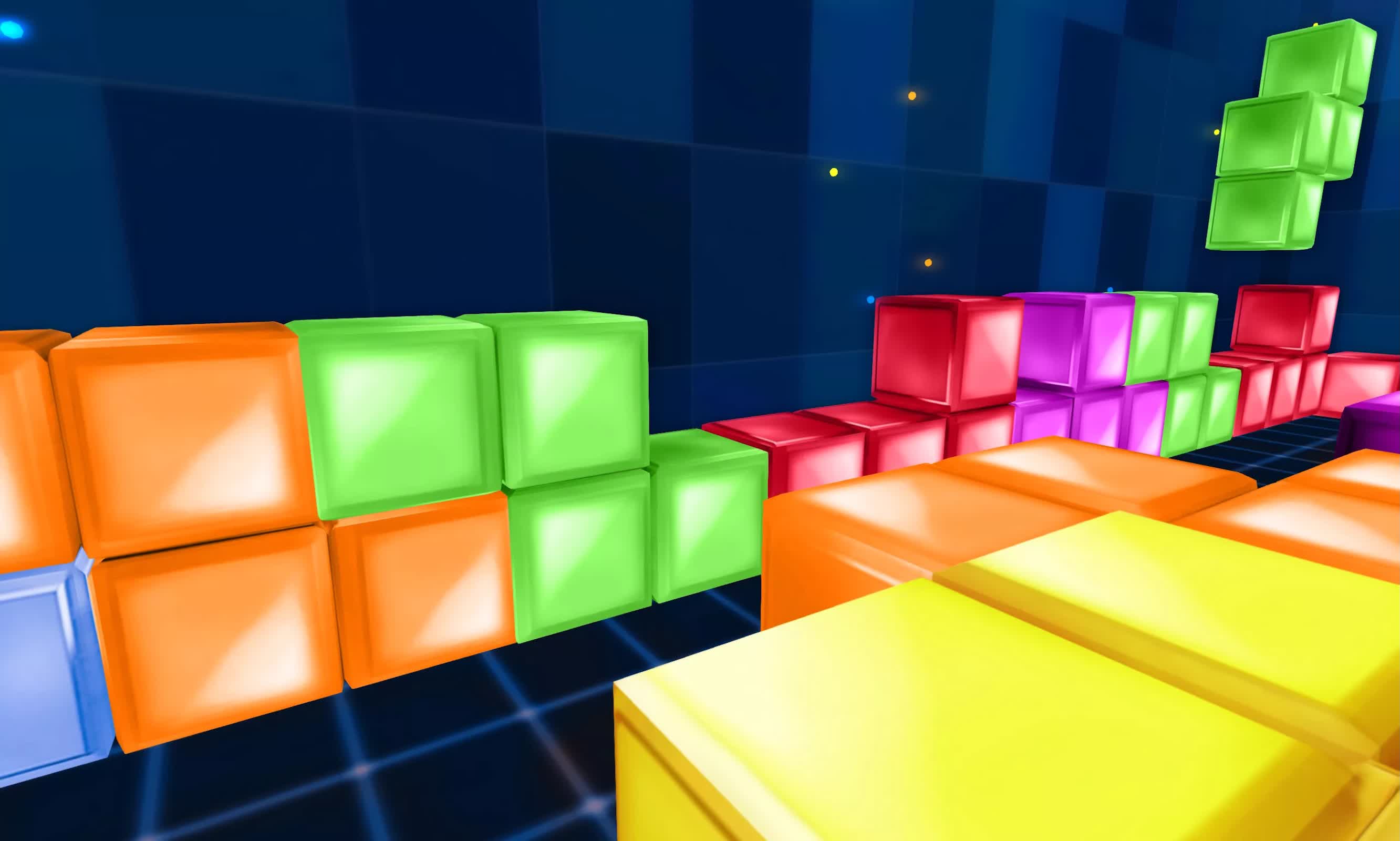
Earlier this week, game developer and technical artist Freya Holmér shared a short clip of a side project she had been working on: a prototype that twists the familiar Tetris formula. In her version, whenever a piece locks into place, the entire playfield rotates 90 degrees in the direction where the blocks land.
Holmér described the project as something she had put together while feeling stressed, wondering aloud whether it was "anything." The response on social platforms suggested it most definitely was. Her video on X quickly surpassed two million views, while on Bluesky, users were already saying they wanted to lose hours to the idea. Prominent figures in game development joined the chorus, calling the concept visually striking and immediately engaging.
– Freya Holmér (@FreyaHolmer) March 17, 2026
The attention was followed almost immediately by imitation. Less than a day after Holmér's clip began circulating, another developer released what she bluntly described as a "bad clone" of her concept.
Commenting on Bluesky, Holmér wrote that seeing someone "vibecode" a copy so quickly made her less inclined to share work in progress, describing "slop ghouls around every corner, AI or otherwise." The phrase captured a growing concern among creators: generative tools and rapid prototyping environments have lowered the cost of cloning to nearly zero, leaving the original author with little practical recourse.
Holmér told PC Gamer that she confirmed one of the replies to her original X clip came from a user who described themselves as an "efficient novelty-maxing generalist" and claimed the idea could be turned into a full game within a day.
Roughly 4.5 hours after her post, that same account shared its own rotating Tetris video, which the creator said had been built with AI. In the clip, the developer matter-of-factly explains that they saw someone present a rotating Tetris design and, "knowing how AI works," assumed the tools would "do something really interesting."
Derivative games are hardly new to the industry. Once a novel title starts trending, mobile storefronts and marketplaces often see a wave of thinly disguised copies seeking to capitalize on the original's visibility.
been feeling kinda stressed lately so I made a little prototype is this anything
– Freya Holmér (@freya.bsky.social) March 16, 2026 at 7:34 PM
[image or embed]
Over the past several years, hits such as Lethal Company, Among Us, Wordle, and Unpacking have all spawned lookalike titles that drew criticism for closely mirroring the mechanics and presentation of the originals. What Holmér highlights is not the existence of copying, but the speed at which it happens. In remarks to PC Gamer, she argued that AI-assisted workflows compress the timeline between an idea appearing in public and the arrival of lookalikes attempting to monetize it.
Holmér added that she believes in putting "intent and humanity" into creative work and described it as "genuinely depressing" to watch others rapidly appropriate an idea and release their versions while the originator is still exploring the concept.
She compared the experience to posting a sketch and having "20 people show up to finish the drawing for you and then boast about it online." The dynamic, she suggested, transforms what was once an invitation to share process and experimentation into a risk: early visibility now primarily benefits competitors.
Holmér said that seeing clones so quickly is discouraging, but also that a degree of spite can be motivating. Where she would typically prefer to take time to "explore the possibility space" of a design before finalizing key decisions, the pace of AI-accelerated imitators is pushing her to move faster and more defensively. "It slightly increases my motivation only because I want to prove them wrong," she told PC Gamer, adding that it also "severely increases my stress and feeling pressured to get my version out as soon as possible."
someone already vibecoded (a bad clone of) this and shared it online because we live in the worst timeline y'know it kinda disincentivizes me from sharing progress when there are slop ghouls around every corner, AI or otherwise
– Freya Holmér (@freya.bsky.social) March 18, 2026 at 10:29 AM
When Holmér first publicly shared the prototype, major design elements were still undecided, including what would count as winning or losing in a game where the board itself keeps turning. Those open questions are now competing with a more urgent task: establishing a formal presence for the project before imitators define it for her. She has begun setting up a Steam page to assert ownership of the concept while continuing to refine the mechanics.
Despite the frustration, Holmér remains confident that there is still a meaningful gap between quickly assembled clones and the deeper work of creating something distinctive. In a Bluesky post, she suggested that many of the people rushing to replicate her idea lack the ability to advance it in any meaningful way, writing that they are "incapable of original thought and don't know how to elevate this concept beyond what they've already seen."
This indie game idea went viral – then AI-built clones showed up within hours


