
WTF?! While the latest AAA first-person shooters usually require over 100GB of storage space, and even retro-style indie titles consume a gigabyte or two, a solo developer recently released a project that resembles the original Quake but could comfortably fit on an NES cartridge. The creator built most of the development tools himself, including the programming language.
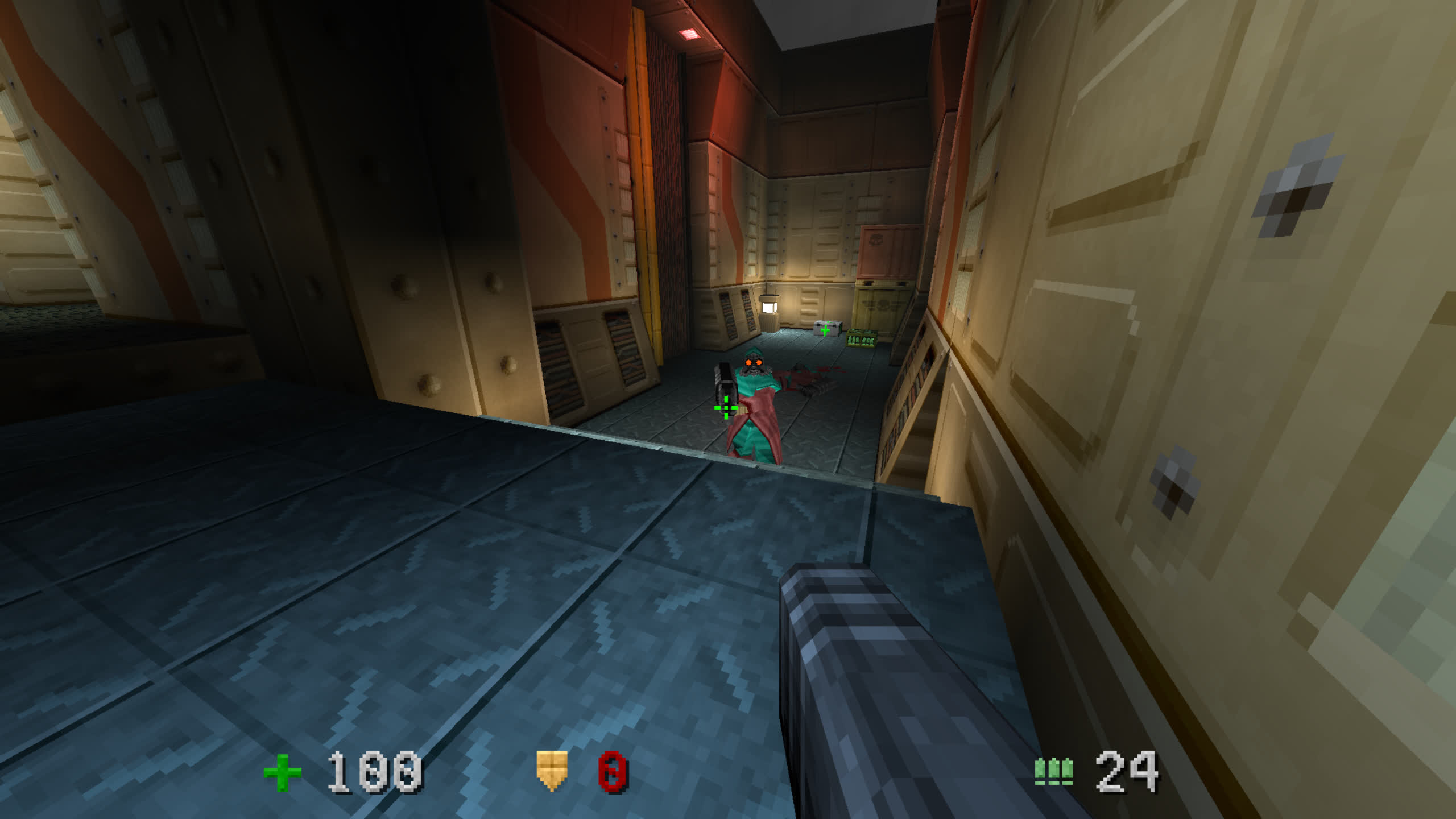
At first glance, QUOD is a typical Quake-inspired boomer shooter. Its four levels exhibit low-poly graphics from the mid-1990s, a handful of enemy and weapon types, id Software-style level design, and moody lighting. However, the entire game is contained within a single 64KB executable. The uncompressed version expands to a whopping 102KB.
For comparison, the shareware version of Quake, which includes seven levels, is approximately 8MB without CD audio. Even uncompressed, QUOD is smaller than the original The Legend of Zelda, which shipped on a 128KB NES cartridge.
However, what might be more impressive than an homage to Quake's shareware episode, which weighs in at approximately one percent of its file size, is the fact that its developer, Daivuk, built his own development pipeline for the project.
QUOD was inspired by demoscene projects that often fit entire games into 64KB or similar file sizes. Daivuk initially conceived his attempt around a decade ago but performed most of the work within the past year.
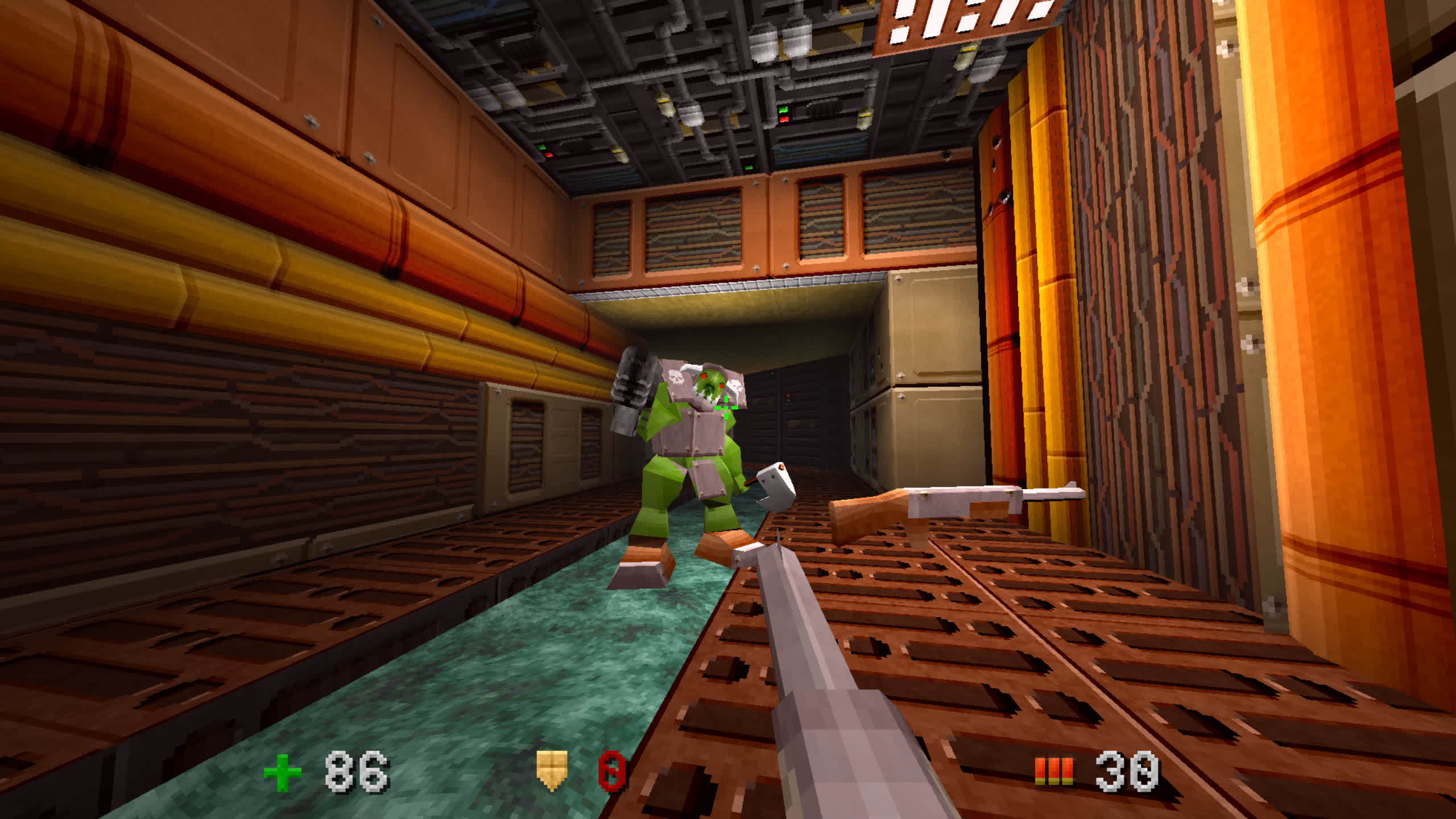
One of QUOD's primary tricks for conserving data is to store instructions for rendering textures within the code instead of storing the textures themselves. Daivuk accomplished this by building his own Photoshop-like image editing program, which he used to assemble textures from layers before converting the process into code instructions. This even allows for animated wall and water textures.
Daivuk assembled QUOD's audio and music with a similar method. He also built the game's lighting system, which achieves global illumination by loading light probes with each level instead of storing them as static data.
After coding QUOD in C++, Daivuk decided that the programming language was too wasteful, so he invented a new programming language, called QUOD Code, in which he re-coded the game within a virtual machine. The extra step saved enough precious kilobytes to fit an extra level within Daivuk's self-imposed 64KB limit.
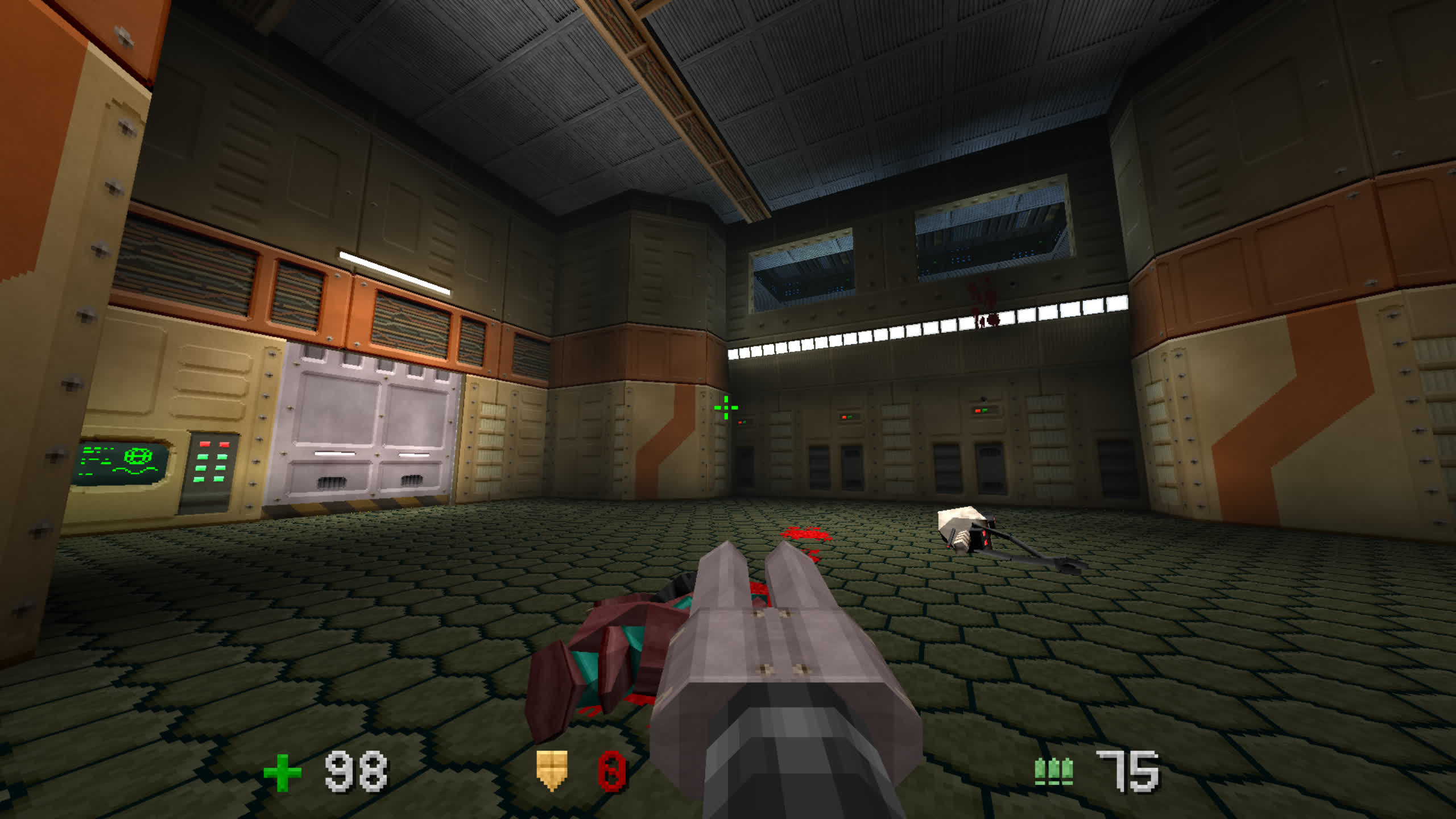
QUOD is currently available on itch.io under a pay-what-you-want system with no minimum donation. Its system requirements are relatively high compared to its original inspiration, mandating at least an Nvidia GeForce GTX 770 and 8GB of system RAM.
Despite his success, Daivuk already sees room for improvement. For his next project, he aims to implement more efficient animated textures, audio, and lighting.


