Looking ahead: Swiss researchers are exploring the frontier of computing by creating processors from living cells, a field known as biocomputing. Their work, though inspired by concepts often seen in science fiction, relies on precise laboratory techniques and targets practical, real-world applications.
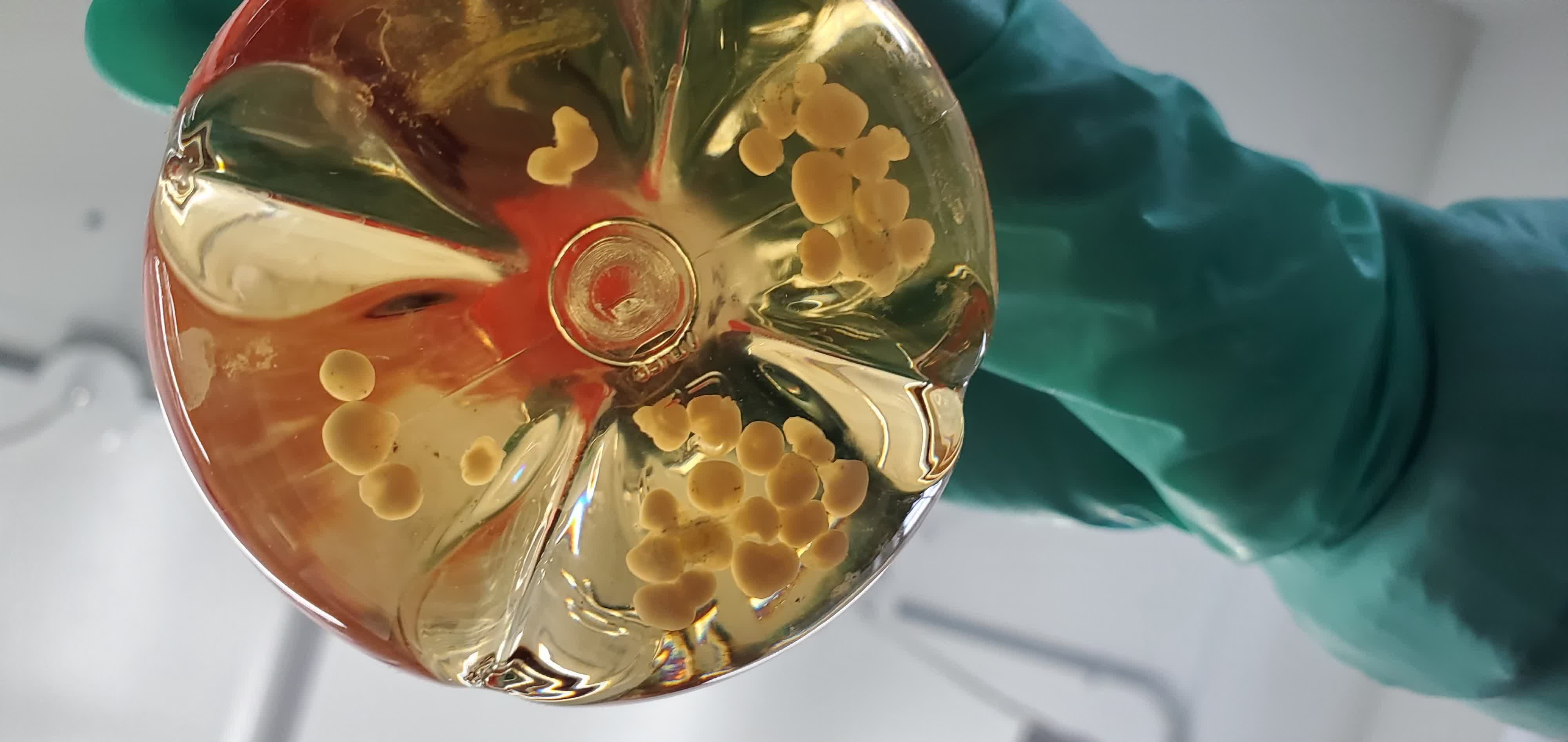
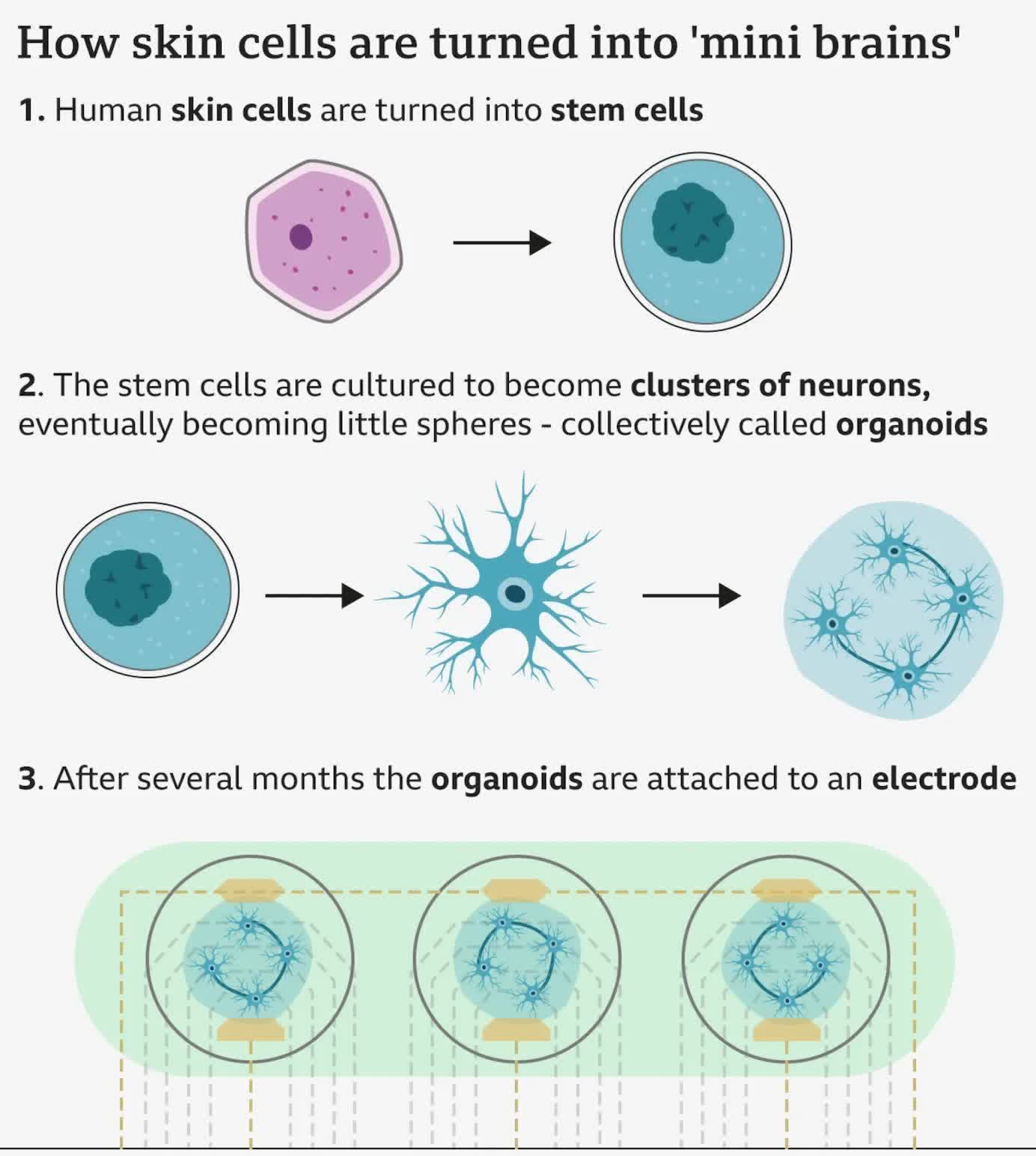
At the FinalSpark laboratory, scientists are developing what they call "wetware" – computers built from networks of lab-grown neurons. The team starts with stem cells derived from human skin, purchased from a clinic in Japan. Donors remain anonymous, though volunteer demand is strong. Co-founder Fred Jordan told the BBC that the team uses only cells from official suppliers, as quality directly affects experimental outcomes.
Researchers culture the stem cells into clusters of neurons and supporting cells, called organoids. These miniature brain-like structures, visible as small white spheres in a lab dish, share the same cellular building blocks as the human brain but lack its complexity. Over several months, the organoids mature until researchers can connect them to electrodes. At that point, they attempt to send and receive electrical signals between the living neural tissue and a conventional computer system.
When researchers send a signal from a keyboard, the responsive organoids generate activity that appears on a moving graph, similar to an EEG readout. Sometimes the signals stop unexpectedly, followed by short bursts of activity.
"There's a lot we still don't understand about what the organoids do and why," Jordan said, joking that he may have "annoyed them."
This electrical stimulation represents an early step toward the ultimate goal: training the neurons to process input and produce output in ways that parallel machine learning.
Maintaining biocomputers is significantly more difficult than running silicon-based hardware. Unlike the human brain, organoids contain no blood vessels, which limits nutrient supply and longevity.
"We don't yet know how to make them properly," said Simon Schultz, professor of Neurotechnology and director of the Center for Neurotechnology at Imperial College London.
Extending lifespan is a central challenge; at present, FinalSpark's organoids survive for up to four months. Jordan described how, before an organoid dies, the team sometimes observes intense spikes of electrical activity, a phenomenon recorded in roughly 1,000 to 2,000 cases over the past five years.
Other research groups are exploring wetware systems for different goals. In 2022, Australian company Cortical Labs reported that its cultured neurons had learned to play the arcade game Pong. Researchers at Johns Hopkins University study laboratory-grown mini-brains to help develop treatments for neurological disorders such as Alzheimer's and autism. Lead researcher Lena Smirnova sees biocomputing as a complement to silicon, not a replacement, offering the added benefits of improved disease modeling and reduced reliance on animal testing.
While advocates acknowledge the technology will not match silicon chips for speed or scale, they expect specialized uses to emerge. Schultz predicts biocomputing will occupy "a niche" rather than compete broadly with traditional processors. Jordan's fascination with the work remains tied to its origins in fiction.
"I've always been a fan of science fiction," he said. "When you have a movie or a book, I always felt a bit sad because my life was not like in the book. Now I feel like I'm in the book, writing the book."
Image credit: NIAID, FinalSpark
Tiny lab-grown brains could help build the next generation of computers


.jpg)