Universities are rethinking computer science curriculum in response to AI tools

Skye Jacobs

Posts: 1,991   +58
Staff
The big picture: The rapid rise of generative artificial intelligence is prompting a fundamental rethinking of computer science education in the US. As AI-powered tools become increasingly proficient at writing code and answering complex questions with human-like fluency, educators and students alike are grappling with which skills will matter most in the years ahead.

Generative AI is making its presence felt across academia, but its impact is most pronounced in computer science. The introduction of AI assistants by major tech companies and startups has accelerated this shift, with some industry leaders predicting that AI will soon rival the abilities of mid-level software engineers.

Universities are now reassessing their curricula. Some educators are considering moving away from an emphasis on mastering programming languages, instead exploring hybrid courses that blend computing skills with other disciplines. The goal is to prepare students for a future in which AI is deeply embedded across all professions.

This sense of urgency is heightened by a tightening tech job market. Graduates who once counted on abundant opportunities now face stiffer competition, as companies automate more entry-level coding tasks with AI.

Some experts suggest that computer science may increasingly take on the qualities of a liberal arts degree, placing greater value on critical thinking and communication skills alongside technical expertise. Mary Lou Maher, a computer scientist and director at the Computing Research Association, told The New York Times that the future of computer science education is likely to shift away from coding and instead emphasize computational thinking and AI literacy.
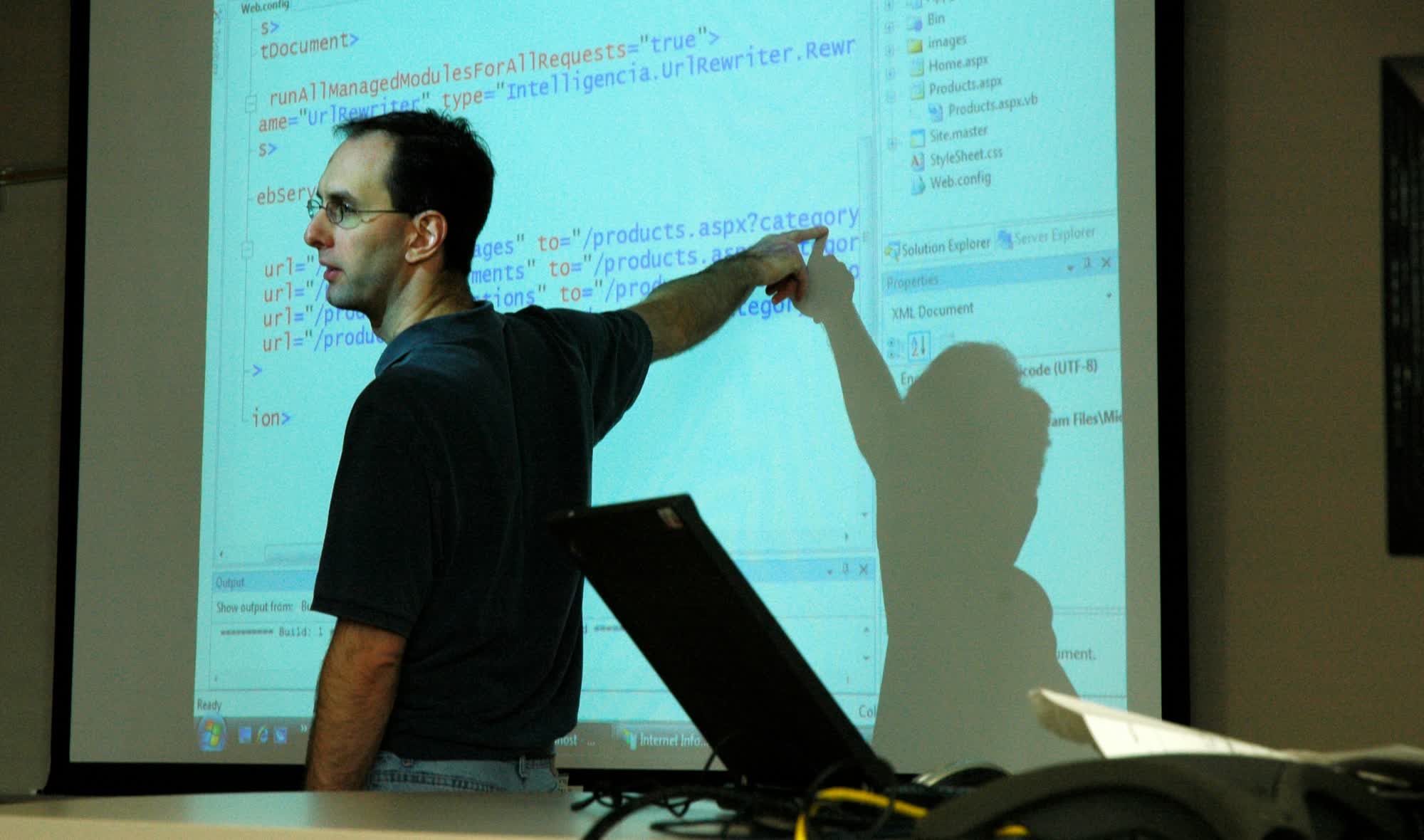
In response, the National Science Foundation has launched an initiative called Level Up AI, led by the Computing Research Association in partnership with New Mexico State University. The 18-month project brings together educators and researchers to define the essentials of AI education and share best practices. "A sense of urgency that we need a lot more computing students – and more people – who know about AI in the work force," is driving the project, Maher said.

Carnegie Mellon University, a longtime leader in computer science, is among the institutions reimagining their approach. This summer, faculty in its computer science department will meet to consider how best to adapt to the new landscape.

AI has "really shaken computer science education," said Thomas Cortina, a professor and associate dean for undergraduate programs. He supports a curriculum that combines foundational computing and AI principles with hands-on experience using new tools. "We think that's where it's going," he added. "But do we need a more profound change in the curriculum?"

At Carnegie Mellon, professors decide individually whether to allow AI in their classes. Last year, the university approved the use of AI tools in introductory courses. Dr. Cortina noted that many students initially saw AI as a "magic bullet" for completing programming assignments, but often "didn't understand half of what the code was." This realization, he said, has led many to refocus on learning to write and debug code themselves. "The students are resetting."

Across the country, students are adapting to these new realities with caution. Many use AI tools to build prototypes, check for errors, or answer technical questions, but worry that overreliance could dull their skills.

The job search has also become more challenging. Connor Drake, a senior at the University of North Carolina at Charlotte, said he felt lucky to get an interview after submitting 30 applications, eventually landing a cybersecurity internship at Duke Energy. "A computer science degree used to be a golden ticket to the promised land of jobs," Drake said. "That's no longer the case."

To stay competitive, Drake has broadened his studies with a minor in political science focused on security and intelligence, and he leads a university cybersecurity club. Like many of his peers, he's adjusting to a tougher job market. According to CompTIA, job listings for workers with two years of experience or less have fallen 65 percent over the past three years, while postings for all experience levels are down 58 percent.

Despite the uncertainty, many experts believe the market for AI-assisted software will continue to grow. Each wave of technological innovation – from personal computers to smartphones – has historically increased demand for software and programmers. This time, AI tools may enable people in many fields to build their own programs using industry-specific data.

"The growth in software engineering jobs may decline, but the total number of people involved in programming will increase," predicted Alex Aiken, a computer science professor at Stanford.

Permalink to story:

 
"the qualities of a liberal arts degree, placing greater value on critical thinking"

giphy.gif
 
Dr. Cortina noted that many students initially saw AI as a "magic bullet" for completing programming assignments, but often "didn't understand half of what the code was."

LOL This! Applies to AI across all disciplines.

AI is like having an intern work for you. Sure it can do work but it also can't be trusted alone with anything but the most basic of tasks (and sometimes not even those).

But students do assume it will magically do the work - which if it actually did would make said student have no skill to get hired.
 
I see this as a good thing. When I finished my Bachelor's and Master's almost a decade ago in an accelerated 5 year program in computer science (double majored in math as an undergrad and got a minor in physics), several items were not included in the curriculum that really needed to be.

For example, the software engineering class didn't even touch on source control or testing, and it irked me to no end that CS1 and 2 were really just C++ programming 1 and 2 - computer science isn't (just) programming! There were plenty of classes that taught more important concepts, like data structures, algorithms, and principles of programming languages, but they needed to have a lot more of that.

So much of good software design (if we just stay in the realm of programming) is information management, organization, choosing the right tool (I.e. data structure) for the job, and there wasn't nearly enough of that. I specialized in data science in both math and comp sci programs, and fortunately those classes were quite informative as the discipline requires deep thought, not just getting some code to work.

Perhaps I'm placing too high of an expectation on universities to embed that deep best-practice expertise into their students, but focusing less on syntax and programming means more room for the higher level thinking, in my mind. The risk is making sure the AI doesn't become too much of a crutch that the higher level thinking can't be translated into real implementations.
 
Critical thinking has been out of vogue for over a decade. One of the courses that help me the most with work, social, and critical thinking was an elective class I took as a blow off-Logic. Not computer logic...just plain logic. It was amazing how looking at problems and issue change through that lens. Of course, my programming courses were in FORTRAN, and I typed my papers using Jane on my C-128. Not sure if anyone still bothers with it.

Feelings seem to be the guiding principal of the current generation. Tic Toc their primary information source. It will be interesting to see how things go when AI becomes their crutch.
 
LOL This! Applies to AI across all disciplines.

AI is like having an intern work for you. Sure it can do work but it also can't be trusted alone with anything but the most basic of tasks (and sometimes not even those).

But students do assume it will magically do the work - which if it actually did would make said student have no skill to get hired.

And, the more information you feed it the more confused it becomes and starts forgetting earlier instructions.

The only benefit to AI is being able to yell and berate it without HR breathing down your neck.
 
Given that LLM's only work by copying what somebody else has already sweated over, what happens when the real people who create all the code that these LLM's steal lose their jobs?
I wonder when/if the world is ever going to wake up to these AI's and the damage they will do? Huge swathes of unemployment and social unrest while a tiny set of corporations like Google and Meta make huge amounts of money at everybody else's expense? Do we really want to put more money in the pockets of morally-bankrupt human-horror-shows like Zuck, Bezos, Musk and Cook?
 
Given that LLM's only work by copying what somebody else has already sweated over, what happens when the real people who create all the code that these LLM's steal lose their jobs?
I wonder when/if the world is ever going to wake up to these AI's and the damage they will do? Huge swathes of unemployment and social unrest while a tiny set of corporations like Google and Meta make huge amounts of money at everybody else's expense? Do we really want to put more money in the pockets of morally-bankrupt human-horror-shows like Zuck, Bezos, Musk and Cook?

Big corps know a large percentage of the society will never stop throwing money at big corps. There will always be a large portion of the population who want quick answers, instant gratification, with no effort.

The best anyone can do is decide for him/herself what's right, what's necessary, what gets his/her money.

Decrying big corps is no more useful than shouting at clouds, though it's still practiced, it's akin to therapy perhaps.
 
We’re watching the academic version of “adapt or die.” The schools that figure out how to blend AI fluency with actual problem-solving and domain knowledge are going to produce some seriously formidable grads. Everyone else might just be churning out prompt engineers with trust issues.
 
I see this as a good thing. When I finished my Bachelor's and Master's almost a decade ago in an accelerated 5 year program in computer science (double majored in math as an undergrad and got a minor in physics), several items were not included in the curriculum that really needed to be.

For example, the software engineering class didn't even touch on source control or testing, and it irked me to no end that CS1 and 2 were really just C++ programming 1 and 2 - computer science isn't (just) programming! There were plenty of classes that taught more important concepts, like data structures, algorithms, and principles of programming languages, but they needed to have a lot more of that.

So much of good software design (if we just stay in the realm of programming) is information management, organization, choosing the right tool (I.e. data structure) for the job, and there wasn't nearly enough of that. I specialized in data science in both math and comp sci programs, and fortunately those classes were quite informative as the discipline requires deep thought, not just getting some code to work.

Perhaps I'm placing too high of an expectation on universities to embed that deep best-practice expertise into their students, but focusing less on syntax and programming means more room for the higher level thinking, in my mind. The risk is making sure the AI doesn't become too much of a crutch that the higher level thinking can't be translated into real implementations.

Top-notch post! When I finished the article this is what I was immediately thinking. In reality, coding is a task best left to machines IMO. The human element is the validation, tweaking and repair of the AI generated code.
 
Top-notch post! When I finished the article this is what I was immediately thinking. In reality, coding is a task best left to machines IMO. The human element is the validation, tweaking and repair of the AI generated code.

The same could be said for painting (art work), but then what would artists do? Coding isn't simply a mindless task, it's art in its own right. Coders use their brains to solve puzzles and their creativity to create something not only functional but often beautiful.
 
Study c++ and python and whatever else, AI will take 50 years to be able to write code and people will go bust. By now all major software would have been revamped if AI could write code well. It can't.
 
With 25+years of experience as a software engineer, IMO, programming takes a lot more than just being able to write code. To be a good programmer requires critical thinking about how to structure code efficiently, for instance, one of my general rules is if you are going to use the same code more than once, make a function out of it that can be reused without having to re-write the code for each instance where it is needed. And that's only one aspect. Writing good code also requires, in many cases, domain knowledge. For instance, if the code is intended to solve a physics problem, then physics knowledge is essential. Image processing - image processing knowledge is essential. An application for any specialized area requires domain knowledge of that specialized area.

As it stands now, AI is just not up to the task and just because it runs on a machine does not necessarily guarantee success. People that are not software engineers seem to think that some software is going to be able to write more software that can do what they want it to do. Maybe this will happen if they can adequately define the problem to be solved. But without a first-class definition of the problem to be solved, well, garbage in - garbage out.

IMO, in its present state, AI is a FAD, a highly generalized solution in search of a problem, and unfortunately, as I see it, it is just like greed. People want everything without expending any effort. That just isn't going to happen.
 
If you do not understand the fundamentals of programming and debugging then how can you possibly understand anything or integrate anything that the AI pumps out?
 
A Computer Science degree has always been a joke, not a "golden ticket". Nothing they teach you in college is applicable to the real world of computing. We interview fresh grads regularly, most of them can't tell you which programming language they wrote their capstone project in, or what operating system they developed it on. They never heard of a "front end", "back end", and none of them know what a "server" is despite using PuTTY every day in class (ask them what Putty is and what it does if you want a real laugh).

The scam is that kids are getting bilked out of their tuition money to learn absolutely nothing, from professors who likely still write Perl, and are getting told their skills are "valuable" when in reality these kids are dead weight on every IT and Tech team in every industry for the first 2 years of their employment.
 
Given that LLM's only work by copying what somebody else has already sweated over, what happens when the real people who create all the code that these LLM's steal lose their jobs?
I wonder when/if the world is ever going to wake up to these AI's and the damage they will do? Huge swathes of unemployment and social unrest while a tiny set of corporations like Google and Meta make huge amounts of money at everybody else's expense? Do we really want to put more money in the pockets of morally-bankrupt human-horror-shows like Zuck, Bezos, Musk and Cook?

It’s valid to question the long term impacts of AI. But a few important distinctions often get lost in these conversations.

First, AI doesn't create in any true sense. It doesn’t think, feel, or imagine. It doesn’t have vision or purpose. What it does is remix patterns it's seen before, and while that can be useful, it’s a far cry from the kind of original thinking, intuition, and ingenuity that only comes from the human mind. Creativity is a fundamentally human trait. AI can assist, but it can’t replace the spark that drives real innovation, art, or problem solving.

Second, this idea that LLMs “steal” from creators misunderstands how they work. They don’t memorize and spit back code, they learn general patterns from publicly available sources, much like developers do when reading docs, browsing Stack Overflow, or studying open source projects. Sure, we need clear rules around data usage and credit.....but calling it theft oversimplifies a much more complex picture.

And that brings us to a key point.....companies need to understand the line between creative work and repetitive, mundane tasks. AI has real value when it's used to automate grunt work, boilerplate code, documentation, testing, etc. freeing up human minds to focus on strategy, vision, and innovation. But if businesses start using AI to replace their creative teams, they're not just making a moral mistake.....they're making a strategic one. Because without real human input, what they’ll end up with is a soulless product, indistinguishable from the noise.

As for the fear that AI will cause massive unemployment while companies like Meta, Google, or Amazon profit, that depends on how we implement the technology. The solution isn’t to halt AI.... it’s to build frameworks that protect workers, incentivize creativity, and keep access to AI open and democratic.

The future isn’t man versus machine, it’s man with machine. But only if we stay clear eyed about where real value comes from ...... human creativity.
 
Limited and incomplete solutions on the web lead to incomplete and non-working code in LLM's. The LLM's look for verbal and other symbolic patterns among all related subjects and then create a pattern-matched response. That is why LLM's create fake legal cases and then argue to conclusions based on the given facts and the desired outcome. It's actually the pattern of the way lawyers work, especially government lawyers opposing aggrieved parties in civil-rights cases. The lawyers usually lie about or misrepresent the law, but they usually cite existing cases. LLM's skip that triviality and create anything that will match the usual pattern.

I've tried several times to see what LLM's could produce in code to create a JavaScript program (with HTML and CSS) to create a word processor that creates legal pleadings. The problem is creating a function that will recognize when the writing area of one page is filled and then start a new page. There is no JavaScript event for when the next character entry or pasted content will exceed the given height limits of a text box or editable div.

Some solutions on the web have suggested word counts, but virtually no writing, especially legal writing, has a set number of words per page.

Other solutions have suggested constantly checking the height of a given writing area after any entry to see when the height limit automatically extends beyond the initially-set height. This is kind of messy because the text area would first have to extend from the input of excessive content (typed or pasted), and then a function would have to work backward to remove and save one character (or word?) at a time until the writing area returns to normal, and then the function would have to create a new page and paste the saved contents into the new page. The devil, of course, would be in the details.

A human being can create the same working results from any number of creative combinations of code, but the LLM's can only create pattern-matching solutions from existing code. I posit that some problems are too unique to have good working solutions already available on the web and that the LLM's will both hallucinate and fail to generate code that actually solves unique problems from start to finish.

Therefore, I posit that we are going to continue to need good coders in much the same way that we are going to need machine language and assembly language coders despite the availability of high-language coders. New problems will continue to require creative human skill.
 
Back