A one-of-a-kind AMD PC signed by Lisa Su was sitting unopened in a basement for a decade

DragonSlayer101

Posts: 981   +14
Staff
What just happened? Commemorative gifts – such as wristwatches or plaques – given to retiring employees don't usually carry much emotional significance for anyone other than the recipient. However, they take on far greater weight when they become part of tech history, such as a one-of-a-kind PC reportedly belonging to former AMD CEO Rory Read and autographed by current CEO Lisa Su and several of her colleagues.
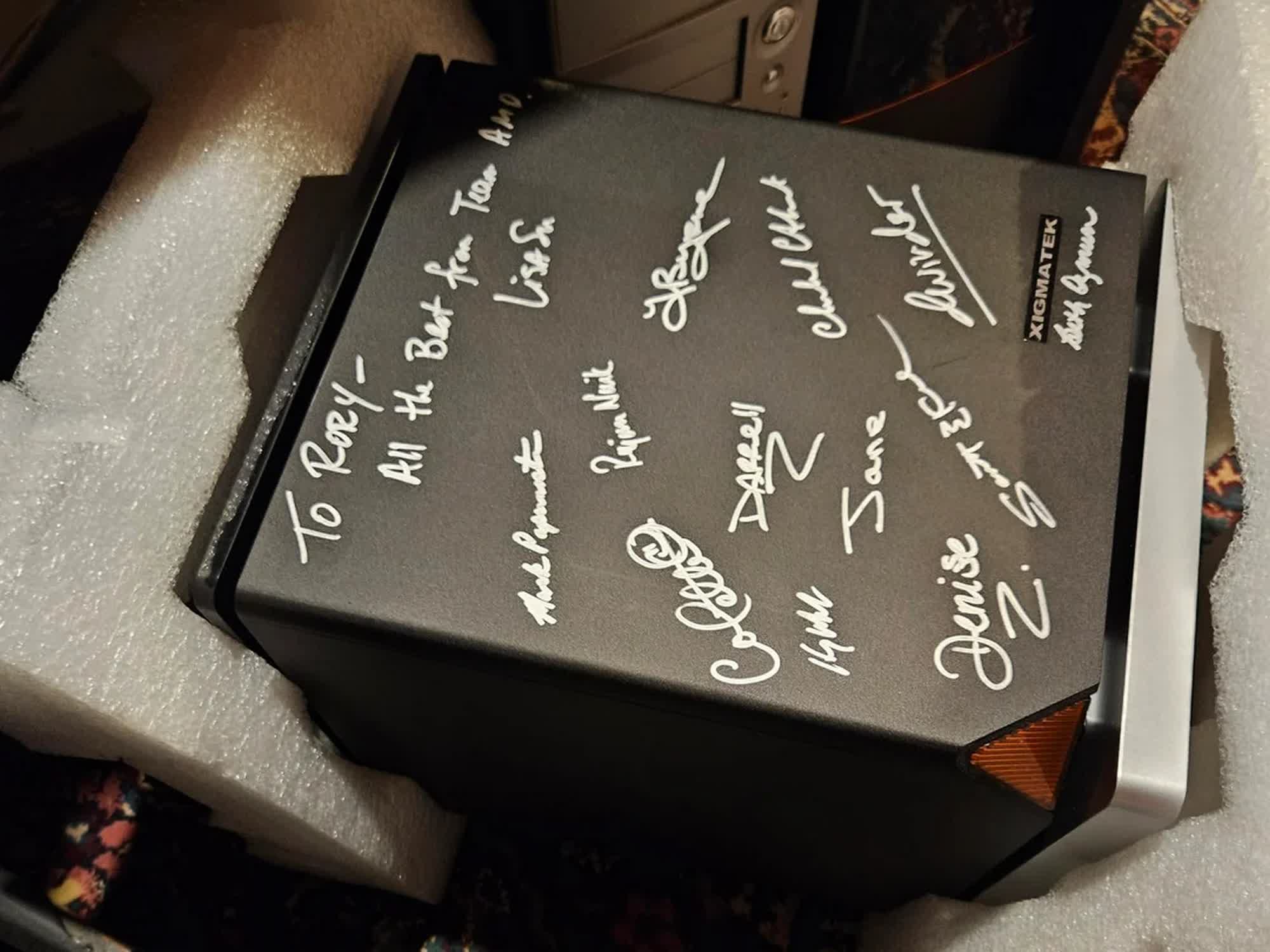
According to Redditor gazicoldfur, the unique piece of tech memorabilia was discovered in someone's basement while he was there to work on their HVAC system. The PC, believed to have been given to former AMD CEO Rory Read as a retirement gift in 2014, is signed by several of his former colleagues, including his successor Lisa Su, who was then the company's chief operating officer.

Su's signature is accompanied by a message reading: "To Rory – All the best from Team AMD."
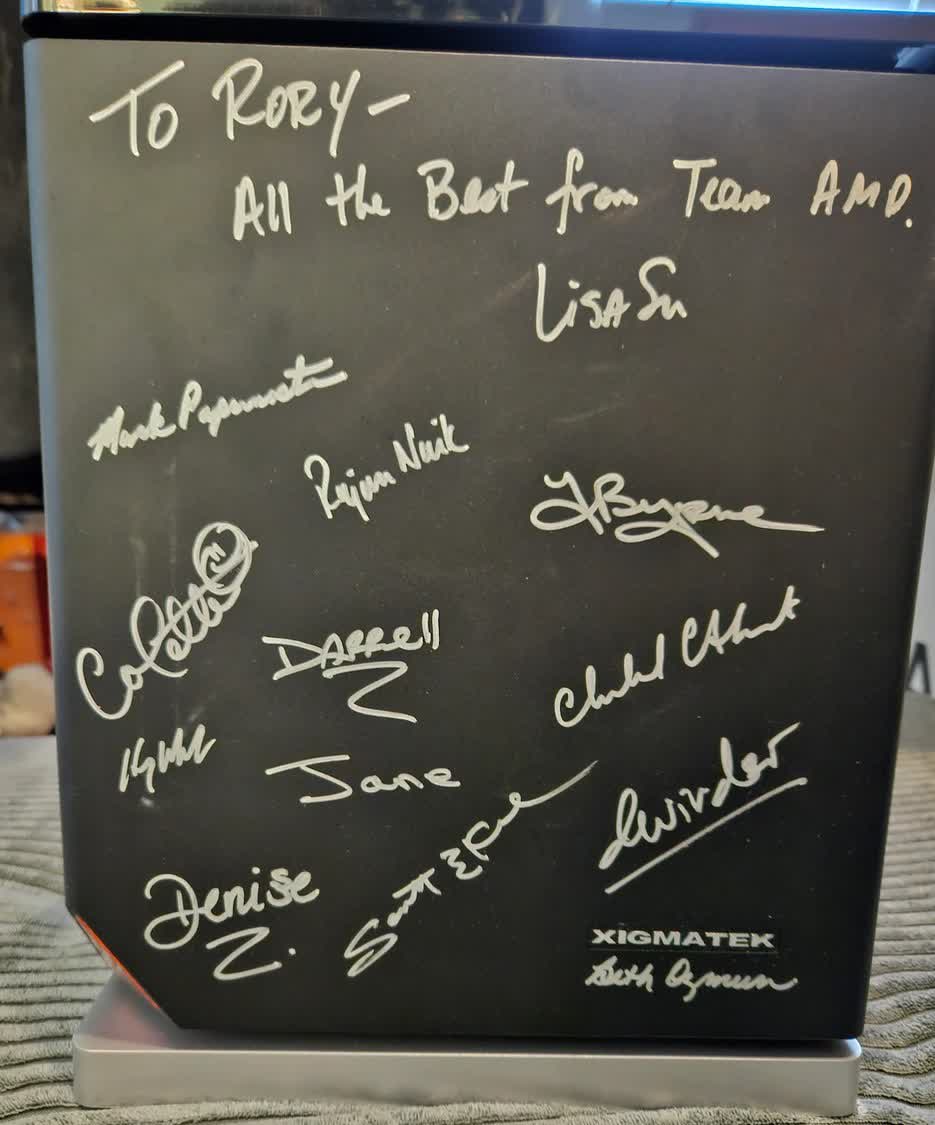
The Redditor claims that the other signatories were identified by Claude AI as CTO and Executive VP Mark Papermaster, former Chief Strategy Officer Rajan Naik, former Chief Financial Officer Devinder Kumar, former Chief Marketing Officer Colette LaForce, former GM of AMD's Computing and Graphics division John Byrne, and former Chief Human Resources Officer Darrell Ford. Papermaster is the only one among the signatories still working at AMD.

The PC is reportedly powered by an AMD A10-7800 "Steamroller" processor, paired with a discrete Sapphire Radeon R9 285 graphics card based on the "Tonga" architecture. Both the CPU and GPU were released in 2014 and would have been considered brand new at the time the system was assembled. Other specifications include 16GB of DDR3 RAM and a 480GB Radeon R7 2.5-inch SATA III SSD. The hardware is housed in a Xigmatek XEN6329 Mini-ITX case.
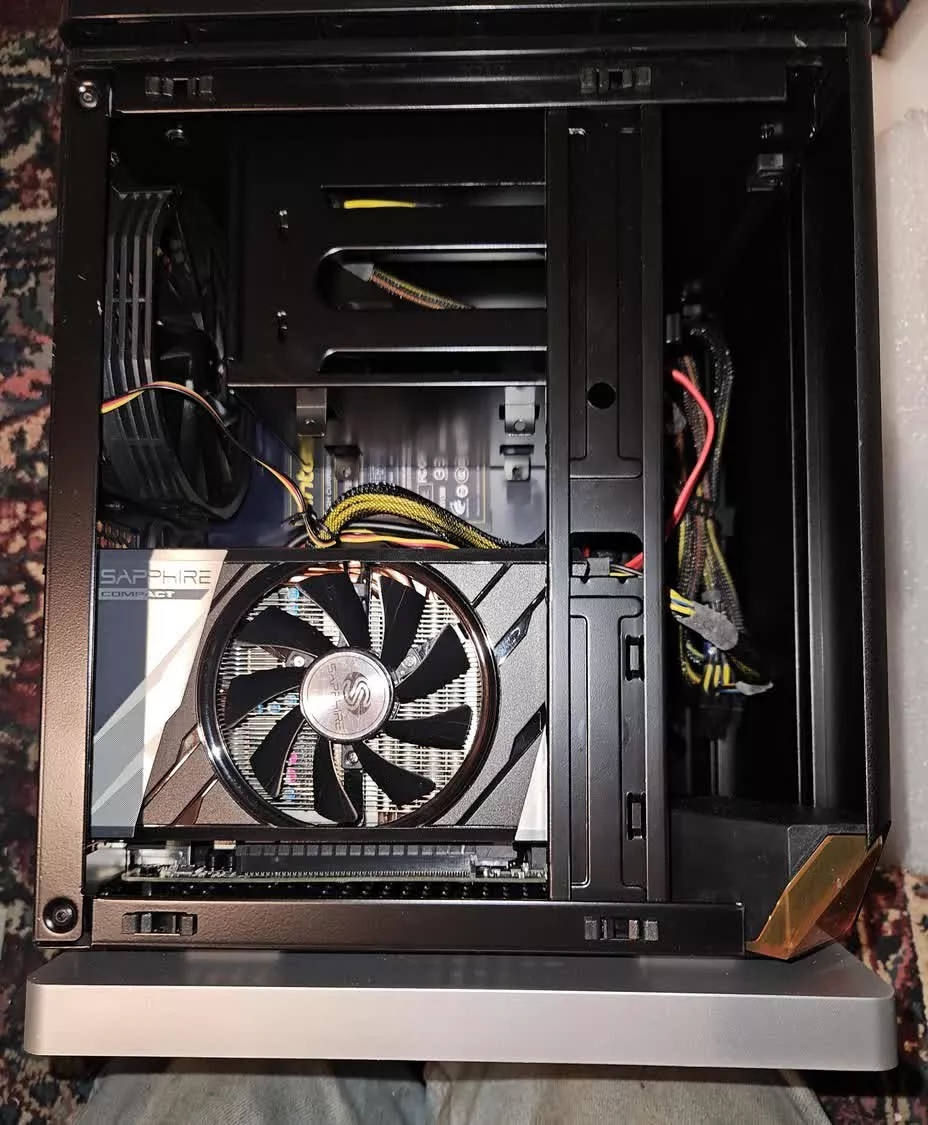
The Redditor claims to have found the PC in an unopened box and believes it was never used by Read. The homeowner, who previously owned a computer shop, is believed to have purchased the PC from Read between 2014 and 2016. After the shop closed in 2016, the system was moved to the basement, where it reportedly remained untouched until now. The box also allegedly contained two shrink-wrapped installation CDs – one for Windows 8.1 and another for Microsoft Office.

It is worth noting that neither Read nor anyone at AMD has confirmed the authenticity of the signatures, so the post should be taken with a grain of salt. While the autographs appear convincing at first glance, they could potentially be replicated using AI tools, making independent verification difficult.

That said, if genuine, the item would represent a notable piece of AMD memorabilia, given its connection to a transitional period in the company's history.

Image credit: gazicoldfur / Redit

Permalink to story:

 
Well... As Lisa Su became another Trump botomlicker I really would pass on this PC...
She now is just the tech sis tagging along the tech bros...

Watching she saying "there's no AI bubble" while we must endure the end of PC DIY market is really infuriating...
 
God bulldozer was awful. Fun to tinker with but an absolute boat anchor of silicon.
It failed at single-threaded IPC and power consumption but was an innovative design, the way certain units were shared across cores, and aimed to beat Core and Nehalem but unfortunately had Sandy Bridge to contend with.
 
What have you got against grass?
I have to mow it and it sometimes has ticks in it #bringblackclover
So awful that it was the fastest CPU on the market at the time, until Piledriver emerged. Oh, how terrible.
Fastest? LMFAO no it wasn't. It was consistently getting whipped in consumer software by core i5s and sometimes i3s while pulling metric shitloads of power. Intels HDET meanwhile not only offered more cores but also far better performance per core.

The bulldozer era nearly bankrupted AMD.
It failed at single-threaded IPC and power consumption but was an innovative design, the way certain units were shared across cores, and aimed to beat Core and Nehalem but unfortunately had Sandy Bridge to contend with.
Building a CPU to "beat core and nehalem" when the latter was already 5 years old was absolutely retarded. There's no other word that would adequately describe that idea.

And yes, sharing critical infrastructure between cores was very innovative, like how the self destructing fork was innovative. Not very useful or practical, but certainly innovative.
 
Building a CPU to "beat core and nehalem" when the latter was already 5 years old was absolutely retarded. There's no other word that would adequately describe that idea.
CPUs take time from design to tapeout. When AMD started work on Bulldozer, K10 was competing with, and falling behind, Nehalem. Setting that as a target to beat, not just match, made good sense. Sandy Bridge had yet to appear. Similarly, Zen's structures, such as its ROB, show that Haswell was being targeted rather than the later, meatier Skylake. But, in terms of release, there is that lag: Zen came out after Skylake but fell behind in single-threaded IPC.

And yes, sharing critical infrastructure between cores was very innovative, like how the self destructing fork was innovative. Not very useful or practical, but certainly innovative.
Bulldozer was intended to put AMD on a competitive footing again; it was an ambitious, innovative design that, owing to implementation bottlenecks, such as integer units, load-store, latency, and branch prediction, didn't perform as intended. Still, it fixed many K10 bottlenecks, and in the course of four iterations, AMD raised IPC and lowered power. Without Bulldozer, there might not have been Zen.
 
Last edited:
Back