US Senators introduce bipartisan bill to enable third-party app stores on iPhones

DragonSlayer101

Posts: 978   +14
Staff
In a nutshell: Five US senators have reintroduced a bipartisan bill to curb Apple's and Google's dominance in mobile app distribution. According to the lawmakers, the legislation will outlaw restrictive trade practices that allow the two tech giants control the global app economy.
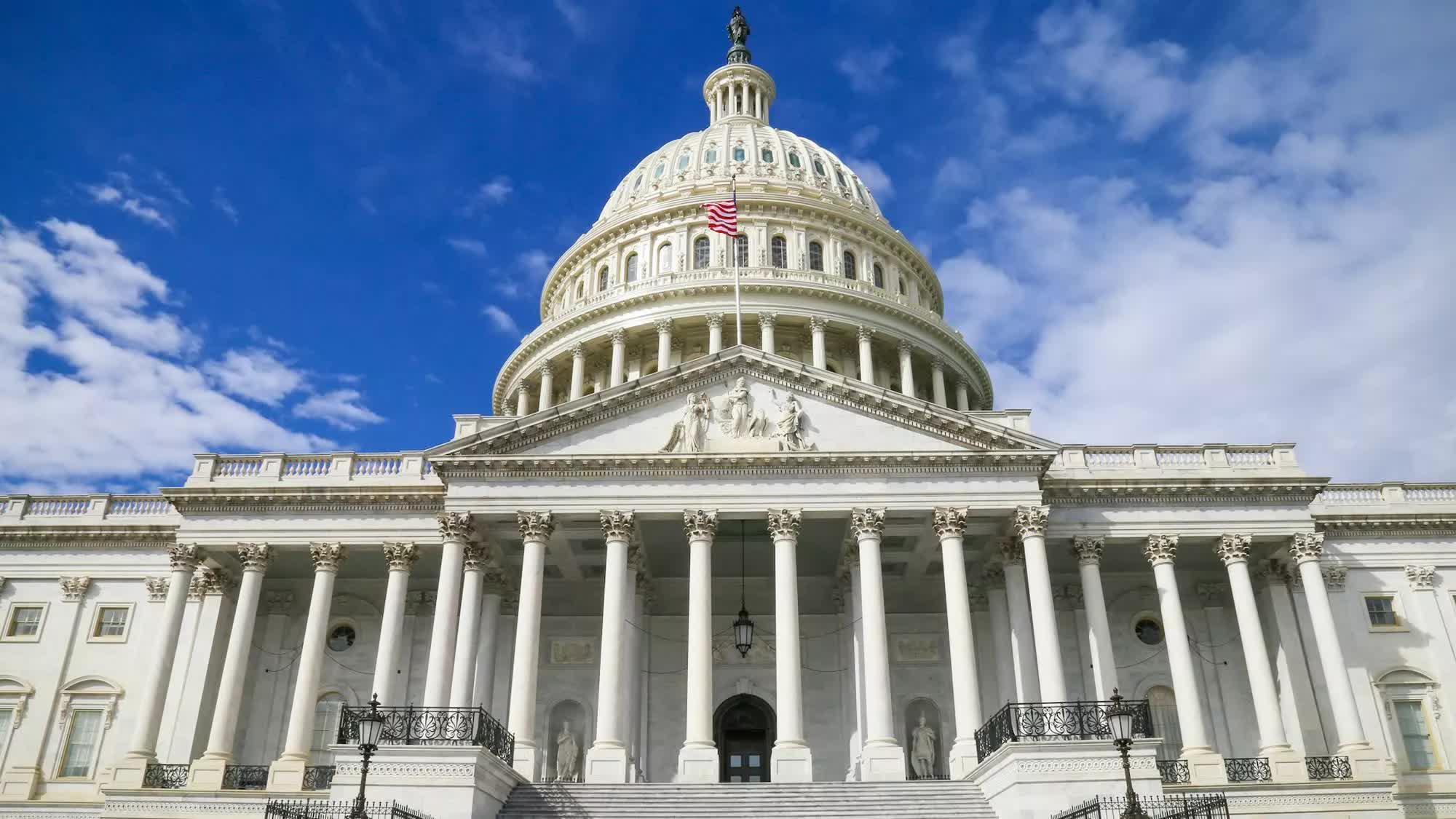
The "Open App Markets Act," introduced by Senators Marsha Blackburn, Richard Blumenthal, Mike Lee, Amy Klobuchar, and Dick Durbin, aims to promote competition and strengthen consumer protections in the evolving mobile economy. The bill asserts that Apple and Google act as gatekeepers to their respective platforms through the App Store and Google Play, stifling competition and restricting consumer choice.

Senator Blackburn's official website claims the two companies have acted as "unaccountable gatekeepers" of the mobile app economy for far too long – forcing consumers to use their native app stores at the expense of third-party options and stifling innovation to the detriment of both consumers and developers.

A key sore point for app publishers is the requirement to use Apple's and Google's payment systems, which drives up prices for consumers and eats into developers' revenue. To address this, the bill allows developers to distribute their apps through external sources and keep a larger share of the earnings.

The Open App Markets Act will protect developers' rights to offer competitive pricing via alternative payment systems. The bill also aims to promote app sideloading and enable developers to create new user experiences by leveraging hardware features without unfair or discriminatory restrictions.

Blackburn added that the Open App Markets Act will create a more equitable market for consumers and small businesses by encouraging competition, expanding user options, and driving innovation. She also said the bill includes measures to safeguard user privacy and security.

Several app developers have backed the bill, including Spotify and Epic Games, both known for their high-profile legal battles against Apple's App Store policies. Consumer advocacy groups – including the American Economic Liberties Project, the American Principles Project, and the Ethics and Public Policy Center – also support the bill, along with the tech startup accelerator Y Combinator.

Senators have tried to move the Open App Markets Act through Congress before. In 2021, Senators Blumenthal, Klobuchar, and Blackburn sponsored the original bill, but powerful industry lobbies prevented it from reaching the House floor.

The revised bill includes stronger provisions for protecting intellectual property and addressing national security concerns. However, the legislation will still face fierce opposition from companies like Apple, Google, Amazon, and Meta, which reportedly spent a combined $100 million during the last effort to block the bill before it could reach a vote.

Permalink to story:

 
Important step forward.

Now can they also copy the EU and pass a bill enforcing physical controls for HVAC in cars?
 
It was good while it lasted. I would not even be upset if I were Apple. All these years they profited immensly on every successful app, getting their 30%.
All goods things eventually end.
 
It may cost $150m to kill this time due to inflation. When lawmakers tee up such a bill, they're formally demanding additional compensation from corporations in exchange for protecting their profits against the interests of those they've formally sworn to serve.
 
Way overdue but bipartisan support is crucial to bring these scumbag tech giants to heel. Now let's get on with breaking up Google.
 
It was good while it lasted. I would not even be upset if I were Apple. All these years they profited immensly on every successful app, getting their 30%.
All goods things eventually end.
Ah but it's Apple, they'll fight tooth and nail to water this down and delay it and then implement it in such a way where it's useless.

Right to repair? Only if you get Apple parts through their own program. The parts are so expensive that it makes no sense. Also requires authorisation over the phone to make it even more unpractical for repair shops.
Having to allow third payment party apps in the EU? Apple still wants full control on what's allowed in these making it rather useless.
Allowing third party providers in the EU? Apple wants a 27 percent cut (for what? No idea and the other payment provider will charge a market standard rate of 3-4%) making it useless.

The EU is getting fed up with Apple trying to delay and implement extra rules though and might start dishing out more fines. Hope the US learns from how it's going and acts heavy handed from the start.
 
Can we get this to apply to game consoles as well? They have locked down market places just like Apple does.
If they were meant to be more general use, I would support that. But a gaming-specific console is a "luxury". I don't see the point in removing their incentive to subsidize the hardware.

Smartphones are very much general use (like a PC), and shouldn't be artificially locked down.
 
If they were meant to be more general use, I would support that. But a gaming-specific console is a "luxury". I don't see the point in removing their incentive to subsidize the hardware.

Smartphones are very much general use (like a PC), and shouldn't be artificially locked down.

With the hardware consoles currently have they very well could be much more general purpose machines; just because console makers artificially restrict them doesn't mean that we should all have to go along with that. I am sure Apple would also argue that iDevices are not general purpose machines and were only ever "meant" to run Apple approved applications, and that of course Apple would claim that they have to charge even more for their devices if they couldn't "subsidize" their iDevice revenue with their App store revenue.
 
If they were meant to be more general use, I would support that. But a gaming-specific console is a "luxury". I don't see the point in removing their incentive to subsidize the hardware.

Smartphones are very much general use (like a PC), and shouldn't be artificially locked down.
Consoles are no more specific use then cell phones. And they're not really subsidized either, their cost ha massively exploded relative to the hardware inside.
 
Consoles are no more specific use then cell phones. And they're not really subsidized either, their cost ha massively exploded relative to the hardware inside.
What are you talking about? Do you do work on your console? Excel sheets? Emails? Don't BS me.

And consoles are still subsidized. Just because inflation is making things feel more expensive, doesn't mean that they're making consoles at a large markup (but I'm not saying they don't eventually break even or even make a bit of money).
 
Back